States Wildlife

Connecticut Spiders: Identification, Pictures & Which Bite

Last checked November 3, 2026 against official sources.

On this page
  1. Which spiders can hurt you
  2. Not native here
  3. All 2 spiders
  4. When they are active
  5. If you are bitten or stung
  6. What official sources say
  7. About this list
  8. Sources

This page lists 2 spiders. 2 are venomous by official accounts.

Not every species: no complete official list of Connecticut spiders exists, so this page covers the ones state and Extension sources name. How lists are built.

Which spiders can hurt you

Official sources single out these spiders in Connecticut, in their own words:

Not native here

Official sources say the brown recluse is not native to Connecticut or not found there. It is not counted on this page; each entry quotes the source.

All 2 spiders

Venomous species first, then A to Z. Do not handle them.

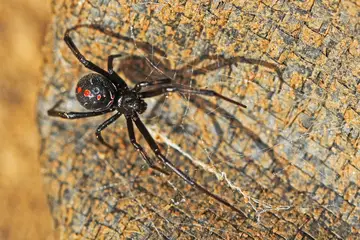
Northern Black Widow
Photo: Judy Gallagher · CC BY 2.0 · Wikimedia Commons

Northern Black Widow

Latrodectus variolus

Venomous per The Connecticut Agricultural Experiment Station (CAES), Department of Entomology

Danger to people
“The most medically significant spider in the northeast is the northern black widow spider Latrodectus variolus.” The Connecticut Agricultural Experiment Station (CAES), Department of Entomology
What the sources say

Venom: “Although black widow spiders possess extremely potent neurotoxic venom, they rarely bite humans.” (The Connecticut Agricultural Experiment Station (CAES), Department of Entomology)

Habitat: Man-made structures such as colonial stone walls, culverts and wood piles can also serve as black widow spider habitats. (The Connecticut Agricultural Experiment Station (CAES), Department of Entomology)

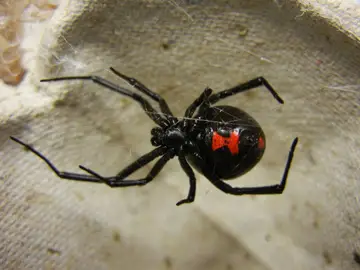
Southern Black Widow
Photo: Shenrich91 · CC BY-SA 3.0 · Wikimedia Commons · resized

Southern Black Widow

Latrodectus mactans

Venomous per The Connecticut Agricultural Experiment Station (CAES), Department of Entomology

What the sources say

Venom: “Females of both species are not likely to bite unless disturbed, but all species have venom that is toxic to humans.” (The Connecticut Agricultural Experiment Station (CAES), Department of Entomology)

Habitat: It is more common in and around human habitations. (The Connecticut Agricultural Experiment Station (CAES), Department of Entomology)

When spiders are active in Connecticut

Records of spiders in Connecticut peak in May to June and August to September. They show when people record spiders, not how many there are (about month bars).

987 records of spiders in Connecticut by month (GBIF, CC0 and CC BY records).

If you are bitten or stung

Call 911 or Poison Help at 1-800-222-1222 right away. Poison Help connects you to your local poison center, any time of day.

What official sources say

Are there black widow spiders in Connecticut?

Yes. CAES says both northern and southern black widows have been found in Connecticut; the poison center says true sightings or bites are uncommon in New England. The Connecticut Agricultural Experiment Station (CAES), Department of Entomology

“Kaston does mention that both species have been found in Connecticut.”

Are there brown recluse spiders in Connecticut?

Not established. The Connecticut Poison Control Center says the brown recluse is not native to any New England state; occasional spiders arrive as "passengers" in boxes, crates or cars. Connecticut Poison Control Center, UConn Health

“The brown recluse is not native to any of the New England States.”

About this list

The species list comes from No official Connecticut spider checklist. Entries from CAES fact sheets (black widows) and the Connecticut Poison Control Center (brown recluse and black widow) (The Connecticut Agricultural Experiment Station (CAES), Department of Entomology, undated fact sheet; retrieved 2026-11-03). 2 more entries come from other official sources named on each card.

Venom labels come only from official sources and link to them; "Not stated" never means harmless. How labels work.

Sources

  1. Report a Wildlife Sighting. Connecticut Department of Energy and Environmental Protection (DEEP), Wildlife Division. Content last updated September 22, 2026; checked November 3, 2026.
  2. Northern Black Widow Spider (Latrodectus variolus) (Katherine Dugas). The Connecticut Agricultural Experiment Station (CAES), Department of Entomology. undated page; checked November 3, 2026.
    Quoted passages (2)
    “Although black widow spiders possess extremely potent neurotoxic venom, they rarely bite humans.”
    “The most medically significant spider in the northeast is the northern black widow spider Latrodectus variolus.”
  3. Northern Black Widow, Southern Black Widow Spider, Latrodectus variolus, Latrodectus mactans (Rose Hiskes). The Connecticut Agricultural Experiment Station (CAES), Department of Entomology. undated page; checked November 3, 2026.
    Quoted passages (2)
    “Females of both species are not likely to bite unless disturbed, but all species have venom that is toxic to humans.”
    “Kaston does mention that both species have been found in Connecticut.”
  4. Arachnophobia: Brown Recluse and Black Widow Spiders. Connecticut Poison Control Center, UConn Health. page modified 2022-12-09; checked November 3, 2026.
    Quoted passages (1)
    “The brown recluse is not native to any of the New England States.”
  5. Venomous Spiders at Work. CDC / National Institute for Occupational Safety and Health (NIOSH). archived copy, captured October 13, 2026; checked November 3, 2026.
    Quoted passages (1)
    “Black widows and brown recluses are two types of venomous spiders in the United States.”
  6. GBIF.org occurrence records, human observations licensed CC0 1.0 or CC BY 4.0 only, accessed November 3, 2026. The datasets behind these counts are listed on our Sources page.