These are the animals official sources describe as venomous or as a risk to people in Connecticut, across 6 groups. The reason is given in the source's own terms.
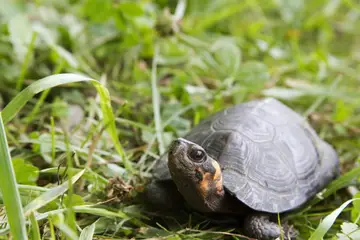
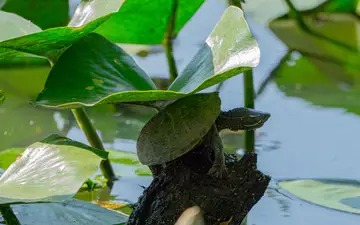
Can be aggressive on land during the breeding season: “Usually docile in water, snapping turtles can be aggressive during the breeding season when they are found traveling across land.”
Can be aggressive in rut or after calving: “Moose can present a serious threat to public safety under some circumstances. Although usually shy, moose can feel threatened and become aggressive during the rutting season or after calving.”
Disease: “Rabies is a fatal viral disease primarily found in bats and wild carnivores, such as raccoons, skunks, and foxes — also referred to as rabies vector species (RVS).”
Official sources say the brown recluse is not native to Connecticut or not found there. It is not counted among the dangerous animals above; each entry quotes the source.
Darker cells are the months with more open-licence observation records of each group in Connecticut (GBIF). They show when people see and record these animals, not how many there are. The current month, this month, is highlighted.
Report: Bear-related emergencies: DEEP 24-hour Dispatch Center 860-424-3333. Wildlife sightings (bear, bobcat, moose, fisher, bats, endangered species and others) via the DEEP Report a Wildlife Sighting page; DEEP Wildlife Division 860-424-3011. Spotted lanternfly: CAES SLF Reporting Form. Timber rattlesnake violations: TIP hotline 800-842-HELP. Connecticut Department of Energy and Environmental Protection (DEEP), Wildlife Division
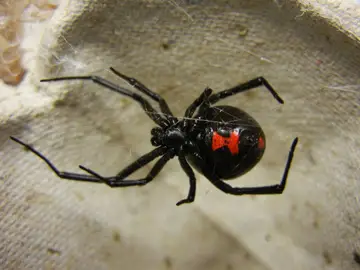
Not established. The Connecticut Poison Control Center says the brown recluse is not native to any New England state; occasional spiders arrive as "passengers" in boxes, crates or cars. Connecticut Poison Control Center, UConn Health
Are there ticks that carry lyme disease in Connecticut?
Yes. Lyme disease is spread in Connecticut by the bite of an infected blacklegged (deer) tick. DPH
Sources
Report a Wildlife Sighting. Connecticut Department of Energy and Environmental Protection (DEEP), Wildlife Division. Content last updated September 22, 2026; checked November 3, 2026.Quoted passages (2)
“For bear-related emergencies, please call DEEP's 24-hour Dispatch Center at 860-424-3333.”
“Annual sightings of cows with calves since 2000 confirm the establishment and expansion of a resident population. Moose sighting reports help biologists monitor the presence of this large mammal in our state. The current population is estimated at just over 100 animals.”
Northern Copperhead (Wildlife Fact Sheet). Connecticut Department of Energy and Environmental Protection (DEEP), Wildlife Division. Content last updated on; checked November 3, 2026.Quoted passages (4)
“The copperhead is one of two venomous snake species found in Connecticut; the other is the state-endangered timber rattlesnake.”
“Copperheads are mostly absent from the northeastern and northwestern portions of the state and less common east of the Connecticut River”
“However, seek medical attention immediately if bitten.”
“Copperheads are active from April through October, spending the rest of the year in dens.”
Timber Rattlesnake (Wildlife Fact Sheet). Connecticut Department of Energy and Environmental Protection (DEEP), Wildlife Division. Content last updated March 8, 2018; checked November 3, 2026.Quoted passages (4)
“The timber rattlesnake is one of only two venomous species found in Connecticut; the other is the northern copperhead.”
“Once documented in over 20 towns in Connecticut, this snake is now limited to isolated populations in about 10 towns in the central and western portions of the state.”
“Do NOT attempt to kill any rattlesnakes under any circumstances as this is an illegal action.”
“Connecticut’s rattlesnakes are active mid-April through October.”
Snakes of Connecticut. Connecticut Department of Energy and Environmental Protection (DEEP), Wildlife Division. Content last updated July 2026; checked November 3, 2026.Quoted passages (1)
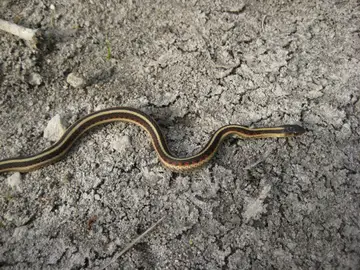
“The answer is 14! Only 2 of the 14 native snake species are venomous -- the northern copperhead and timber rattlesnake.”
Common Five-lined Skink (Wildlife Fact Sheet). Connecticut Department of Energy and Environmental Protection (DEEP), Wildlife Division. undated page; checked November 3, 2026.Quoted passages (1)
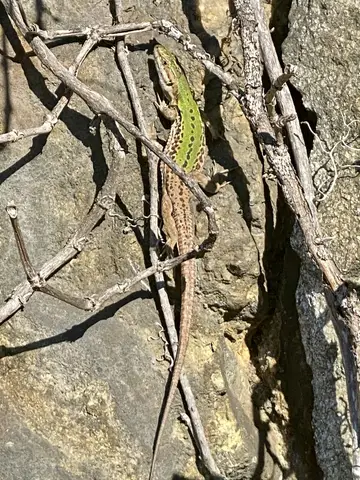
“The state-threatened common five-lined skink is the only lizard native to Connecticut.”
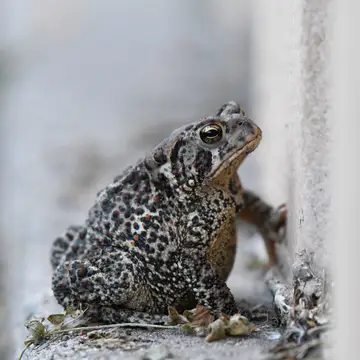
“There are 11 species of frogs and toads native to Connecticut.”
“One additional lizard species is non-native and established in the state.”
Turtles of Connecticut. Connecticut Department of Energy and Environmental Protection (DEEP), Wildlife Division. Content last updated June 2026; checked November 3, 2026.Quoted passages (2)
“Twelve turtle species (including 4 sea turtles) occur in Connecticut.”
“Of the eight species of sea turtles in the world, four have been documented in Connecticut waters in Long Island Sound.”
“Females of both species are not likely to bite unless disturbed, but all species have venom that is toxic to humans.”
“Kaston does mention that both species have been found in Connecticut.”
Common Snapping Turtle (Wildlife Fact Sheet). Connecticut Department of Energy and Environmental Protection (DEEP), Wildlife Division. Content last updated November 2, 2022; checked November 3, 2026.Quoted passages (1)
“Usually docile in water, snapping turtles can be aggressive during the breeding season when they are found traveling across land.”
Lyme Disease. Connecticut Department of Public Health (DPH). undated page; checked November 3, 2026.Quoted passages (2)
“It is the most commonly reported tick-borne disease in Connecticut and in the United States.”
“In Connecticut it is spread to people through the bite of an infected Black-legged (‘deer’) tick (Ixodes scapularis).”
State of Connecticut Mosquito Management Program. State of Connecticut Mosquito Management Program (DEEP, CAES, Department of Public Health and partners). undated page; checked November 3, 2026.Quoted passages (1)
“The Connecticut Agricultural Experiment Station traps, identifies, and tests mosquitoes for encephalitis viruses.”
Yellowjackets (Family Vespidae). The Connecticut Agricultural Experiment Station (CAES), Dr. Gale E. Ridge. October 26, 2021; checked November 3, 2026.Quoted passages (1)
“Yellowjackets can become extremely aggressive if disturbed.”
Black Bear (Wildlife Fact Sheet). Connecticut Department of Energy and Environmental Protection (DEEP), Wildlife Division. undated page; checked November 3, 2026.Quoted passages (1)
“Never feed bears. Bears that associate food with people may become bold, aggressive, and dangerous.”
Moose (Wildlife Fact Sheet). Connecticut Department of Energy and Environmental Protection (DEEP), Wildlife Division. undated page; checked November 3, 2026.Quoted passages (2)
“Moose can present a serious threat to public safety under some circumstances. Although usually shy, moose can feel threatened and become aggressive during the rutting season or after calving.”
“The moose’s breeding or ‘rutting’ season begins in September.”
Rabies and Wildlife. Connecticut Department of Energy and Environmental Protection (DEEP), Wildlife Division. Content last updated March 2025; checked November 3, 2026.Quoted passages (1)
“Rabies is a fatal viral disease primarily found in bats and wild carnivores, such as raccoons, skunks, and foxes — also referred to as rabies vector species (RVS).”
Bats in Connecticut. Connecticut Department of Energy and Environmental Protection (DEEP), Wildlife Division. Content last updated May 2026; checked November 3, 2026.Quoted passages (2)
“NEVER touch a live bat. Bats will bite to protect themselves!”
“Tree-roosting bats generally migrate long distances to more southern latitudes during winter.”
“The brown recluse is not native to any of the New England States.”
“IN A POISON EMERGENCY: CALL 1-800-222-1222”
Spotted Lanternfly. Connecticut Department of Energy and Environmental Protection (DEEP), Forestry. Content last updated August 2026; checked November 3, 2026.Quoted passages (2)
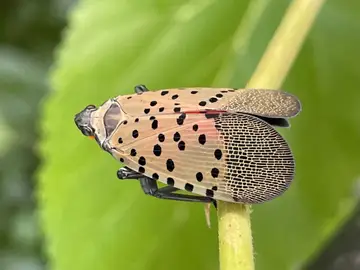
“In 2020, two small established populations of spotted lanternfly were found in Fairfield County, Connecticut. Since then, SLF has spread to multiple counties in Connecticut.”
“In 2020, two small established populations of spotted lanternfly were found in Fairfield County, Connecticut.”
Invasive Species. Connecticut Department of Energy and Environmental Protection (DEEP). Content last updated June 2022; checked November 3, 2026.Quoted passages (3)
“Emerald Ash Borer (EAB)”
“Asian Longhorned Beetle (ALB)”
“Jumping Worms: These invasive worms favor leaf litter and mulch.”
Cottontail Rabbits (Wildlife Fact Sheet). Connecticut Department of Energy and Environmental Protection (DEEP), Wildlife Division. Content last updated April 30, 2019; checked November 3, 2026.Quoted passages (1)
“The eastern cottontail was introduced into New England in the late 1800s and early 1900s and has been expanding its range ever since.”
Northern Watersnake (Wildlife Fact Sheet). Connecticut Department of Energy and Environmental Protection (DEEP), Wildlife Division. Content last updated on; checked November 3, 2026.Quoted passages (1)
“Although these two species may be similar in appearance, water moccasins do not occur in Connecticut.”
Frequently Asked Questions About Black Bears. Connecticut Department of Energy and Environmental Protection (DEEP), Wildlife Division. undated page; checked November 3, 2026.Quoted passages (1)
“In 2023, bears were reported from 165 of the state’s 169 towns and cities.”
Coyote (Wildlife Fact Sheet). Connecticut Department of Energy and Environmental Protection (DEEP), Wildlife Division. Content last updated March 2023; checked November 3, 2026.Quoted passages (1)
“Coyotes eventually expanded their range throughout the entire state and are now a part of Connecticut’s ecosystem”
2019 CT DEEP Weekly Fishing Report No. 28, 10/25/2019. Connecticut Department of Energy and Environmental Protection (DEEP); copy held by the Connecticut State Library digital collections. 10/25/2019; checked November 3, 2026.Quoted passages (1)
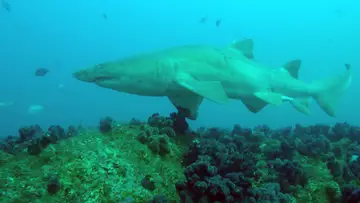
“Anglers may catch Sand Tiger and Sandbar (Brown) Shark which are protected and prohibited species and must be released unharmed.”
“These venomous snakes, along with the other 12 Connecticut snake species, are not aggressive and will only bite if threatened or handled. If left alone, snakes pose no threat to people.”
“If you suspect a snake in your yard is venomous, observe it from a safe distance and call the Wildlife Division for advice.”
Eastern Wormsnake (Wildlife Fact Sheet). Connecticut Department of Energy and Environmental Protection (DEEP), Wildlife Division. Content last updated on; checked November 3, 2026.Quoted passages (1)
“Eastern wormsnakes are active from May through September.”
Northern Redbelly Snake (Wildlife Fact Sheet). Connecticut Department of Energy and Environmental Protection (DEEP), Wildlife Division. Content last updated on; checked November 3, 2026.Quoted passages (1)
“Northern redbelly snakes are typically active in May through October.”
Northern Ring-necked Snake (Wildlife Fact Sheet). Connecticut Department of Energy and Environmental Protection (DEEP), Wildlife Division. Content last updated on; checked November 3, 2026.Quoted passages (1)
“Ring-necked snakes are active from May through mid-October.”