This page lists 5 spiders.
1 is venomous by official accounts.
Not every species: no complete official list of Alaska spiders exists, so this page covers the ones state and Extension sources name. How lists are built.
Which spiders can hurt you
Official sources single out these spiders in Alaska, in their own words:
Venomous bite. “Bites may cause a small irritation to the skin, necrotic lesions to the skin, systemic disturbances, blood disorders, or even internal organ damage, depending on the amount of venom injected.” Alaska Department of Environmental Conservation, Pesticide Program
All 5 spiders
Venomous species first, then A to Z. Do not handle them.
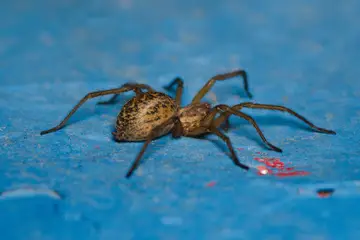
Venom: “Bites may cause a small irritation to the skin, necrotic lesions to the skin, systemic disturbances, blood disorders, or even internal organ damage, depending on the amount of venom injected.” (Alaska Department of Environmental Conservation, Pesticide Program)
Habitat: Hobo Spiders create funnel shaped webs in cracks or crevices, and are generally found near ground level. (Alaska Department of Environmental Conservation, Pesticide Program)
No official source we use states whether this animal is venomous. That does not mean it is harmless: do not handle it.
JFMAMJJASOND
51 records by month.
No confirmed photo of Crab spiders
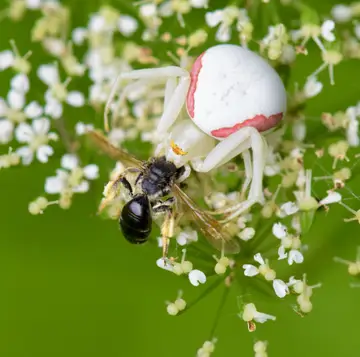
Crab spiders
Thomisidae (family)
Not stated
Venom
No official source we use states whether this animal is venomous. That does not mean it is harmless: do not handle it.
No confirmed photo of Orbweaver spiders
Orbweaver spiders
Araneidae (family)
Not stated
Venom
No official source we use states whether this animal is venomous. That does not mean it is harmless: do not handle it.
No confirmed photo of Wolf spiders
Wolf spiders
Lycosidae (family)
Not stated
Venom
No official source we use states whether this animal is venomous. That does not mean it is harmless: do not handle it.
What the sources say
Habitat: While usually found hunting on the ground, they will also climb trees and the sides of buildings looking for prey. (University of Alaska Fairbanks Cooperative Extension Service)
When spiders are active in Alaska
Records of spiders in Alaska peak in June to August. They show when people record spiders, not how many there are (about month bars).
JanFebMarAprMayJunJulAugSepOctNovDec
1,786 records of spiders in Alaska by month (GBIF, CC0 and CC BY records).
If you are bitten or stung
Call 911 or Poison Help at 1-800-222-1222 right away. Poison Help connects you to your local poison center, any time of day.
How to report
Report invasive species to the ADF&G Invasive Species Hotline 1-877-INVASIV (1-877-468-2748) or [email protected]. Report dangerous wildlife encounters with the ADF&G wildlife encounter form (https://www.adfg.alaska.gov/index.cfm?adfg=reportwildlifeencounter.main). Alaska Department of Fish and Game
“Bites may cause a small irritation to the skin, necrotic lesions to the skin, systemic disturbances, blood disorders, or even internal organ damage, depending on the amount of venom injected.”