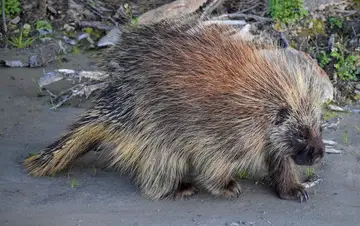
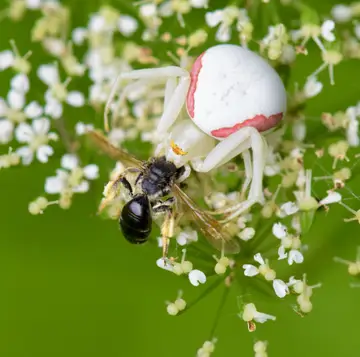
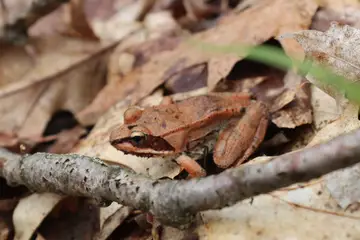
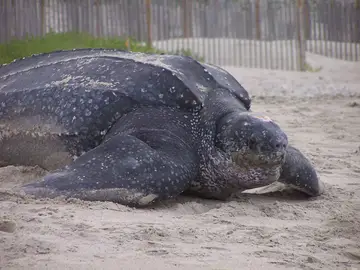
No snakes are on Alaska's official lists. This guide covers 7 animal groups from Alaska Department of Fish and Game lists and other official sources, with photos, venomous status and when each group is active.
Identification help has limits: a photo cannot confirm that an animal is safe. Watch from a distance and never handle a wild animal.
These are the animals official sources describe as venomous or as a risk to people in Alaska, across 4 groups. The reason is given in the source's own terms.
Venomous: “Bites may cause a small irritation to the skin, necrotic lesions to the skin, systemic disturbances, blood disorders, or even internal organ damage, depending on the amount of venom injected.”
Disease: “Tularemia occurs sporadically in Alaska, and humans can become infected from a tick bite and through direct contact with an infected animal.”
Attacks if provoked: “While not normally aggressive, moose can become dangerous if provoked, so it is important to know how to respond if you encounter an aggressive moose.”
Disease (parasites and pathogens): “Aside from the predation pressure of rats on Alaskan wildlife, they also carry parasites, pathogens and diseases that can be harmful to other species as well as humans.”
May react defensively and charge if threatened: “Muskoxen may appear very tolerant. However, they are powerful animals and may react defensively if they feel threatened.”
Can be startled and put a person in danger (few injuries recorded): “There is a chance, however, that one could be startled and put a person in danger, so ADF&G is working with village residents to minimize that risk.”
Darker cells are the months with more open-licence observation records of each group in Alaska (GBIF). They show when people see and record these animals, not how many there are. The current month, this month, is highlighted.
Report: Report invasive species to the ADF&G Invasive Species Hotline 1-877-INVASIV (1-877-468-2748) or [email protected]. Report dangerous wildlife encounters with the ADF&G wildlife encounter form (https://www.adfg.alaska.gov/index.cfm?adfg=reportwildlifeencounter.main). Alaska Department of Fish and Game
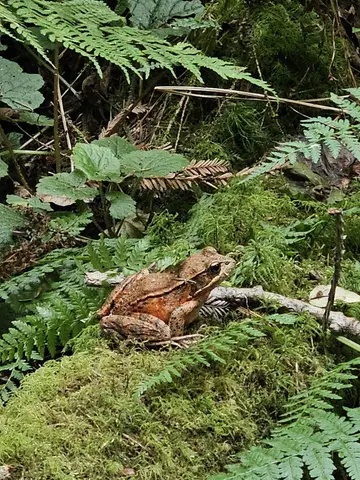
Yes. The wood frog is found across most of Alaska, including above the Arctic Circle. Other frogs and the western toad are found mainly in Southeast Alaska. Alaska Department of Fish and Game
Are there poisonous amphibians in Alaska?
Yes. ADF&G says the roughskin newt of Southeast Alaska has poisonous skin. The toxins are harmless unless swallowed but can irritate skin or eyes. Wash your hands after handling. Alaska Department of Fish and Game
Are there venomous spiders in Alaska?
Alaska DEC says most venomous spiders do not exist in Alaska, but the hobo spider may live in the panhandle (Southeast Alaska). Its bite can cause skin wounds and other symptoms. For any bite, call 911 or Poison Help at 1-800-222-1222. Alaska Department of Environmental Conservation, Pesticide Program
No. The Department of Health says no one has been reported to catch Lyme disease or Rocky Mountain spotted fever in Alaska. Cases were caught while traveling out of state. Alaska Department of Health, Section of Epidemiology
Are there bears in Alaska?
Yes. ADF&G says Alaska is bear country, with all three North American bear species. Brown bears live nearly everywhere in the state. Alaska Department of Fish and Game
Are moose dangerous?
Yes. ADF&G says moose are not normally aggressive but can become dangerous if provoked. Never approach a moose. Alaska Department of Fish and Game
Do wolves attack people in Alaska?
Rarely. ADF&G says wolves rarely act aggressively toward people. A person was killed in Alaska in 2010. Alaska Department of Fish and Game
Is there rabies in Alaska?
Yes. ADF&G says rabies occurs most often in arctic and red foxes on the North and West coasts and the Alaska Peninsula. Alaska Department of Fish and Game
Do bats in alaska carry rabies?
Rarely. ADF&G says rabies is not common in Alaska bats: 5 cases have been documented, all in Southeast Alaska. None passed the disease to a person. Alaska Department of Fish and Game
Our Agency: Mission. Alaska Department of Fish and Game. undated page; checked November 3, 2026.
Checklist of Alaska Birds, 32nd edition—2026. University of Alaska Museum (with the Alaska Bird Records Committee). 32nd edition—2026; checked November 3, 2026.Quoted passages (1)
“As of 1 Jan 2026 the list of avian taxa known in Alaska included 551 species in 67 families and 21 orders.”
“This checklist includes all 116 mammal species known to presently occur in Alaska.”
Shark Research in Alaska. NOAA Fisheries, Alaska Fisheries Science Center. updated August 14, 2023; checked November 3, 2026.Quoted passages (1)
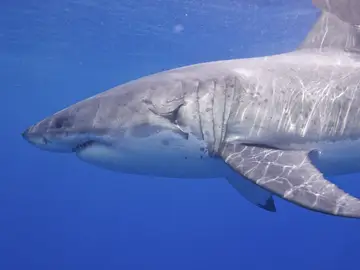
“There are three shark species commonly found in Alaskan waters: Pacific sleeper shark (Somniosus pacificus), spiny dogfish (Squalus suckleyi), and salmon shark (Lamna ditropis).”
“Bites may cause a small irritation to the skin, necrotic lesions to the skin, systemic disturbances, blood disorders, or even internal organ damage, depending on the amount of venom injected.”
“Although most venomous spiders do not exist in Alaska, the hobo spider, Tegenaria agrestis, may inhabit the panhandle area of Alaska.”
“Some species are nuisance pests when their stinging and scavenging behavior puts them in contact with humans.”
“Only the new queen overwinters; the remainder of the colony dies.”
Ticks and Tickborne Disease Information. Alaska Department of Health, Section of Epidemiology. archived copy, captured March 26, 2025; checked November 3, 2026.Quoted passages (2)
“Tularemia occurs sporadically in Alaska, and humans can become infected from a tick bite and through direct contact with an infected animal.”
“There have been no reports of people contracting Rocky Mountain spotted fever or Lyme disease in Alaska.”
“The American dog tick is a vector of Rocky Mountain Spotted Fever (RMSF) and tularemia.”
Safety in Bear Country. Alaska Department of Fish and Game. undated page; checked November 3, 2026.Quoted passages (4)
“Bears are curious, intelligent and tend to avoid or ignore people, but can be dangerous.”
“Brown bears, also called grizzly bears, are found nearly everywhere in Alaska. Black bears inhabit most of Alaska’s forests. Polar bears frequent the sea ice and tundra of extreme northern and western Alaska.”
“Stay calm during a bear encounter. Ready your deterrent. Stand your ground, group up with others and alert the bear by talking calmly. Don't run.”
“Bears have only a few months to build up fat reserves for a long winter in dens and are always looking for something to eat.”
Living With Moose. Alaska Department of Fish and Game. undated page; checked November 3, 2026.Quoted passages (3)
“While not normally aggressive, moose can become dangerous if provoked, so it is important to know how to respond if you encounter an aggressive moose.”
“The key to coexisting with moose is to avoid confrontations by giving moose plenty of space. Never approach a moose!”
“Look out for moose on roadways especially in winter when moose-vehicle collisions are most common.”
Living With Wolves. Alaska Department of Fish and Game. undated page; checked November 3, 2026.Quoted passages (3)
“Wolves rarely act aggressively toward people, but there have been instances in Alaska and Canada where wolves have attacked people.”
“The first case of wild healthy wolves killing a human in modern North America occurred in Saskatchewan in 2005; a second person was killed in 2010 in Alaska.”
“If you encounter a wolf or pack of wolves at close range do not run or turn away.”
“Aside from the predation pressure of rats on Alaskan wildlife, they also carry parasites, pathogens and diseases that can be harmful to other species as well as humans.”
Living With Muskoxen. Alaska Department of Fish and Game. undated page; checked November 3, 2026.Quoted passages (2)
“Muskoxen may appear very tolerant. However, they are powerful animals and may react defensively if they feel threatened.”
“Bull muskoxen are more aggressive during the fall breeding season which takes place from August through October.”
Living with Wood Bison. Alaska Department of Fish and Game. undated page; checked November 3, 2026.Quoted passages (1)
“There is a chance, however, that one could be startled and put a person in danger, so ADF&G is working with village residents to minimize that risk.”
Living With Beavers. Alaska Department of Fish and Game. undated page; checked November 3, 2026.Quoted passages (1)
“Beavers can spread disease, for example, giardia in drinking water.”
“Widely distributed throughout Alaska and is the only amphibian found above the Arctic Circle.”
Roughskin Newt Species Profile. Alaska Department of Fish and Game. undated page; checked November 3, 2026.Quoted passages (2)
“These neurotoxins are generally harmless unless ingested, but may cause skin or eye irritation in humans, especially if eyes are touched after handling newts before washing hands.”
“In Alaska, breeding probably commences in April and continues into June”
Information on Ticks. Alaska Department of Environmental Conservation, Office of the State Veterinarian. archived copy, captured May 21, 2026; checked November 3, 2026.Quoted passages (1)
“Alaska is home to six native tick species, or ticks that have historically been found in the state.”
Living With Bats: Rabies. Alaska Department of Fish and Game. undated page; checked November 3, 2026.Quoted passages (2)
“There are only 5 documented cases of bats with rabies in Alaska, all from Southeast Alaska.”
“Please call the Alaska Section of Epidemiology at the Alaska Department of Health and Social Services (ADHSS) immediately if:”
Western Toad Species Profile. Alaska Department of Fish and Game. undated page; checked November 3, 2026.Quoted passages (1)
“The western toad's breeding period is variable depending on the location but it generally occurs late April to July in Alaska.”
Living With Bats. Alaska Department of Fish and Game. undated page; checked November 3, 2026.Quoted passages (1)
“Excluding maternity roosts in Alaska should be done in late September or early October”