Alaska Mammals: Species List With Pictures
Last checked November 3, 2026 against official sources.
On this page
University of Alaska Museum of the North, University of Alaska Fairbanks: This checklist includes all 116 mammal species known to presently occur in Alaska.
This page lists 115 mammals. 5 are nonnative. University of Alaska Museum of the North, University of Alaska Fairbanks gives a total of 116; the 115 here are the mammals official sources name one by one.
Which mammals can hurt you
Official sources single out these mammals in Alaska, in their own words:
-
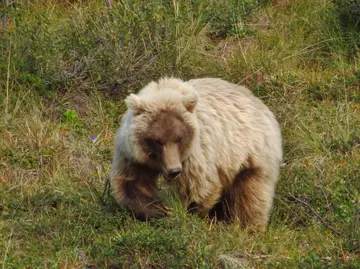
Photo: Annika Lindqvist · CC BY 4.0 · iNaturalist Brown or Grizzly Bear
Attacks. “Bears are curious, intelligent and tend to avoid or ignore people, but can be dangerous.” Alaska Department of Fish and Game
-
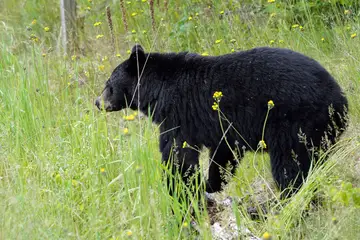
Photo: U.S. Fish and Wildlife Service - Midwest Region · Public domain · Wikimedia Commons American Black Bear
Attacks. “Bears are curious, intelligent and tend to avoid or ignore people, but can be dangerous.” Alaska Department of Fish and Game
-
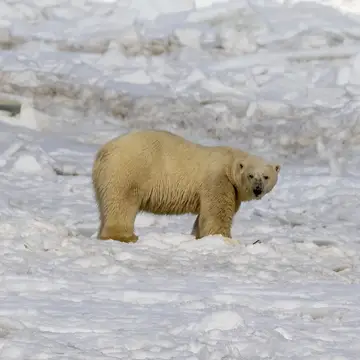
Photo: Dan Vickers · CC BY 4.0 · iNaturalist Polar Bear
Attacks. “Bears are curious, intelligent and tend to avoid or ignore people, but can be dangerous.” Alaska Department of Fish and Game
-
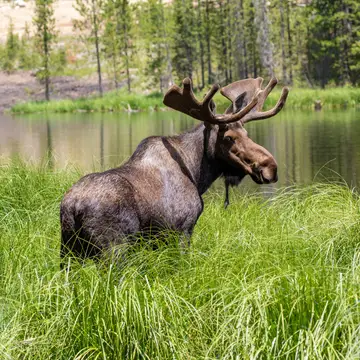
Photo: Dan Vickers · CC BY 4.0 · iNaturalist Moose
Attacks if provoked. “While not normally aggressive, moose can become dangerous if provoked, so it is important to know how to respond if you encounter an aggressive moose.” Alaska Department of Fish and Game
-
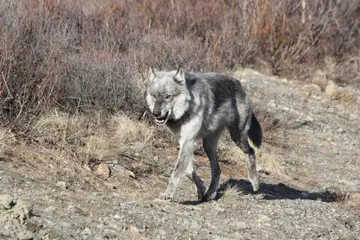
Photo: Robbie Hannawacker · CC0 1.0 · iNaturalist Wolf
Attacks (rare). “Wolves rarely act aggressively toward people, but there have been instances in Alaska and Canada where wolves have attacked people.” Alaska Department of Fish and Game
-
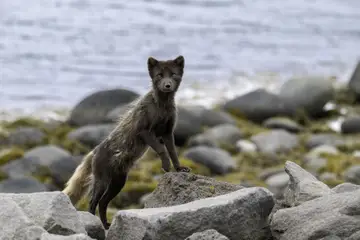
Photo: Emily Turteltaub Nelson · CC BY 4.0 · iNaturalist Arctic Fox
Disease (rabies). “In Alaska, rabies occurs most often in arctic fox and red fox from the North coast, West coast and Alaska Peninsula.” Alaska Department of Fish and Game
-
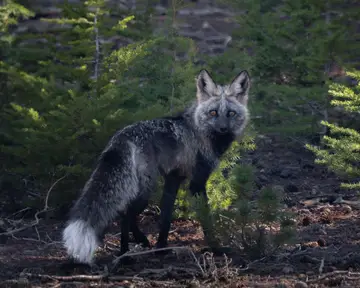
Photo: David Willingham · CC BY 4.0 · iNaturalist Red Fox
Disease (rabies). “In Alaska, rabies occurs most often in arctic fox and red fox from the North coast, West coast and Alaska Peninsula.” Alaska Department of Fish and Game
-
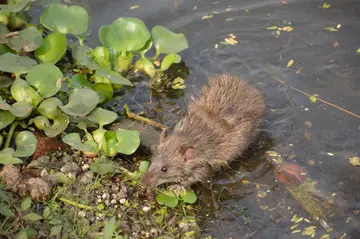
Photo: Biswarup Ganguly · CC BY 3.0 · Wikimedia Commons Brown (Norway) Rat
Disease (parasites and pathogens). “Aside from the predation pressure of rats on Alaskan wildlife, they also carry parasites, pathogens and diseases that can be harmful to other species as well as humans.” Alaska Department of Fish and Game
-
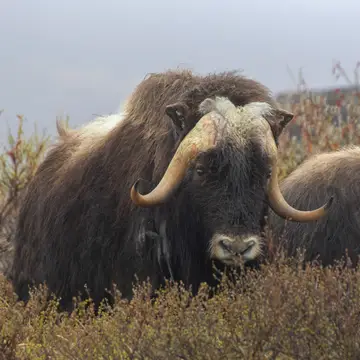
Photo: Dan Vickers · CC BY 4.0 · iNaturalist Muskox
May react defensively and charge if threatened. “Muskoxen may appear very tolerant. However, they are powerful animals and may react defensively if they feel threatened.” Alaska Department of Fish and Game
-
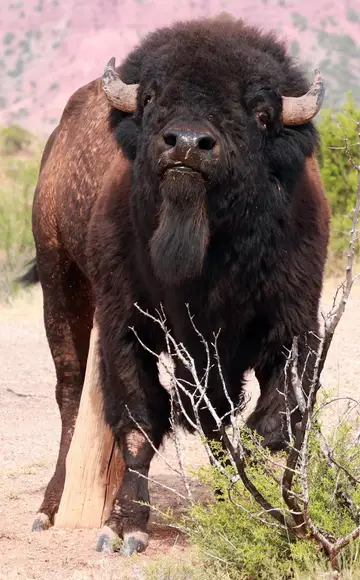
Photo: Catherine C. Galley · CC BY 4.0 · iNaturalist Wood Bison
Can be startled and put a person in danger (few injuries recorded). “There is a chance, however, that one could be startled and put a person in danger, so ADF&G is working with village residents to minimize that risk.” Alaska Department of Fish and Game
-
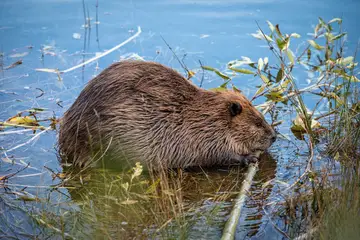
Photo: GrandTetonNPS · Public domain · Wikimedia Commons American Beaver
Disease (giardia in drinking water). “Beavers can spread disease, for example, giardia in drinking water.” Alaska Department of Fish and Game


All 115 mammals on the list
- Alaska Hare or Jackrabbit Lepus othus
- Alaska Marmot Marmota broweri
- American Beaver Castor canadensis
- American Bison Bison bison
- American Black Bear Ursus americanus
- American Marten Martes americana
- American Mink Neovison vison
- Arctic Fox Vulpes lagopus
- Arctic Ground Squirrel Urocitellus parryii
- Baird's Beaked Whale Berardius bairdii
- Barren Ground Shrew Sorex ugyunak
- Bearded Seal Erignathus barbatus
- Beluga Delphinapterus leucas
- Big Brown Bat Eptesicus fuscus
- Blue Whale Balaenoptera musculus
- Bowhead Balaena mysticetus
- Brown or Grizzly Bear Ursus arctos
- Brown Rat Rattus norvegicusNonnative
- Bushy-tailed Woodrat Neotoma cinerea
- California Myotis Myotis californicus
- California Sea Lion Zalophus californianus
- Canadian Lynx Lynx canadensis
- Cinereus or Masked Shrew Sorex cinereus
- Collared Pika Ochotona collaris
- Common Minke Whale Balaenoptera acutorostrata
- Common Muskrat Ondatra zibethicus
- Cougar Puma concolor
- Coyote Canis latrans
- Cuvier's Beaked Whale Ziphius cavirostris
- Dall's Porpoise Phocoenoides dalli
- Dall's Sheep Ovis dalli
- Dusky Shrew Sorex monticola
- Ermine or Short-tailed Weasel Mustela erminea
- European Rabbit Oryctolagus cuniculusNonnative
- False Killer Whale Pseudorca crassidens
- Fin Whale Balaenoptera physalus
- Fisher Martes pennanti
- Glacier Bay Water Shrew Sorex alaskanus
- Gray Whale Eschrichtius robustus
- Guadalupe Fur Seal Arctocephalus townsendi
- Harbor Porpoise Phocoena phocoena
- Harbor Seal Phoca vitulina
- Harp Seal Pagophilus groenlandicus
- Hoary Bat Lasiurus cinereus
- Hoary Marmot Marmota caligata
- Holarctic Least Shrew Sorex minutissimus
- Hooded Seal Cystophora cristata
- House Mouse Mus musculusNonnative
- Humpback Whale Megaptera novaeangliae
- Insular Vole Microtus abbreviatus
- Keen's Myotis Myotis keenii
- Killer Whale or Orca Orcinus orca
- Least Weasel Mustela nivalis
- Little Brown Myotis Myotis lucifugus
- Long-legged Myotis Myotis volans
- Long-tailed Vole Microtus longicaudus
- Meadow Jumping Mouse Zapus hudsonius
- Meadow Vole Microtus pennsylvanicus
- Moose Alces americanus
- Mountain Goat Oreamnos americanus
- Mule Deer, Black-tailed Deer Odocoileus hemionus
- Muskox Ovibos moschatus
- Narwhal Monodon monoceros
- Nearctic Brown Lemming Lemmus trimucronatus
- Nearctic Collared Lemming Dicrostonyx groenlandicus
- North American Deermouse Peromyscus maniculatus
- North American Porcupine Erethizon dorsatum
- North American Red Squirrel Tamiasciurus hudsonicus
- North American River Otter Lontra canadensis
- North Pacific Right Whale Eubalaena japonica
- Northern Bog Lemming Synaptomys borealis
- Northern Elephant Seal Mirounga angustirostris
- Northern Flying Squirrel Glaucomys sabrinus
- Northern Fur Seal Callorhinus ursinus
- Northern Red-backed Vole Myodes rutilus
- Northern Right Whale Dolphin Lissodelphis borealis
- Northwestern Deermouse Peromyscus keeni
- Pacific Marten Martes caurina
- Pacific White-sided Dolphin Lagenorhynchus obliquidens
- Pantropical Spotted Dolphin Stenella attenuata
- Polar Bear Ursus maritimus
- Pribilof Island Shrew Sorex pribilofensis
- Pygmy Shrew Sorex hoyi
- Pygmy Sperm Whale Kogia breviceps
- Raccoon Procyon lotorNonnative
- Red Fox Vulpes vulpes
- Reindeer or Caribou Rangifer tarandus
- Ribbon Seal Histriophoca fasciata
- Ringed Seal Pusa hispida
- Risso's Dolphin Grampus griseus
- Roof or Ship Rat Rattus rattusNonnative
- Root or Tundra Vole Microtus oeconomus
- Sea Otter Enhydra lutris
- Sei Whale Balaenoptera borealis
- Short-finned Pilot Whale Globicephala macrorhynchus
- Silver-haired Bat Lasionycteris noctivagans
- Singing Vole Microtus miurus
- Snowshoe Hare Lepus americanus
- Southern Red-backed Vole Myodes gapperi
- Sperm Whale Physeter catodon
- Spotted Seal Phoca largha
- St. Lawrence Island Shrew Sorex jacksoni
- Stejneger's Beaked Whale Mesoplodon stejnegeri
- Steller's Sea Lion Eumetopias jubatus
- Taiga or Yellow-cheeked Vole Microtus xanthognathus
- Tundra Shrew Sorex tundrensis
- Walrus Odobenus rosmarus
- Wapiti, Eastern Red Deer, or Elk Cervus canadensis
- Western Heather Vole Phenacomys intermedius
- Western Jumping Mouse Zapus princeps
- Western Water Shrew Sorex navigator
- Wolf Canis lupus
- Wolverine Gulo gulo
- Woodchuck or Groundhog Marmota monax
- Yuma Bat Myotis yumanensis
Mammals people confuse
Coyote or Gray wolf?
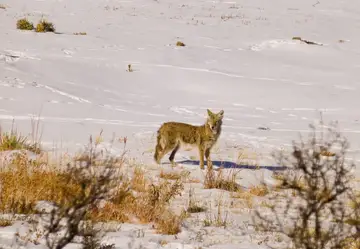

Coyote Not stated
Gray wolf Not stated
NY DEC: gray wolves are much larger (females typically 50-100 lb, males 70-145 lb, 5-6 ft nose to tail, 27-33 in at the shoulder); eastern coyotes rarely exceed 50 lb and generally stand under 2 ft at the shoulder. Wolves have small rounded ears and a short blocky snout; coyotes have larger, more pointed ears (can look rounded in winter coat) and a long, narrow, pointed snout. Coyote tracks are typically 3 x 2 in, wolf tracks about 5 x 4 in. NY DEC says most wolf reports in New York were coyotes, dogs or wolf-dog hybrids.
American Black Bear or Grizzly (Brown) Bear?
American Black Bear Not stated
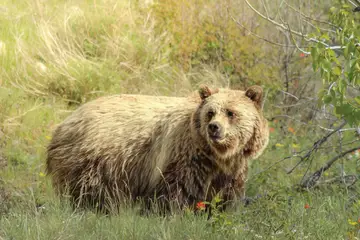
Grizzly (Brown) Bear Not stated
Grizzlies have longer front claws, humped shoulders and a more concave face. Color does not settle it: brown bears can be black to blonde.
Photos show typical adults; individuals vary. Never get close to compare.
When mammals are active in Alaska
Records of mammals in Alaska peak in June to September. They show when people record mammals, not how many there are (about month bars).
- Bears den for a long winter and spend the few active months building fat reserves. Alaska Department of Fish and Game
- Bat maternity roost exclusions should be done in late September or early October. Alaska Department of Fish and Game
If you are bitten or stung
Call 911 or Poison Help at 1-800-222-1222 right away. Poison Help connects you to your local poison center, any time of day.
Official advice from Alaska Department of Fish and Game:
- Bear country essentials: make noise, never approach bears, secure food, stay calm and do not run. Alaska Department of Fish and Game
- Avoid contact with foxes that have lost their fear of people (rabies). Alaska Department of Fish and Game
- If a person or pet has had contact with a bat, call the Alaska Section of Epidemiology immediately. Alaska Department of Fish and Game
How to report
Report invasive species to the ADF&G Invasive Species Hotline 1-877-INVASIV (1-877-468-2748) or [email protected]. Report dangerous wildlife encounters with the ADF&G wildlife encounter form (https://www.adfg.alaska.gov/index.cfm?adfg=reportwildlifeencounter.main). Alaska Department of Fish and Game
What official sources say
Are there bears in Alaska?
Yes. ADF&G says Alaska is bear country, with all three North American bear species. Brown bears live nearly everywhere in the state. Alaska Department of Fish and Game
“Brown bears, also called grizzly bears, are found nearly everywhere in Alaska. Black bears inhabit most of Alaska’s forests. Polar bears frequent the sea ice and tundra of extreme northern and western Alaska.”
About this list
The species list comes from Mammals of Alaska: Checklist of the mammals of Alaska (University of Alaska Museum of the North) (University of Alaska Museum of the North, University of Alaska Fairbanks, undated web page; retrieved 2026-11-03). 115 more entries come from other official sources named on each card.
Venom labels come only from official sources and link to them; "Not stated" never means harmless. How labels work.
"Nonnative" and "Invasive" follow the wording of the source list. See invasive species in Alaska.
Sources
- Our Agency: Mission. Alaska Department of Fish and Game. undated page; checked November 3, 2026.
- Mammals of Alaska: Checklist of the mammals of Alaska (page). University of Alaska Museum of the North, University of Alaska Fairbanks. undated page; checked November 3, 2026.
Quoted passages (1)
“This checklist includes all 116 mammal species known to presently occur in Alaska.”
- Mammals of Alaska (checklist table shown in the page iframe). University of Alaska Museum of the North, University of Alaska Fairbanks. undated page; checked November 3, 2026.
- Living With Beavers. Alaska Department of Fish and Game. undated page; checked November 3, 2026.
Quoted passages (1)
“Beavers can spread disease, for example, giardia in drinking water.”
- Invasive Species: Norway Rat (Impacts). Alaska Department of Fish and Game. undated page; checked November 3, 2026.
Quoted passages (1)
“Aside from the predation pressure of rats on Alaskan wildlife, they also carry parasites, pathogens and diseases that can be harmful to other species as well as humans.”
- Living With Wolves. Alaska Department of Fish and Game. undated page; checked November 3, 2026.
Quoted passages (1)
“Wolves rarely act aggressively toward people, but there have been instances in Alaska and Canada where wolves have attacked people.”
- Wildlife Diseases and Parasites in Alaska: Rabies. Alaska Department of Fish and Game. undated page; checked November 3, 2026.
Quoted passages (2)
“In Alaska, rabies occurs most often in arctic fox and red fox from the North coast, West coast and Alaska Peninsula.”
“Rabid foxes often lose natural fear of humans. Avoid contact.”
- Safety in Bear Country. Alaska Department of Fish and Game. undated page; checked November 3, 2026.
Quoted passages (4)
“Bears are curious, intelligent and tend to avoid or ignore people, but can be dangerous.”
“Stay calm during a bear encounter. Ready your deterrent. Stand your ground, group up with others and alert the bear by talking calmly. Don't run.”
“Bears have only a few months to build up fat reserves for a long winter in dens and are always looking for something to eat.”
“Brown bears, also called grizzly bears, are found nearly everywhere in Alaska. Black bears inhabit most of Alaska’s forests. Polar bears frequent the sea ice and tundra of extreme northern and western Alaska.”
- Living with Wood Bison. Alaska Department of Fish and Game. undated page; checked November 3, 2026.
Quoted passages (1)
“There is a chance, however, that one could be startled and put a person in danger, so ADF&G is working with village residents to minimize that risk.”
- Living With Muskoxen. Alaska Department of Fish and Game. undated page; checked November 3, 2026.
Quoted passages (1)
“Muskoxen may appear very tolerant. However, they are powerful animals and may react defensively if they feel threatened.”
- Living With Moose. Alaska Department of Fish and Game. undated page; checked November 3, 2026.
Quoted passages (1)
“While not normally aggressive, moose can become dangerous if provoked, so it is important to know how to respond if you encounter an aggressive moose.”
- Living With Bats: Rabies. Alaska Department of Fish and Game. undated page; checked November 3, 2026.
Quoted passages (1)
“Please call the Alaska Section of Epidemiology at the Alaska Department of Health and Social Services (ADHSS) immediately if:”
- Living With Bats. Alaska Department of Fish and Game. undated page; checked November 3, 2026.
Quoted passages (1)
“Excluding maternity roosts in Alaska should be done in late September or early October”
- How to Report an Invasive Species you saw in Alaska. Alaska Department of Fish and Game. undated page; checked November 3, 2026.
Quoted passages (1)
“Call the Invasive Species Hotline: 1-877-INVASIV (1-877-468-2748)”
- GBIF.org occurrence records, human observations licensed CC0 1.0 or CC BY 4.0 only, accessed November 3, 2026. The datasets behind these counts are listed on our Sources page.