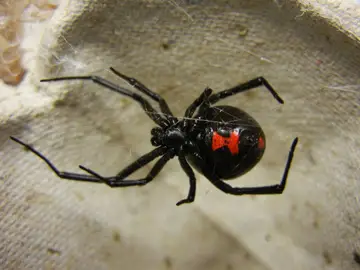
This page lists 1 spider: all from Cooperative Extension Service, South Dakota State University's Venomous Spiders in South Dakota, SDSU Cooperative Extension.
1 is venomous by official accounts.
Not every species: no complete official list of South Dakota spiders exists, so this page covers the ones state and Extension sources name. How lists are built.
Which spiders can hurt you
Official sources single out these spiders in South Dakota, in their own words:
Official sources say the brown recluse spider is not native to South Dakota or not found there. It is not counted on this page; each entry quotes the source.
Venom: “…two dangerous venomous species of spider-the black widow … are of major medical consequence in the United States.” (Cooperative Extension Service, South Dakota State University)
Habitat: Black widow spiders are found in the outdoors in undergrowth, under stones, in mouths of rodent bur- rows, hollow trees or in protected hollows of all kinds. (Cooperative Extension Service, South Dakota State University)
When spiders are active in South Dakota
Records of spiders in South Dakota peak in July to September. They show when people record spiders, not how many there are (about month bars).
JanFebMarAprMayJunJulAugSepOctNovDec
166 records of spiders in South Dakota by month (GBIF, CC0 and CC BY records).
If you are bitten or stung
Call 911 or Poison Help at 1-800-222-1222 right away. Poison Help connects you to your local poison center, any time of day.
How to report
SDGFP: [email protected] (hunting/fishing and wildlife questions); report a suspected aquatic invasive species with a photo to [email protected]; report a tick photo to SD DOH via the South Dakota Tick Survey; report wildlife violations at 1.888.OVERBAG. South Dakota Game, Fish and Parks
Venom labels come only from official sources and link to them; "Not stated" never means harmless. How labels work.
Sources
Contact Us. South Dakota Game, Fish and Parks. undated page; checked November 3, 2026.
Venomous Spiders in South Dakota (FS 421). Cooperative Extension Service, South Dakota State University (Berndt and Kantack). archived copy, captured July 9, 2024; checked November 3, 2026.Quoted passages (3)
“…two dangerous venomous species of spider-the black widow … are of major medical consequence in the United States.”
“…the brown recluse spider has not been reported in South Dakota.”
“…the more familiar black widow spider frequently is found in this state”
Venomous Spiders at Work. CDC / NIOSH. archived copy, captured October 6, 2026; checked November 3, 2026.Quoted passages (1)
“Black widows and brown recluses are two types of venomous spiders in the United States.”