States Wildlife

South Dakota Snakes: Identification Guide With Pictures

Last checked November 3, 2026 against official sources.

On this page
  1. Venomous snakes
  2. The other 16 snakes
  3. Lookalikes
  4. When they are active
  5. If you are bitten or stung
  6. How to report
  7. What official sources say
  8. About this list
  9. Sources

This page lists 17 snakes: all from South Dakota Game, Fish and Parks's Amphibians and Reptiles checklist. 1 is venomous by official accounts: Prairie Rattlesnake.

Venomous snakes in South Dakota

Official sources label these snakes venomous in South Dakota. Venomous snakes in South Dakota has more on each one.

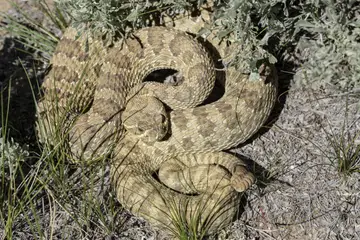
Prairie Rattlesnake
Photo: Cecelia Alexander · CC0 1.0 · iNaturalist

Prairie Rattlesnake

Crotalus viridis

Venomous per National Park Service

Danger to people
“Prairie Rattlesnakes are the only venomous snakes in South Dakota.” National Park Service
Size
Usually about 3 to 4 feet; Montana gives 15 to 60 inches and NPS says up to 5 feet. Arizona gives a maximum of 28 to 64 inches (excluding rattle) depending on subspecies; in Colorado it is rarely over 39 inches.
How to recognize it
  • Rattle (or a button in newborns) at the tail tip
  • Head much broader than the neck, many small scales on top of the head, heat-sensing pit between eye and nostril
  • Vertical (cat-like) pupils
46 records by month.
What the sources say

Venom: “Prairie Rattlesnakes are the only venomous snakes in South Dakota. … South Dakota’s only species of venomous snake.” (National Park Service)

Habitat: Although these snakes enjoy open grasslands and prairies, they may also seek out forested environments. (National Park Service)

Full Prairie Rattlesnake guide

The other 16 snakes

From A to Z. Some harmless snakes mimic venomous ones: leave every snake alone.

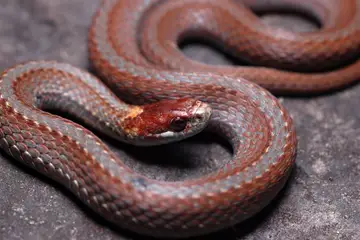
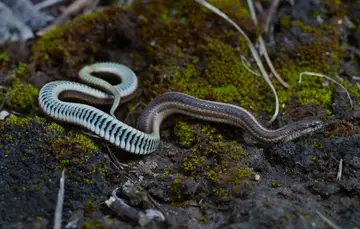
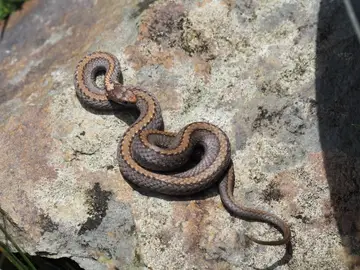
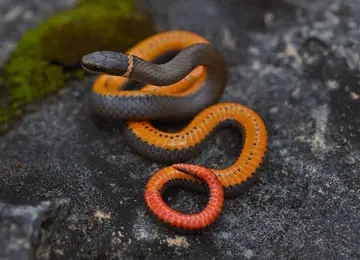
Black Hills Redbelly Snake
Photo: Rstanton13 · CC BY-SA 4.0 · Wikimedia Commons · resized

Black Hills Redbelly Snake

Storeria occipitomaculata pahasapae

Non-venomous per National Park Service

Conservation
SD Natural Heritage Program Rare Animals list: state rank S3 (very rare and local or vulnerable; reviewed 06/27/2017)
What the sources say

Venom: “Prairie Rattlesnakes are the only venomous snakes in South Dakota.” (National Park Service)

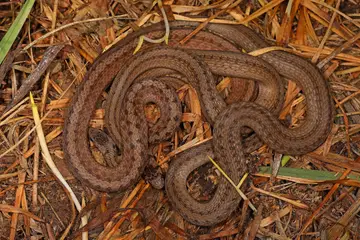
Brown Snake
Photo: Judy Gallagher · CC BY 2.0 · Wikimedia Commons

Brown Snake

Storeria dekayi

Non-venomous per National Park Service

Size
Most adults 9 to 13 inches; occasionally up to about 20 inches.
How to recognize it
  • Dark top of head; a dark spot under each eye and on each side of the neck
  • Keeled (ridged) scales in 17 rows; round pupil
  • Tennessee: a small dark downward streak on the side of the head
Conservation
SD Natural Heritage Program Rare Animals list: state rank SX (believed extinct in the state, historical records only; reviewed 02/10/2022)
What the sources say

Venom: “Prairie Rattlesnakes are the only venomous snakes in South Dakota.” (National Park Service)

Full Brown Snake guide

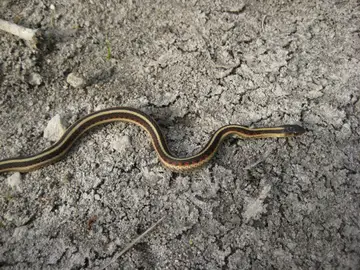
Common Gartersnake
Photo: kclarksdnhmorg · CC BY 4.0 · iNaturalist

Common Gartersnake

Thamnophis sirtalis

Non-venomous per National Park Service

What the sources say

Venom: “Prairie Rattlesnakes are the only venomous snakes in South Dakota.” (National Park Service)

Eastern Hognose Snake
Photo: Joshua Liverman · CC BY 4.0 · iNaturalist

Eastern Hognose Snake

Heterodon platirhinos

Non-venomous per National Park Service

What the sources say

Venom: “Prairie Rattlesnakes are the only venomous snakes in South Dakota.” (National Park Service)

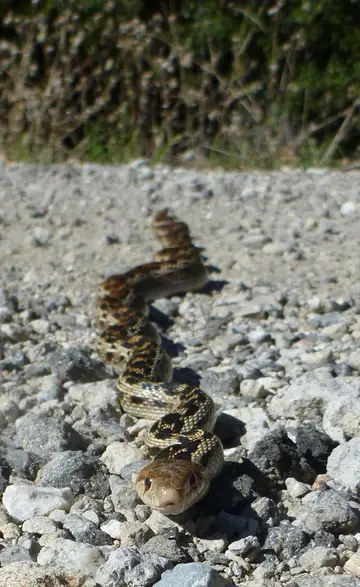
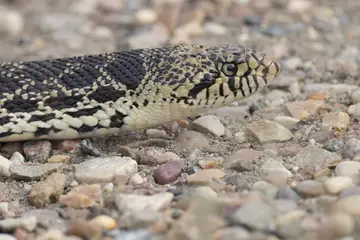
Gopher Snake
Photo: National Park Service from USA · Public domain · Wikimedia Commons

Gopher Snake

Pituophis catenifer

Non-venomous per National Park Service

Size
Usually 3 to 6 feet; Arizona's longest snake, up to 92 inches (AZGFD); Missouri record 105 inches
How to recognize it
  • No rattle: tail tapers to a point
  • Round pupils; keeled back scales (separates it from the similar glossy snake)
  • Head somewhat triangular, more so when agitated (so head shape alone is not a safe test)
53 records by month.
What the sources say

Venom: “Prairie Rattlesnakes are the only venomous snakes in South Dakota.” (National Park Service)

Full Gopher Snake guide

Lined Snake
Photo: Peter Paplanus from St. Louis, Missouri · CC BY 2.0 · Wikimedia Commons

Lined Snake

Tropidoclonion lineatum

Non-venomous per National Park Service

What the sources say

Venom: “Prairie Rattlesnakes are the only venomous snakes in South Dakota.” (National Park Service)

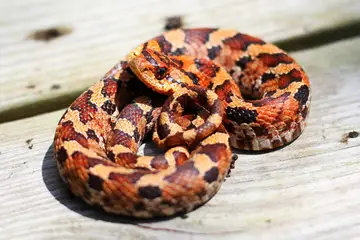
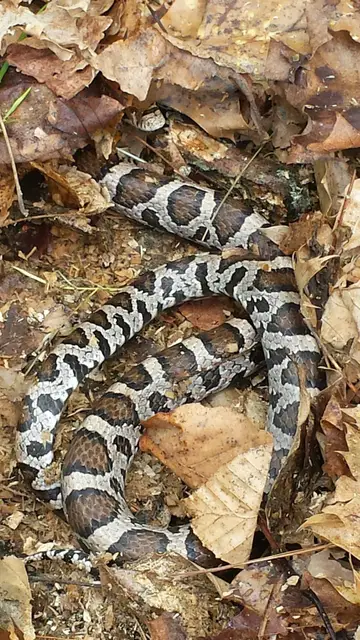
Milksnake
Photo: Tom Norton · CC BY 4.0 · iNaturalist

Milksnake

Lampropeltis triangulum

Non-venomous per National Park Service

Size
Eastern milksnake 24 to 52 inches (Alabama); TN gives 24 to 36 inches for eastern and 21 to 28 for red milksnake.
How to recognize it
  • Eastern milksnake: black-and-white checkerboard belly (Ohio). Western milksnake in Louisiana: underside dull white with scattered black marks.
  • Eastern milksnake: a light Y- or V-shaped mark is usually present on the nape
  • Smooth, shiny scales and round pupils
What the sources say

Venom: “Prairie Rattlesnakes are the only venomous snakes in South Dakota.” (National Park Service)

Full Milksnake guide

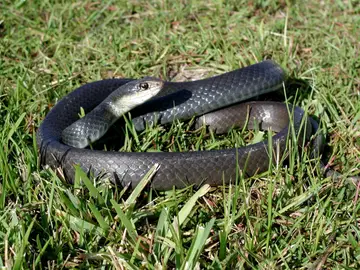
North American Racer
Photo: Everglades NPS from Homestead, Florida, United States · Public domain · Wikimedia Commons

North American Racer

Coluber constrictor

Non-venomous per National Park Service

Size
Most adults about 3 to 5 ft. Sources range from 20 to 56 inches (Florida Museum) to 34 to 77 inches (New Jersey); Alabama says some exceed 6 ft.
How to recognize it
  • Smooth scales
  • Long and slender with large eyes
  • White chin
What the sources say

Venom: “Prairie Rattlesnakes are the only venomous snakes in South Dakota.” (National Park Service)

Full North American Racer guide

Northern Redbelly Snake
Photo: Clay Gibbons · CC BY 4.0 · iNaturalist

Northern Redbelly Snake

Storeria occipitomaculata occipitomaculata

Non-venomous per National Park Service

Conservation
SD Natural Heritage Program Rare Animals list: state rank S3 (very rare and local or vulnerable; reviewed 02/10/2022)
What the sources say

Venom: “Prairie Rattlesnakes are the only venomous snakes in South Dakota.” (National Park Service)

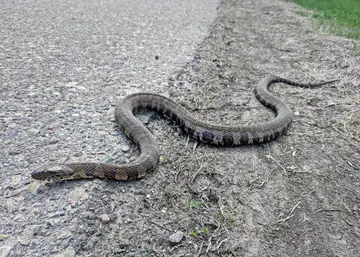
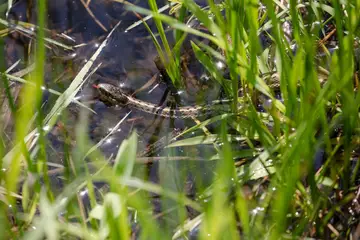
Northern Water Snake
Photo: U.S. Fish and Wildlife Service - Midwest Region · Public domain · Wikimedia Commons

Northern Water Snake

Nerodia sipedon

Non-venomous per National Park Service

Size
Adults 22 to 42 inches long, occasionally to 59 inches (Missouri). Pennsylvania gives 24 to over 50 inches; females are usually bigger than males.
How to recognize it
  • Dark crossbands on the front part of the body break up into rows of blotches from the middle of the body to the tail.
  • Belly white, yellow or orange, usually with dark half-moon-shaped spots.
  • Keeled (ridged) scales, so it feels rough; round pupils like other nonvenomous snakes in Missouri.
Conservation
SD Natural Heritage Program Rare Animals list: state rank SU (unrankable; reviewed 02/10/2022)
What the sources say

Venom: “Prairie Rattlesnakes are the only venomous snakes in South Dakota.” (National Park Service)

Full Northern Water Snake guide

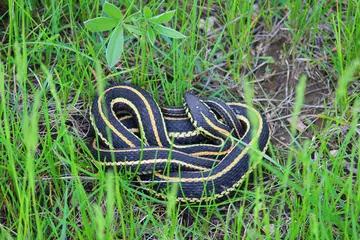
Plains Gartersnake
Photo: Photo Credit: Krista Lundgren/USFWS USFWS Mountain-Prairie · Public domain · Wikimedia Commons

Plains Gartersnake

Thamnophis radix

Non-venomous per National Park Service

What the sources say

Venom: “Prairie Rattlesnakes are the only venomous snakes in South Dakota.” (National Park Service)

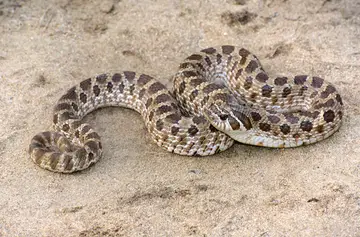
Plains Hognose Snake
Photo: Dean Hester · CC BY 4.0 · iNaturalist

Plains Hognose Snake

Heterodon nasicus

Non-venomous per National Park Service

What the sources say

Venom: “Prairie Rattlesnakes are the only venomous snakes in South Dakota.” (National Park Service)

Ringneck Snake
Photo: Peter Paplanus from St. Louis, Missouri · CC BY 2.0 · Wikimedia Commons

Ringneck Snake

Diadophis punctatus

Non-venomous per National Park Service

Size
Usually 8 to 15 inches long; Alabama reports up to about 18 inches, rarely 24. AZGFD gives a maximum of 34 inches for Arizona animals.
How to recognize it
  • A yellow, cream or orange ring around the neck; it may be incomplete, and some Lower Florida Keys and western Arizona snakes lack it.
  • Bright yellow to orange or red belly, often with a row of black half-moon spots; the underside of the tail is often red.
  • Smooth, shiny scales and a small head only slightly wider than the neck.
Conservation
SD Natural Heritage Program Rare Animals list: state rank S3 (very rare and local or vulnerable; reviewed 10/14/2020)
What the sources say

Venom: “Prairie Rattlesnakes are the only venomous snakes in South Dakota.” (National Park Service)

Full Ringneck Snake guide

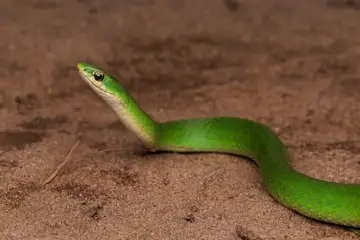
Smooth Green Snake
Photo: User:Rstanton13 · CC BY-SA 4.0 · Wikimedia Commons · resized

Smooth Green Snake

Opheodrys vernalis

Non-venomous per National Park Service

Conservation
SD Natural Heritage Program Rare Animals list: state rank S3 (very rare and local or vulnerable; reviewed 02/10/2022)
What the sources say

Venom: “Prairie Rattlesnakes are the only venomous snakes in South Dakota.” (National Park Service)

Terrestrial Gartersnake
Photo: Yellowstone National Park · Public domain · Wikimedia Commons

Terrestrial Gartersnake

Thamnophis elegans

Non-venomous per National Park Service

What the sources say

Venom: “Prairie Rattlesnakes are the only venomous snakes in South Dakota.” (National Park Service)

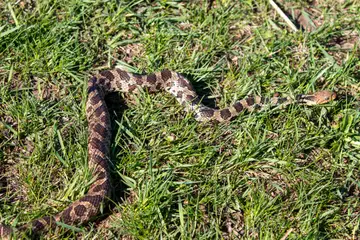
Western Foxsnake
Photo: Jonathan Bayer · CC BY 4.0 · iNaturalist

Western Foxsnake

Pantherophis ramspotti

Non-venomous per National Park Service

What the sources say

Venom: “Prairie Rattlesnakes are the only venomous snakes in South Dakota.” (National Park Service)

Snakes people confuse

Black Racer or Northern water snake?

Black Racer
Photo: Everglades NPS from Homestead, Florida, United States · Public domain · Wikimedia Commons

Black Racer Non-venomous

Northern water snake
Photo: U.S. Fish and Wildlife Service - Midwest Region · Public domain · Wikimedia Commons

Northern water snake Non-venomous

NH lists it as commonly confused; it gives no separating feature.

Ringneck snake or Brown snake (juvenile)?

Ringneck snake
Photo: Peter Paplanus from St. Louis, Missouri · CC BY 2.0 · Wikimedia Commons

Ringneck snake Non-venomous

Brown snake (juvenile)
Photo: Judy Gallagher · CC BY 2.0 · Wikimedia Commons

Brown snake (juvenile) Non-venomous

Young brown snakes also have a light collar, but their scales are keeled (ridged); the ringneck's scales are smooth.

Brown Snake (Dekay's Brownsnake) or Ring-necked Snake?

Brown Snake (Dekay's Brownsnake)
Photo: Judy Gallagher · CC BY 2.0 · Wikimedia Commons

Brown Snake (Dekay's Brownsnake) Non-venomous

Ring-necked Snake
Photo: Peter Paplanus from St. Louis, Missouri · CC BY 2.0 · Wikimedia Commons

Ring-necked Snake Non-venomous

Ring-necked snakes have smooth scales and yellow bellies with paired dots down the center.

Prairie Rattlesnake or Bullsnake (gopher snake)?

Prairie Rattlesnake
Photo: Cecelia Alexander · CC0 1.0 · iNaturalist

Prairie Rattlesnake Venomous

Bullsnake (gopher snake)
Photo: Cephas · CC BY-SA 4.0 · Wikimedia Commons · resized

Bullsnake (gopher snake) Non-venomous

The bullsnake has no rattle, an oval or rounded head and large round pupils; the prairie rattlesnake has a triangular head, slit pupils and a rattle. Bullsnakes are often mistaken for rattlesnakes: when threatened they may coil, flatten the head, hiss and vibrate the tail in dry leaves to sound like a rattle, so do not judge by behavior or by head shape alone.

Prairie Rattlesnake or Western hognose snake?

Prairie Rattlesnake
Photo: Cecelia Alexander · CC0 1.0 · iNaturalist

Prairie Rattlesnake Venomous

Western hognose snake
Photo: Dean Hester · CC BY 4.0 · iNaturalist

Western hognose snake Non-venomous

The Montana Field Guide names the western hog-nosed snake as a lookalike and says that in Montana no other snake has rattles: a hognose has no rattle.

Photos show typical adults; individuals vary. Never get close to compare.

When snakes are active in South Dakota

Records of snakes in South Dakota peak in May to July. They show when people record snakes, not how many there are (about month bars).

269 records of snakes in South Dakota by month (GBIF, CC0 and CC BY records).

If you are bitten or stung

Call 911 or Poison Help at 1-800-222-1222 right away. Poison Help connects you to your local poison center, any time of day.

Official advice from National Park Service:

How to report

SDGFP: [email protected] (hunting/fishing and wildlife questions); report a suspected aquatic invasive species with a photo to [email protected]; report a tick photo to SD DOH via the South Dakota Tick Survey; report wildlife violations at 1.888.OVERBAG. South Dakota Game, Fish and Parks

What official sources say

Are there venomous snakes in South Dakota?

Yes. NPS says prairie rattlesnakes are the only venomous snakes in South Dakota. National Park Service

“Prairie Rattlesnakes are the only venomous snakes in South Dakota.”

Are there copperheads or water moccasins in South Dakota?

Not on the official list. Neither is on the SDGFP amphibian and reptile checklist, and NPS says the prairie rattlesnake is the only venomous snake in the state. National Park Service

“Prairie Rattlesnakes are the only venomous snakes in South Dakota.”

About this list

The species list comes from Amphibians and Reptiles checklist (SDGFP Wildlife Action Plan website) (South Dakota Game, Fish and Parks (Wildlife Action Plan website checklists), undated PDF; server Last-Modified 2015-06-15).

Venom labels come only from official sources and link to them; "Not stated" never means harmless. How labels work.

Want a paper copy? Print the South Dakota snakes ID chart.

Sources

  1. Contact Us. South Dakota Game, Fish and Parks. undated page; checked November 3, 2026.
  2. Amphibians and Reptiles checklist. South Dakota Game, Fish and Parks (Wildlife Action Plan website checklists). undated page; checked November 3, 2026.
  3. Prairie Rattlesnake (Crotalus virdidis) - Jewel Cave National Monument. National Park Service. updated January 9, 2024; checked November 3, 2026.
    Quoted passages (2)
    “Prairie Rattlesnakes are the only venomous snakes in South Dakota.”
    “Prairie Rattlesnakes are the only venomous snakes in South Dakota. … South Dakota’s only species of venomous snake.”
  4. Prairie Rattlesnakes in the Badlands. National Park Service (Badlands National Park). updated April 16, 2021; checked November 3, 2026.
    Quoted passages (5)
    “If you are bitten by a rattlesnake, please call 911 immediately.”
    “One of the best ways to prevent a bite is to give these animals plenty of space and not try to handle them.”
    “Snakes typically come out of hibernaculums and return to their summer activity in April or May when the weather is warm enough.”
    “Female rattlesnakes give birth to 8-17 baby snakes in the late summer. … they are born venomous.”
    “In the winter, ground temperatures are too cool for snakes to be active.”
  5. SD Least Wanted: Laws and Regulations (aquatic invasive species). South Dakota Game, Fish and Parks (sdleastwanted.sd.gov). undated page; checked November 3, 2026.
    Quoted passages (1)
    “If you catch what you believe is an invasive species, please take a picture of it and send the picture to [email protected].”
  6. GBIF.org occurrence records, human observations licensed CC0 1.0 or CC BY 4.0 only, accessed November 3, 2026. The datasets behind these counts are listed on our Sources page.