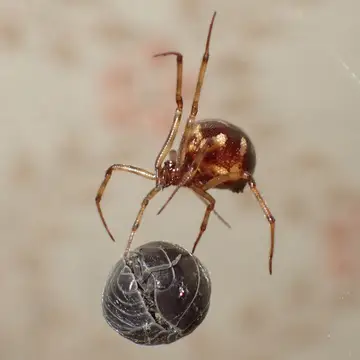
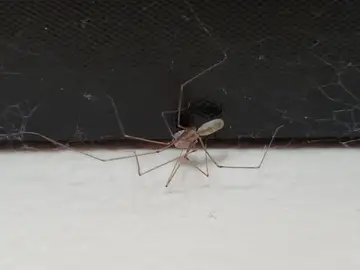
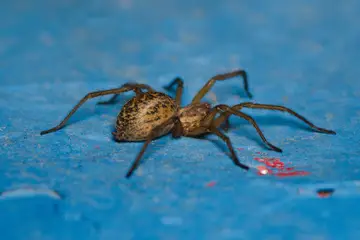
This page lists 8 spiders.
1 is venomous by official accounts, and 2 mildly venomous. 2 are nonnative.
University of Idaho Extension says: “Though all other spiders have venom, the percentage that are actually dangerous to humans is very small.” Official sources name Western Black Widow as dangerous to people; it is marked venomous, with the source, and listed first. The other 5 spiders are marked “Not named as dangerous”. That does not make them harmless: do not handle spiders.
Not every species: no complete official list of Idaho spiders exists, so this page covers the ones state and Extension sources name. How lists are built.
Which spiders can hurt you
Official sources single out these spiders in Idaho, in their own words:
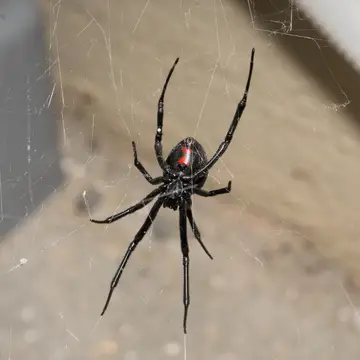
Venomous. “…there is only one arachnid in Idaho that is considered medically important to humans (i.e., possesses dangerous venom), the black widow spider” University of Idaho Extension
All 8 spiders
Venomous species first, then A to Z. Do not handle them.
“…there is only one arachnid in Idaho that is considered medically important to humans (i.e., possesses dangerous venom), the black widow spider” University of Idaho Extension
“Though all other spiders have venom, the percentage that are actually dangerous to humans is very small.” University of Idaho Extension. University of Idaho Extension says this of the whole group; it does not name this species as dangerous to people. Do not handle it.
JFMAMJJASOND
73 records by month.
No confirmed photo of Cat-faced spider (monkeyface spider)
Cat-faced spider (monkeyface spider)
Araneus gemmoides
Not named as dangerous
Venom
“Though all other spiders have venom, the percentage that are actually dangerous to humans is very small.” University of Idaho Extension. University of Idaho Extension says this of the whole group; it does not name this species as dangerous to people. Do not handle it.
“Though all other spiders have venom, the percentage that are actually dangerous to humans is very small.” University of Idaho Extension. University of Idaho Extension says this of the whole group; it does not name this species as dangerous to people. Do not handle it.
“Though all other spiders have venom, the percentage that are actually dangerous to humans is very small.” University of Idaho Extension. University of Idaho Extension says this of the whole group; it does not name this species as dangerous to people. Do not handle it.
“Though all other spiders have venom, the percentage that are actually dangerous to humans is very small.” University of Idaho Extension. University of Idaho Extension says this of the whole group; it does not name this species as dangerous to people. Do not handle it.
Size
Body length: females 3/8 to 5/8 in (9.5 to 16.5 mm); males 9/32 to 9/16 in (7 to 13.5 mm). About 1 to 1 3/4 in including legs.
How to recognize it
No dark bands on the legs
Eight eyes in two rows of four
Cannot be identified by color alone; a sure ID needs a microscope and an expert
Invasive species: Idaho Invasive Species Hotline 1-877-336-8676 (ISDA). Wildlife crimes: Citizens Against Poaching 1-800-632-5999 (IDFG). Bear sightings and conflicts: report to the state wildlife agency (IDFG regional offices). Idaho State Department of Agriculture
What official sources say
Are there black widow spiders in Idaho?
Yes. UI Extension: the western black widow is the only native Idaho spider dangerous to humans; it occurs statewide and is most common in the southern third. University of Idaho Extension
“Latrodectus occur statewide but are most common in the southern third.”
Are there brown recluse spiders in Idaho?
No. UI Extension: the brown recluse is not native to Idaho and there are no verified cases from Idaho; one found would likely have been carried in from its native range. University of Idaho Extension
“No verified cases of brown recluse spiders are known from Idaho.”
“In Idaho, only one native spider is dangerous to humans, the western black widow (Latrodectus hesperus)”
“…there is only one arachnid in Idaho that is considered medically important to humans (i.e., possesses dangerous venom), the black widow spider”
“Though all other spiders have venom, the percentage that are actually dangerous to humans is very small.”
“…they are thought to be mildly venomous”
“If you think you have or someone else has been bitten by a black widow, seek IMMEDIATE medical attention.”
“People usually notice hobo spiders as lone specimens running across ground-level floors inside homes from mid-July through the first killing fall frost”
“Latrodectus occur statewide but are most common in the southern third.”
“No verified cases of brown recluse spiders are known from Idaho.”
Invasive Species / Pests / Invertebrates. Idaho State Department of Agriculture (Invasive Species of Idaho program). undated page; checked November 3, 2026.Quoted passages (1)
“Idaho Invasive Species Hotline [toll-free]: 1-877-336-8676”