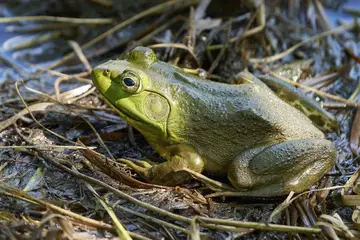
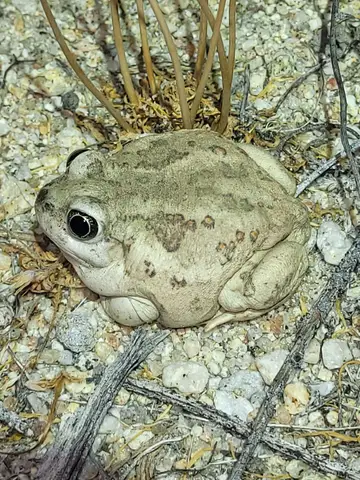
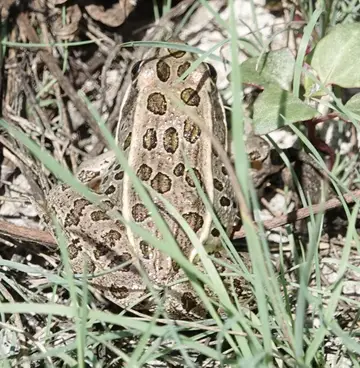
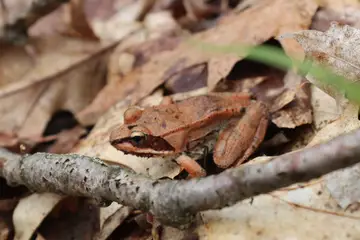
No official source we use states whether this animal is venomous. That does not mean it is harmless: do not handle it.
Size
Usually 6 to 8 inches long (NCWRC); can reach 8 inches or more and weigh over 2 pounds (CDFW). Missouri gives 3.5 to 6 inches snout to vent, occasionally to 8.75.
How to recognize it
No ridge (dorsolateral fold) down each side of the back
Large round eardrum: about twice the eye in males, about eye-sized in females
Fully webbed hind feet, longest toe extends past the webbing
Conservation
No IDAPA classification shown; State Conservation Rank SNA
No confirmed photo of Columbia spotted frog (Alaska)
Columbia spotted frog (Alaska) Not stated
ADF&G: slightly bumpy skin covered with irregular black spots and salmon-red undersides of the legs and belly; in Alaska it is mostly confined to Southeast river corridors. The wood frog has a dark eye mask and a light lip line and a uniformly cream underside.
Photos show typical adults; individuals vary. Never get close to compare.
When frogs and toads are active in Idaho
Records of frogs and toads in Idaho peak in May to July. They show when people record frogs and toads, not how many there are (about month bars).
JanFebMarAprMayJunJulAugSepOctNovDec
256 records of frogs and toads in Idaho by month (GBIF, CC0 and CC BY records).
How to report
Invasive species: Idaho Invasive Species Hotline 1-877-336-8676 (ISDA). Wildlife crimes: Citizens Against Poaching 1-800-632-5999 (IDFG). Bear sightings and conflicts: report to the state wildlife agency (IDFG regional offices). Idaho State Department of Agriculture
Invasive Species / Pests / Invertebrates. Idaho State Department of Agriculture (Invasive Species of Idaho program). undated page; checked November 3, 2026.Quoted passages (1)
“Idaho Invasive Species Hotline [toll-free]: 1-877-336-8676”