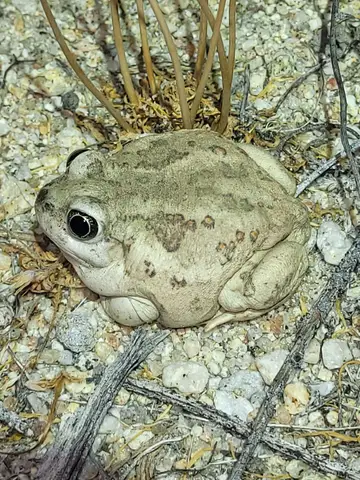
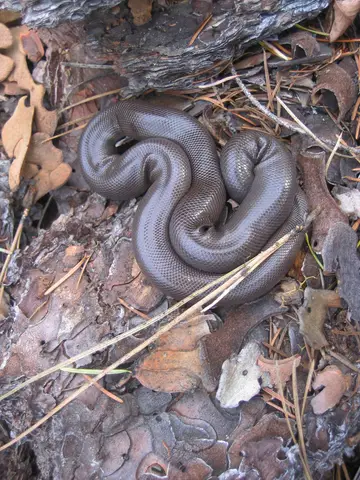
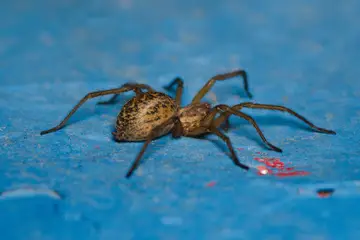
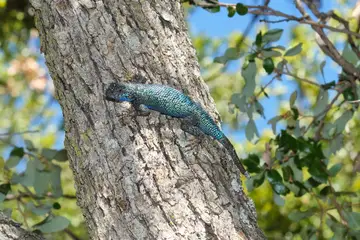
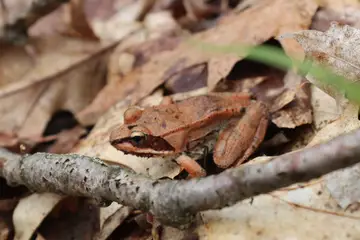
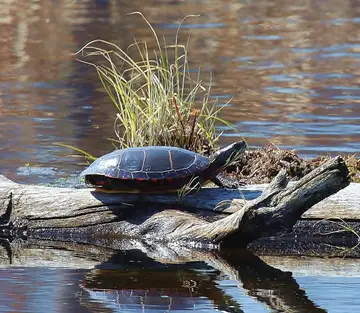
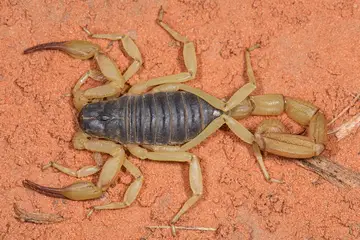
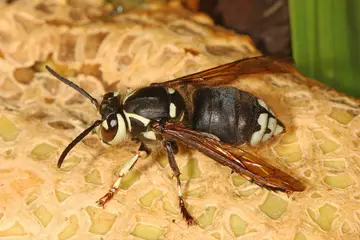
Idaho has 2 venomous snakes named by official sources: Western Rattlesnake and Prairie Rattlesnake, as labelled by Idaho Department of Fish and Game. Digital Atlas of Idaho, Idaho State University also lists 1 snake as mildly venomous or not dangerous to people. This guide covers 9 animal groups from Idaho Department of Fish and Game lists and other official sources, with photos, venomous status and when each group is active.
Identification help has limits: a photo cannot confirm that an animal is safe. Watch from a distance and never handle a wild animal.
These are the animals official sources describe as venomous or as a risk to people in Idaho, across 5 groups. The reason is given in the source's own terms.
Disease: “In Idaho, public health officials are most concerned about West Nile virus from mosquitoes and Rocky Mountain Spotted Fever, tick-borne relapsing fever, and tularemia from ticks.”
Approaching, disturbing or feeding bears is extremely dangerous (USFWS message published by IDFG): “Approaching, disturbing, or feeding bears, intentionally or accidentally, is extremely dangerous to both humans and bears.”
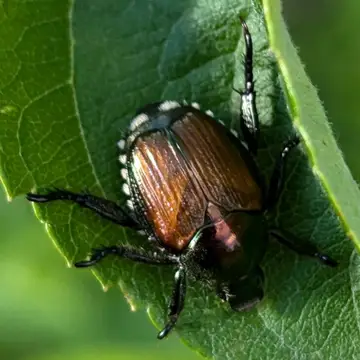
9 nonnative animals are named on Idaho's official lists (Idaho State Department of Agriculture). The USGS Nonindigenous Aquatic Species database records 1 nonnative animal in our groups with an established population in Idaho.
Darker cells are the months with more open-licence observation records of each group in Idaho (GBIF). They show when people see and record these animals, not how many there are. The current month, this month, is highlighted.
Report: Invasive species: Idaho Invasive Species Hotline 1-877-336-8676 (ISDA). Wildlife crimes: Citizens Against Poaching 1-800-632-5999 (IDFG). Bear sightings and conflicts: report to the state wildlife agency (IDFG regional offices). Idaho State Department of Agriculture
If you hear a rattlesnake you are too close; move away from the sound. Never try to grab a rattlesnake or any snake. Idaho Department of Fish and Game
Rattlesnake country: wear tall leather boots and long loose pants; do not lift anything a snake could be under with your hands. Idaho Department of Fish and Game
Mountain lion: stand your ground, look large, do not turn or run; back away slowly; if attacked, fight back. Idaho Department of Fish and Game
Questions people ask about Idaho wildlife
Are there rattlesnakes in Idaho?
Yes. IDFG: rattlesnakes live everywhere in Idaho except the far north and higher mountain elevations; two species live in Idaho. Idaho Department of Fish and Game
What venomous snakes are in Idaho?
IDFG names two rattlesnakes and says they are the only dangerous snakes in Idaho. The Digital Atlas of Idaho says night snakes are mildly venomous but not dangerous to humans. Idaho Department of Fish and Game
What snake is mistaken for a rattlesnake in Idaho?
IDFG says gopher snakes are sometimes mistaken for rattlesnakes because of their pattern and defensive displays. Idaho Department of Fish and Game
Are there black widow spiders in Idaho?
Yes. UI Extension: the western black widow is the only native Idaho spider dangerous to humans; it occurs statewide and is most common in the southern third. University of Idaho Extension
Are there brown recluse spiders in Idaho?
No. UI Extension: the brown recluse is not native to Idaho and there are no verified cases from Idaho; one found would likely have been carried in from its native range. University of Idaho Extension
Are hobo spiders dangerous?
No. UI Extension says the hobo spider is not dangerous; claims of ulcerating wounds have been debunked. University of Idaho Extension
Are there scorpions in Idaho?
Yes. Northern scorpion, yellow devil scorpion and black hairy scorpion; none is medically important, per UI Extension. University of Idaho Extension
Yes. Grizzlies are federally protected in Idaho; people in southeastern Idaho and the Idaho Panhandle should be prepared to encounter one. Idaho Department of Fish and Game
No. UI Extension: northern giant hornets ("murder hornets") have not been reported in Idaho; cicada killer wasps are often mistaken for them. University of Idaho Extension
Is there lyme disease in Idaho?
Rarely. Idaho DHW: Lyme cases are rare and mostly in people who traveled; the tick that carries Lyme disease is not known to live in Idaho. Idaho Department of Health and Welfare
Are there quagga mussels in Idaho?
Yes. ISDA confirmed quagga mussels in the Mid-Snake River in 2023; the population is contained between just upriver of Twin Falls Dam and Shoshone Falls. Idaho State Department of Agriculture
Sources
About Fish and Game. Idaho Department of Fish and Game. archived copy, captured September 23, 2026; checked November 3, 2026.
“Rattlesnakes are the only dangerous snakes in Idaho. They use venom to kill their prey.”
“Rattlesnakes are found everywhere in Idaho except in the far north and higher mountain elevations.”
“Two rattlesnakes live in Idaho.”
“If you have cell service, call 911.”
“If you hear a rattlesnake, you are too close and should move away from the sound.”
“…they are mostly nocturnal, especially during hot summer months.”
“In Idaho, the babies, call snakelets, are born between late August and early October.”
Hypsiglena torquata species account. Digital Atlas of Idaho, Idaho State University (digitalatlas.cose.isu.edu). archived copy, captured August 9, 2024; checked November 3, 2026.Quoted passages (1)
“Night Snakes are mildly venomous (although not dangerous to humans)”
“In Idaho, only one native spider is dangerous to humans, the western black widow (Latrodectus hesperus)”
“Spiders, scorpions, rattlesnakes, and wasps are all venomous.”
“Hobo spiders are not native to the United States, but western Europe”
“Latrodectus occur statewide but are most common in the southern third.”
“No verified cases of brown recluse spiders are known from Idaho.”
“…the hobo spider is NOT dangerous.”
“If you think you have or someone else has been bitten by a black widow, seek IMMEDIATE medical attention.”
“People usually notice hobo spiders as lone specimens running across ground-level floors inside homes from mid-July through the first killing fall frost”
“Systemic allergic reactions to sting venoms occur in 1%–3% of the population”
“Today it is found statewide in Idaho and ranks as our most commonly encountered stinging wasp.”
“The German yellowjacket is a European species that was first recorded in the northeastern United States during the 1970s and subsequently in Idaho during the 1980s.”
“In Idaho, public health officials are most concerned about West Nile virus from mosquitoes and Rocky Mountain Spotted Fever, tick-borne relapsing fever, and tularemia from ticks.”
“The tick that carries Lyme disease is not known to live in Idaho.”
“…particularly during dusk and dawn hours when mosquitoes are most active.”
“Approaching, disturbing, or feeding bears, intentionally or accidentally, is extremely dangerous to both humans and bears.”
“People recreating and residing in the larger areas of western Montana, southeastern Idaho, the Idaho Panhandle, and northeast Washington should be prepared to encounter a grizzly bear”
“The U.S. Fish and Wildlife Service reminds the public to remain vigilant as grizzly bears emerge from their dens this spring.”
Living with mountain lions (blog). Idaho Department of Fish and Game. archived copy, captured April 12, 2026; checked November 3, 2026.Quoted passages (2)
“…since 1990 there have been 4 recorded attacks on humans by mountain lions in Idaho, none of which were fatal.”
“Do not turn or run; rather, back away slowly while leaving the lion an escape route.”
“In Idaho, the rabies virus circulates among bats. Only a small percentage of bats in the wild have rabies (about 1 in 100).”
Snake River Quagga. Idaho State Department of Agriculture (Invasive Species of Idaho program). undated page; checked November 3, 2026.Quoted passages (2)
“In September 2023, ISDA confirmed quagga mussel veligers in the Mid-Snake River, triggering Idaho’s first rapid response plan.”
“In September 2023, ISDA confirmed quagga mussel veligers in the Mid-Snake River”
Idaho Japanese Beetle Project. Idaho State Department of Agriculture (Invasive Species of Idaho program). undated page; checked November 3, 2026.Quoted passages (1)
“During 2012 the first ever detected JB infestation in Idaho was uncovered when traps in downtown Boise collected 56 JB.”
Invasive Species / Pests / Invertebrates. Idaho State Department of Agriculture (Invasive Species of Idaho program). undated page; checked November 3, 2026.Quoted passages (1)
“Idaho Invasive Species Hotline [toll-free]: 1-877-336-8676”
Poison Help. Health Resources and Services Administration (HRSA), U.S. Department of Health and Human Services. archived copy, captured October 2, 2026; checked November 3, 2026.Quoted passages (1)
“Need help now? Call the Poison Help Line at: 1-800-222-1222”
Crotalus viridis species account. Digital Atlas of Idaho, Idaho State University (digitalatlas.cose.isu.edu). archived copy, captured April 22, 2025; checked November 3, 2026.Quoted passages (1)
“Active from about April to November over most of range, and from late March to October in southern British Columbia and northern Idaho.”