States Wildlife

Utah Spiders: Identification, Pictures & Which Bite

Last checked November 3, 2026 against official sources.

On this page
  1. Which spiders can hurt you
  2. Ticks (arachnids, not spiders)
  3. All 5 spiders
  4. When they are active
  5. If you are bitten or stung
  6. What official sources say
  7. About this list
  8. Sources

This page lists 5 spiders. 1 is venomous by official accounts, and 1 mildly venomous. 1 is nonnative.

Not every species: no complete official list of Utah spiders exists, so this page covers the ones state and Extension sources name. How lists are built.

Which spiders can hurt you

Official sources single out these spiders in Utah, in their own words:

Ticks (arachnids, not spiders)

Official sources single out these ticks in Utah, in their own words:

  • Ticks (Colorado tick fever)

    Utah DHHS. “Colorado tick fever is an illness caused by a virus carried by small mammals, such as ground squirrels, porcupines, chipmunks, and ticks.” DHHS

All 5 spiders

Venomous species first, then A to Z. Do not handle them.

No confirmed photo of Western black widow

Western black widow

Venomous per Utah State University Extension

Danger to people
“The major spider of medical concern in Utah is the black widow.” Utah State University Extension
What the sources say

Venom: “Worldwide, comb-footed spiders in the genus Latrodectus (widow spiders: Fig. 8) are some of the most venomous spiders.” (Utah State University Extension)

No confirmed photo of Yellow sac spider

Yellow sac spider

Mildly venomous per Utah State University Extension

What the sources say

Venom: “The venom is not harmful to humans; however, bites can be painful and leave a red bump.” (Utah State University Extension)

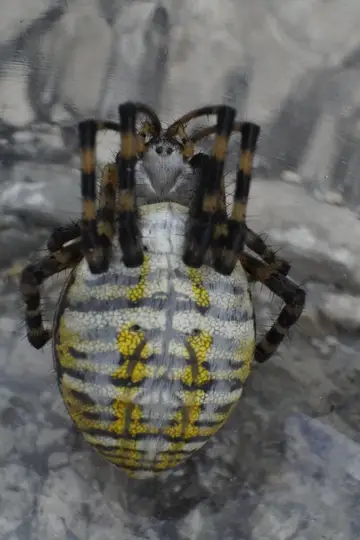
Banded orb-weaver spider
Photo: Nick Chirico · CC BY 4.0 · iNaturalist

Banded orb-weaver spider

Argiope trifasciata

Not stated

Venom
No official source we use states whether this animal is venomous. That does not mean it is harmless: do not handle it.
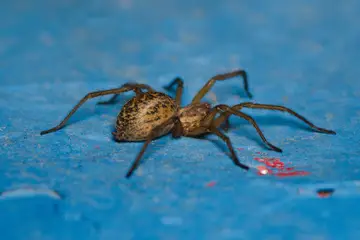
Hobo spider
Photo: Adrian Tync · CC BY-SA 4.0 · Wikimedia Commons · resized

Hobo spider

Eratigena agrestis

Not stated Nonnative

Venom
No official source we use states whether this animal is venomous. That does not mean it is harmless: do not handle it.
Size
Body length: females 3/8 to 5/8 in (9.5 to 16.5 mm); males 9/32 to 9/16 in (7 to 13.5 mm). About 1 to 1 3/4 in including legs.
How to recognize it
  • No dark bands on the legs
  • Eight eyes in two rows of four
  • Cannot be identified by color alone; a sure ID needs a microscope and an expert

Full Hobo spider guide

No confirmed photo of Tarantula (genus Aphonopelma)

Tarantula (genus Aphonopelma)

Not stated

Venom
No official source we use states whether this animal is venomous. That does not mean it is harmless: do not handle it.
Where in Utah
Northern border of native range; at times as far north as Cache County Wild Aware Utah

When spiders are active in Utah

Records of spiders in Utah peak in April and July to September. They show when people record spiders, not how many there are (about month bars).

1,461 records of spiders in Utah by month (GBIF, CC0 and CC BY records).

If you are bitten or stung

Call 911 or Poison Help at 1-800-222-1222 right away. Poison Help connects you to your local poison center, any time of day.

What official sources say

Are there black widows in Utah?

Yes. USU Extension: the western black widow is the primary spider of health concern in Utah. Utah State University Extension

“The primary spider of health concern in Utah is the western black widow spider.”

Are there brown recluse spiders in Utah?

No. USU Extension says brown recluse spiders do not occur in Utah; cellar spiders and crevice-weaving spiders are often mistaken for them. Utah State University Extension

“Brown recluse spiders do not occur in Utah.”

About this list

Venom labels come only from official sources and link to them; "Not stated" never means harmless. How labels work.
"Nonnative" and "Invasive" follow the wording of the source list. See invasive species in Utah.

Sources

  1. Who we are: About the Utah Division of Wildlife Resources. Utah Division of Wildlife Resources (DWR). page "Last updated: April 2, 2026"; checked November 3, 2026.
  2. Hobo Spider, Eratigena agrestis (USU Extension fact sheet ENT-86-08). Utah State University Extension. Revised February 2016; checked November 3, 2026.
    Quoted passages (2)
    “In Utah, hobo spiders are frequently found indoors from August through October.”
    “The primary spider of health concern in Utah is the western black widow spider.”
  3. Spiders (USU Extension / Utah Plant Pest Diagnostic Laboratory fact sheet ENT-163-12PR). Utah State University Extension. January 2013; checked November 3, 2026.
    Quoted passages (4)
    “Worldwide, comb-footed spiders in the genus Latrodectus (widow spiders: Fig. 8) are some of the most venomous spiders.”
    “The major spider of medical concern in Utah is the black widow.”
    “The venom is not harmful to humans; however, bites can be painful and leave a red bump.”
    “Brown recluse spiders do not occur in Utah.”
  4. Be aware: Arachnids (spiders, scorpions). Wild Aware Utah (partnership: Utah DWR, Utah's Hogle Zoo, USU Berryman Institute). undated page; checked November 3, 2026.
    Quoted passages (1)
    “Fall is the season for spider encounters in Utah.”
  5. Colorado tick fever | Communicable Diseases. Utah Department of Health and Human Services (DHHS). undated page; checked November 3, 2026.
    Quoted passages (1)
    “Colorado tick fever is an illness caused by a virus carried by small mammals, such as ground squirrels, porcupines, chipmunks, and ticks.”
  6. GBIF.org occurrence records, human observations licensed CC0 1.0 or CC BY 4.0 only, accessed November 3, 2026. The datasets behind these counts are listed on our Sources page.