States Wildlife

Utah wildlife: what lives here and what is dangerous

Last checked November 3, 2026 against official sources.

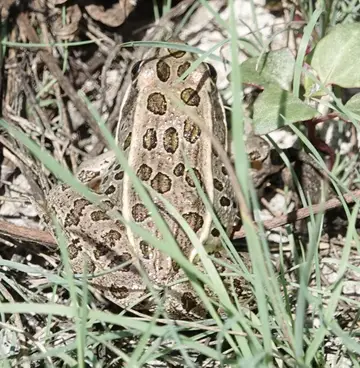
Northern leopard frog
Photo: Colin Croft · CC BY 4.0 · iNaturalist

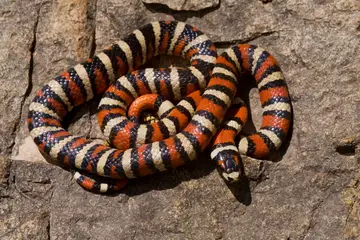
Utah has 5 venomous snakes named by official sources: Western rattlesnake, Prairie rattlesnake, Mojave rattlesnake, Sidewinder and Southwestern speckled rattlesnake, as labelled by DWR. This guide covers 9 animal groups from Utah Division of Wildlife Resources (DWR), Utah Department of Natural Resources lists and other official sources, with photos, venomous status and when each group is active.

Identification help has limits: a photo cannot confirm that an animal is safe. Watch from a distance and never handle a wild animal.

On this page
  1. Animal groups
  2. Dangerous animals
  3. Invasive species
  4. Seasons
  5. Official agency and reporting
  6. Questions
  7. Sources

Animal groups in Utah

Dangerous animals in Utah

These are the animals official sources describe as venomous or as a risk to people in Utah, across 7 groups. The reason is given in the source's own terms.

AnimalGroupWhy, per the sourceSource
Western rattlesnakeSnakesVenomous: “Rattlesnakes use their venom to subdue prey so they can eat it, and a snake will only bite defensively if it feels threatened.”DWR
Prairie rattlesnakeSnakesVenomous: “Rattlesnakes use their venom to subdue prey so they can eat it, and a snake will only bite defensively if it feels threatened.”DWR
Mojave (or Mohave) rattlesnakeSnakesVenomous: “Rattlesnakes use their venom to subdue prey so they can eat it, and a snake will only bite defensively if it feels threatened.”DWR
SidewinderSnakesVenomous: “Rattlesnakes use their venom to subdue prey so they can eat it, and a snake will only bite defensively if it feels threatened.”DWR
Southwestern speckled rattlesnakeSnakesVenomous: “Rattlesnakes use their venom to subdue prey so they can eat it, and a snake will only bite defensively if it feels threatened.”DWR
Western black widowSpidersVenomous: “Worldwide, comb-footed spiders in the genus Latrodectus (widow spiders: Fig. 8) are some of the most venomous spiders.”Utah State University Extension
Ticks (Colorado tick fever)Ticks (arachnids)Utah DHHS: “Colorado tick fever is an illness caused by a virus carried by small mammals, such as ground squirrels, porcupines, chipmunks, and ticks.”DHHS
Gila monsterLizardsVenomous: “Gila monsters are one of two venomous lizard species in North America.”DWR
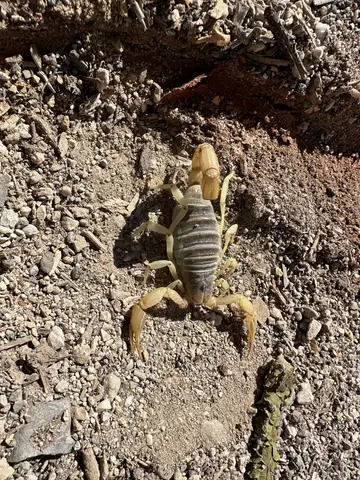
Arizona bark scorpionScorpionsVenomous: “The only species in Utah that is potentially harmful to humans is Centruroides exilicauda, or the Arizona bark scorpion (Fig. 3) …”Utah State University Extension
Africanized honey beeInsects and BugsVenomous: “…their sting is not more painful or venomous than other honey bees.”Utah State University Extension
Mosquitoes (West Nile virus)Insects and BugsUtah DHHS: “West Nile virus (WNV) is carried by mosquitoes and can cause disease in humans, birds, horses, and some other mammals.”DHHS
Rodent fleas (plague)Insects and BugsUtah DHHS: “It is spread by rodent flea bites and infected animals to humans and can develop into serious infection and death.”DHHS
Stinging insects (allergic reactions)Insects and BugsCDC/NIOSH: “People who are allergic to venom may experience anaphylaxis, a severe and potentially life-threatening allergic reaction that requires immediate emergency care.”CDC / NIOSH
Black bearMammalsDWR: “A bear may become aggressive toward animals or people it perceives as threatening the area where it found the food.”DWR
CougarMammalsWild Aware Utah advises fighting back if attacked and not leaving children outside unattended at dawn and dusk: “Fight back if you are attacked! Protect your head and neck.”Wild Aware Utah
MooseMammalsCan be dangerous when they feel threatened: “Due to their large size, moose can be dangerous when they feel threatened.”Wild Aware Utah
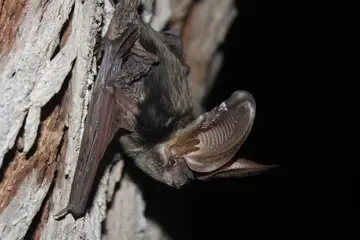
Bats (rabies)MammalsDWR: “Because bats can be carriers of rabies — a deadly virus that can be transmitted to people — you should never handle a bat with your bare hands.”DWR
Rodents (hantavirus)MammalsUtah DHHS: “It is usually spread by inhaling the virus, which is in the droppings, urine and saliva of infected rodents.”DHHS

Venomous snakes in Utah shows each venomous snake with photos and range.

Invasive and nonnative species

10 nonnative animals are named on Utah's official lists (DWR).

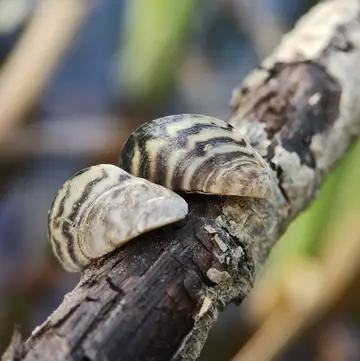
  • Quagga mussel Dreissena bugensis
  • Zebra mussel Dreissena polymorpha
  • Bullfrog Lithobates catesbiana
  • Green frog Lithobates clamitans
  • Baja California treefrog Pseudacris hypochondriaca
  • Pacific treefrog Pseudacris regilla
  • Red-eared slider or pond slider Trachemys scripta
  • Common snapping turtle Chelydra serpentina

All invasive species in Utah, with where they live and how to report them.

When animals are active in Utah

Darker cells are the months with more open-licence observation records of each group in Utah (GBIF). They show when people see and record these animals, not how many there are. The current month, this month, is highlighted.

JanFebMarAprMayJunJulAugSepOctNovDec
SnakesJanuary: 2 recordsFebruary: 0 recordsMarch: 16 recordsApril: 72 recordsMay: 213 recordsJune: 136 recordsJuly: 131 recordsAugust: 93 recordsSeptember: 77 recordsOctober: 29 recordsNovember: 4 recordsDecember: 1 record
SpidersJanuary: 4 recordsFebruary: 11 recordsMarch: 36 recordsApril: 170 recordsMay: 161 recordsJune: 162 recordsJuly: 223 recordsAugust: 297 recordsSeptember: 208 recordsOctober: 121 recordsNovember: 25 recordsDecember: 11 records
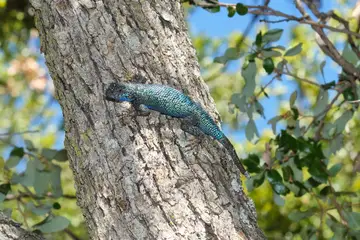
LizardsJanuary: 1 recordFebruary: 15 recordsMarch: 94 recordsApril: 294 recordsMay: 650 recordsJune: 551 recordsJuly: 321 recordsAugust: 263 recordsSeptember: 238 recordsOctober: 137 recordsNovember: 27 recordsDecember: 1 record
Frogs and ToadsJanuary: 0 recordsFebruary: 4 recordsMarch: 8 recordsApril: 48 recordsMay: 73 recordsJune: 56 recordsJuly: 79 recordsAugust: 69 recordsSeptember: 49 recordsOctober: 10 recordsNovember: 2 recordsDecember: 1 record
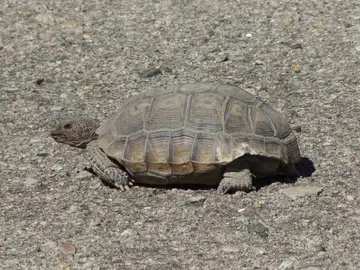
TurtlesJanuary: 1 recordFebruary: 2 recordsMarch: 8 recordsApril: 12 recordsMay: 12 recordsJune: 7 recordsJuly: 5 recordsAugust: 6 recordsSeptember: 11 recordsOctober: 6 recordsNovember: 1 recordDecember: 0 records
ScorpionsJanuary: 0 recordsFebruary: 1 recordMarch: 5 recordsApril: 7 recordsMay: 12 recordsJune: 7 recordsJuly: 7 recordsAugust: 14 recordsSeptember: 8 recordsOctober: 2 recordsNovember: 1 recordDecember: 0 records
Insects and BugsJanuary: 51 recordsFebruary: 71 recordsMarch: 413 recordsApril: 1,529 recordsMay: 2,599 recordsJune: 3,343 recordsJuly: 4,349 recordsAugust: 3,017 recordsSeptember: 1,843 recordsOctober: 835 recordsNovember: 221 recordsDecember: 78 records
MammalsJanuary: 160 recordsFebruary: 145 recordsMarch: 291 recordsApril: 460 recordsMay: 555 recordsJune: 649 recordsJuly: 638 recordsAugust: 592 recordsSeptember: 465 recordsOctober: 266 recordsNovember: 161 recordsDecember: 150 records

What official sources say about seasons

  • Rattlesnakes are most active in late spring and early summer; activity peaks at dawn and dusk (DWR). DWR
  • Gila monsters are most likely seen by day in April and May, also June–August, especially on warm summer nights (DWR). DWR
  • Reptiles and amphibians are on the move from mid-spring to early summer (DWR). DWR
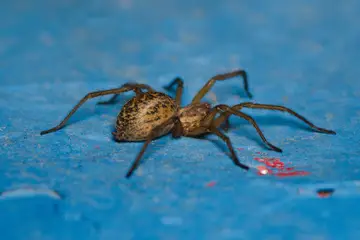
  • Hobo spiders are often found indoors August through October (USU). Utah State University Extension
  • Fall is the season for spider encounters in Utah (Wild Aware Utah). Wild Aware Utah
  • Bat encounters spike in September as migratory species move through (DWR). DWR
  • Bears den from late October (females) / mid-November (males) and emerge in April or May (Wild Aware Utah). Wild Aware Utah
  • Moose cows with calves can be aggressive in spring; bulls in the fall breeding season (Wild Aware Utah). Wild Aware Utah

Official agency and how to report

Utah's wildlife agency is the Utah Division of Wildlife Resources (DWR), Utah Department of Natural Resources.

Report: Report a rattlesnake repeatedly seen in a problem area, or in a public park, yard or play area, to the nearest DWR office; report aggressive wildlife to the nearest DWR office (after hours: local police or county sheriff). Report Gila monster sightings to DWR (435-879-8694). Report non-native reptiles/amphibians via iNaturalist (optional, per DWR). DWR

Official safety advice

  • Medical emergency: call 911 or Poison Help at 1-800-222-1222 (Utah Poison Control Center). Utah Poison Control Center, University of Utah Health
  • Rattlesnake bites are a serious medical emergency needing hospital care as soon as possible. DWR
  • If you meet a rattlesnake, stay calm, keep at least 10 feet away, and go around it; do not try to kill it. DWR
  • If you cannot identify a snake, move away and treat it as venomous. DWR
  • Rattlesnakes, Gila monsters, desert tortoises, western (boreal) toads and Columbia spotted frogs must not be handled or tampered with. DWR
  • Do not grab or touch a Gila monster. DWR

Questions people ask about Utah wildlife

How many venomous snakes are in Utah?

DWR: five rattlesnake species live in Utah; the most common is the Great Basin rattlesnake, a subspecies of the western rattlesnake. USU Extension (1998) counted seven venomous snakes by including subspecies. DWR

Are there rattlesnakes in Utah?

Yes. Western, prairie, Mojave and southwestern speckled rattlesnakes and the sidewinder (DWR). Rocky benches, high-elevation slopes and dry canyons are the most common places to meet one. DWR

How many kinds of snakes are in Utah?

USU Extension: 31 snake species, 24 of them non-venomous. The current DWR tables name 28 snake species but give no total. Utah State University Extension in cooperation with Utah DWR; hosted by Wild Aware Utah

Are there gila monsters in Utah?

Yes. The Gila monster is Utah's state reptile, native to southwestern Utah, and venomous. It is prohibited from collection. DWR · More

Are there black widows in Utah?

Yes. USU Extension: the western black widow is the primary spider of health concern in Utah. Utah State University Extension

Are there brown recluse spiders in Utah?

No. USU Extension says brown recluse spiders do not occur in Utah; cellar spiders and crevice-weaving spiders are often mistaken for them. Utah State University Extension

Are hobo spiders dangerous?

No. USU Extension: recent evidence suggests hobo spiders do not have a necrotic bite. Wild Aware Utah calls them not aggressive or harmful to humans. Utah State University Extension

Are there scorpions in Utah?

Yes. USU Extension recognizes 9 scorpion species in Utah, mostly in the south. Only the Arizona bark scorpion (Kane County) is potentially harmful to humans. Utah State University Extension

Are there bears in Utah?

Yes, black bears only. Black bears are the only bear species in Utah and live across much of the state. DWR

Are there mountain lions in Utah?

Yes. Cougars live throughout Utah, usually in foothills and canyons, sometimes in valleys in winter. Wild Aware Utah

Are there moose in Utah?

Yes. Moose live in the mountains of northern and northeastern Utah, including urban areas along the Wasatch Front. Wild Aware Utah

How many bat species are in Utah?

DWR: 18 confirmed bat species, with the greatest diversity in southern Utah. DWR

Is a gopher snake a rattlesnake?

No. DWR: gopher snakes are often mistaken for rattlesnakes but have a slender, pointed tail without a rattle. DWR

Is it legal to kill a rattlesnake in Utah?

No. DWR: rattlesnakes are protected under Utah law; harassing or killing one is illegal. DWR

Are there quagga mussels in Utah?

Yes. DWR: quagga and zebra mussels in Utah are currently limited to Lake Powell. DWR

Are there africanized (killer) bees in Utah?

Yes. USU Extension: Africanized honey bees were first detected in Utah in August 2008 and confirmed in Iron, Kane, San Juan and Washington counties (2010 fact sheet). Utah State University Extension

Sources

  1. Who we are: About the Utah Division of Wildlife Resources. Utah Division of Wildlife Resources (DWR). page "Last updated: April 2, 2026"; checked November 3, 2026.
  2. How to avoid conflicts with rattlesnakes in Utah this spring and summer (news release). Utah Division of Wildlife Resources (DWR). Published March 17, 2026; checked November 3, 2026.
    Quoted passages (10)
    “Rattlesnakes use their venom to subdue prey so they can eat it, and a snake will only bite defensively if it feels threatened.”
    “If you do repeatedly see a rattlesnake in a problematic area or if you encounter a rattlesnake in a public park, yard or play area, you can contact the nearest DWR office to report it.”
    “There are five rattlesnake species in Utah, and the most common is the Great Basin rattlesnake, which is a subspecies of the Western rattlesnake.”
    “Rocky benches, high-elevation slopes and dry canyons are the most common places in Utah to encounter rattlesnakes, often while people are out hiking, rock climbing or biking.”
    “A gopher snake's tail is slender, pointed and lacks a rattle.”
    “Rattlesnakes are protected under Utah law, making it illegal to harass or kill one.”
    “Rattlesnake bites are a serious medical emergency and require getting medical attention at a hospital as soon as possible.”
    “Remain calm and stay at least 10 feet from the snake.”
    “If you cannot identify a snake you encounter, the best course of action is to move away and treat the snake as if it were venomous.”
    “Rattlesnakes are most active during the late spring and early summer months.”
  3. Scorpions (USU Extension / Utah Plant Pest Diagnostic Laboratory fact sheet ENT-68-08). Utah State University Extension. June 2008; checked November 3, 2026.
    Quoted passages (3)
    “…only 9 are recognized in Utah”
    “The only species in Utah that is potentially harmful to humans is Centruroides exilicauda, or the Arizona bark scorpion (Fig. 3). Children and older adults are more likely to express symptoms if stung.”
    “…but only 9 are recognized in Utah”
  4. Spiders (USU Extension / Utah Plant Pest Diagnostic Laboratory fact sheet ENT-163-12PR). Utah State University Extension. January 2013; checked November 3, 2026.
    Quoted passages (2)
    “Worldwide, comb-footed spiders in the genus Latrodectus (widow spiders: Fig. 8) are some of the most venomous spiders.”
    “Brown recluse spiders do not occur in Utah.”
  5. Colorado tick fever | Communicable Diseases. Utah Department of Health and Human Services (DHHS). undated page; checked November 3, 2026.
    Quoted passages (1)
    “Colorado tick fever is an illness caused by a virus carried by small mammals, such as ground squirrels, porcupines, chipmunks, and ticks.”
  6. Gila monster named state reptile (news release). Utah Division of Wildlife Resources (DWR). Published March 28, 2019; checked November 3, 2026.
    Quoted passages (4)
    “Gila monsters are one of two venomous lizard species in North America.”
    “Gila monsters are primarily located in west-central Arizona, but are also native to southwestern Utah, Nevada, New Mexico and parts of California.”
    “If you do get lucky enough to see a Gila monster in the wild, do not attempt to grab or touch one.”
    “People are most likely to see them during the day in April and May, but they may also be seen through June, July and August, especially on warm summer nights.”
  7. Africanized Honey Bees (USU Extension / Utah Plant Pest Diagnostic Laboratory fact sheet, Hodgson, Stanley, Roe, Downey). Utah State University Extension. fact sheet dated November 2010; checked November 3, 2026.
    Quoted passages (2)
    “…their sting is not more painful or venomous than other honey bees.”
    “Africanized honey bees were detected in Utah for the first time in August 2008.”
  8. West Nile virus | Communicable Diseases. Utah Department of Health and Human Services (DHHS). undated page; checked November 3, 2026.
    Quoted passages (1)
    “West Nile virus (WNV) is carried by mosquitoes and can cause disease in humans, birds, horses, and some other mammals.”
  9. Plague | Communicable Diseases. Utah Department of Health and Human Services (DHHS). undated page; checked November 3, 2026.
    Quoted passages (1)
    “It is spread by rodent flea bites and infected animals to humans and can develop into serious infection and death.”
  10. Insects and Scorpions at Work. CDC / NIOSH. archived copy, captured October 4, 2026; checked November 3, 2026.
    Quoted passages (1)
    “People who are allergic to venom may experience anaphylaxis, a severe and potentially life-threatening allergic reaction that requires immediate emergency care.”
  11. Bear incidents doubled from last year and how to prevent conflicts (news release). Utah Division of Wildlife Resources (DWR). Published Aug. 27, 2026; checked November 3, 2026.
    Quoted passages (2)
    “A bear may become aggressive toward animals or people it perceives as threatening the area where it found the food.”
    “Black bears are the only species of bear in Utah, and they live and roam across much of the state.”
  12. Be aware: Cougars. Wild Aware Utah (partnership: Utah DWR, Utah's Hogle Zoo, USU Berryman Institute). undated page; checked November 3, 2026.
    Quoted passages (2)
    “Fight back if you are attacked! Protect your head and neck.”
    “Cougars can be found throughout Utah, usually in the foothill and canyon areas, but also sometimes down in the valleys — especially during the winter months when they follow deer searching for food to lower elevations.”
  13. Be aware: Moose. Wild Aware Utah (partnership: Utah DWR, Utah's Hogle Zoo, USU Berryman Institute). undated page; checked November 3, 2026.
    Quoted passages (3)
    “Due to their large size, moose can be dangerous when they feel threatened.”
    “Utah is home to between 2,500 and 3,000 moose.”
    “Cows with calves can be aggressive in the spring.”
  14. What to know about bats in Utah and how to prevent conflicts with them (news release). Utah Division of Wildlife Resources (DWR). Published July 14, 2026; checked November 3, 2026.
    Quoted passages (3)
    “Because bats can be carriers of rabies — a deadly virus that can be transmitted to people — you should never handle a bat with your bare hands.”
    “Utah is home to 18 confirmed bat species, but there may be more.”
    “"Encounters with bats seem to spike in September as the migratory species — especially the Mexican free-tailed bat — move around Utah," Hersey said.”
  15. Hantavirus | Communicable Diseases. Utah Department of Health and Human Services (DHHS). undated page; checked November 3, 2026.
    Quoted passages (1)
    “It is usually spread by inhaling the virus, which is in the droppings, urine and saliva of infected rodents.”
  16. Aquatic Invasive Species: mussels, milfoil & more. Utah Division of Wildlife Resources (DWR). page "Last updated: April 21, 2026"; checked November 3, 2026.
    Quoted passages (1)
    “While the presence of quagga and zebra mussels in Utah is currently limited to Lake Powell, these invasive species threaten all of Utah's waterbodies.”
  17. Species tables for Utah's reptiles and amphibians. Utah Division of Wildlife Resources (DWR). page "Last updated: April 22, 2026"; checked November 3, 2026.
    Quoted passages (1)
    “Because these species are often problematic for Utah's native wildlife, they may be collected or possessed in any number without a permit.”
  18. Non-venomous Snakes (USU Extension Wildlife Damage Management Series NR/WD/007). Utah State University Extension in cooperation with Utah DWR; hosted by Wild Aware Utah. August 1998; checked November 3, 2026.
    Quoted passages (1)
    “Utah is home to 31 species of snakes. Of these, 24 are non-venomous.”
  19. Hobo Spider, Eratigena agrestis (USU Extension fact sheet ENT-86-08). Utah State University Extension. Revised February 2016; checked November 3, 2026.
    Quoted passages (3)
    “The primary spider of health concern in Utah is the western black widow spider.”
    “Recent scientific evidence suggests that hobo spiders do not have a necrotic bite.”
    “In Utah, hobo spiders are frequently found indoors from August through October.”
  20. Utah Poison Control Center (home page). Utah Poison Control Center, University of Utah Health. undated page; checked November 3, 2026.
    Quoted passages (1)
    “The service is free and private. By calling 1-800-222-1222 you will save time getting the information you need immediately.”
  21. Ask a herpetologist (DWR blog, Native Herpetology Coordinator). Utah Division of Wildlife Resources (DWR). Published June 14, 2023; checked November 3, 2026.
    Quoted passages (2)
    “Rattlesnakes, Gila monsters, desert tortoises, western (boreal) toads and Columbia spotted frogs are prohibited from being handled or tampered with in any way.”
    “From mid-spring to early summer, reptiles, amphibians and other animals are on the move looking for food and mates!”
  22. Be aware: Arachnids (spiders, scorpions). Wild Aware Utah (partnership: Utah DWR, Utah's Hogle Zoo, USU Berryman Institute). undated page; checked November 3, 2026.
    Quoted passages (1)
    “Fall is the season for spider encounters in Utah.”
  23. Be aware: Bears. Wild Aware Utah (partnership: Utah DWR, Utah's Hogle Zoo, USU Berryman Institute). undated page; checked November 3, 2026.
    Quoted passages (1)
    “In much of Utah, bears begin denning in the fall — late October for females and mid-November for males — and emerge from their dens in April or May.”
  24. GBIF.org occurrence records, human observations licensed CC0 1.0 or CC BY 4.0 only, accessed November 3, 2026. The datasets behind these counts are listed on our Sources page.