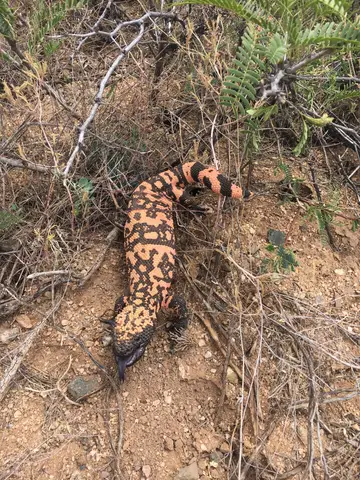
The Gila monster is Utah's state reptile, native to southwestern Utah, and venomous. It is prohibited from collection.
DWR: “Gila monsters are primarily located in west-central Arizona, but are also native to southwestern Utah, Nevada, New Mexico and parts of California.” Source
“Bites are very rare and are usually the result of harassing the reptile.” DWR
Size
NPS: up to 22 inches (560 mm) long and over a pound (450 g), the largest lizard in the United States. AZGFD: up to 14 inches from snout to vent. NDOW lists 18-24 inches and 2-4 lb.
How to recognize it
Hard, rounded, beadlike scales; dark forked tongue; short fat tail
Short, stout legs with long, sharp-clawed toes; big head and round tail
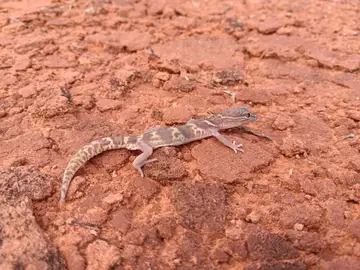
NPS says Gila monster hatchlings are sometimes confused with the banded gecko, a small, thin-skinned lizard. Hatchlings are much larger than an adult banded gecko.
When lizards are seen in Utah
JanFebMarAprMayJunJulAugSepOctNovDec
2,592 records (GBIF, CC0 and CC BY).
What official sources advise
Rattlesnakes, Gila monsters, desert tortoises, western (boreal) toads and Columbia spotted frogs must not be handled or tampered with. DWR
“Gila monsters are primarily located in west-central Arizona, but are also native to southwestern Utah, Nevada, New Mexico and parts of California.”
“Gila monsters are one of two venomous lizard species in North America.”
“Bites are very rare and are usually the result of harassing the reptile.”
“If you do get lucky enough to see a Gila monster in the wild, do not attempt to grab or touch one.”
“People are most likely to see them during the day in April and May, but they may also be seen through June, July and August, especially on warm summer nights.”
“Rattlesnakes, Gila monsters, desert tortoises, western (boreal) toads and Columbia spotted frogs are prohibited from being handled or tampered with in any way.”