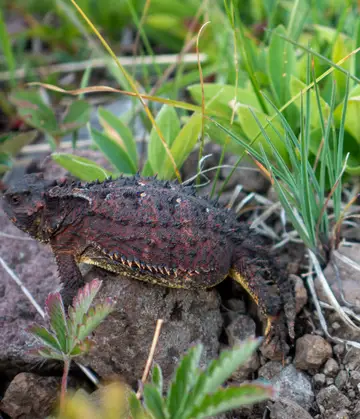
“Bites are very rare and are usually the result of harassing the reptile.” DWR
Size
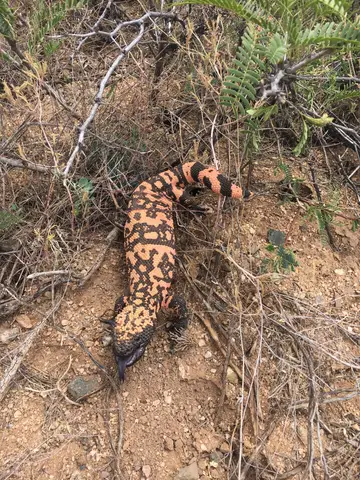
NPS: up to 22 inches (560 mm) long and over a pound (450 g), the largest lizard in the United States. AZGFD: up to 14 inches from snout to vent. NDOW lists 18-24 inches and 2-4 lb.
How to recognize it
Hard, rounded, beadlike scales; dark forked tongue; short fat tail
Short, stout legs with long, sharp-clawed toes; big head and round tail
No official source we use states whether this animal is venomous. That does not mean it is harmless: do not handle it.
Size
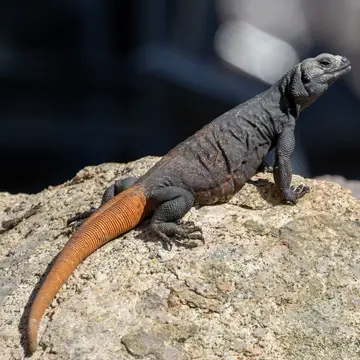
Adults 11 to 16.5 inches (28 to 42 cm) long (AZGFD); up to 9 inches snout to vent. NPS gives up to 20 inches. AZGFD calls it the largest native iguanid in the US.
How to recognize it
Flat, wide body with loose skin folds on neck and sides; flattened broad head; tail blunt at the tip and broad at the base
Small, granular body scales (Gila monster has large bead-like scales)
Larger and stockier than other US iguanid lizards, without head spines or enlarged scales along the back
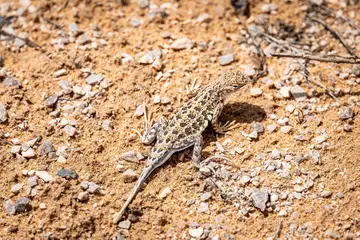
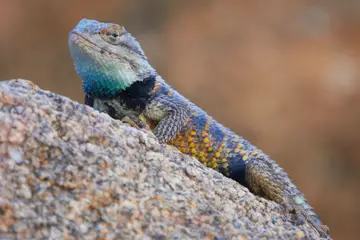
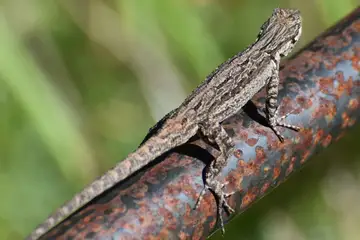
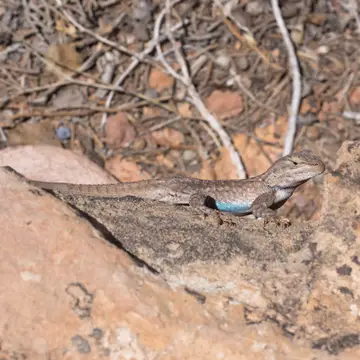
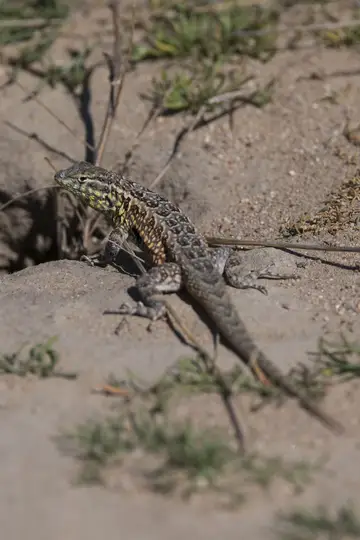
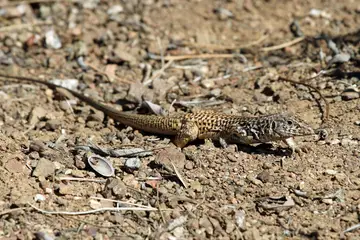
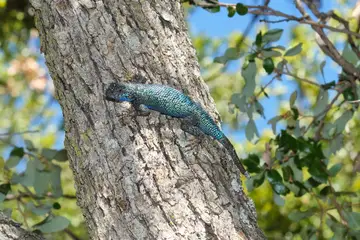
Smaller (adults under 2.4 in snout to vent), less robust, with orange or rust armpits, no yellow on the back of the thighs and smaller spiny scales. Male sagebrush lizards have blue mottling on the throat; male fence lizards have an entirely blue throat.
AZGFD: the chuckwalla has small granular body scales; the Gila monster has large bead-like scales. NPS: the Gila monster has bright orange to salmon-pink bands over black skin and a swollen tail.
Photo: Joshua Tree National Park · Public domain · Wikimedia Commons
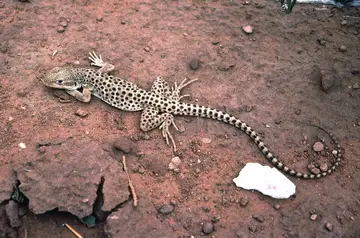
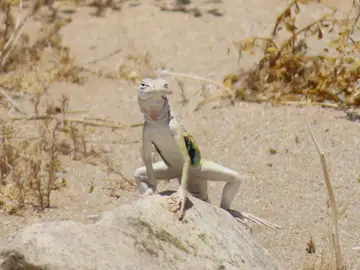
Desert iguana Not stated
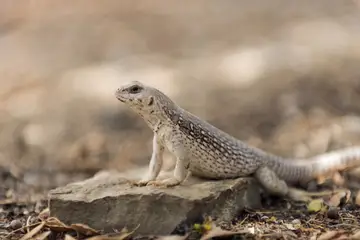
Arizona Game and Fish: the desert iguana has a small, blunt head, a long tail and short, stocky limbs, with a single row of enlarged, pointed scales down the middle of the back.
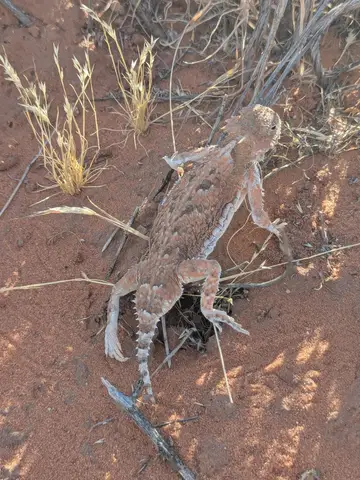
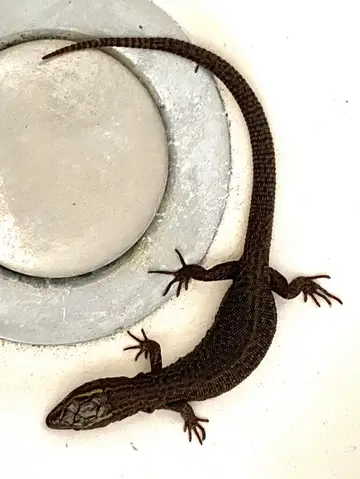
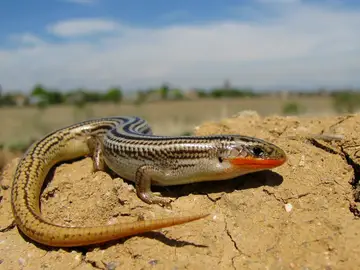
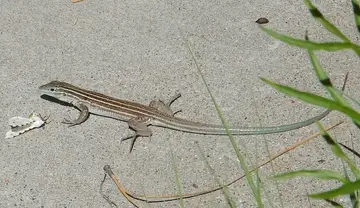
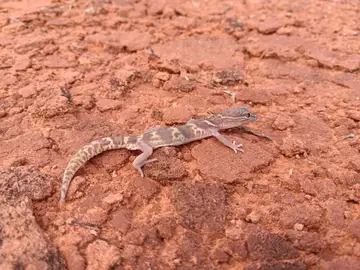
NPS says Gila monster hatchlings are sometimes confused with the banded gecko, a small, thin-skinned lizard. Hatchlings are much larger than an adult banded gecko.
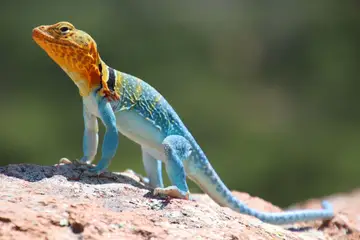
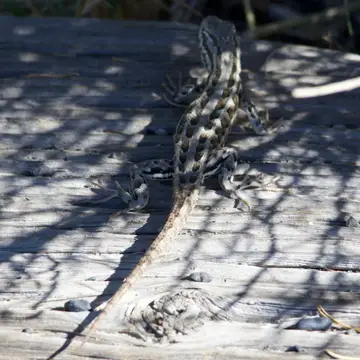
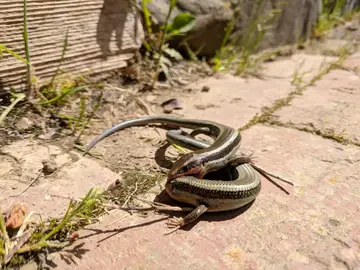
Photos show typical adults; individuals vary. Never get close to compare.
When lizards are active in Utah
Records of lizards in Utah peak in April to July. They show when people record lizards, not how many there are (about month bars).
JanFebMarAprMayJunJulAugSepOctNovDec
2,592 records of lizards in Utah by month (GBIF, CC0 and CC BY records).
Gila monsters are most likely seen by day in April and May, also June–August, especially on warm summer nights (DWR). DWR
If you are bitten or stung
Call 911 or Poison Help at 1-800-222-1222 right away. Poison Help connects you to your local poison center, any time of day.
Official advice from DWR:
Rattlesnakes, Gila monsters, desert tortoises, western (boreal) toads and Columbia spotted frogs must not be handled or tampered with. DWR
Report a rattlesnake repeatedly seen in a problem area, or in a public park, yard or play area, to the nearest DWR office; report aggressive wildlife to the nearest DWR office (after hours: local police or county sheriff). Report Gila monster sightings to DWR (435-879-8694). Report non-native reptiles/amphibians via iNaturalist (optional, per DWR). DWR
“Gila monsters are one of two venomous lizard species in North America.”
“Bites are very rare and are usually the result of harassing the reptile.”
“If you do get lucky enough to see a Gila monster in the wild, do not attempt to grab or touch one.”
“People are most likely to see them during the day in April and May, but they may also be seen through June, July and August, especially on warm summer nights.”
“Rattlesnakes, Gila monsters, desert tortoises, western (boreal) toads and Columbia spotted frogs are prohibited from being handled or tampered with in any way.”
“If you do repeatedly see a rattlesnake in a problematic area or if you encounter a rattlesnake in a public park, yard or play area, you can contact the nearest DWR office to report it.”