Utah State University Extension: …only 9 are recognized in Utah
This page lists 9 scorpions: all from Utah State University Extension's Table 1. List of scorpions found in Utah.
1 is venomous by official accounts.
Utah State University Extension says: “Although all scorpions have venom, only one species in the United States is considered to have a potentially life threatening sting.” Official sources name Arizona bark scorpion as dangerous to people; it is marked venomous, with the source, and listed first. The other 8 scorpions are marked “Not named as dangerous”. That does not make them harmless: do not handle scorpions.
Not every species: no complete official list of Utah scorpions exists, so this page covers the ones state and Extension sources name. How lists are built.
Which scorpions can hurt you
Official sources single out these scorpions in Utah, in their own words:
Arizona bark scorpion
USU. “The only species in Utah that is potentially harmful to humans is Centruroides exilicauda, or the Arizona bark scorpion (Fig. 3). Children and older adults are more likely to express symptoms if stung.” Utah State University Extension
All 9 scorpions
Venomous species first, then A to Z. Do not handle them.
Venom: “The only species in Utah that is potentially harmful to humans is Centruroides exilicauda, or the Arizona bark scorpion (Fig. 3). Children and older adults are more likely to express symptoms if stung.” (Utah State University Extension)
“Although all scorpions have venom, only one species in the United States is considered to have a potentially life threatening sting.” Utah State University Extension. Utah State University Extension says this of the whole group; it does not name this species as dangerous to people. Do not handle it.
“Although all scorpions have venom, only one species in the United States is considered to have a potentially life threatening sting.” Utah State University Extension. Utah State University Extension says this of the whole group; it does not name this species as dangerous to people. Do not handle it.
“Although all scorpions have venom, only one species in the United States is considered to have a potentially life threatening sting.” Utah State University Extension. Utah State University Extension says this of the whole group; it does not name this species as dangerous to people. Do not handle it.
Size
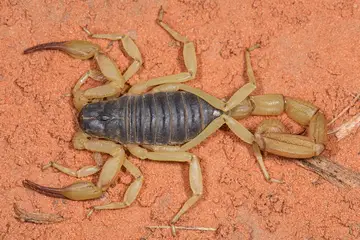
Adults are often more than 5 inches long; UC IPM gives 5 to 7 inches at maturity. It is the largest scorpion in the US. (Northern desert hairy scorpion, H. spadix: up to about 5 inches.)
How to recognize it
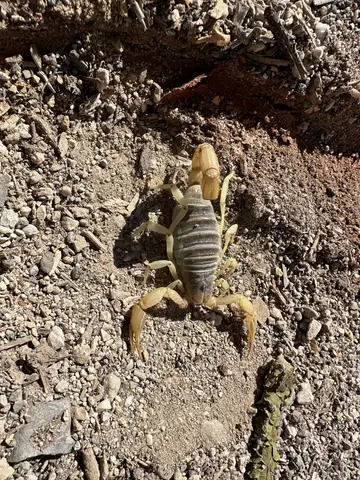
Heavy-bodied and very large. It is the biggest scorpion in the US.
Strong, grasping pincers (pedipalps). It uses them to hold prey.
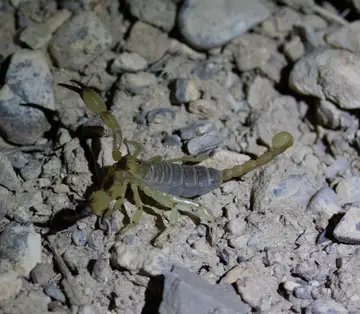
H. spadix (Capitol Reef): many sensory hairs and a black front body section (cephalothorax), which sets it apart from other local scorpions.
“Although all scorpions have venom, only one species in the United States is considered to have a potentially life threatening sting.” Utah State University Extension. Utah State University Extension says this of the whole group; it does not name this species as dangerous to people. Do not handle it.
“Although all scorpions have venom, only one species in the United States is considered to have a potentially life threatening sting.” Utah State University Extension. Utah State University Extension says this of the whole group; it does not name this species as dangerous to people. Do not handle it.
“Although all scorpions have venom, only one species in the United States is considered to have a potentially life threatening sting.” Utah State University Extension. Utah State University Extension says this of the whole group; it does not name this species as dangerous to people. Do not handle it.
“Although all scorpions have venom, only one species in the United States is considered to have a potentially life threatening sting.” Utah State University Extension. Utah State University Extension says this of the whole group; it does not name this species as dangerous to people. Do not handle it.
“Although all scorpions have venom, only one species in the United States is considered to have a potentially life threatening sting.” Utah State University Extension. Utah State University Extension says this of the whole group; it does not name this species as dangerous to people. Do not handle it.
Records of scorpions in Utah peak in April to May and August to September. They show when people record scorpions, not how many there are (about month bars).
JanFebMarAprMayJunJulAugSepOctNovDec
64 records of scorpions in Utah by month (GBIF, CC0 and CC BY records).
If you are bitten or stung
Call 911 or Poison Help at 1-800-222-1222 right away. Poison Help connects you to your local poison center, any time of day.
Official advice from Utah State University Extension:
Yes. USU Extension recognizes 9 scorpion species in Utah, mostly in the south. Only the Arizona bark scorpion (Kane County) is potentially harmful to humans. Utah State University Extension
“Although all scorpions have venom, only one species in the United States is considered to have a potentially life threatening sting.”
“The only species in Utah that is potentially harmful to humans is Centruroides exilicauda, or the Arizona bark scorpion (Fig. 3). Children and older adults are more likely to express symptoms if stung.”
“People stung by a scorpion should consult a doctor.”