Invasive and nonnative animals in Utah
Last checked November 3, 2026 against official sources.
On this page
- Aquatic Invasive Species: mussels, milfoil & more
- Species tables for Utah's reptiles and amphibians
- Hobo Spider, Eratigena agrestis (USU Extension fact sheet ENT-86-08)
- Africanized Honey Bees (USU Extension / Utah Plant Pest Diagnostic Laboratory fact sheet, Hodgson, Stanley, Roe, Downey)
- How to report
- Sources
10 nonnative animals are named on 4 official lists for Utah: “Aquatic Invasive Species: mussels, milfoil & more” (DWR), “Species tables for Utah's reptiles and amphibians” (DWR), “Hobo Spider, Eratigena agrestis (USU Extension fact sheet ENT-86-08)” (Utah State University Extension) and “Africanized Honey Bees (USU Extension / Utah Plant Pest Diagnostic Laboratory fact sheet, Hodgson, Stanley, Roe, Downey)” (Utah State University Extension).
To report a sighting, see how to report.
Being on a list of nonnative species does not always mean an animal is harmful or established: each list below is described in its source's terms. A sighting of a listed animal is still worth reporting to the agency.
Aquatic Invasive Species: mussels, milfoil & more
Utah Division of Wildlife Resources (DWR), page "Last updated: April 21, 2026". 2 animals.
-
Quagga mussel Dreissena bugensis
Lake Powell DWR
-
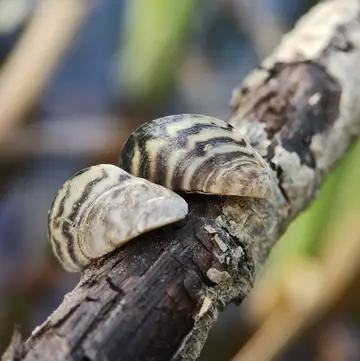
Photo: Harukano · CC0 1.0 · iNaturalist Zebra mussel Dreissena polymorpha
Lake Powell DWR
Species tables for Utah's reptiles and amphibians
Utah Division of Wildlife Resources (DWR), page "Last updated: April 22, 2026". 6 animals.
-
Baja California treefrog Pseudacris hypochondriaca
-
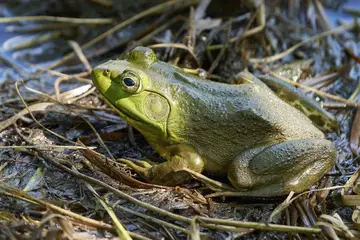
Photo: Paul Danese · CC BY-SA 4.0 · Wikimedia Commons · resized Bullfrog Lithobates catesbiana
-
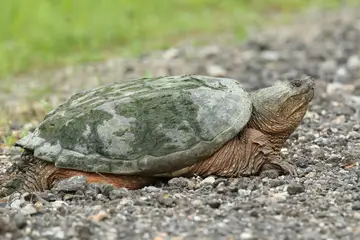
Photo: Cephas · CC BY-SA 4.0 · Wikimedia Commons · resized Common snapping turtle Chelydra serpentina
-
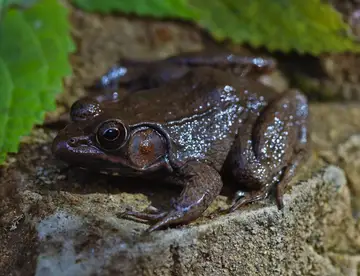
Photo: Peter Paplanus from St. Louis, Missouri · CC BY 2.0 · Wikimedia Commons Green frog Lithobates clamitans
-
Pacific treefrog Pseudacris regilla
-
Red-eared slider or pond slider Trachemys scripta


Hobo Spider, Eratigena agrestis (USU Extension fact sheet ENT-86-08)
Utah State University Extension, Revised February 2016. 1 animal.
-
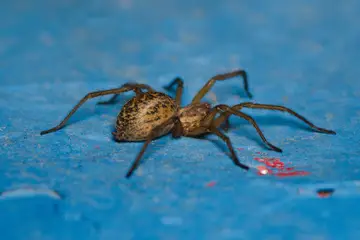
Photo: Adrian Tync · CC BY-SA 4.0 · Wikimedia Commons · resized Hobo spider Eratigena agrestis

Africanized Honey Bees (USU Extension / Utah Plant Pest Diagnostic Laboratory fact sheet, Hodgson, Stanley, Roe, Downey)
Utah State University Extension, fact sheet dated November 2010. 1 animal.
-
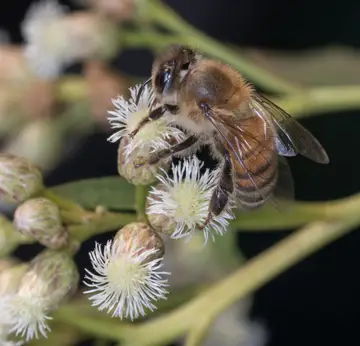
Photo: Jesse Rorabaugh · CC0 1.0 · iNaturalist Africanized honey bee
Iron, Kane, San Juan and Washington counties (confirmed colonies as of 2010) Utah State University Extension
How to report a sighting in Utah
Report a rattlesnake repeatedly seen in a problem area, or in a public park, yard or play area, to the nearest DWR office; report aggressive wildlife to the nearest DWR office (after hours: local police or county sheriff). Report Gila monster sightings to DWR (435-879-8694). Report non-native reptiles/amphibians via iNaturalist (optional, per DWR). DWR
Do not try to catch or handle the animal. A photo taken from a safe distance, the place and the date help the agency.
Sources
- Aquatic Invasive Species: mussels, milfoil & more. Utah Division of Wildlife Resources (DWR). page "Last updated: April 21, 2026"; checked November 3, 2026.
Quoted passages (1)
“While the presence of quagga and zebra mussels in Utah is currently limited to Lake Powell, these invasive species threaten all of Utah's waterbodies.”
- Africanized Honey Bees (USU Extension / Utah Plant Pest Diagnostic Laboratory fact sheet, Hodgson, Stanley, Roe, Downey). Utah State University Extension. fact sheet dated November 2010; checked November 3, 2026.
Quoted passages (1)
“The Utah Department of Agriculture and Food is the regulatory agency that surveys for Africanized honey bees and other potentially invasive species.”
- Species tables for Utah's reptiles and amphibians. Utah Division of Wildlife Resources (DWR). page "Last updated: April 22, 2026"; checked November 3, 2026.
Quoted passages (1)
“Because these species are often problematic for Utah's native wildlife, they may be collected or possessed in any number without a permit.”
- Hobo Spider, Eratigena agrestis (USU Extension fact sheet ENT-86-08). Utah State University Extension. Revised February 2016; checked November 3, 2026.
Quoted passages (1)
“The hobo spider is native to Europe, but was”
- How to avoid conflicts with rattlesnakes in Utah this spring and summer (news release). Utah Division of Wildlife Resources (DWR). Published March 17, 2026; checked November 3, 2026.
Quoted passages (1)
“If you do repeatedly see a rattlesnake in a problematic area or if you encounter a rattlesnake in a public park, yard or play area, you can contact the nearest DWR office to report it.”