States Wildlife

Utah Mammals: Species List With Pictures

Last checked November 3, 2026 against official sources.

On this page
  1. Which mammals can hurt you
  2. All 38 mammals
  3. When they are active
  4. If you are bitten or stung
  5. What official sources say
  6. About this list
  7. Sources

This page lists 38 mammals.

Which mammals can hurt you

Official sources single out these mammals in Utah, in their own words:

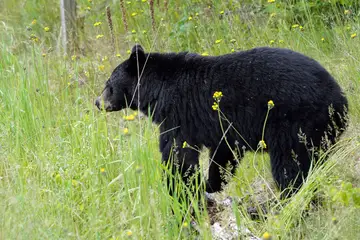
  • Black bear
    Photo: U.S. Fish and Wildlife Service - Midwest Region · Public domain · Wikimedia Commons

    Black bear

    DWR. “A bear may become aggressive toward animals or people it perceives as threatening the area where it found the food.” DWR

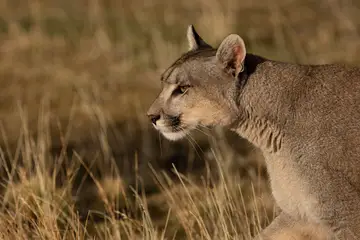
  • Cougar
    Photo: ArgentinaTurismo · CC BY 4.0 · Wikimedia Commons

    Cougar

    Wild Aware Utah advises fighting back if attacked and not leaving children outside unattended at dawn and dusk. “Fight back if you are attacked! Protect your head and neck.” Wild Aware Utah

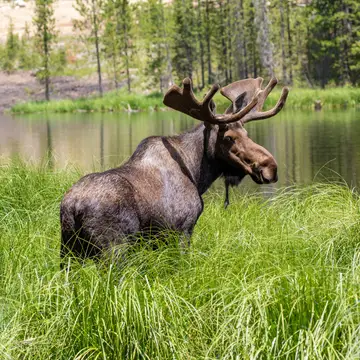
  • Moose
    Photo: Dan Vickers · CC BY 4.0 · iNaturalist

    Moose

    Can be dangerous when they feel threatened. “Due to their large size, moose can be dangerous when they feel threatened.” Wild Aware Utah

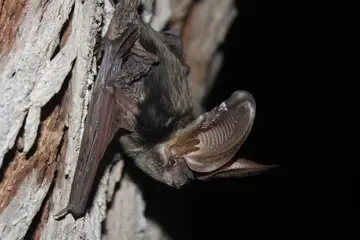
  • Bats (rabies)

    DWR. “Because bats can be carriers of rabies — a deadly virus that can be transmitted to people — you should never handle a bat with your bare hands.” DWR

  • Rodents (hantavirus)

    Utah DHHS. “It is usually spread by inhaling the virus, which is in the droppings, urine and saliva of infected rodents.” DHHS

All 38 mammals

From A to Z. Do not handle them.

Allen’s big-eared bat
Photo: Juan Cruzado Cortés · CC BY-SA 4.0 · Wikimedia Commons · resized

Allen’s big-eared bat

Idionycteris phyllotis

Conservation
Utah Species of Greatest Conservation Need (2025)
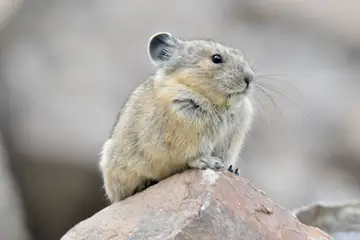
American pika
Photo: Parker James Lloyd · CC BY 4.0 · iNaturalist

American pika

Ochotona princeps

Conservation
Utah Species of Greatest Conservation Need (2025)
No confirmed photo of Badger

Badger

Black bear
Photo: U.S. Fish and Wildlife Service - Midwest Region · Public domain · Wikimedia Commons

Black bear

Ursus americanus

Danger to people
“A bear may become aggressive toward animals or people it perceives as threatening the area where it found the food.” DWR
Size
Smokies: males average about 6 ft long, 3 ft at the shoulder and 250 lb in summer; females usually just over 100 lb. Missouri: 46 to 78 inches long, 86 to 600 lb.
How to recognize it
  • Straight facial profile, rounded erect ears, very short tail
  • Short curved claws for climbing
What the sources say

Habitat: Mountains and forests; most at 7,000–10,000 feet (Wild Aware Utah)

Full Black bear guide

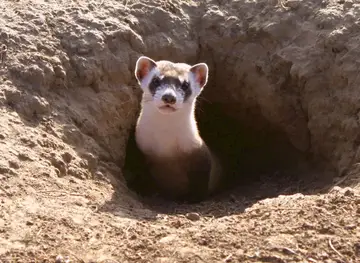
Black-footed ferret
Photo: Colorado Front Range National Wildlife Refuge Complex · CC BY 4.0 · iNaturalist

Black-footed ferret

Mustela nigripes

Conservation
Utah Species of Greatest Conservation Need (2025); federally Endangered
Cougar (mountain lion)
Photo: ArgentinaTurismo · CC BY 4.0 · Wikimedia Commons

Cougar (mountain lion)

Puma concolor

Danger to people
“Fight back if you are attacked! Protect your head and neck.” Wild Aware Utah
Size
Total length 5 to 8.5 feet including a 21 to 37.5 inch tail; males 79 to 265 lb, females 64 to 141 lb (Missouri Department of Conservation).
How to recognize it
  • Very large, slender cat with a small head, small rounded ears without tufts and a long, heavy tail.
  • The tail may be one-third of the total length; much larger than a bobcat or lynx.
  • Tracks: 2.75 to 3.75 inches wide, three lobes at the bottom of the heel pad, claw marks usually absent.
Where in Utah
Throughout Utah Wild Aware Utah

Full Cougar (mountain lion) guide

No confirmed photo of Dark kangaroo mouse

Dark kangaroo mouse

Microdipodops megacephalus

Conservation
Utah Species of Greatest Conservation Need (2025)
No confirmed photo of Elk

Elk

No confirmed photo of Gunnison’s prairie dog

Gunnison’s prairie dog

Cynomys gunnisoni

Conservation
Utah Species of Greatest Conservation Need (2025)
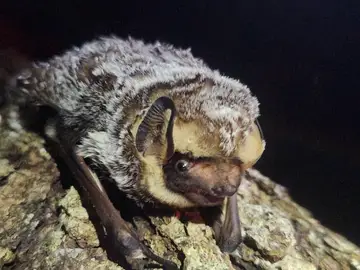
Hoary bat
Photo: otiegoat · CC BY 4.0 · iNaturalist

Hoary bat

Lasiurus cinereus

Conservation
Utah Species of Greatest Conservation Need (2025)
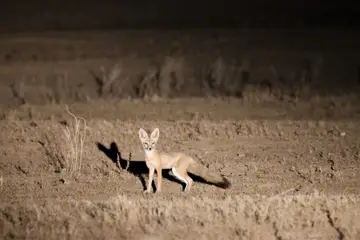
Kit fox
Photo: Russ Namitz · CC0 1.0 · iNaturalist

Kit fox

Vulpes macrotis

Conservation
Utah Species of Greatest Conservation Need (2025)
No confirmed photo of Little brown bat

Little brown bat

Myotis lucifugus

Conservation
Utah Species of Greatest Conservation Need (2025)
No confirmed photo of Mink

Mink

Moose
Photo: Dan Vickers · CC BY 4.0 · iNaturalist

Moose

Alces alces

Danger to people
“Due to their large size, moose can be dangerous when they feel threatened.” Wild Aware Utah
Size
Alaska: adults 800 lb (small cow) to 1,600 lb (large bull), up to almost 6 feet tall. Elsewhere, NY DEC: bulls 600-1,200 lb, cows 500-800 lb.
How to recognize it
  • "Bell": flap of skin and hair hanging from the throat (both sexes)
  • Antlers on males only; flat and palmate (hand-shaped), up to five feet wide
  • Antlers only on males (ADF&G)
Where in Utah
Mountains of the northern and northeastern portion of the state, including urban areas along the Wasatch Front Wild Aware Utah
102 records by month.

Full Moose guide

No confirmed photo of Pygmy rabbit

Pygmy rabbit

Brachylagus idahoensis

Conservation
Utah Species of Greatest Conservation Need (2025); petitioned for ESA listing
No confirmed photo of Raccoon

Raccoon

No confirmed photo of Spotted bat

Spotted bat

Euderma maculatum

Conservation
Utah Species of Greatest Conservation Need (2025)
No confirmed photo of Spotted skunk

Spotted skunk

No confirmed photo of Townsend’s big-eared bat

Townsend’s big-eared bat

Corynorhinus townsendii

Conservation
Utah Species of Greatest Conservation Need (2025)
No confirmed photo of Utah prairie dog

Utah prairie dog

Cynomys parvidens

Conservation
Utah Species of Greatest Conservation Need (2025); federally Threatened
No confirmed photo of Weasel

Weasel

No confirmed photo of White-tailed prairie dog

White-tailed prairie dog

Cynomys leucurus

Conservation
Utah Species of Greatest Conservation Need (2025)
No confirmed photo of Wolverine

Wolverine

Gulo gulo

Conservation
Utah Species of Greatest Conservation Need (2025); federally Threatened

When mammals are active in Utah

Records of mammals in Utah peak in May to September. They show when people record mammals, not how many there are (about month bars).

4,568 records of mammals in Utah by month (GBIF, CC0 and CC BY records).
  • Bat encounters spike in September as migratory species move through (DWR). DWR
  • Bears den from late October (females) / mid-November (males) and emerge in April or May (Wild Aware Utah). Wild Aware Utah

If you are bitten or stung

Call 911 or Poison Help at 1-800-222-1222 right away. Poison Help connects you to your local poison center, any time of day.

Official advice from DWR:

  • Never handle a bat with bare hands; after physical contact with a bat, contact your local health department. DWR
  • Secure trash and other attractants in bear country. DWR

What official sources say

Are there bears in Utah?

Yes, black bears only. Black bears are the only bear species in Utah and live across much of the state. DWR

“Black bears are the only species of bear in Utah, and they live and roam across much of the state.”

Are there mountain lions in Utah?

Yes. Cougars live throughout Utah, usually in foothills and canyons, sometimes in valleys in winter. Wild Aware Utah

“Cougars can be found throughout Utah, usually in the foothill and canyon areas, but also sometimes down in the valleys — especially during the winter months when they follow deer searching for food to lower elevations.”

Are there moose in Utah?

Yes. Moose live in the mountains of northern and northeastern Utah, including urban areas along the Wasatch Front. Wild Aware Utah

“Utah is home to between 2,500 and 3,000 moose.”

About this list

Venom labels come only from official sources and link to them; "Not stated" never means harmless. How labels work.

Sources

  1. Who we are: About the Utah Division of Wildlife Resources. Utah Division of Wildlife Resources (DWR). page "Last updated: April 2, 2026"; checked November 3, 2026.
  2. 2025 Utah Species of Greatest Conservation Need. Utah Division of Wildlife Resources (DWR). 2025 list; checked November 3, 2026.
  3. Be aware: Bears. Wild Aware Utah (partnership: Utah DWR, Utah's Hogle Zoo, USU Berryman Institute). undated page; checked November 3, 2026.
    Quoted passages (1)
    “In much of Utah, bears begin denning in the fall — late October for females and mid-November for males — and emerge from their dens in April or May.”
  4. Bear incidents doubled from last year and how to prevent conflicts (news release). Utah Division of Wildlife Resources (DWR). Published Aug. 27, 2026; checked November 3, 2026.
    Quoted passages (3)
    “A bear may become aggressive toward animals or people it perceives as threatening the area where it found the food.”
    “Utahns can help bears by not feeding them and by removing items that may attract them to the area.”
    “Black bears are the only species of bear in Utah, and they live and roam across much of the state.”
  5. Be aware: Cougars. Wild Aware Utah (partnership: Utah DWR, Utah's Hogle Zoo, USU Berryman Institute). undated page; checked November 3, 2026.
    Quoted passages (2)
    “Fight back if you are attacked! Protect your head and neck.”
    “Cougars can be found throughout Utah, usually in the foothill and canyon areas, but also sometimes down in the valleys — especially during the winter months when they follow deer searching for food to lower elevations.”
  6. Be aware: Moose. Wild Aware Utah (partnership: Utah DWR, Utah's Hogle Zoo, USU Berryman Institute). undated page; checked November 3, 2026.
    Quoted passages (2)
    “Due to their large size, moose can be dangerous when they feel threatened.”
    “Utah is home to between 2,500 and 3,000 moose.”
  7. Big Game Application Guidebook (2026). Utah Division of Wildlife Resources (DWR). Published Jan. 30, 2026, version 2026.5; checked November 3, 2026.
  8. Black Bear, Cougar and Furbearer Guidebook (2026). Utah Division of Wildlife Resources (DWR). Published Jan. 15, 2026, version 2026.4; checked November 3, 2026.
  9. What to know about bats in Utah and how to prevent conflicts with them (news release). Utah Division of Wildlife Resources (DWR). Published July 14, 2026; checked November 3, 2026.
    Quoted passages (3)
    “Because bats can be carriers of rabies — a deadly virus that can be transmitted to people — you should never handle a bat with your bare hands.”
    “If you do have physical contact with a bat, contact your local health department for guidance.”
    “"Encounters with bats seem to spike in September as the migratory species — especially the Mexican free-tailed bat — move around Utah," Hersey said.”
  10. Hantavirus | Communicable Diseases. Utah Department of Health and Human Services (DHHS). undated page; checked November 3, 2026.
    Quoted passages (1)
    “It is usually spread by inhaling the virus, which is in the droppings, urine and saliva of infected rodents.”
  11. GBIF.org occurrence records, human observations licensed CC0 1.0 or CC BY 4.0 only, accessed November 3, 2026. The datasets behind these counts are listed on our Sources page.