Yellow jacket
Vespula and Dolichovespula (yellowjackets; family Vespidae) · also called Yellowjacket, Yellowjacket wasp and Meat bee · Last checked November 3, 2026.
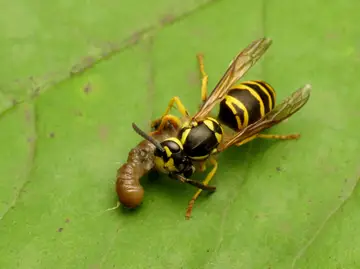
Yellow jackets (yellowjackets) are social wasps with black and yellow stripes in the genera Vespula and Dolichovespula. They often nest underground or in wall voids and scavenge food at picnics and trash cans in late summer and fall. They can sting repeatedly. University of Tennessee Extension says they are often considered the most dangerous stinging insects in the United States, and stings can be life-threatening for people allergic to the venom. University of California Statewide IPM Program
This page covers a genus (Vespula and Dolichovespula (yellowjackets; family Vespidae)), not a single species.
On this page
Is the yellow jacket dangerous?
Often considered the most dangerous stinging insects in the United States. Stings can be life-threatening to people who are allergic to the venom. University of Tennessee Extension
“Yellowjackets are often considered the most dangerous stinging insects in the United States. … Wasp, hornet and yellowjacket stings can be life-threatening to persons who are allergic to the venom.”
Bites and stings: Stings, and can sting more than once: the stinger has no barbs.
If someone is bitten or stung, call 911 or Poison Help at 1-800-222-1222.
How to identify a yellow jacket
A photo or description can narrow it down, but cannot confirm what an animal is or that it is safe. Look from a distance and do not handle wild animals.
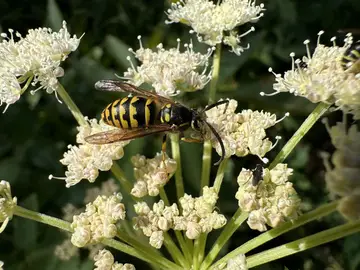
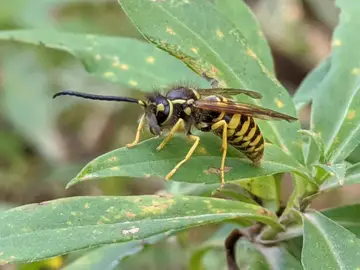
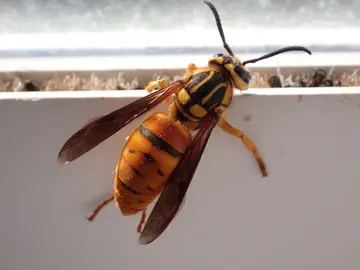
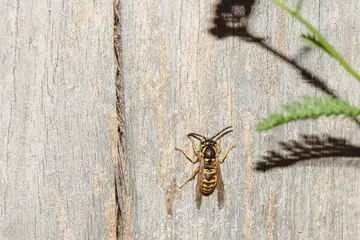

Size: 1/2 to 1 inch long University of California Statewide IPM Program
Colors: Black with jagged bright yellow bands; dolichovespula species (including the bald-faced hornet) are black and white. Pattern: Striped / banded abdomen.
Key features
- Less hairy and more brightly striped than honey bees University of California Statewide IPM Program
- Scavenges human food, unlike other common wasps University of California Statewide IPM Program
- Flies in a rapid side-to-side pattern before landing Alabama Cooperative Extension System
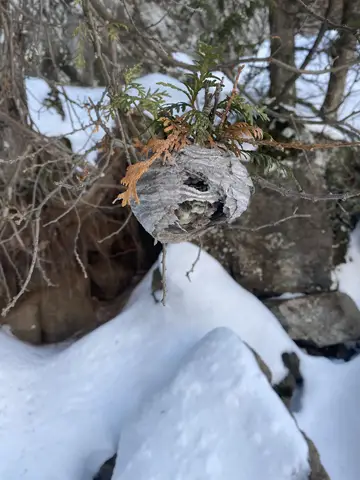
- Nests in the ground, in wall voids, or in enclosed gray paper nests with a single entrance University of California Statewide IPM Program
Young
Larvae stay inside the nest and are rarely seen.
Animals mistaken for the yellow jacket
Yellow jacket or Honey bee?
Yellow jacket
Honey bee Apis mellifera
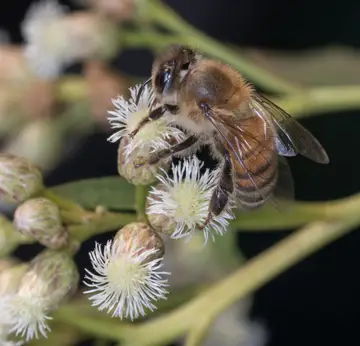
Honey bees are hairier and less brightly striped, and they usually are not attracted to food. University of California Statewide IPM Program
Stings. UC IPM says honey bees are unlikely to sting unless trapped or stepped on.
Yellow jacket or Paper wasps?
Yellow jacket
Paper wasps Polistes spp.
Paper wasps have long slender waists and build open-celled paper nests under eaves. University of California Statewide IPM Program
Can sting; UC IPM says they are rarely aggressive.
Yellow jacket or Bald-faced hornet?
Yellow jacket
Bald-faced hornet Dolichovespula maculata
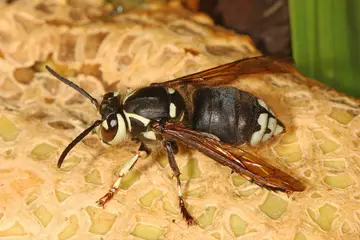

UGA Extension says the bald-faced hornet is actually a type of yellow jacket. It has white or light-yellow face markings and hangs its nest in trees and bushes. University of Georgia Cooperative Extension
Stings. UC IPM says aerial-nesting yellowjackets are extremely defensive when their nest is disturbed.
Yellow jacket or European paper wasp?
Yellow jacket
European paper wasp Polistes dominula
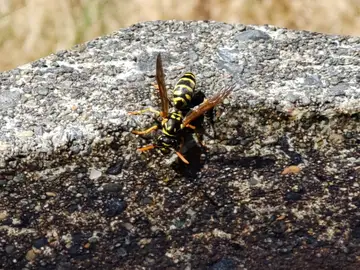
Penn State Extension says European paper wasps are yellow and black and may be mistaken for yellowjackets. They nest on eaves and overhangs, while yellowjackets typically nest underground. Penn State Extension
Stings (social wasp).
Yellow jacket or European hornet?
Yellow jacket
European hornet Vespa crabro
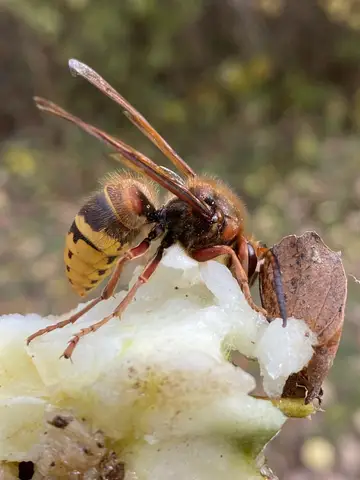
Penn State Extension: one of the largest wasps where it occurs (workers up to an inch, queens to 1.3 inches); red and yellow head, red and brown thorax, abdomen mostly yellow with brown tear-drop marks. It nests in protected aerial spots such as hollow trees or wall voids, while yellowjackets typically nest in the ground. Penn State Extension
Stings, and can sting multiple times (Penn State Extension).
Where the yellow jacket lives
- Native or listed
- Nonnative or not established
- No official record in our data
- 1–9
- 10–99
- 100–999
- 1,000+
State boundaries: U.S. Census Bureau, cartographic boundary file cb_2024_us_state_20m.
When it is active
Colonies start in spring and peak in late summer and fall. They die off in late autumn after hard frosts, and only mated queens overwinter. University of Tennessee Extension
US open-licence records for all yellowjackets (genera Vespula and Dolichovespula) peak in July to October.
Habitat and habits
Habitat: Nests are often underground in old rodent burrows or under rocks or landscape timbers. They also nest in walls, attics, crawlspaces and behind siding. University of Tennessee Extension
Behavior: Foragers away from the nest seldom sting unless provoked; most stings happen when a wasp is swatted or trapped against skin. Nests are defended vigorously, and foragers become more aggressive in late summer.
Diet: They hunt insects and also scavenge meat and sweets. Protein is collected in spring and summer to feed larvae; in late summer and fall they are especially drawn to sweets.
Young: Colonies last one year. A mated queen starts a paper nest in spring, the colony grows to as many as 4,000 workers by late summer, and new queens overwinter. Old nests are not reused.
Legal status and reporting
Invasive status: German Yellowjacket (Vespula germanica) is introduced from Europe (Ohio DNR). Native yellowjacket species are not described as invasive. Ohio Department of Natural Resources, Division of Wildlife
Questions about the yellow jacket
Yellow jacket sting
Yellowjackets can sting repeatedly. UC IPM says reactions range from short-term intense pain to swelling, itching, or life-threatening allergic responses. Federal Poison Help guidance says to go to a hospital right away for hives, dizziness, trouble breathing, or swelling around the eyes and mouth. Call 911 or Poison Help at 1-800-222-1222.
Yellow jacket sting treatment
This guide gives no treatment advice. For hives, dizziness, trouble breathing, or swelling around the eyes and mouth, go to a hospital immediately (federal Poison Help guidance). For any question about a sting, call Poison Help at 1-800-222-1222; in an emergency, call 911.
Yellow jacket vs wasp
Yellow jackets are wasps: 'yellowjacket' is the name for several wasp species in the genera Vespula and Dolichovespula. Unlike other common wasps, yellowjackets scavenge on food, and they nest in the ground, in wall cavities, or in enclosed paper nests. Paper wasps have long slender waists, build open-celled nests under eaves, and are rarely aggressive.
Yellow jacket wasp
Yes, the yellow jacket is a social wasp (family Vespidae) with jagged yellow and black stripes, 1/2 to 1 inch long.
Bald faced hornet vs yellow jacket
UGA Extension says the bald-faced hornet is actually a type of yellow jacket. It is black and white rather than black and yellow, and it hangs its nest in trees and bushes instead of nesting underground.
Yellow jacket nest
Nests are usually underground in old rodent burrows or under rocks or landscape timbers, and sometimes in walls, attics, crawlspaces or behind siding. Yellowjackets defend nests vigorously. UT Extension recommends against dousing nests with gasoline or a hose, which can lead to multiple stings, and suggests a pest control professional when a nest is hard to reach.
Sources
- Pest Notes: Yellowjackets and Other Social Wasps. University of California Statewide IPM Program (UC ANR Cooperative Extension). updated 03/2012; checked November 3, 2026.
Quoted passages (7)
“Yellowjackets are 1⁄2 to 1 inch long with jagged bright yellow and black stripes.”
“Honey bees are less brightly striped than yellowjackets and have more hair.”
“Unlike other common wasps, yellowjackets scavenge on food.”
“They nest in holes in the ground, inside wall cavities, or in hanging nests totally enclosed in gray paper with a single entrance.”
“Immatures normally aren’t seen unless the nest is torn open”
“Honey bees are less brightly striped than yellowjackets and have more hair. They usually aren’t attracted to food”
“Paper wasps have long slender waists, build paper nests with many open cells under eaves, and are rarely aggressive.”
- SP341-M Yellowjacket Wasps in Tennessee. University of Tennessee Extension. SP 341-M 09/24; checked November 3, 2026.
Quoted passages (7)
“Yellowjackets are often considered the most dangerous stinging insects in the United States. … Wasp, hornet and yellowjacket stings can be life-threatening to persons who are allergic to the venom.”
“Wasp, hornet and yellowjacket stings can be a serious health threat to animals and humans, especially if a person being stung is allergic to yellowjacket venom.”
“Yellowjacket nests are often located underground in old rodent burrows or beneath rocks or landscape timbers. Yellowjackets also build nests in walls, attics, crawlspaces and behind the siding of buildings.”
“Foods such as meats that contain proteins are more commonly collected in the spring and summer to feed developing larvae. … They are particularly fond of sweets”
“Yellowjackets foraging away from their nests are seldom aggressive and usually will not sting unless provoked. … most stings occur when foragers are slapped or trapped against skin. … Workers foraging away from their nest are seldom aggressive in the spring or early summer, but in late summer they become more aggressive.”
“Yellowjacket colonies die off on their own in late autumn with the onset of cold weather, usually after the second hard frost.”
“Mated queens overwinter under bark and in other sheltered locations. In the spring each queen emerges and constructs a small paper nest where she lays eggs. … the colony grows rapidly and contains up to 4000 workers by the end of summer. … Abandoned nests are not re-used and soon disintegrate.”
- Lookout for Yellow Jackets - Outdoor Stinging Insects. Alabama Cooperative Extension System. published 2021-08-31; checked November 3, 2026.
Quoted passages (1)
“Yellow jackets have large colonies and fly with a unique rapid, side-to-side pattern prior to landing.”
- Bees and Wasps of Ohio Field Guide (Publication 5488). Ohio Department of Natural Resources, Division of Wildlife. Publication date 3/16; checked November 3, 2026.
Quoted passages (1)
“…an import from Europe”
- Circular 782: Ouch! What Just Bit Me? Insect Identification Guide for Southeastern Landscapes (Stinging Pests). University of Georgia Cooperative Extension. published with major revisions October 26, 2022; checked November 3, 2026.
Quoted passages (1)
“The white or light yellowish markings on the face, thorax, and part of the abdomen help to identify the baldfaced hornet. … These hornets are actually a type of yellow jacket that build their nests suspended in trees and bushes.”
- Common Social Bees and Wasps of Pennsylvania: Behavior, Lifecycle, and Management. Penn State Extension. updated February 4, 2024; checked November 3, 2026.
Quoted passages (1)
“Paper wasps, bald-faced hornets, and European hornets build their nests above ground, while yellowjackets typically excavate nests underground … Northern paper wasps (Figure 4) and European paper wasps make their nests on eaves and overhangs. … These invasive wasps are yellow and black and may be mistaken for yellowjackets.”
- European Hornet. Penn State Extension. updated July 19, 2024; checked November 3, 2026.
Quoted passages (1)
“European hornet workers can be up to an inch (25 mm) long while queens are slightly larger and can reach 1.3 inches (35 mm). They are amongst the largest wasps in the areas they occur. The head is red and yellow, the thorax is red and brown, while the abdomen is brown anteriorly and mostly yellow posteriorly with brown tear-drops. … yellowjackets, which typically build paper nests in the ground, the nests of European hornets are found in protected aerial areas, such as a hollow in a large, standing tree and sometimes in the wall voids of houses”
- Animals, Bites, and Stings (FAQ). U.S. Health Resources & Services Administration (HRSA), Poison Help. archived copy, captured July 13, 2026; checked November 3, 2026.
- GBIF.org occurrence records, human observations licensed CC0 1.0 or CC BY 4.0 only, accessed November 3, 2026. The datasets behind these counts are listed on our Sources page.
- State boundaries: U.S. Census Bureau, cartographic boundary file cb_2024_us_state_20m.