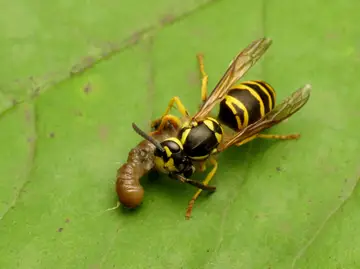
Eastern yellowjacket
Vespula maculifrons
- Venom
- No official source we use states whether this animal is venomous. That does not mean it is harmless: do not handle it.
Last checked November 3, 2026 against official sources.
This page lists 4 insects: 1 from Massachusetts Department of Public Health, Bureau of Infectious Disease and Laboratory Sciences's Mass DPH Mosquito-borne Diseases; MDAR spotted lanternfly update; UMass Extension Landscape fact sheet: Yellowjackets and 3 named in other official sources. 2 are nonnative.
Not every species: no complete official list of Massachusetts insects exists, so this page covers the ones state and Extension sources name. How lists are built.
Official sources single out these insects in Massachusetts, in their own words:
Disease vectors. “West Nile Virus (WNV) and Eastern Equine Encephalitis (EEE or ‘Triple E’) are viruses that occur in Massachusetts and can cause illness ranging from a mild fever to more serious disease like encephalitis or meningitis.” Massachusetts Department of Public Health, Bureau of Infectious Disease and Laboratory Sciences
Stings. “Yellowjacket colonies on private property can be a serious health and safety risk for individuals with allergies to wasp, bee, or hornet stings.” UMass Extension Landscape, Nursery and Urban Forestry Program, University of Massachusetts Amherst
From A to Z. Do not handle them.
Vespula maculifrons
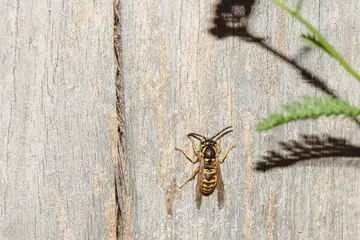
Vespula germanica
Records of insects in Massachusetts peak in June to August. They show when people record insects, not how many there are (about month bars).
Call 911 or Poison Help at 1-800-222-1222 right away. Poison Help connects you to your local poison center, any time of day.
Official advice from Massachusetts Department of Public Health, Bureau of Infectious Disease and Laboratory Sciences:
The species list comes from Mass DPH Mosquito-borne Diseases; MDAR spotted lanternfly update; UMass Extension Landscape fact sheet: Yellowjackets (Massachusetts Department of Public Health, Bureau of Infectious Disease and Laboratory Sciences, see each source). 3 more entries come from other official sources named on each card.
Venom labels come only from official sources and link to them; "Not stated" never means harmless. How labels work.
"Nonnative" and "Invasive" follow the wording of the source list. See invasive species in Massachusetts.
“West Nile Virus (WNV) and Eastern Equine Encephalitis (EEE or ‘Triple E’) are viruses that occur in Massachusetts and can cause illness ranging from a mild fever to more serious disease like encephalitis or meningitis.”
“Current WNV and EEE activity and risk maps (June – October)”
“Yellowjacket colonies on private property can be a serious health and safety risk for individuals with allergies to wasp, bee, or hornet stings.”
“Tick-borne illnesses can be very severe and taking steps to avoid tick bites is important.”
