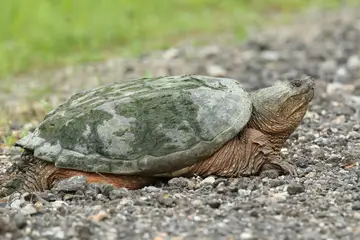
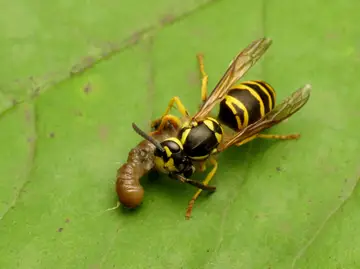
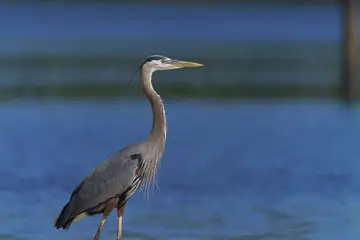
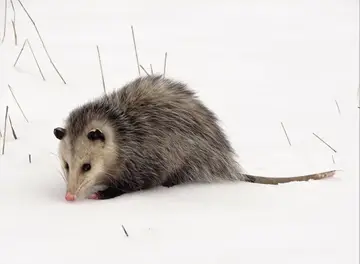
Massachusetts has 2 venomous snakes named by official sources: Timber Rattlesnake and Copperhead, as labelled by MassWildlife. This guide covers 9 animal groups from Massachusetts Division of Fisheries and Wildlife (MassWildlife) lists and other official sources, with photos, venomous status and when each group is active.
Identification help has limits: a photo cannot confirm that an animal is safe. Watch from a distance and never handle a wild animal.
These are the animals official sources describe as venomous or as a risk to people in Massachusetts, across 6 groups. The reason is given in the source's own terms.
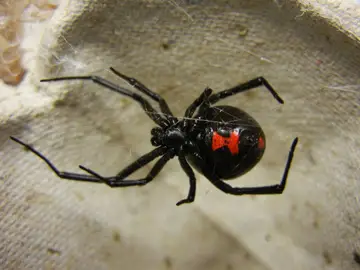
Venomous: “We do have one venomous spider in Massachusetts … the black widow. Occasionally found in houses but more often in garden sheds and wood piles.”
May spread disease-causing germs when they bite: “Black-legged (deer) ticks and dog ticks are found throughout Massachusetts and may spread different disease-causing germs when they bite you …”
Disease vectors: “West Nile Virus (WNV) and Eastern Equine Encephalitis (EEE or ‘Triple E’) are viruses that occur in Massachusetts and can cause illness ranging from a mild fever to more serious disease like …”
Stings: “Yellowjacket colonies on private property can be a serious health and safety risk for individuals with allergies to wasp, bee, or hornet stings.”
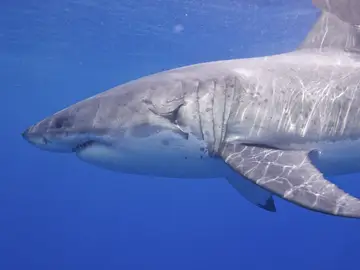
NPS Cape Cod National Seashore: “While it is rare for a great white shark to bite a human, since 2012, sharks have bitten people three times in the waters off Truro and Wellfleet. One bite in 2018 resulted in a fatality.”
Darker cells are the months with more open-licence observation records of each group in Massachusetts (GBIF). They show when people see and record these animals, not how many there are. The current month, this month, is highlighted.
Bears: talk calmly and back away slowly, do not run, never come between a female and cubs; fight back if a black bear makes contact. MassWildlife
Questions people ask about Massachusetts wildlife
Are there venomous snakes in Massachusetts?
Yes. MassWildlife: only 2 of the 14 snake species are venomous, the timber rattlesnake and the copperhead; both live in only a few areas and are state endangered. MassWildlife
How many snakes are in Massachusetts?
MassWildlife says Massachusetts is home to 14 species of snakes. MassWildlife
Are there rattlesnakes in Massachusetts?
Yes, but rare. Timber rattlesnakes are native but the statewide population is only in the hundreds, scattered over a few areas; most people never see one. MassWildlife
Are there cottonmouths (water moccasins) in Massachusetts?
No. Not on the MassWildlife list. USGS NAS has 2 Massachusetts records, both from Milton in 1986, and says the species was never established in Massachusetts (the specimen may have been a released pet). US Geological Survey, Nonindigenous Aquatic Species database
Are there alligators in Massachusetts?
No. No crocodilian is on the MassWildlife list. USGS NAS has 4 American alligator records in Massachusetts (2005-2007, Rehoboth, Townsend, Brockton, Blackstone), all marked failed; it also has 2 failed Common Caiman records. US Geological Survey, Nonindigenous Aquatic Species database
Are there black widow spiders in Massachusetts?
Yes. Cape Cod Cooperative Extension: the black widow is the one venomous spider in Massachusetts, occasionally in houses but more often in garden sheds and wood piles. Cape Cod Cooperative Extension, Barnstable County
Are there brown recluse spiders in Massachusetts?
No. Cape Cod Cooperative Extension: brown recluse distribution is confined to Nebraska, Kansas, Missouri and the south; reported sightings turn out to be wolf spiders. Cape Cod Cooperative Extension, Barnstable County
Are there lizards in Massachusetts?
Not established. MassWildlife lists only the Common Five-lined Skink, with no extant populations known in Massachusetts. MassWildlife
Are there great white sharks in Massachusetts?
Yes. White sharks are in Massachusetts waters from as early as late April to mid-December, most commonly August through October, and approach very close to shore when feeding on seals. DMF
Yes. MassWildlife estimates over 4,500 black bears, growing and expanding eastward; they live and breed in Worcester County, northern Middlesex County and west to the Berkshires. MassWildlife
Are there coyotes in Massachusetts?
Yes. The eastern coyote is well established throughout Massachusetts except Nantucket and Martha's Vineyard. MassWildlife
Are there mountain lions in Massachusetts?
No. MassWildlife lists the cougar as extirpated (last record 1858); almost all recent reports are misidentifications, with one confirmed scat (1997) and a trail of tracks (2011) in Franklin County. MassWildlife
Are there wolves in Massachusetts?
No. Gray wolves were extirpated by 1840; one vagrant from Canada was killed in Franklin County in 2007. MassWildlife
Are there moose in Massachusetts?
Yes. Resident in northeastern, central and western Massachusetts; vagrants may occur in the southeast. MassWildlife
Are there sea turtles in Massachusetts?
Yes. Hundreds of sea turtles summer in Cape Cod waters; all marine turtles are state listed as threatened or endangered. MassWildlife
“You can report sightings of rattlesnakes to MassWildlife at [email protected], or report any suspected illegal activity directly to the Massachusetts Environmental Police at 1-800-632-8075.”
“Today, their statewide population is only in the hundreds and scattered over a small handful of areas, making the chance of seeing one very low.”
“If you aren’t sure what species of snake you are looking at, treat it as though it is venomous and give it plenty of space. To avoid an encounter, make sure to stay on trails, and keep pets leashed.”
“…they hibernate for six months of the year.”
Snakes of Massachusetts. Massachusetts Division of Fisheries and Wildlife (MassWildlife). archived copy, captured October 24, 2026; checked November 3, 2026.Quoted passages (2)
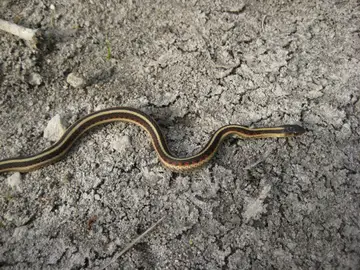
“Only 2 of the 14 types of snakes in Massachusetts are venomous: the timber rattlesnake and the copperhead.”
“Massachusetts is home to an impressive diversity of wildlife, including 14 species of snakes.”
Freshwater Turtles of Massachusetts. Massachusetts Division of Fisheries and Wildlife (MassWildlife). archived copy, captured October 24, 2026; checked November 3, 2026.Quoted passages (1)
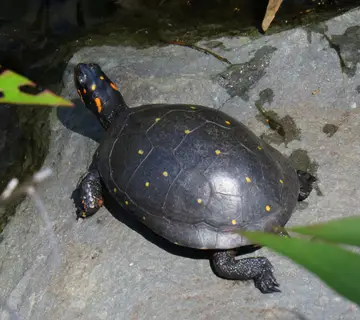
“Found in a variety of habitats, 10 species of native freshwater turtles call Massachusetts home.”
“We do have one venomous spider in Massachusetts … the black widow. Occasionally found in houses but more often in garden sheds and wood piles.”
“I do get frequent calls about spiders … brown recluse in particular. Yes, they are one of three venomous spiders found in North America. Their distribution is confined to Nebraska, Kansas, Missouri and the south. In every case these sightings turn out to be wolf spiders.”
“Their distribution is confined to Nebraska, Kansas, Missouri and the south. In every case these sightings turn out to be wolf spiders.”
Tick-borne Diseases. Massachusetts Department of Public Health, Bureau of Infectious Disease and Laboratory Sciences. archived copy, captured September 30, 2026; checked November 3, 2026.Quoted passages (1)
“Black-legged (deer) ticks and dog ticks are found throughout Massachusetts and may spread different disease-causing germs when they bite you. The most common tick-borne diseases in Massachusetts are Lyme Disease, Babesiosis, and Anaplasmosis.”
Mosquito-borne Diseases. Massachusetts Department of Public Health, Bureau of Infectious Disease and Laboratory Sciences. archived copy, captured September 6, 2026; checked November 3, 2026.Quoted passages (2)
“West Nile Virus (WNV) and Eastern Equine Encephalitis (EEE or ‘Triple E’) are viruses that occur in Massachusetts and can cause illness ranging from a mild fever to more serious disease like encephalitis or meningitis.”
“Current WNV and EEE activity and risk maps (June – October)”
Landscape: Yellowjackets (fact sheet). UMass Extension Landscape, Nursery and Urban Forestry Program, University of Massachusetts Amherst. archived copy, captured January 15, 2025; checked November 3, 2026.Quoted passages (1)
“Yellowjacket colonies on private property can be a serious health and safety risk for individuals with allergies to wasp, bee, or hornet stings.”
Learn about black bears. Massachusetts Division of Fisheries and Wildlife (MassWildlife). archived copy, captured May 28, 2026; checked November 3, 2026.Quoted passages (4)
“Do not approach bears or intrude between a female bear and her cubs. Do not run. Fight back if a black bear makes contact with you.”
“The statewide population of bears is estimated to be over 4,500 animals and is growing and expanding eastward.”
“If you encounter a bear while hiking or camping, talk in a calm voice and slowly back away. Do not approach bears or intrude between a female bear and her cubs. Do not run. Fight back if a black bear makes contact with you.”
“Depending on food availability and snow cover, bears will den between mid-November and early December and exit between early March and mid-April.”
Prevent conflicts with coyotes. Massachusetts Division of Fisheries and Wildlife (MassWildlife). archived copy, captured April 22, 2026; checked November 3, 2026.Quoted passages (1)
“While unfortunate, it’s normal behavior for coyotes to attack pets like outdoor cats and unsupervised dogs.”
Shark Safety at Cape Cod. National Park Service, Cape Cod National Seashore. updated August 19, 2026; checked November 3, 2026.Quoted passages (2)
“While it is rare for a great white shark to bite a human, since 2012, sharks have bitten people three times in the waters off Truro and Wellfleet. One bite in 2018 resulted in a fatality.”
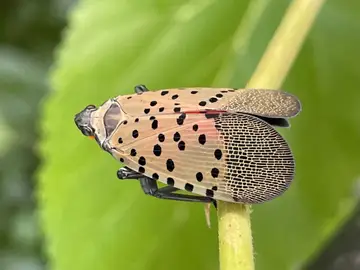
“…the Spotted Lanternfly (SLF), an invasive insect, has now been confirmed in more than 50 cities and towns across nine different counties in the state.”
Amphibians and Reptiles in Massachusetts. Massachusetts Division of Fisheries and Wildlife (MassWildlife). archived copy, captured January 17, 2026; checked November 3, 2026.Quoted passages (1)
“No extant populations known in Massachusetts, although the species is native to Vermont, New York, and Connecticut.”
“This species arrives in Massachusetts waters as early as late April and can stay as late as mid-December, but is most common August through October.”
Learn about coyotes. Massachusetts Division of Fisheries and Wildlife (MassWildlife). archived copy, captured October 24, 2026; checked November 3, 2026.Quoted passages (2)
“The eastern coyote is well established throughout Massachusetts except on Nantucket and Martha’s Vineyard.”
“They remain active year-round and do not hibernate.”
Mammals in Massachusetts. Massachusetts Division of Fisheries and Wildlife (MassWildlife). archived copy, captured April 11, 2026; checked November 3, 2026.Quoted passages (3)
“Extirpated; six records from 1680 to 1858; last record 1858 from Hampshire County. Almost all recent records are misidentifications or spurious.”
“Extirpated by 1840.”
“Resident in northeastern, central, and western Massachusetts. Vagrants may occur in southeastern Massachusetts.”
Marine Turtles of Massachusetts. Massachusetts Division of Fisheries and Wildlife (MassWildlife). archived copy, captured September 1, 2025; checked November 3, 2026.Quoted passages (1)
“Hundreds of sea turtles summer in Cape Cod waters annually.”
Learn about timber rattlesnakes. MassWildlife Natural Heritage & Endangered Species Program. archived copy, captured March 13, 2026; checked November 3, 2026.Quoted passages (2)
“Because they are venomous AND endangered in Massachusetts, please maintain a safe, respectful distance. Do not handle or otherwise disturb them.”
“Massachusetts timber rattlesnakes are active from mid-April to mid-October.”
Poison Help home page. U.S. Health Resources & Services Administration (HRSA), Poison Help. archived copy, captured October 2, 2026; checked November 3, 2026.Quoted passages (1)
“1-800-222-1222”
Shark research in Massachusetts. Massachusetts Division of Marine Fisheries (DMF). archived copy, captured July 17, 2026; checked November 3, 2026.Quoted passages (1)
“At least a dozen shark species visit our coastline from May to November”