States Wildlife

Sharks in Massachusetts: Species, Stingrays & Safety

Last checked November 3, 2026 against official sources.

On this page
  1. Which sharks, rays and other marine animals can hurt you
  2. All 12 sharks, rays and other marine animals
  3. Lookalikes
  4. When they are active
  5. If you are bitten or stung
  6. What official sources say
  7. About this list
  8. Sources

DMF: At least a dozen shark species visit our coastline from May to November

This page lists 12 sharks, rays and other marine animals: 4 from DMF's DMF Shark research in Massachusetts; MarineFisheries Advisory; Shark Nursery Areas in the Coastal Waters of Massachusetts and 8 named in other official sources.

Which sharks, rays and other marine animals can hurt you

Official sources single out these sharks, rays and other marine animals in Massachusetts, in their own words:

All 12 sharks, rays and other marine animals

From A to Z. Do not handle them.

No confirmed photo of Basking shark

Basking shark

Cetorhinus maximus

Not stated

Venom
No official source we use states whether this animal is venomous. That does not mean it is harmless: do not handle it.
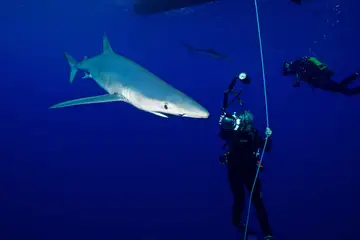
Blue shark
Photo: Juergen Gangoly · CC BY-SA 4.0 · Wikimedia Commons · resized

Blue shark

Prionace glauca

Not stated

Venom
No official source we use states whether this animal is venomous. That does not mean it is harmless: do not handle it.
No confirmed photo of Common thresher shark

Common thresher shark

Not stated

Venom
No official source we use states whether this animal is venomous. That does not mean it is harmless: do not handle it.
No confirmed photo of Dusky shark

Dusky shark

Carcharhinus obscurus

Not stated

Venom
No official source we use states whether this animal is venomous. That does not mean it is harmless: do not handle it.
No confirmed photo of Porbeagle

Porbeagle

Lamna nasus

Not stated

Venom
No official source we use states whether this animal is venomous. That does not mean it is harmless: do not handle it.
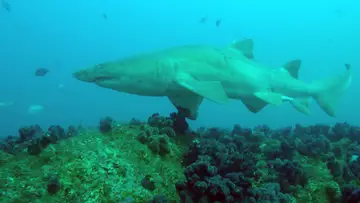
Sand tiger
Photo: Tom Heijnen · CC BY 4.0 · iNaturalist

Sand tiger

Carcharias taurus

Not stated

Venom
No official source we use states whether this animal is venomous. That does not mean it is harmless: do not handle it.
No confirmed photo of Sandbar shark

Sandbar shark

Carcharhinus plumbeus

Not stated

Venom
No official source we use states whether this animal is venomous. That does not mean it is harmless: do not handle it.
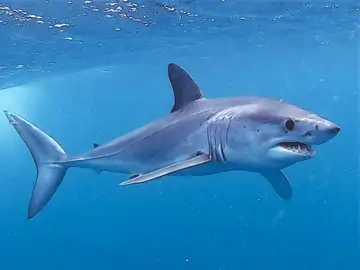
Shortfin mako
Photo: Fábio Olmos · CC BY 4.0 · iNaturalist

Shortfin mako

Isurus oxyrinchus

Not stated

Venom
No official source we use states whether this animal is venomous. That does not mean it is harmless: do not handle it.
Size
Up to about 13 ft (NOAA, Atlantic; Florida Museum); Pacific: up to 12 ft, averaging 6 to 7 ft (NOAA). SCDNR: averages 5 to 8 ft.
How to recognize it
  • Very pointed snout and long gill slits
  • Crescent-shaped (lunate) tail with a single strong keel on each side of the tail base
  • Long, slender, smooth-edged teeth, visible even with the mouth closed

Full Shortfin mako guide

No confirmed photo of Smooth dogfish

Smooth dogfish

Mustelus canis

Not stated

Venom
No official source we use states whether this animal is venomous. That does not mean it is harmless: do not handle it.
No confirmed photo of Spiny dogfish

Spiny dogfish

Squalus acanthias

Not stated

Venom
No official source we use states whether this animal is venomous. That does not mean it is harmless: do not handle it.
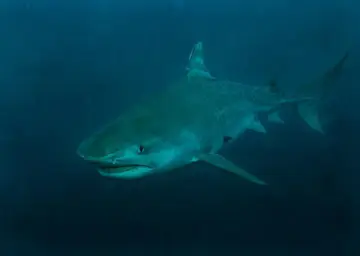
Tiger shark
Photo: Georgina Jones · CC BY-SA 4.0 · iNaturalist · resized

Tiger shark

Galeocerdo cuvier

Not stated

Venom
No official source we use states whether this animal is venomous. That does not mean it is harmless: do not handle it.
Size
Florida gives a maximum of about 18 ft and 2,000 lb.
How to recognize it
  • Blunt snout and vertical bars on the sides
  • Very broad head; short, broadly rounded snout much shorter than the mouth is wide
  • Large triangular teeth, strongly serrated, with a deep notch on the outer edge

Full Tiger shark guide

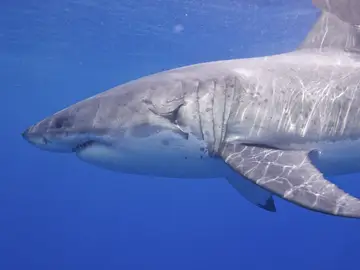
White shark
Photo: Elias Levy · CC BY 2.0 · Wikimedia Commons

White shark

Carcharodon carcharias

Not stated

Venom
No official source we use states whether this animal is venomous. That does not mean it is harmless: do not handle it.
Danger to people
“While it is rare for a great white shark to bite a human, since 2012, sharks have bitten people three times in the waters off Truro and Wellfleet. One bite in 2018 resulted in a fatality.” National Park Service, Cape Cod National Seashore
Size
Born about 4 feet long; grows to about 20-21 feet and over 4,000 pounds (NOAA quick facts: up to 4,500 pounds).
How to recognize it
  • Torpedo-shaped body, conical snout, prominent keel at the base of a crescent-shaped tail
  • Large first dorsal fin, usually with a pointed tip
  • Broad, triangular, serrated teeth
Conservation
Massachusetts prohibited species (DMF, 2005); attraction, capture and tagging prohibited without a special permit (2015)
What the sources say

Habitat: Entire water column along the continental shelf; approaches very close to shore when feeding on seals (DMF)

Full White shark guide

Sharks and Marine Life people confuse

Great white shark or Shortfin mako shark?

Great white shark
Photo: Elias Levy · CC BY 2.0 · Wikimedia Commons

Great white shark Not stated

Shortfin mako shark
Photo: Fábio Olmos · CC BY 4.0 · iNaturalist

Shortfin mako shark Not stated

Mako lacks black tips on the undersides of the fins and has thin, pointed teeth without serrations.

Shortfin Mako Shark or White shark?

Shortfin Mako Shark
Photo: Fábio Olmos · CC BY 4.0 · iNaturalist

Shortfin Mako Shark Not stated

White shark
Photo: Elias Levy · CC BY 2.0 · Wikimedia Commons

White shark Not stated

The white shark has broad, triangular, serrated teeth; mako teeth are slender and smooth-edged.

Photos show typical adults; individuals vary. Never get close to compare.

When sharks, rays and other marine animals are active in Massachusetts

Records of sharks, rays and other marine animals in Massachusetts peak in April to June and August. They show when people record sharks, rays and other marine animals, not how many there are (about month bars).

256 records of sharks, rays and other marine animals in Massachusetts by month (GBIF, CC0 and CC BY records).
  • At least a dozen shark species visit the Massachusetts coast May to November. DMF
  • White sharks: late April to mid-December, most common August through October. DMF

If you are bitten or stung

Call 911 or Poison Help at 1-800-222-1222 right away. Poison Help connects you to your local poison center, any time of day.

Official advice from National Park Service, Cape Cod National Seashore and MassWildlife:

  • Sharks on Cape Cod: stay close to shore, swim in groups, avoid seals, schools of fish and murky water; in an emergency dial 911. National Park Service, Cape Cod National Seashore
  • Stranded sea turtle on a beach: do not assume it is dead and do not put it back in the water; call the Wellfleet Bay hotline 508-349-2615. MassWildlife

What official sources say

Are there great white sharks in Massachusetts?

Yes. White sharks are in Massachusetts waters from as early as late April to mid-December, most commonly August through October, and approach very close to shore when feeding on seals. DMF

“This species arrives in Massachusetts waters as early as late April and can stay as late as mid-December, but is most common August through October.”

About this list

The species list comes from DMF Shark research in Massachusetts; MarineFisheries Advisory (June 28, 2024); Shark Nursery Areas in the Coastal Waters of Massachusetts (DMF, 2007) (Massachusetts Division of Marine Fisheries (DMF), 2007-2026 (see each source)). 8 more entries come from other official sources named on each card.

Venom labels come only from official sources and link to them; "Not stated" never means harmless. How labels work.

Sources

  1. Frequently asked questions about rattlesnakes in MA. Massachusetts Division of Fisheries and Wildlife (MassWildlife). archived copy, captured June 18, 2026; checked November 3, 2026.
  2. Shark research in Massachusetts. Massachusetts Division of Marine Fisheries (DMF). archived copy, captured July 17, 2026; checked November 3, 2026.
    Quoted passages (1)
    “At least a dozen shark species visit our coastline from May to November”
  3. Creature Feature: White Shark, Carcharodon carcharias. Massachusetts Division of Marine Fisheries (DMF). archived copy, captured March 7, 2026; checked November 3, 2026.
    Quoted passages (1)
    “This species arrives in Massachusetts waters as early as late April and can stay as late as mid-December, but is most common August through October.”
  4. Shark Safety at Cape Cod. National Park Service, Cape Cod National Seashore. updated August 19, 2026; checked November 3, 2026.
    Quoted passages (2)
    “While it is rare for a great white shark to bite a human, since 2012, sharks have bitten people three times in the waters off Truro and Wellfleet. One bite in 2018 resulted in a fatality.”
    “If it is an emergency dial 911.”
  5. Shark Nursery Areas in the Coastal Waters of Massachusetts (G. B. Skomal, DMF; American Fisheries Society Symposium 50, 2007). Massachusetts Division of Marine Fisheries (DMF), hosted on mass.gov. archived copy, captured September 1, 2025; checked November 3, 2026.
  6. MarineFisheries Advisory: Important reminder for recreational shark fishers. Massachusetts Division of Marine Fisheries (DMF). archived copy, captured September 18, 2025; checked November 3, 2026.
  7. Marine Turtles of Massachusetts. Massachusetts Division of Fisheries and Wildlife (MassWildlife). archived copy, captured September 1, 2025; checked November 3, 2026.
    Quoted passages (1)
    “If you find a sea turtle on a shoreline, do not assume it is dead and do not put it back into the water.”
  8. GBIF.org occurrence records, human observations licensed CC0 1.0 or CC BY 4.0 only, accessed November 3, 2026. The datasets behind these counts are listed on our Sources page.