This page lists 10 insects and 6 ticks: 1 from NH Department of Health and Human Services's Tickborne Diseases; Controlling Wasps, Bees and Hornets Around Your Home; NH SGCN list and 15 named in other official sources.
4 are nonnative.
Not every species: no complete official list of New Hampshire insects exists, so this page covers the ones state and Extension sources name. How lists are built.
Which insects can hurt you
Official sources single out these insects in New Hampshire, in their own words:
Mosquitoes
Three mosquito-borne illnesses are currently found in NH per NH DHHS. Species not named. “While there are many mosquito borne illnesses, three types are currently found in NH; Eastern Equine Encephalitis Virus (EEEV), West Nile Virus (WNV), and Jamestown Canyon Virus (JCV).” NH Department of Health and Human Services
Browntail moth caterpillar
Poisonous fine hairs cause rashes. “Browntail moth caterpillars have poisonous fine hairs that can produce skin rashes similar to poison ivy, even when the exposure to them is airborne.” NH Department of Natural and Cultural Resources
Yellow jackets and hornets
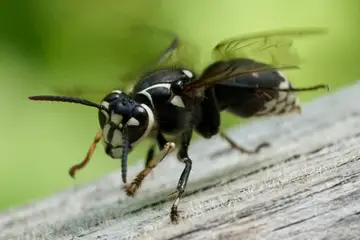
Stings can be painful, even life-threatening, for a few highly sensitive people, per UNH Extension. “Wasp encounters can be painful, even life-threatening, for a few highly sensitive people.” UNH Cooperative Extension
Ticks (arachnids, not insects)
Official sources single out these ticks in New Hampshire, in their own words:
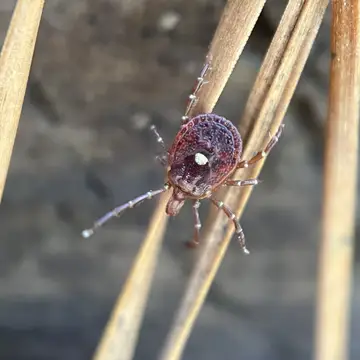
Spreads Lyme disease, anaplasmosis, babesiosis, B. miyamotoi and Powassan virus, per NH DHHS. “Lyme disease, anaplasmosis, babesiosis, B. miyamotoi and Powassan virus are transmitted by the bite of the black-legged tick” NH Department of Health and Human Services
UNH Extension says it rarely turns up in NH and is a vector of human ehrlichiosis agents. “The lone Star tick is the vector for Ehrlichia chaffeensis, the agent of human monocytic ehrlichiosis (HME)” UNH Cooperative Extension
Woodchuck tick
UNH Extension says it occurs in every NH county and is a vector of a rare, serious human disease, Powassan encephalitis. “…but is a vector of a rare, serious human disease called Powassan encephalitis.” UNH Cooperative Extension
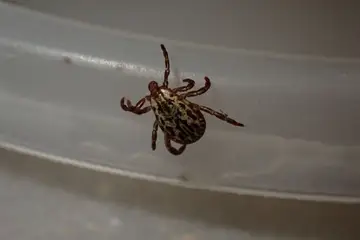
UNH Extension says it can transmit the organism that causes Rocky Mountain spotted fever, which is rare in New England. “This species can transmit the organism that causes Rocky Mountain Spotted Fever, which is rare in New England” UNH Cooperative Extension
No official source we use states whether this animal is venomous. That does not mean it is harmless: do not handle it.
Danger to people
“Lyme disease, anaplasmosis, babesiosis, B. miyamotoi and Powassan virus are transmitted by the bite of the black-legged tick” NH Department of Health and Human Services
No confirmed photo of Brown dog tick
Brown dog tick
Rhipicephalus sanguineus
Not statedTick: an arachnid, not an insect
Venom
No official source we use states whether this animal is venomous. That does not mean it is harmless: do not handle it.
No confirmed photo of Browntail moth
Browntail moth
Euproctis chrysorrhoea
Not statedNonnative
Venom
No official source we use states whether this animal is venomous. That does not mean it is harmless: do not handle it.
Danger to people
“Browntail moth caterpillars have poisonous fine hairs that can produce skin rashes similar to poison ivy, even when the exposure to them is airborne.” NH Department of Natural and Cultural Resources
NH Fish and Game Wildlife Division (603) 271-2461; Law Enforcement (603) 271-3361. Invasive insects: NHBugs reporting form (nhbugs.org/reporting-form). Stranded marine animals: Seacoast Science Center (603) 997-9448 or the Northeast hotline (866) 755-6622. Sharks: Northeast Shark Hotline (401) 859-1043. New Hampshire Fish and Game Department
“Wasp encounters can be painful, even life-threatening, for a few highly sensitive people.”
Browntail Moth. NHBugs (UNH Cooperative Extension, NH Division of Forests and Lands, NH Department of Agriculture). undated page; checked November 3, 2026.
“Browntail moth caterpillars have poisonous fine hairs that can produce skin rashes similar to poison ivy, even when the exposure to them is airborne.”
“People should not handle the caterpillars without wearing proper gloves and, when possible, a mask.”
“While there are many mosquito borne illnesses, three types are currently found in NH; Eastern Equine Encephalitis Virus (EEEV), West Nile Virus (WNV), and Jamestown Canyon Virus (JCV).”
Wildlife FAQs. New Hampshire Fish and Game Department. archived copy, captured August 1, 2023; checked November 3, 2026.Quoted passages (1)