New Hampshire Fish and Game Department: There are 7 species of turtles that are considered native to New Hampshire.
This page lists 8 turtles: 1 from New Hampshire Fish and Game Department's Turtles of New Hampshire; Species Occurring in NH and 7 named in other official sources.
1 is nonnative. New Hampshire Fish and Game Department gives a total of 7; the 8 here are the turtles official sources name one by one.
NH endangered; Species of Greatest Conservation Need
What the sources say
Habitat: Wetland habitats with permanent shallow water and emergent vegetation such as marshes, swamps, bogs, and ponds. Use vernal pools extensively in spring and while traveling through the landscape. May use slow rivers and streams as mechanisms for dispersal between wetlands. Extensive use of terrestrial habitats for nesting and travel among wetlands. (New Hampshire Fish and Game Department)
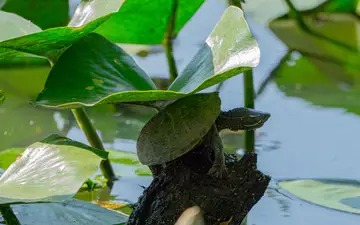
Habitat: Exclusively aquatic, found in ponds, shallow lakes, slow-moving streams and rivers that have soft muddy bottoms. Tolerate a narrow range of temperatures, moving to deeper, cooler water when temperatures get too high. (New Hampshire Fish and Game Department)
NH endangered; Species of Greatest Conservation Need
What the sources say
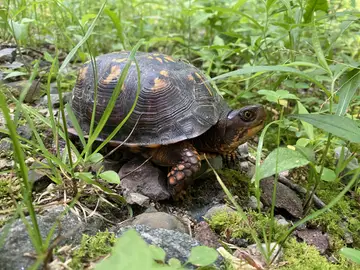
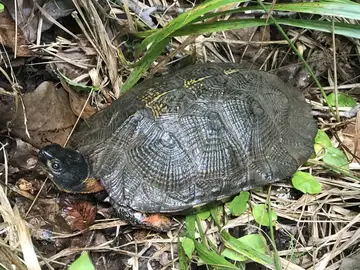
Habitat: Terrestrial areas such as dry and moist woodlands, old fields, pastures, power-line corridors, and edges of marshes, bogs, and shallow streams. During hot weather, may rest in water or burrow under logs and moist vegetation. (New Hampshire Fish and Game Department)
Photo: U. S. Fish and Wildlife Service - Northeast Region · Public domain · Wikimedia Commons
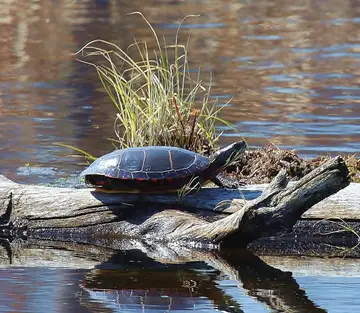
Habitat: Wetland areas with an abundance of vegetation and basking areas such as shallow ponds, marshes, bogs, slow-moving streams, and lakeshores. Often seen basking on partially submerged logs or rocks in large groups. (New Hampshire Fish and Game Department)
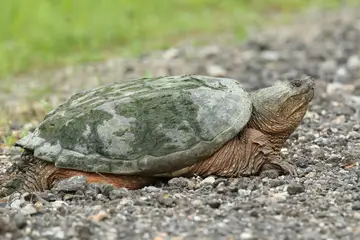
Habitat: Any permanent water body such as lakes, ponds, swamps, bogs, streams, and rivers, especially aquatic habitats with muddy bottoms and abundant submerged logs and aquatic vegetation. Use terrestrial habitats while searching for appropriate nesting sites and traveling among wetland habitats. (New Hampshire Fish and Game Department)
NH threatened; Species of Greatest Conservation Need
What the sources say
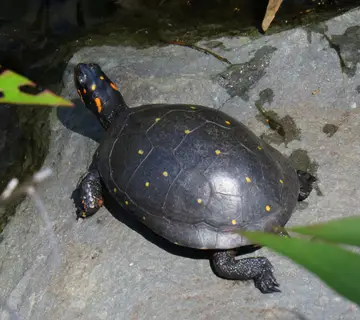
Habitat: Wetlands with shallow, permanent water bodies and emergent vegetation. Marshes, vernal pools, wet meadows, swamps, ponds, and slow-moving streams and rivers all provide suitable habitats for spotted turtles. Terrestrial habitat used extensively while searching for suitable nesting sites, traveling among wetland habitats, and periods of inactivity during high temperatures. (New Hampshire Fish and Game Department)
NH species of special concern; Species of Greatest Conservation Need
What the sources say
Habitat: Found in slow-moving streams and channels with sandy bottoms. Extensive use of terrestrial habitats during summer, including floodplains, meadows, woodlands, fields, as well as wetlands. (New Hampshire Fish and Game Department)
NH Fish and Game Wildlife Division (603) 271-2461; Law Enforcement (603) 271-3361. Invasive insects: NHBugs reporting form (nhbugs.org/reporting-form). Stranded marine animals: Seacoast Science Center (603) 997-9448 or the Northeast hotline (866) 755-6622. Sharks: Northeast Shark Hotline (401) 859-1043. New Hampshire Fish and Game Department
About this list
The species list comes from Turtles of New Hampshire; Species Occurring in NH (New Hampshire Fish and Game Department, Internet Archive capture 2025-10-14 of the undated official page). 7 more entries come from other official sources named on each card.
Venom labels come only from official sources and link to them; "Not stated" never means harmless. How labels work.
Snakes of NH (old site page). New Hampshire Fish and Game Department. archived copy, captured August 1, 2023; checked November 3, 2026.
Turtles of New Hampshire. New Hampshire Fish and Game Department. archived copy, captured October 14, 2025; checked November 3, 2026.Quoted passages (2)
“There are 7 species of turtles that are considered native to New Hampshire.”
“Never release pet turtles into the wild!! Report non-native species to Fish and Game.”