Fire ants
Solenopsis (fire ants); page focuses on the red imported fire ant, Solenopsis invicta · also called red imported fire ant, RIFA, black imported fire ant and imported fire ants · Last checked November 3, 2026.
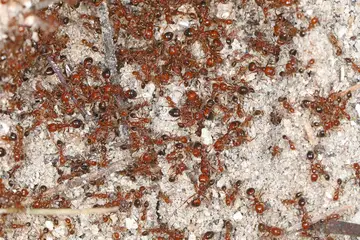

Fire ants are small reddish-brown to black ants that build soil mounds in sunny lawns, pastures, parks and fields and swarm out to sting when the mound is disturbed. They are venomous: a single ant can sting repeatedly, stings burn and form white pustules, and some people have severe allergic reactions (anaphylaxis) that need emergency care. The red and black imported fire ants came from South America; USDA APHIS lists infestations in Alabama, Arkansas, California, Florida, Georgia, Louisiana, Mississippi, North Carolina, Oklahoma, South Carolina, Tennessee, Texas, Virginia and Puerto Rico, and CDC/NIOSH adds limited areas of New Mexico and Arizona. Native fire ants also occur in the South and West. If someone stung has trouble breathing, chest pain, serious swelling or slurred speech, call 911; for questions call Poison Help at 1-800-222-1222. APHIS
This page covers a genus (Solenopsis (fire ants); page focuses on the red imported fire ant, Solenopsis invicta), not a single species.
On this page
Are fire ants dangerous?
Venomous; stings are painful and usually not life-threatening, but some people are allergic and can go into anaphylactic shock, which is an emergency. Deaths are documented but relatively few compared with bee and wasp stings. University of Georgia Cooperative Extension
“If a sting causes severe chest pain, nausea, severe sweating, loss of breath, serious swelling or slurred speech, the person should be taken to an emergency medical facility immediately. These are symptoms of an allergic reaction or anaphylactic shock.”
Bites and stings: Fire ants grip with their jaws (bite) and then sting; the sting causes the pain and the white pustule. They attack in numbers when the mound or a food source is disturbed and run up vertical surfaces to sting. Symptoms: burning and itching, then a white pustule within a day or two; pustules can become infected and scar.
If someone is bitten or stung, call 911 or Poison Help at 1-800-222-1222.
How to identify fire ants
A photo or description can narrow it down, but cannot confirm what an animal is or that it is safe. Look from a distance and do not handle wild animals.
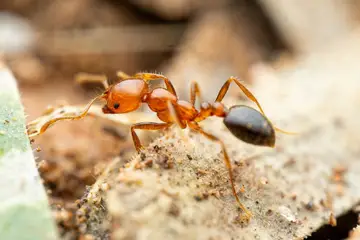

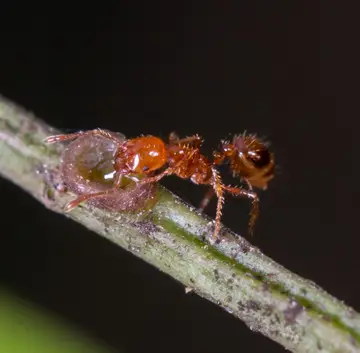

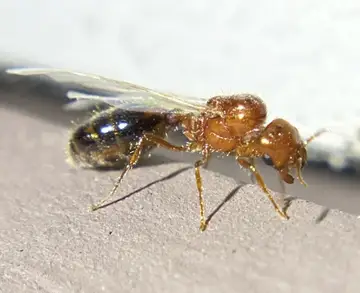
Size: Workers vary in size within one colony, about 1/8 to 1/4 inch (2.4 to 6 mm). UF/IFAS Extension
Colors: reddish-brown to red, with a darker (black) rear abdomen (gaster); imported fire ants are reddish-brown or black (APHIS). Pattern: small reddish-brown body with an opaque shiny black abdomen (HISC, red imported fire ant).
Key features
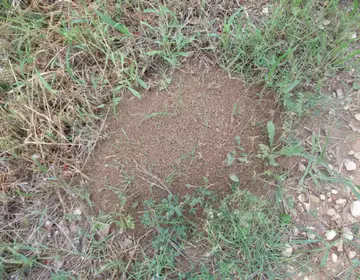
- soil mound, often dome-shaped; up to 18-24 inches high depending on soil (UGA; UC IPM: can be 1 ft high); in mowed turf the mound may look flattened
- mounds have no visible entrance hole Hawaii DLNR
- aggressive: many ants swarm out and sting when the mound is disturbed; this is the quickest field sign University of California Statewide IPM Program
- waist (pedicel) of two segments; antennae end in a two-segmented club UF/IFAS Extension
- workers of mixed sizes in the same colony, but no big-headed workers (unlike the tropical fire ant) UF/IFAS Extension
- white eggs, larvae and pupae may be visible on top of mounds APHIS
Young
Eggs, larvae and pupae stay in the underground nest and are only seen when the nest is disturbed or brood is being moved; the whitish objects at the top of a mound are brood.
Animals mistaken for fire ants
Fire ants or Tropical fire ant?
Fire ants
Tropical fire ant Solenopsis geminata
Its colonies contain big workers with square heads that are large for their bodies; red imported fire ant workers do not have oversized heads (UF/IFAS). Hawaii's HISC says a microscope is required to tell the two apart. UF/IFAS Extension
Fire ants or Southern fire ant?
Fire ants
Southern fire ant Solenopsis xyloni
About the same size and color as the red imported fire ant; its nests are irregular, scattered soil with several hidden entrances rather than a dome; less aggressive. Definite ID needs a microscope (2 clypeal teeth vs 3). University of California Statewide IPM Program
UC IPM: both become very agitated when disturbed, but the red imported fire ant is much more aggressive ("Both southern fire ants and red imported fire ants become very agitated when their nests are disturbed, but red imported fire ants are much more aggressive").
Fire ants or California harvester ant ("red ants")?
Fire ants
California harvester ant ("red ants") Pogonomyrmex californicus
Workers are all the same size (about 1/5 inch) and red; many people call these red ants. Fire ant workers vary in size within a colony. University of California Statewide IPM Program
Fire ants or Little fire ant?
Fire ants
Little fire ant Wasmannia auropunctata
Much smaller (about 1/16 inch, all workers the same size), uniform yellow-red to light brown, and does NOT build mounded dirt nests; nests in trees, potted plants, irrigation lines and electrical boxes and often falls on people from above. Hawaii DLNR
Hawaii Invasive Species Council: painful sting; welts can last weeks; may sting and even blind pets ("Delivers a painful sting when disturbed. Welts can last for weeks."). Not a Solenopsis; HISC's page header prints the name as "Allomerus auropunctatus", an apparent page error; GBIF accepted name is Wasmannia auropunctata (key 1315391).
Fire ants or Argentine ant?
Fire ants
Argentine ant Linepithema humile
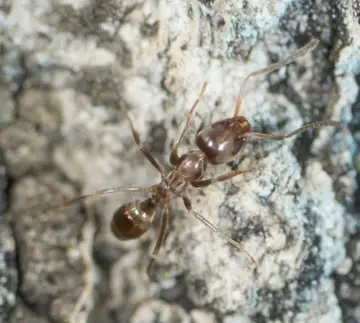
Small grayish-black ant, all the same size (about 1/10 inch), moving in long trails. University of California Statewide IPM Program
Fire ants or Termite swarmers (vs. winged fire ants)?
Fire ants
Termite swarmers (vs. winged fire ants)
Winged fire ants have a narrow waist, front wings longer than hind wings and elbowed antennae. Alabama Cooperative Extension System
Where fire ants live
- Native or listed
- Nonnative or not established
- No official record in our data
- 1–9
- 10–99
- 100–999
- 1,000+
State boundaries: U.S. Census Bureau, cartographic boundary file cb_2024_us_state_20m.
When it is active
Forage when surface soil is about 70-95°F; in summer mostly at night. Mating flights from spring through late fall, most common in spring and fall, especially a day or two after rain that follows a dry period. Can forage indoors in hot, dry summers. Clemson University Cooperative Extension, Home & Garden Information Center
US open-licence records for the five US fire ants named on this page (Solenopsis invicta, S. richteri, S. geminata, S. xyloni and S. aurea) peak in January to May and October.
Habitat and habits
Habitat: Open, sunny places: pastures, parks, lawns, meadows and fields; also landscape beds, around trees and shrubs, sidewalk cracks, against buildings, rotting logs, and utility boxes. Colonies can move indoors. APHIS
Behavior: Social colonies of 100,000 to 500,000 workers; single-queen and multiple-queen forms. In floods whole colonies float as rafts or balls of ants and sting on contact.
Diet: Almost any plant or animal material: insects, ticks, ground-nesting animals, seedlings, plant buds, fruits and seeds; they also prey on pests such as flea larvae, chinch bugs and cockroach eggs.
Young: Winged males and females mate in flight; males die, and the mated queen sheds her wings and starts a colony in the soil. A queen can later lay 800 to 1,000 eggs a day and live 7 years or more.
Legal status and reporting
Federal: Federally quarantined plant pest: under 7 CFR 301.81 USDA APHIS lists each state or part of a state infested with the imported fire ant as a quarantined area, and regulates moving baled hay, soil, plants, soil-moving equipment and other items out of those areas. Not a listed endangered or threatened species. Electronic Code of Federal Regulations
Invasive status: Imported fire ants are invasive, introduced from South America (first at Mobile, Alabama, in the 1930s). APHIS
Report: Outside known infested areas, report suspected imported fire ants to your State plant regulatory official or USDA State plant health director (APHIS), or your local Extension office for ID. Virginia: VDACS Invasive Species Reporting Tool (outside the quarantine area). California: CDFA fire ant line 1-888-434-7326 (as given by UC IPM, 2013). Hawaii: send in ants for identification (HISC ant collection kit). APHIS
Questions about fire ants
Fire ants
Small reddish-brown to black ants that build soil mounds in sunny areas and sting in large numbers when disturbed. Imported fire ants are invasive pests from South America found across the southern US, parts of California and Puerto Rico.
Fire ants bite
Fire ants grip the skin with their jaws and then sting; the sting causes the burning pain and a white pustule within a day or two. A single ant can sting repeatedly. Some people have severe allergic reactions: call 911 for trouble breathing, chest pain, serious swelling or slurred speech; for questions call Poison Help at 1-800-222-1222.
Fire ants bite treatment
This guide gives no treatment advice. Official sources say anyone with severe chest pain, nausea, severe sweating, loss of breath, serious swelling or slurred speech after a sting must get emergency care immediately: call 911. For other questions call Poison Help at 1-800-222-1222.
Fire ants vs red ants
"Red ants" is not one species. In California, UC IPM says many people call harvester ants red ants; harvester workers are all the same size and red, while fire ant workers vary in size in one colony and are dark reddish brown. The quickest field sign of a fire ant is many ants swarming out to sting when the mound is disturbed.
Fire ants in house
Fire ant colonies can move indoors, and ants from colonies near buildings sometimes forage inside for food and moisture, especially in hot, dry summers. They also nest in walls of buildings and utility boxes.
Fire ants in texas
Yes. The red imported fire ant reached Texas in the 1950s and has spread across the state (Texas A&M AgriLife); APHIS lists Texas as infested.
Fire ants florida
Yes. UF/IFAS says two fire ants occur in Florida: the red imported fire ant (most common) and the less common tropical or native fire ant.
Are there fire ants in california?
Yes. The red imported fire ant arrived in 1998 and has infested Orange, Los Angeles, Riverside, San Bernardino and San Diego counties and has also been found in Central Valley almond orchards; it is a quarantined pest. The native southern fire ant also lives in California.
Are there fire ants in tennessee?
Yes. UT says the red and black imported fire ants and their hybrid occur in Tennessee; APHIS lists Tennessee as infested.
Are there fire ants in Colorado, Illinois, Indiana, Michigan, Minnesota, Ohio, Pennsylvania and Wisconsin?
No official source from these states was collected on whether any fire ants occur there, so this page does not say they are absent.
Sources
- Imported Fire Ants. USDA Animal and Plant Health Inspection Service (APHIS). archived copy, captured October 23, 2026; checked November 3, 2026.
Quoted passages (5)
“A single fire ant can sting repeatedly. Young and newborn animals are especially susceptible to the venomous sting.”
“Small white fire ant eggs, larvae, and pupae may be visible on top of their mounds.”
“Open, sunny areas like pastures, parks, lawns, meadows, and fields are most attractive to imported fire ants.”
“Imported fire ants (Solenopsis invicta Buren and S. richteri Forel) are invasive pests”
“Have you seen this pest or signs of pest damage? Immediately report your findings.”
- Insects and Scorpions at Work. CDC / NIOSH. archived copy, captured October 4, 2026; checked November 3, 2026.
- Managing Imported Fire Ants in Urban Areas (Bulletin 1191). University of Georgia Cooperative Extension. March 5, 2026; checked November 3, 2026.
Quoted passages (3)
“If a sting causes severe chest pain, nausea, severe sweating, loss of breath, serious swelling or slurred speech, the person should be taken to an emergency medical facility immediately. These are symptoms of an allergic reaction or anaphylactic shock.”
“The average colony contains 100,000 to 500,000 workers and up to several hundred winged forms and queens.”
“Later on, a queen fed by worker ants can lay from 800 to 1,000 eggs per day if needed.”
- Pest Notes: Red Imported Fire Ant. University of California Statewide IPM Program (UC ANR, Cooperative Extension). 2013-12; checked November 3, 2026.
Quoted passages (6)
“However, the quickest way to recognize this pest is to observe its aggressive behavior when its nest is disturbed.”
“The egg, larval, and pupal stages occur within the underground nest and are only seen when nests are disturbed or when they are being carried to a different location by workers.”
“Fire ants feed on almost any plant or animal material, including other insects, ticks, ground-nesting animals, young trees, seedlings, plant buds, developing fruits, and seeds.”
“Our native southern fire ant (Solenopsis xyloni) is about the same size and color as the red imported fire ant. … Nests of the native southern fire ant, for instance, are usually irregular in shape and consist of scattered soil with multiple obscure entrances. … The characteristic that definitively separates the red imported fire ant from other fire ants is the number of clypeal teeth on its head, a feature that is best viewed under a microscope. The red imported fire ant has 3 clypeal teeth, whereas the native fire ant, Solenopsis xyloni, only has two lateral teeth.”
“On the other hand, California harvester ant (Pogonomyrmex californicus) workers are all the same size (1/5 inch long) and are red in color (many people refer to these as red ants).”
“The most common ant found around homes in southern California is the Argentine ant, Linepithema humile, a small grayish black ant that is uniform in size (1/10 inch long) and is seen moving along in long trails.”
- EENY-195 Red Imported Fire Ant, Solenopsis invicta. UF/IFAS Extension (EDIS). Original Jan 2001; checked November 3, 2026.
Quoted passages (4)
“Workers consist of many sizes (polymorphic) between 2.4 to 6 mm (1/8 to 1/4 in)”
“The pedicel, or ‘waist’ in the RIFA consists of two segments. … the antennae are 10-segmented, ending in a two-segmented club”
“Workers of Solenopsis invicta do not have workers with disproportionate head to body ratios.”
“Mounds of Solenopsis geminata will contain workers with square-shaped heads that are larger in proportion to the rest of their body. … Workers of Solenopsis invicta do not have workers with disproportionate head to body ratios.”
- Red Imported Fire Ant (RIFA) (invasive species profile). Hawaii Invasive Species Council (Hawaii DLNR). undated page; checked November 3, 2026.
Quoted passages (1)
“These mounds are variable in size, from a few inches wide to 0.6 m (2 ft) and have no visible opening.”
- Fire Ant Management in the Home Lawn (HGIC 2501). Clemson University Cooperative Extension, Home & Garden Information Center. Updated Jun 6, 2011; checked November 3, 2026.
Quoted passages (1)
“Fire ants forage when the surface soil temperature is between 70 °F and 95 °F. In the summer months this is primarily at night.”
- 7 CFR 301.81-3 Quarantined areas (Imported Fire Ant). Electronic Code of Federal Regulations (Office of the Federal Register / GPO). eCFR as of 2026-10-30; checked November 3, 2026.
Quoted passages (1)
“…the Administrator will list as a quarantined area each State or portion of a State determined to be infested with the imported fire ant.”
- Little Fire Ant (LFA) (invasive species profile). Hawaii Invasive Species Council (Hawaii DLNR). undated page; checked November 3, 2026.
Quoted passages (1)
“This ant is a uniform yellow-red to light brown in color, all workers are 1.5 mm in length … about 1/16’ … Little fire ant does NOT build mounded dirt nests, and nests in a variety of habitats including in trees, around potted plants, irrigation lines, and in electrical boxes. … LFA infestations are often discovered when ants fall on people from above”
- Swarming Fire Ants. Alabama Cooperative Extension System. published 2021-06-15; checked November 3, 2026.
Quoted passages (1)
“Fire ant swarmers can be easily differentiated from termite swarmers by three of their characteristics: … narrow ‘waist’ between thorax and abdomen … front wings are longer than hind wings … elbowed antennae”
- Diagnosing and Treating Nondomestic and Exotic Animals for Red Imported Fire Ant Injury (ENTO-004 03/14). Texas A&M AgriLife Extension Service. 03/14; checked November 3, 2026.
- Fire Ants in Tennessee. University of Tennessee Institute of Agriculture, Department of Entomology and Plant Pathology. undated page; checked November 3, 2026.
- GBIF.org occurrence records, human observations licensed CC0 1.0 or CC BY 4.0 only, accessed November 3, 2026. The datasets behind these counts are listed on our Sources page.
- State boundaries: U.S. Census Bureau, cartographic boundary file cb_2024_us_state_20m.