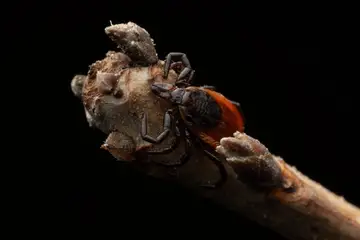
This page lists 9 insects and 5 ticks.
7 are venomous by official accounts. 3 are nonnative.
Not every species: no complete official list of Pennsylvania insects exists, so this page covers the ones state and Extension sources name. How lists are built.
Which insects can hurt you
Official sources single out these insects in Pennsylvania, in their own words:
Bees, wasps and hornets
Stings. “Stinging or biting insects include bees, wasps, hornets, and fire ants. … People who are allergic to venom may experience anaphylaxis, a severe and potentially life-threatening allergic reaction that requires immediate emergency care.” CDC / NIOSH
Social wasps (paper wasps, yellowjackets, hornets)
Repeated stings when defending nests. “Social wasps can be aggressive when defending their nests and females can deliver repeated stings when threatened.” Penn State Extension
Mosquitoes
Disease. “DEP coordinates the Commonwealth's mosquito control program with representatives from 50 counties at the highest risk of mosquito-borne disease to develop a comprehensive mosquito surveillance and control network.” Pennsylvania Department of Environmental Protection, Vector Management
Ticks (arachnids, not insects)
Official sources single out these ticks in Pennsylvania, in their own words:
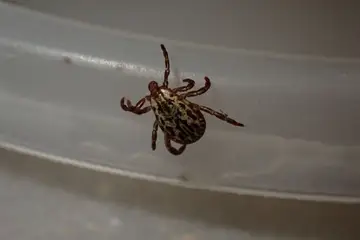
Disease (Rocky Mountain spotted fever, tularemia). “American dog ticks are the main vector of the pathogens that cause Rocky Mountain spotted fever in Pennsylvania, which is less common than Lyme disease but a potentially more serious illness.” Penn State Extension
Missouri: workers 1/2 to 3/4 inch, queens 3/4 inch. University of Maryland: workers 5/8 to 3/4 inch, queens just over an inch. Penn State gives 13 to 20 mm for the queen and her offspring.
How to recognize it
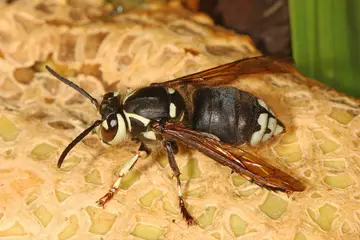
Not yellow, unlike typical yellowjackets; larger, black and ivory
Large, rounded, gray paper nest hanging in trees or shrubs, sometimes on buildings
Nest entrance is the lowest opening of the cone- or egg-shaped nest
JFMAMJJASOND
276 records by month.What the sources say
Venom: “When provoked, these wasps will sting repeatedly, and are capable of spraying venom at the eyes of their attacker.” (Penn State Extension)
Venom: “Stinging or biting insects include bees, wasps, hornets, and fire ants. … People who are allergic to venom may experience anaphylaxis, a severe and potentially life-threatening allergic reaction that requires immediate emergency care.” (CDC / NIOSH)
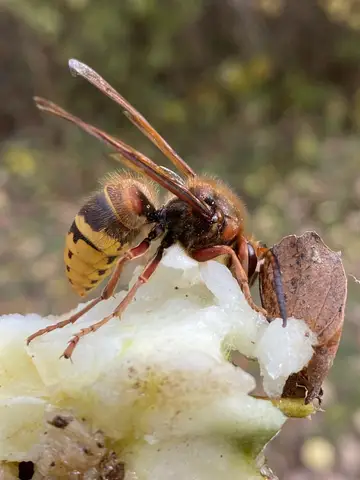
Workers up to 1 inch (25 mm); queens slightly larger, up to about 1.3 inches.
How to recognize it
Large size plus reddish-brown color on the thorax and first abdominal segment
C-shaped eyes; somewhat hairy body
Flies at night and comes to porch lights
JFMAMJJASOND
122 records by month.What the sources say
Venom: “Stinging or biting insects include bees, wasps, hornets, and fire ants. … People who are allergic to venom may experience anaphylaxis, a severe and potentially life-threatening allergic reaction that requires immediate emergency care.” (CDC / NIOSH)
Venom: “Stinging or biting insects include bees, wasps, hornets, and fire ants. … People who are allergic to venom may experience anaphylaxis, a severe and potentially life-threatening allergic reaction that requires immediate emergency care.” (CDC / NIOSH)
Venom: “Stinging or biting insects include bees, wasps, hornets, and fire ants. … People who are allergic to venom may experience anaphylaxis, a severe and potentially life-threatening allergic reaction that requires immediate emergency care.” (CDC / NIOSH)
No confirmed photo of Yellowjackets (Vespula species)
Venom: “Stinging or biting insects include bees, wasps, hornets, and fire ants. … People who are allergic to venom may experience anaphylaxis, a severe and potentially life-threatening allergic reaction that requires immediate emergency care.” (CDC / NIOSH)
Habitat: They typically make their nests underground and sometimes nest at the base of building walls or in cracks in pavement or landscaping. (Penn State Extension)
No official source we use states whether this animal is venomous. That does not mean it is harmless: do not handle it.
Danger to people
“American dog ticks are the main vector of the pathogens that cause Rocky Mountain spotted fever in Pennsylvania, which is less common than Lyme disease but a potentially more serious illness.” Penn State Extension
No confirmed photo of Asian longhorned tick
Asian longhorned tick
Haemaphysalis longicornis
Not statedInvasiveTick: an arachnid, not an insect
Venom
No official source we use states whether this animal is venomous. That does not mean it is harmless: do not handle it.
NC State Extension: European hornets are much larger (about 1 1/2 in.), brownish red with a dull yellow abdomen, and rarely build free-hanging or exposed nests (the bald-faced hornet is black and ivory and hangs its nest in the open).
Photos show typical adults; individuals vary. Never get close to compare.
When insects are active in Pennsylvania
Records of insects in Pennsylvania peak in June to August. They show when people record insects, not how many there are (about month bars).
JanFebMarAprMayJunJulAugSepOctNovDec
104,953 records of insects in Pennsylvania by month (GBIF, CC0 and CC BY records).
Black bears den in late fall; pregnant females first, typically mid to late November, males several weeks later. Pennsylvania Game Commission
Bees and wasps become more defensive in late summer and fall. Wasp colonies end as winter approaches. Penn State Extension
If you are bitten or stung
Call 911 or Poison Help at 1-800-222-1222 right away. Poison Help connects you to your local poison center, any time of day.
Official advice from Poison Control Center at Children's Hospital of Philadelphia and Pennsylvania Department of Environmental Protection, Vector Management:
“Upon stinging, the barbed stinger becomes lodged in the target with a venom sac attached.”
“When provoked, these wasps will sting repeatedly, and are capable of spraying venom at the eyes of their attacker.”
“Social wasps can be aggressive when defending their nests and females can deliver repeated stings when threatened.”
“Typically, bees or wasps become more defensive later in the summer and into fall, when local food resources become scarce. … The natural life cycle of wasp colonies in Pennsylvania ends as winter approaches.”
“Stinging or biting insects include bees, wasps, hornets, and fire ants. … People who are allergic to venom may experience anaphylaxis, a severe and potentially life-threatening allergic reaction that requires immediate emergency care.”
European Hornet. Penn State Extension. updated July 19, 2024; checked November 3, 2026.Quoted passages (2)
“European hornets are also the only nocturnal wasp in Pennsylvania and are sometimes attracted to porch lights at night.”
“European hornet workers can be up to an inch (25 mm) long while queens are slightly larger and can reach 1.3 inches (35 mm).”
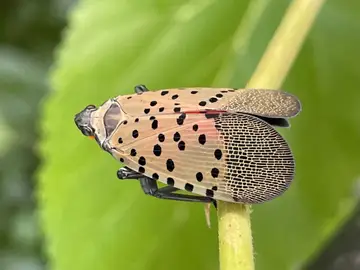
Spotted Lanternfly Alert. Pennsylvania Department of Agriculture. undated page; checked November 3, 2026.Quoted passages (1)
“The legs and head are black; the abdomen is yellow with broad black bands.”
“American dog ticks are the main vector of the pathogens that cause Rocky Mountain spotted fever in Pennsylvania, which is less common than Lyme disease but a potentially more serious illness.”
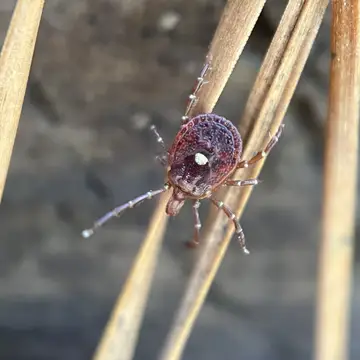
“Amblyomma americanum bites are also associated with alpha-gal (red meat) allergy.”
Blacklegged Tick (Ixodes scapularis). Pennsylvania Department of Environmental Protection, Vector Management. undated page; checked November 3, 2026.Quoted passages (3)
“Pennsylvania ranks number one in the country for reported Lyme Disease cases. Additionally, the Blacklegged tick can potentially pass other pathogens to humans and make us sick.”
“Removing a tick quickly can reduce the risk of contracting a tick-borne disease.”
“However, the greatest risk of being bitten is spring, summer, and fall from a nymph or adult female. … Most Lyme transmission occurs in June and July due to the activity and small size of the nymphs.”
Mosquito-borne Disease Control Program. Pennsylvania Department of Environmental Protection, Vector Management. undated page; checked November 3, 2026.Quoted passages (1)
“DEP coordinates the Commonwealth's mosquito control program with representatives from 50 counties at the highest risk of mosquito-borne disease to develop a comprehensive mosquito surveillance and control network.”
Poison Control 101. Poison Control Center at Children's Hospital of Philadelphia. undated page; checked November 3, 2026.Quoted passages (1)
“Call the Poison Control Center at CHOP at 1-800-222-1222. … The Poison Control Center is available 24 hours a day, 7 days a week, 365 days a year-even on holidays! … A bug bite or a bee sting”
Wildlife Notes: Black Bear. Pennsylvania Game Commission. Revised 02/2021; checked November 3, 2026.Quoted passages (1)
“Bears enter hibernation late in the fall, with pregnant females being the first to enter dens, typically during mid to late November. Males den several weeks later.”