States Wildlife

Pennsylvania Turtles: Identification Guide With Pictures

Last checked November 3, 2026 against official sources.

On this page
  1. Which turtles can hurt you
  2. All 15 turtles
  3. When they are active
  4. If you are bitten or stung
  5. About this list
  6. Sources

Pennsylvania Fish and Boat Commission: Pennsylvania is home to a diverse population of amphibians and reptiles, including 22 species of salamanders, 21 snakes, 18 frogs and toads, 13 turtles and four lizards.

This page lists 15 turtles: 13 from Pennsylvania Fish and Boat Commission's Pennsylvania Native Reptile and Amphibian Species, turtle section and 2 named in other official sources. 2 are nonnative. Pennsylvania Fish and Boat Commission gives a total of 13; the 15 here are the turtles official sources name one by one.

Which turtles can hurt you

Official sources single out these turtles in Pennsylvania, in their own words:

All 15 turtles

From A to Z. Do not handle them.

No confirmed photo of Blanding's Turtle

Blanding's Turtle

Emydoidea blandingii

Conservation
PA status C = Candidate Species (PFBC)
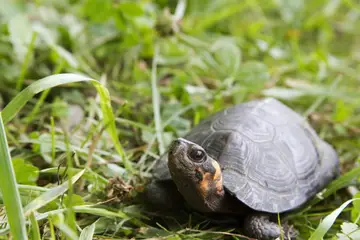
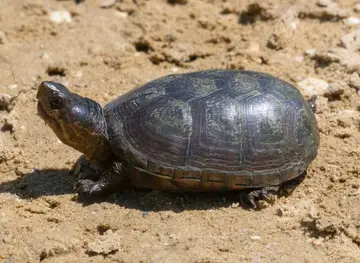
Eastern Musk Turtle
Photo: Curtis Meyers · CC BY-SA 4.0 · iNaturalist · resized

Eastern Musk Turtle

Sternotherus odoratus

Conservation
PA status A = Abundant (PFBC)
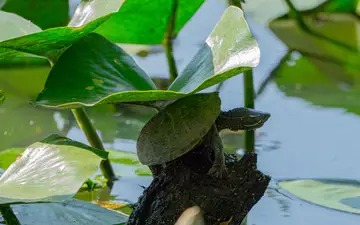
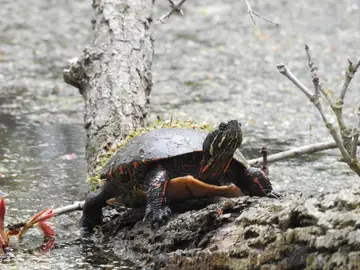
Eastern Painted Turtle
Photo: Melissa McMasters · CC BY 4.0 · iNaturalist

Eastern Painted Turtle

Chrysemys picta picta

Conservation
PA status A = Abundant (PFBC)
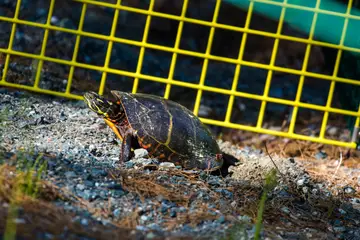
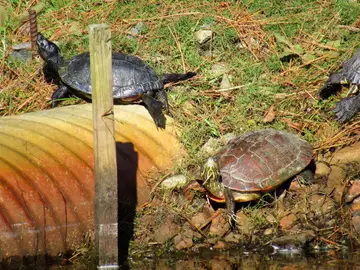
Midland Painted Turtle
Photo: sudomir · CC BY 4.0 · iNaturalist

Midland Painted Turtle

Chrysemys picta marginata

Conservation
PA status A = Abundant (PFBC)
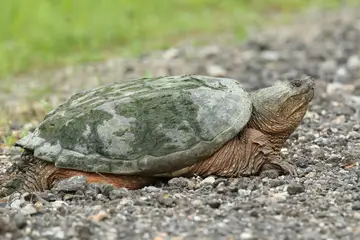
North American Snapping Turtle
Photo: Cephas · CC BY-SA 4.0 · Wikimedia Commons · resized

North American Snapping Turtle

Chelydra serpentina

Danger to people
“Although on land it may lash out viciously, it is generally inoffensive when submerged in water where it spends most of its time.” Pennsylvania Fish and Boat Commission
Size
Upper shell usually 8 to 14 inches, occasionally to nearly 20; usually 10 to 35 lb, occasionally to 75 lb in the wild.
How to recognize it
  • Large head, long tail
  • Saw-toothed scales on the long tail
  • Small, cross-shaped lower shell
Conservation
PA status A = Abundant (PFBC)
315 records by month.

Full North American Snapping Turtle guide

No confirmed photo of Northern Map Turtle

Northern Map Turtle

Graptemys geographica

Conservation
PA status A = Abundant (PFBC)
Northern Red-bellied Cooter
Photo: Joshua Liverman · CC BY 4.0 · iNaturalist

Northern Red-bellied Cooter

Pseudemys rubriventris

Conservation
PA status T = Threatened Species (PFBC)
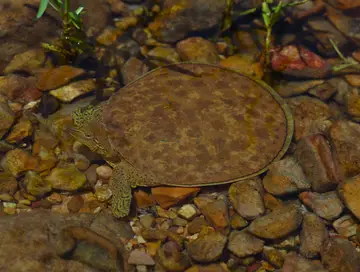
Northern Spiny Softshell
Photo: Peter Paplanus · CC BY 2.0 · Wikimedia Commons

Northern Spiny Softshell

Apalone spinifera spinifera

Conservation
PA status A = Abundant (PFBC)
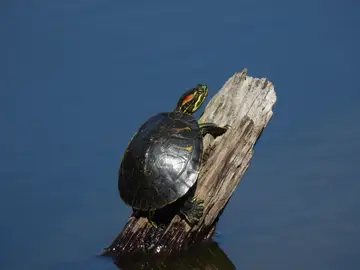
Red-eared Slider
Photo: ncb1221 · CC BY 4.0 · iNaturalist

Red-eared Slider

Trachemys scripta elegans

Invasive

Where in Pennsylvania
Reported from at least 48 counties; "clustered primarily in areas of dense human populations (e.g., southeastern Pennsylvania, State College, Pittsburgh, and Erie)" Pennsylvania Fish and Boat Commission
Southeastern Mud Turtle
Photo: Jim Moore (Maryland) · CC BY 4.0 · iNaturalist

Southeastern Mud Turtle

Kinosternon subrubrum subrubrum

Conservation
PA status E = Endangered Species (PFBC)
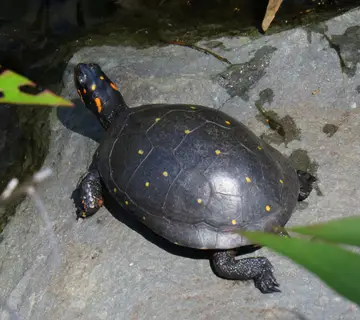
Spotted Turtle
Photo: Nick Block · CC BY 4.0 · iNaturalist

Spotted Turtle

Clemmys guttata

Conservation
PA status S = Species of Special Concern (PFBC)
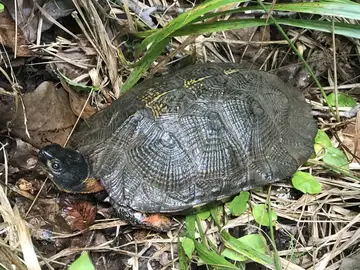
Wood Turtle
Photo: Michael Ellis · CC BY 4.0 · iNaturalist

Wood Turtle

Glyptemys insculpta

Size
14-20 cm (5.5-8 in)
How to recognize it
  • Lower shell has no hinge
  • Combination of brown shell, orange front limbs and a lower shell solidly fused to the upper shell
  • Males: concave lower shell, long thick tail, broader head
Conservation
PA status S = Species of Special Concern (PFBC)
95 records by month.

Full Wood Turtle guide

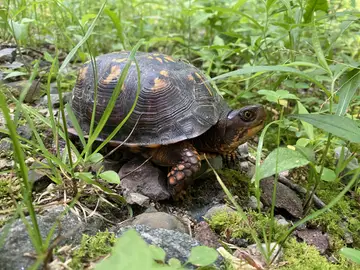
Woodland Box Turtle
Photo: Summit Metro Parks · CC BY-SA 4.0 · iNaturalist · resized

Woodland Box Turtle

Terrapene carolina carolina

Conservation
PA status S = Species of Special Concern (PFBC)
No confirmed photo of Yellow-bellied Slider

Yellow-bellied Slider

Trachemys scripta scripta

Nonnative

When turtles are active in Pennsylvania

Records of turtles in Pennsylvania peak in April to June. They show when people record turtles, not how many there are (about month bars).

1,549 records of turtles in Pennsylvania by month (GBIF, CC0 and CC BY records).

If you are bitten or stung

Call 911 or Poison Help at 1-800-222-1222 right away. Poison Help connects you to your local poison center, any time of day.

About this list

The species list comes from Pennsylvania Native Reptile and Amphibian Species, turtle section (Pennsylvania Fish and Boat Commission, undated web page; retrieved 2026-11-03). 2 more entries come from other official sources named on each card.

Venom labels come only from official sources and link to them; "Not stated" never means harmless. How labels work.

"Nonnative" and "Invasive" follow the wording of the source list. See invasive species in Pennsylvania.

Sources

  1. Pennsylvania Native Reptile and Amphibian Species (PA Species and Endangered Species Act listing status). Pennsylvania Fish and Boat Commission. undated page; checked November 3, 2026.
    Quoted passages (1)
    “Pennsylvania is home to a diverse population of amphibians and reptiles, including 22 species of salamanders, 21 snakes, 18 frogs and toads, 13 turtles and four lizards.”
  2. Turtles (species accounts). Pennsylvania Fish and Boat Commission. undated page; checked November 3, 2026.
    Quoted passages (3)
    “Although on land it may lash out viciously, it is generally inoffensive when submerged in water where it spends most of its time.”
    “The plastron is hingeless and can aid in distinguishing this turtle from the box and Blanding's turtles”
    “Pennsylvania's turtle species are often on the move during late spring and early summer, as the females look for places to lay their eggs.”
  3. Aquatic Invasive Species (AIS) Control Plan: Pond Slider. Pennsylvania Fish and Boat Commission. Updated July 2022; checked November 3, 2026.
  4. GBIF.org occurrence records, human observations licensed CC0 1.0 or CC BY 4.0 only, accessed November 3, 2026. The datasets behind these counts are listed on our Sources page.