Invasive and nonnative animals in Pennsylvania
Last checked November 3, 2026 against official sources.
On this page
6 nonnative animals are named on 6 official lists for Pennsylvania: “Spotted Lanternfly Alert” (Pennsylvania Department of Agriculture), “Feral Swine” (Pennsylvania Game Commission), “Aquatic Invasive Species (AIS) Control Plan: Pond Slider” (Pennsylvania Fish and Boat Commission), “Common Ticks and Tick-borne Diseases in Pennsylvania” (Penn State Extension), “Common Social Bees and Wasps of Pennsylvania: Behavior, Lifecycle, and Management” (Penn State Extension) and “Aquatic Invasive Species (AIS)” (Pennsylvania Fish and Boat Commission).
To report a sighting, see how to report.
Being on a list of nonnative species does not always mean an animal is harmful or established: each list below is described in its source's terms. A sighting of a listed animal is still worth reporting to the agency.
Spotted Lanternfly Alert
Pennsylvania Department of Agriculture, undated page. 1 animal.
-
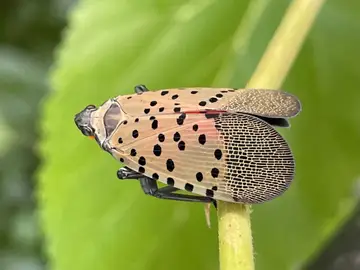
Photo: Isaac Caswell · CC0 1.0 · iNaturalist Spotted lanternfly Lycorma delicatula
Multiple counties (quarantine zones); see PDA interactive quarantine map Pennsylvania Department of Agriculture
Feral Swine
Pennsylvania Game Commission, undated page. 1 animal.
-
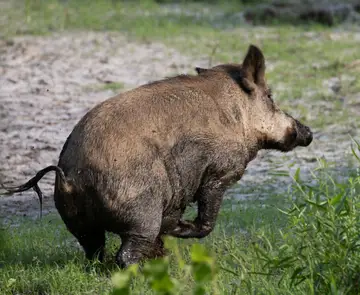
Photo: Cullen Hanks · CC BY 4.0 · iNaturalist Feral swine Sus scrofa
Rare; any breeding populations small and likely limited to Bedford and Fulton counties Pennsylvania Game Commission
Aquatic Invasive Species (AIS) Control Plan: Pond Slider
Pennsylvania Fish and Boat Commission, Updated July 2022. 1 animal.
-

Photo: ncb1221 · CC BY 4.0 · iNaturalist Red-eared Slider Trachemys scripta elegans
At least 48 counties; clustered in southeastern PA, State College, Pittsburgh, Erie Pennsylvania Fish and Boat Commission
Common Ticks and Tick-borne Diseases in Pennsylvania
Penn State Extension, updated November 27, 2025. 1 animal.
-
Asian longhorned tick Haemaphysalis longicornis
Three samples found in Pennsylvania as of May 2019 (per Penn State) Penn State Extension
Common Social Bees and Wasps of Pennsylvania: Behavior, Lifecycle, and Management
Penn State Extension, updated February 4, 2024. 1 animal.
-
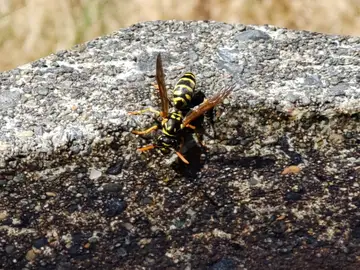
Photo: Gavin Slater · CC BY 4.0 · iNaturalist European paper wasp
Aquatic Invasive Species (AIS)
Pennsylvania Fish and Boat Commission, undated page. 1 animal.
-
Northern Snakehead
How to report a sighting in Pennsylvania
Feral swine: report to the Game Commission at 1-833-PGC-WILD (or 1-833-PGC-HUNT). Spotted lanternfly: report online or call 1-888-4BADFLY (PA Dept. of Agriculture). Venomous snake removal: call a local PFBC Waterways Conservation Officer. Nuisance wildlife: PGC region office; USDA-APHIS Wildlife Services 866-487-3297. Pennsylvania Game Commission
Do not try to catch or handle the animal. A photo taken from a safe distance, the place and the date help the agency.
Sources
- Spotted Lanternfly Alert. Pennsylvania Department of Agriculture. undated page; checked November 3, 2026.
Quoted passages (1)
“The Spotted Lanternfly is an invasive species native to Asia. In 2014 it was found in Pennsylvania, and has since spread to multiple counties which are now quarantined.”
- Feral Swine. Pennsylvania Game Commission. undated page; checked November 3, 2026.
Quoted passages (2)
“Feral swine are a destructive and invasive species that pose serious risks to wildlife, agriculture, and property.”
“Any observations of feral swine in the commonwealth should immediately be reported to the Game Commission at 1-833-PGC-WILD or 1-833-PGC-HUNT.”
- Aquatic Invasive Species (AIS) Control Plan: Pond Slider. Pennsylvania Fish and Boat Commission. Updated July 2022; checked November 3, 2026.
Quoted passages (1)
“Recent data from the Pennsylvania Amphibian and Reptile Survey (PARS) project (primarily encompassing records from 2013-2021) shows Red-eared Sliders have been reported from at least 48 counties (Figure 4).”
- Common Ticks and Tick-borne Diseases in Pennsylvania. Penn State Extension. updated November 27, 2025; checked November 3, 2026.
Quoted passages (1)
“Haemaphysalis longicornis is an invasive tick native to East and Central Asia.”
- Common Social Bees and Wasps of Pennsylvania: Behavior, Lifecycle, and Management. Penn State Extension. updated February 4, 2024; checked November 3, 2026.
Quoted passages (1)
“European paper wasps were introduced from Europe in the 1980s. These invasive wasps are yellow and black and may be mistaken for yellowjackets.”
- Aquatic Invasive Species (AIS). Pennsylvania Fish and Boat Commission. undated page; checked November 3, 2026.
Quoted passages (1)
“In addition to the prohibited species below, some of the least-wanted AIS in Pennsylvania are: New Zealand Mudsnail, Northern Snakehead, Sea Lamprey, Hydrilla, Spiny Water Flea, Eurasian Watermilfoil, Golden Clam and Red-eared Slider (turtle).”