Giant Water Bugs
Belostomatidae (genera Abedus, Belostoma and Lethocerus in the US) · also called Toe-biter, Electric light bug, Belostomatid bugs and Water roach (UMaine) · Last checked November 3, 2026.
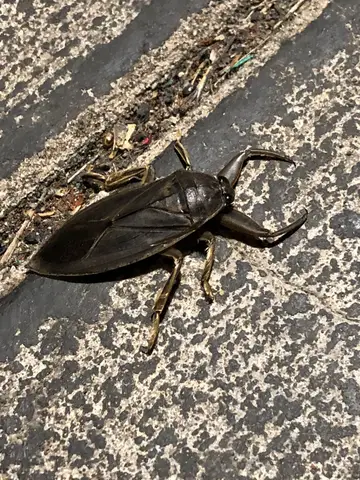
Giant water bugs, also called toe-biters or electric light bugs, are big, flat, brown, oval aquatic insects (to about 2 inches in Missouri; UMaine gives 2 to 4 inches for the largest US species) with grabbing front legs. They live in ponds, lakes and slow streams across the country and fly to lights at night, sometimes landing in pools or parking lots. Missouri's wildlife agency lists them as venomous: they inject saliva that paralyzes prey, and a bite to a person who handles one or bothers one while wading barefoot is excruciatingly painful. Texas AgriLife Extension calls them nuisance biters whose bites are not long-lasting or life-threatening. Missouri Department of Conservation
This page covers a family (Belostomatidae (genera Abedus, Belostoma and Lethocerus in the US)), not a single species.
On this page
Are giant water bugs dangerous?
Missouri Department of Conservation: if handled or accidentally bothered by barefoot waders, giant water bugs can deliver an excruciatingly painful bite. Texas A&M AgriLife Extension lists them among nuisance biters, whose bite reactions are not long-lasting or life-threatening.
Bites and stings: Yes, in defense when handled or stepped on: an excruciatingly painful bite (MDC); UF/IFAS adds they may also pinch with the front legs.
If someone is bitten or stung, call 911 or Poison Help at 1-800-222-1222.
How to identify giant water bugs
A photo or description can narrow it down, but cannot confirm what an animal is or that it is safe. Look from a distance and do not handle wild animals.
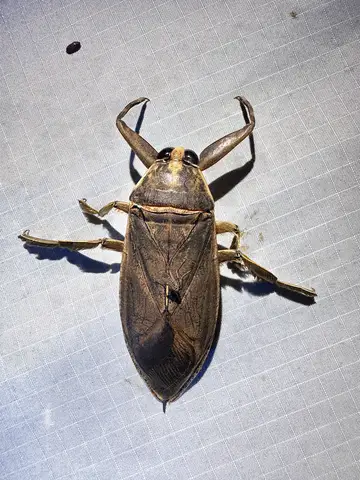
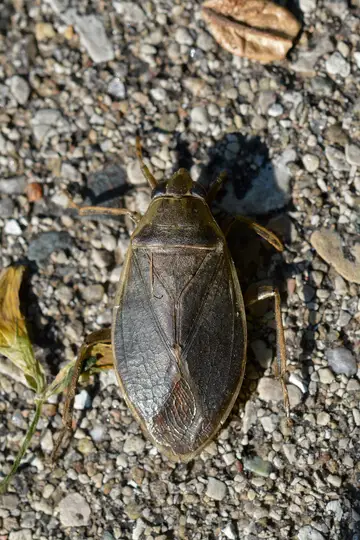

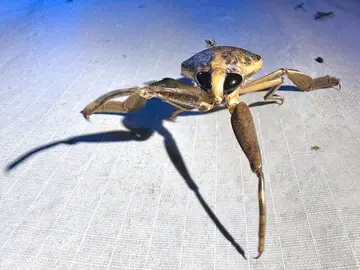
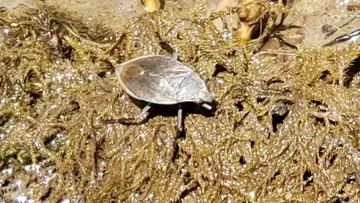
Size: Adults to about 2 inches (Missouri). Missouri Department of Conservation
Colors: Brownish.
Key features
- Oval, flattened, beetle-like body Missouri Department of Conservation
- Claw-like front legs for grabbing prey; long, oar-like hind legs for swimming Missouri Department of Conservation
- Piercing, tube-like beak (true bug mouthparts) Missouri Department of Conservation
- Males of Abedus and Belostoma carry the eggs glued to their backs UF/IFAS Extension (EDIS), Featured Creatures
Young
Nymphs look like small adults with wing buds on the sides of the thorax until the final molt.
Where giant water bugs live
- Native or listed
- Nonnative or not established
- No official record in our data
- 1–9
- 10–99
- 100–999
- 1,000+
State boundaries: U.S. Census Bureau, cartographic boundary file cb_2024_us_state_20m.
When it is active
Adults sometimes leave the water on summer nights and fly in search of mates, and are attracted to artificial lights (MSU); adults may overwinter in the mud (UF/IFAS).
US open-licence records for all giant water bugs (family Belostomatidae) peak in May to September.
Habitat and habits
Habitat: Ponds and sluggish waters with plenty of insects and small prey; they surface to breathe through snorkel-like tubes at the hind end. Missouri Department of Conservation
Behavior: Lie-in-wait predators that sit still on the bottom or on a plant stalk; strong fliers attracted to artificial lights at night.
Diet: Predators: insects and crayfish, and also frogs, fish, and even young turtles and snakes; they inject saliva that paralyzes and digests prey.
Young: Lethocerus lays eggs above water on plants; in Abedus and Belostoma the female glues eggs onto the male's back. Eggs hatch in one to two weeks; development takes one to two months.
Sources
- Giant Water Bugs (Field Guide). Missouri Department of Conservation. Reviewed On 2024-01-04; checked November 3, 2026.
Quoted passages (8)
“Adult length: to about 2 inches.”
“They are brownish with oval, flattened, beetle-like bodies.”
“The clawlike forelegs are adapted for grabbing prey, and the hind legs are long and somewhat oarlike, for swimming.”
“Like all other true bugs, they have tubelike mouthparts that pierce.”
“Until then, "wing buds" appear on the sides of the thorax of immature bugs.”
“Giant water bugs are common in ponds and sluggish waters that have plenty of insects and small prey.”
“They have been known to eat all manner of small aquatic animals such as insects and crayfish, but also frogs, fish, and even young turtles and snakes.”
“Lie-in-wait predators, giant water bugs typically sit motionless at the bottom of a pond, clinging onto a plant stalk, waiting for another creature to pass by.”
- Giant Water Bug (Bug's Eye View, Vol. 10, No. 08). Mississippi State University Extension Service. 2024; checked November 3, 2026.
- Giant Water Bug (Home and Garden IPM). University of Maine Cooperative Extension. published 2013-01-23; checked November 3, 2026.
- Venomous Terrestrial Animals of Texas (B-6118). Texas Cooperative Extension (now Texas A&M AgriLife Extension). 8-04 (publication code B-6118 8-04; checked November 3, 2026.
- Giant Water Bugs, Electric Light Bugs, Lethocerus, Abedus, Belostoma (EENY-301). UF/IFAS Extension (EDIS), Featured Creatures. original July 2003; checked November 3, 2026.
Quoted passages (2)
“Eggs of Abedus and Belostoma are glued onto males’ backs by females.”
“Eggs hatch in one to two weeks, with total development time ranging from one to two months.”
- GBIF.org occurrence records, human observations licensed CC0 1.0 or CC BY 4.0 only, accessed November 3, 2026. The datasets behind these counts are listed on our Sources page.
- State boundaries: U.S. Census Bureau, cartographic boundary file cb_2024_us_state_20m.