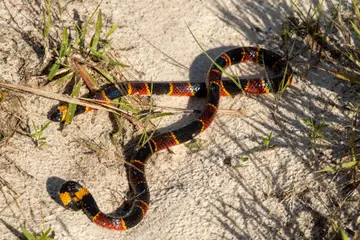
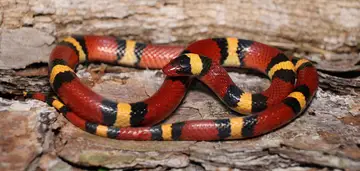
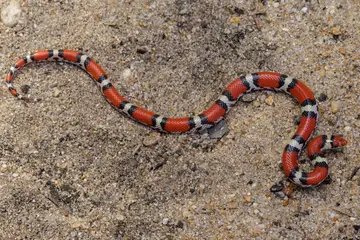
“Bites from Harlequin Coralsnakes can be very dangerous to people and pets, but bites from this species are extremely rare.” Florida Museum of Natural History
Where in Florida
Harlequin Coralsnakes are found throughout Florida and in every county. They also occur on Key Largo in the Northern Florida Keys. Florida Museum of Natural History
JFMAMJJASOND
70 records by month.What the sources say
Venom: “Only six of Florida's 44 snake species are venomous: the eastern coral snake, the southern copperhead, the cottonmouth, the eastern diamondback rattlesnake, the timber rattlesnake, and the dusky pygmy rattlesnake.” (FWC)
Habitat: Harlequin Coralsnakes occupy a variety of habitats, from dry, well–drained flatwoods and scrub areas to low, wet hammocks and the borders of swamps. They are secretive and are usually found under debris and in the ground. Occasionally they are found in the open, and they have even been seen climbing the trunks of live oaks. This species is occasionally found in suburban neighborhoods where development encroaches into favorable habitats. (Florida Museum of Natural History)
Official presence. 10 states where a state list or official source names it. Gray means no official record in our data, not that it is absent.
Native or listed
Nonnative or not established
No official record in our data
Observation records. Open-licence records on GBIF for all US coral snakes (genera Micrurus and Micruroides) in 7 states. Records are sightings people shared, not confirmation that a population lives there.
Living with Snakes. Florida Fish and Wildlife Conservation Commission (FWC). archived copy, captured June 16, 2026; checked November 3, 2026.Archived copy. Quoted passages (1)
“Only six of Florida's 44 snake species are venomous: the eastern coral snake, the southern copperhead, the cottonmouth, the eastern diamondback rattlesnake, the timber rattlesnake, and the dusky pygmy rattlesnake.”