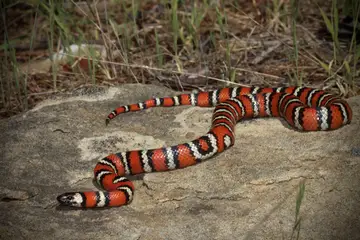
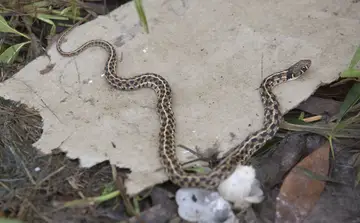
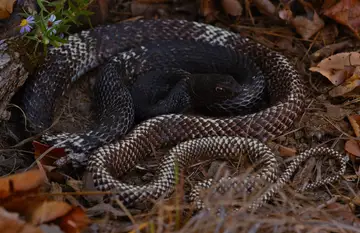
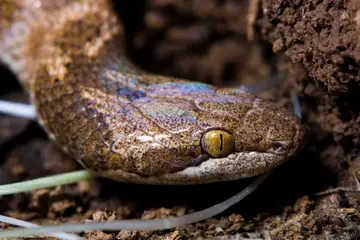
This page lists 47 snakes: all from CWHR Program's Complete List of Amphibian, Reptile, Bird and Mammal Species in California.
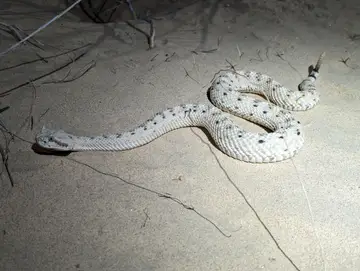
8 are venomous by official accounts: Western Rattlesnake, Sidewinder, Mohave Rattlesnake, Speckled Rattlesnake, Western Diamond-backed Rattlesnake, Red Diamond Rattlesnake, Panamint Rattlesnake and Yellow-bellied Seasnake. 3 are nonnative.
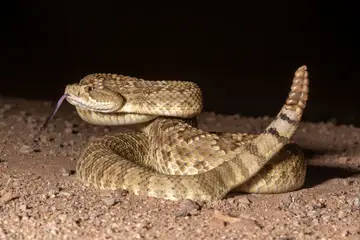
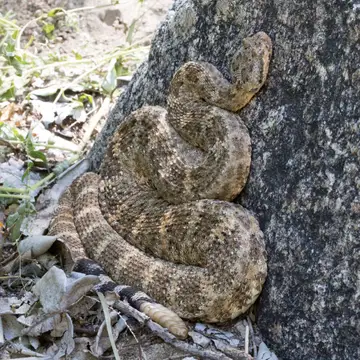
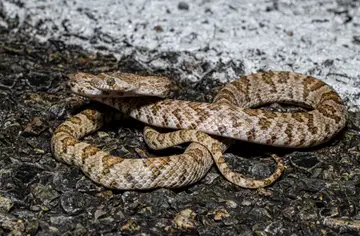
Up to 50 inches excluding the rattle (Arizona). Grand Canyon-Parashant National Monument says it averages 2 to 4 feet. Texas calls it smaller and more slender than the western diamondback.
How to recognize it
Rattle at the end of the tail
Broad triangular head on a slender neck; vertical pupils
Thin light stripe from the back corner of the eye running past the corner of the mouth
Where in California
Are found in the desert and foothills of southeastern California. CWHR Program
JFMAMJJASOND
83 records by month.What the sources say
Venom: “The rattlesnake is California’s only native venomous snake.” (University of California Statewide IPM Program)
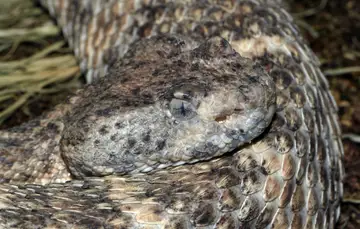
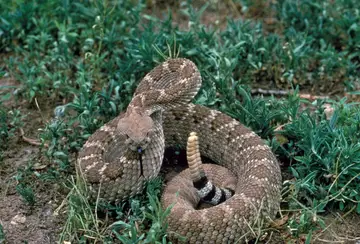
Usually about 3.5 to 4.5 feet; Texas says it can reach seven feet. Arizona's maximum is 66 inches excluding the rattle; Saguaro National Park gives a range of 30 to 90 inches.
How to recognize it
Rattle at the end of the tail
Broad triangular head on a slender neck; vertical pupils
Thin light stripe from behind the eye down to the upper lip
Where in California
Are rare in California but can occur in desert areas in the far southeastern part of the state. CWHR Program
What the sources say
Venom: “The rattlesnake is California’s only native venomous snake.” (University of California Statewide IPM Program)
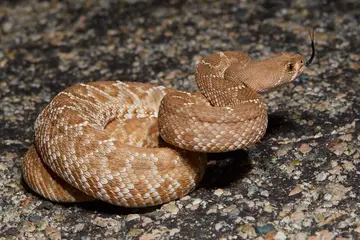
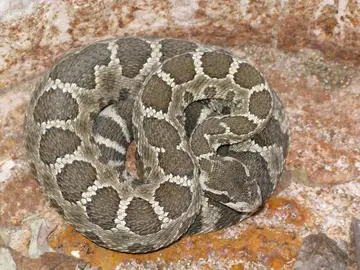
Varies by area and subspecies: up to 63 in. excluding rattle (Arizona); largest in the Northwest 59 in., most Washington adults around 2 ft; 18 to 36 in. average (Oregon); C. o. concolor rarely over 26 in. (Colorado).
How to recognize it
Rattle on the tail; broad triangular head; facial pits
Vertical pupils and heat-sensing pits near the nostrils
Strongly keeled scales
Where in California
Western rattlesnakes (PDF) (C. oreganus) are the most widespread rattler in California. It is found statewide from sea level up to 7,000 feet. CWHR Program
JFMAMJJASOND
2,118 records by month.What the sources say
Venom: “The rattlesnake is California’s only native venomous snake.” (University of California Statewide IPM Program)
“All 52 known species of sea snakes are venomous, and human deaths from bites have been reported. Sea snake bites are often painless or cause minimal pain but can be very dangerous.” US Centers for Disease Control and Prevention
What the sources say
Venom: “The yellow-bellied sea snake, Pelamis platurus, has also been found along the eastern Pacific Coast of Central and South America. All 52 known species of sea snakes are venomous, and human deaths from bites have been reported.” (US Centers for Disease Control and Prevention)
The other 39 snakes
From A to Z. "Not stated" means no official source we use gives a venom status, not that the snake is harmless. Some harmless snakes mimic venomous ones: leave every snake alone.
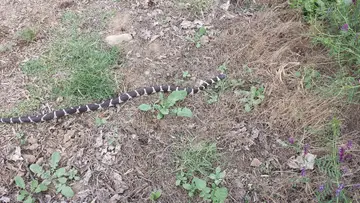
Usually 2.5-3.5 ft, up to about 4 ft (NPS Cabrillo). Arizona Game and Fish gives up to 56 inches for the common kingsnake; NPS Tuzigoot (Arizona) gives 40-80 inches for kingsnakes there. These official figures differ.
How to recognize it
Smooth, glossy scales ('Lampropeltis' means 'shiny shield').
Arizona form: black or dark brown with 21 to 45 white bands that widen low on the sides; snout and face usually have small white blotches.
Round pupils (Arizona Game and Fish, common kingsnake).
What the sources say
Venom: “Non-venomous snake species exist, too, in Yosemite such as kingsnakes and yellow-bellied racers.” (US National Park Service)
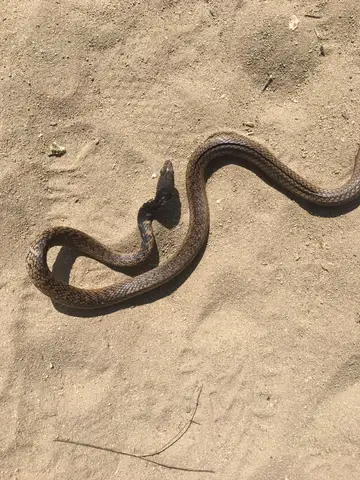
Most adults about 42 to 60 inches (3.5 to 5 ft); record 102 inches (8.5 ft). Ranges given by agencies: 41 to 84 in (Louisiana), 36 to 82 in (Oklahoma), adults average 50 to 72 in (Alabama), up to 94 in (NC State Extension), up to 80 in in Colorado and up to 68 in in Arizona.
How to recognize it
Long, slowly tapering tail whose scales look like a braided whip
Very long and slender, with smooth scales
Large eyes with round pupils
JFMAMJJASOND
211 records by month.What the sources say
Venom: “Of the 14 snakes found in the Santa Monica Mountains, only one, the southern Pacific rattlesnake (Crotalus viridis), is venomous. … red coachwhip (Masticophis flagellum)” (US National Park Service)
Adults 22 to 42 inches long, occasionally to 59 inches (Missouri). Pennsylvania gives 24 to over 50 inches; females are usually bigger than males.
How to recognize it
Dark crossbands on the front part of the body break up into rows of blotches from the middle of the body to the tail.
Belly white, yellow or orange, usually with dark half-moon-shaped spots.
Keeled (ridged) scales, so it feels rough; round pupils like other nonvenomous snakes in Missouri.
Where in California
In California, northern watersnakes have been established and reproducing in Kaseberg Creek in the City of Roseville, Placer County since 2007. CWHR Program
What the sources say
Venom: “Northern watersnakes are not venomous, but when threatened will strike repeatedly and emit a foul-smelling musk mixed with feces.” (California Department of Fish and Wildlife)
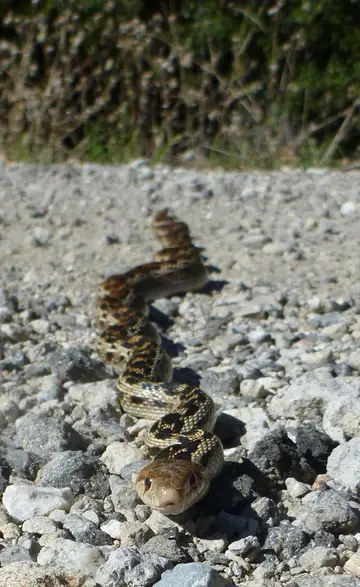
Usually 3 to 6 feet; Arizona's longest snake, up to 92 inches (AZGFD); Missouri record 105 inches
How to recognize it
No rattle: tail tapers to a point
Round pupils; keeled back scales (separates it from the similar glossy snake)
Head somewhat triangular, more so when agitated (so head shape alone is not a safe test)
JFMAMJJASOND
2,731 records by month.What the sources say
Venom: “Some snakes can mimic the appearance of a rattlesnake, such as the gopher snake (Pituophis catenifer), but are non-venomous and lack a rattle.” (California Department of Fish and Wildlife)
No official source we use states whether this animal is venomous. That does not mean it is harmless: do not handle it.
Size
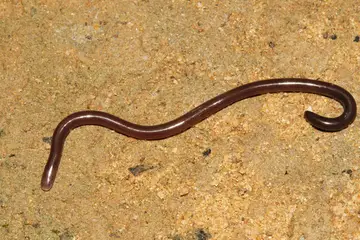
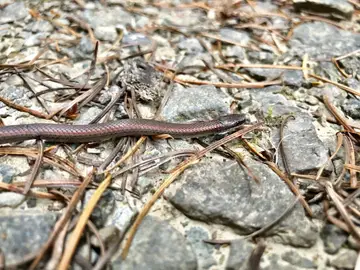
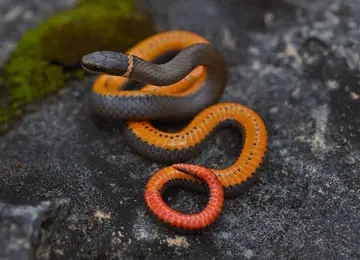
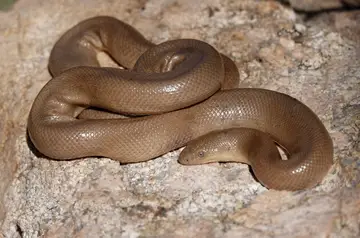
In the Northwest it rarely exceeds about two feet (WDFW). Montana: 14 to 28 inches total length; Yellowstone gives a maximum of 28 inches; Colorado gives a maximum of about 33 inches.
How to recognize it
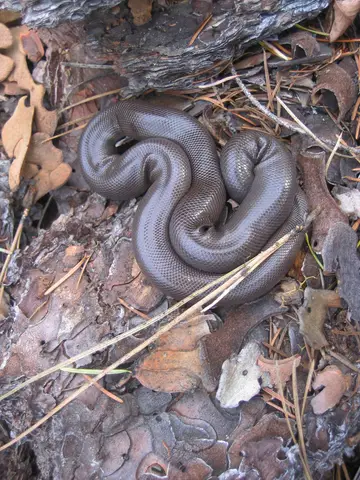
Thick body, small eyes, tiny scales, and a blunt tail that looks like the head
Loose, wrinkled skin gives a rubbery look and feel
In California, southern watersnakes are found in Sacramento, Yolo, and Los Angeles counties. CWHR Program
What the sources say
Venom: “Southern watersnakes are not venomous, but when threatened, will strike repeatedly and emit a foul-smelling musk mixed with feces.” (California Department of Fish and Wildlife)
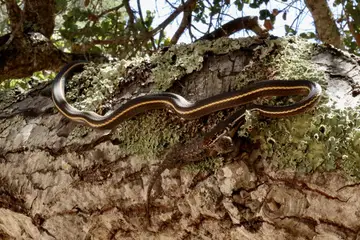
Venom: “Of the 14 snakes found in the Santa Monica Mountains, only one, the southern Pacific rattlesnake (Crotalus viridis), is venomous. … California striped racer (Masticophis lateralis)” (US National Park Service)
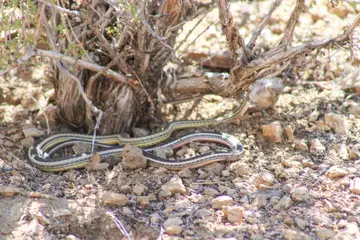
Venom: “Of the 14 snakes found in the Santa Monica Mountains, only one, the southern Pacific rattlesnake (Crotalus viridis), is venomous. … two-striped garter snake (Thamnophis hammondii)” (US National Park Service)
Venom: “Of the 14 snakes found in the Santa Monica Mountains, only one, the southern Pacific rattlesnake (Crotalus viridis), is venomous. … blackhead snake (Tantilla planiceps)” (US National Park Service)
Venom: “Of the 14 snakes found in the Santa Monica Mountains, only one, the southern Pacific rattlesnake (Crotalus viridis), is venomous. … coast patch-nosed snake (Salvadora hexalepis)” (US National Park Service)
Venom: “Of the 14 snakes found in the Santa Monica Mountains, only one, the southern Pacific rattlesnake (Crotalus viridis), is venomous. … Other less common species include the blind snake (Leptotyphlops humilis)” (US National Park Service)
Snakes people confuse
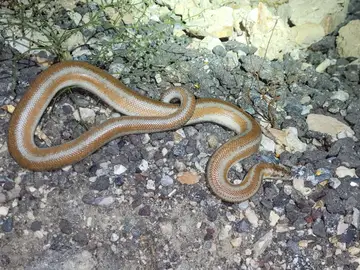
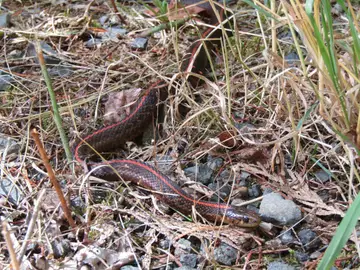
Rubber Boa or Racer (Western Yellow-bellied Racer)?
WDFW: racers have large eyes, large back scales and a tail that tapers to a point; rubber boas have small eyes, tiny scales and a blunt tail. Racers are fast and will strike and bite if cornered or handled; rubber boas are slow and non-aggressive. Yellowstone adds that racers have round pupils.
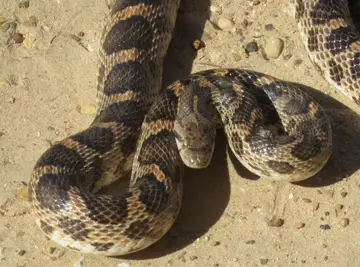
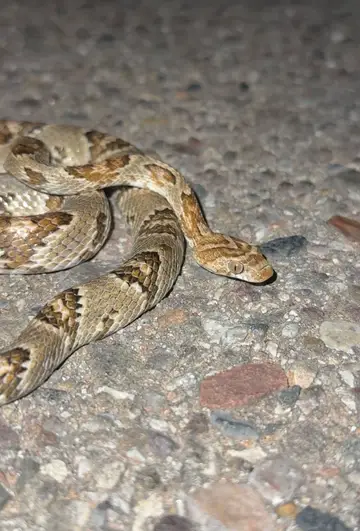
Gopher snake (gophersnake) or Glossy snake?
Photo: National Park Service from USA · Public domain · Wikimedia Commons
TWRA: the racer lacks the coachwhip's reddish tint along the sides of the tail; an all-black coachwhip is distinctly lighter or reddish toward the rear. Oklahoma: the coachwhip is much larger.
Western Rattlesnake or Gopher snake (gophersnake)?
WDFW (Washington): no rattle and no facial pits, oval pupils, smaller square spots, a narrow eye stripe and less keeled scales. It can coil, strike, hiss loudly and vibrate its tail like a rattlesnake, so behavior alone does not tell them apart.
Photos show typical adults; individuals vary. Never get close to compare.
When snakes are active in California
Records of snakes in California peak in March to June. They show when people record snakes, not how many there are (about month bars).
JanFebMarAprMayJunJulAugSepOctNovDec
10,815 records of snakes in California by month (GBIF, CC0 and CC BY records).
Rattlesnakes: most active at dawn, dusk and night in spring and summer; inactive/brumating in fall and winter; most bites April-October California Department of Fish and Wildlife
Wildlife conflicts: CDFW Wildlife Incident Reporting (WIR) system https://apps.wildlife.ca.gov/wir, emergencies 9-1-1. Invasive animal sightings: CDFW Invasive Species Program (866) 440-9530 or [email protected]; invasive insects/spiders/terrestrial invertebrates: California Department of Food and Agriculture 1-800-491-1899. California Department of Fish and Wildlife
“Of the 14 snakes found in the Santa Monica Mountains, only one, the southern Pacific rattlesnake (Crotalus viridis), is venomous. … Other less common species include the blind snake (Leptotyphlops humilis)”
“Of the 14 snakes found in the Santa Monica Mountains, only one, the southern Pacific rattlesnake (Crotalus viridis), is venomous. … blackhead snake (Tantilla planiceps)”
“Of the 14 snakes found in the Santa Monica Mountains, only one, the southern Pacific rattlesnake (Crotalus viridis), is venomous. … red coachwhip (Masticophis flagellum)”
“Of the 14 snakes found in the Santa Monica Mountains, only one, the southern Pacific rattlesnake (Crotalus viridis), is venomous. … California striped racer (Masticophis lateralis)”
“Of the 14 snakes found in the Santa Monica Mountains, only one, the southern Pacific rattlesnake (Crotalus viridis), is venomous. … coast patch-nosed snake (Salvadora hexalepis)”
“Of the 14 snakes found in the Santa Monica Mountains, only one, the southern Pacific rattlesnake (Crotalus viridis), is venomous. … two-striped garter snake (Thamnophis hammondii)”
“Non-venomous snake species exist, too, in Yosemite such as kingsnakes and yellow-bellied racers.”
Rattlesnake. California Department of Fish and Wildlife. undated page; checked November 3, 2026.Quoted passages (7)
“Some snakes can mimic the appearance of a rattlesnake, such as the gopher snake (Pituophis catenifer), but are non-venomous and lack a rattle.”
“For more information, call the California Poison Control System at (800) 222-1222. In the event of an emergency situation, call 9-1-1 and seek medical attention immediately.”
“DO NOT try to touch or handle a snake, dead or alive. Dead rattlers may still inject venom shortly after death.”
“A startled rattlesnake may NOT rattle before striking defensively.”
“In Spring and Summer - Most active at dawn, dusk, and night to avoid overheating. In Fall and Winter - Inactive, and some may go into brumation (a state of dormancy with periods of activity), for several months in rock crevices, rodent burrows, or thick vegetation. … Most bites occur between April and October when snakes and humans are most active outdoors.”
“Rattlesnake courtship and mating occurs once temperatures heat up with the warmer weather (March to May). … Females often nest in old rodent burrows and rock crevices, and give birth to 1 to 25 live young in the Fall.”
“There are seven species of rattlesnake in California:”
“Northern watersnakes are not venomous, but when threatened will strike repeatedly and emit a foul-smelling musk mixed with feces.”
“All subspecies have black, dark brown, or reddish crossbands on the front section of the body that break up into rows of blotches from the middle to the end of the body.”
“Their bellies can be white, yellow, or orange, and commonly have dark half-mooned shaped spots.”
“The yellow-bellied sea snake, Pelamis platurus, has also been found along the eastern Pacific Coast of Central and South America. All 52 known species of sea snakes are venomous, and human deaths from bites have been reported.”
“All 52 known species of sea snakes are venomous, and human deaths from bites have been reported. Sea snake bites are often painless or cause minimal pain but can be very dangerous.”
Pest Notes: Rattlesnakes. University of California Statewide IPM Program (UC ANR, Cooperative Extension). 2014-12; checked November 3, 2026.Quoted passages (2)
“The rattlesnake is California’s only native venomous snake.”
“Rattlesnakes have a rattle in addition to a distinctive triangular head whereas harmless gopher snakes do not have a rattle.”
Report an Invasive Species Sighting. California Department of Fish and Wildlife (Invasive Species Program). undated page; checked November 3, 2026.Quoted passages (1)
“To report a sighting of a known, or suspected invasive species of an animal (mammal, bird, reptile, amphibian, fish, aquatic invertebrate) or marine plant, complete and submit the Suspect Invasive Species Sighting Report form below or contact us at (866) 440-9530. / For a known invasive plant, terrestrial invertebrate (worm, beetle, spider, bug, bee, fly, ant, snail, etc.) or plant/tree disease, or one that you suspect may be new to your area of California, contact the California Department of Food and Agriculture at 1-800-491-1899. / [ca-cdfw-hwc] Wildlife Incident Reporting (WIR) System For Emergencies, call 9-1-1”