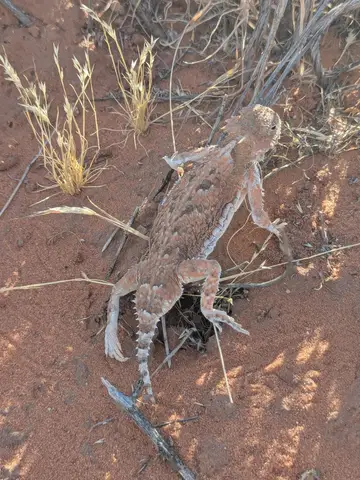
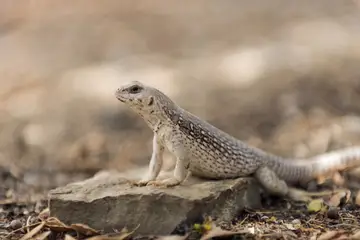
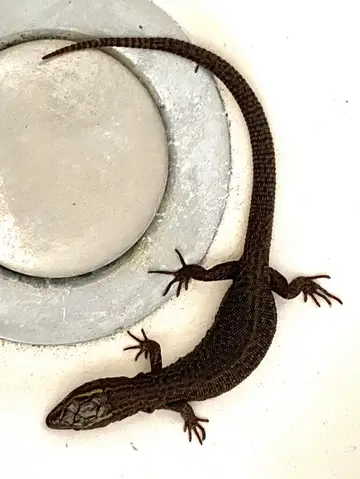
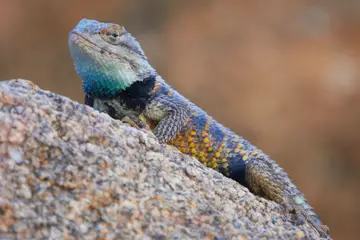
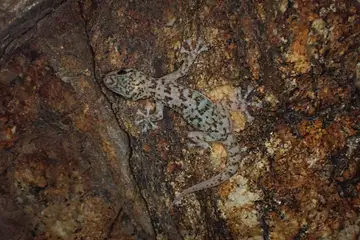
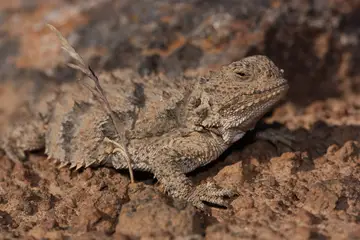
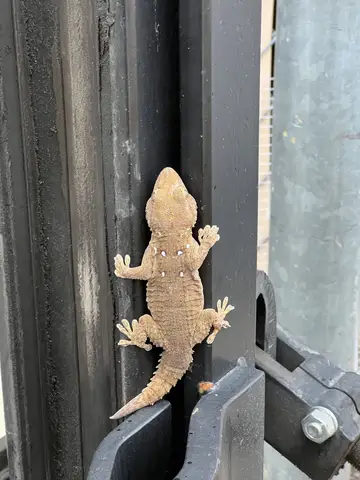
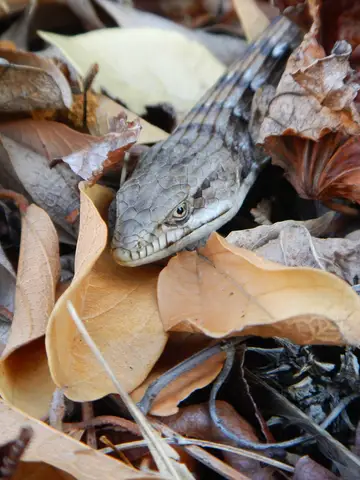
On this page Which lizards can hurt you All 50 lizards Lookalikes When they are active If you are bitten or stung How to report Common questions About this list Sources
This page lists 50 lizards : all from CWHR Program's Complete List of Amphibian, Reptile, Bird and Mammal Species in California.
1 is venomous by official accounts. 7 are nonnative.
Which lizards can hurt you Official sources single out these lizards in California, in their own words:
All 50 lizards Venomous species first, then A to Z. Do not handle them.
Find by name
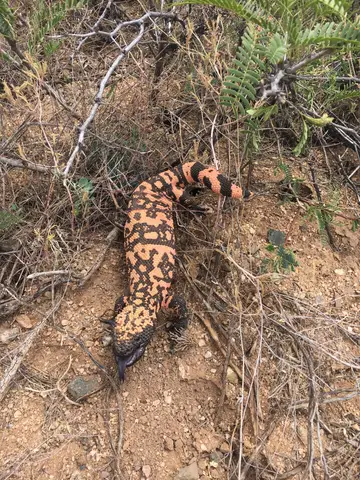
Photo: Matt Berger · CC BY 4.0 · iNaturalist Heloderma suspectum
Venomous per US National Park Service
Danger to people “A Gila Monster bite is a serious and painful medical emergency and always calls for a trip to the Emergency Room.” US National Park Service Size NPS: up to 22 inches (560 mm) long and over a pound (450 g), the largest lizard in the United States. AZGFD: up to 14 inches from snout to vent. NDOW lists 18-24 inches and 2-4 lb. How to recognize it Hard, rounded, beadlike scales; dark forked tongue; short fat tail Short, stout legs with long, sharp-clawed toes; big head and round tail What the sources say Venom: “Gila Monsters are venomous.” (US National Park Service)
Full Gila Monster guide
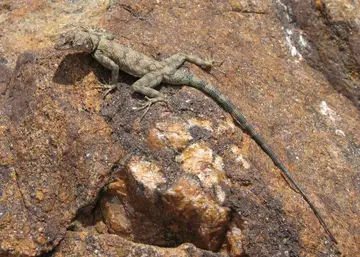
Photo: RJ Baltierra · CC BY 4.0 · iNaturalist Baja California Brush Lizard Urosaurus nigricaudus
Not stated
Venom No official source we use states whether this animal is venomous. That does not mean it is harmless: do not handle it. Photo: Matt D'Agrosa · CC BY 4.0 · iNaturalist Baja California Collared Lizard Crotaphytus vestigium
Not stated
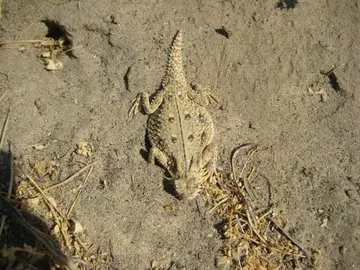
Venom No official source we use states whether this animal is venomous. That does not mean it is harmless: do not handle it. Photo: Millie Basden · CC BY 4.0 · Wikimedia Commons Blainville’s Horned Lizard Phrynosoma blainvillii
Not stated
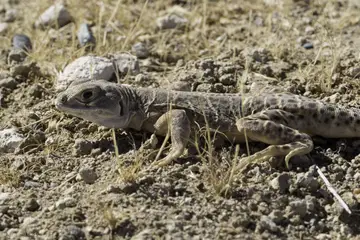
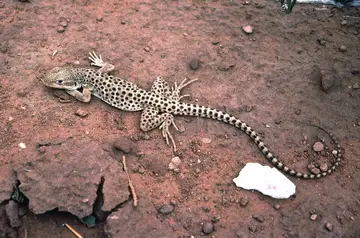
Venom No official source we use states whether this animal is venomous. That does not mean it is harmless: do not handle it. Photo: Ken-ichi Ueda · CC BY 4.0 · iNaturalist Blunt-nosed Leopard Lizard Gambelia sila
Not stated
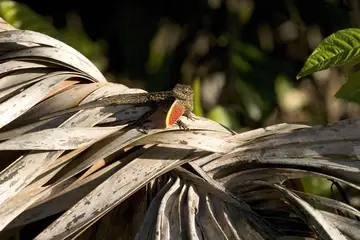
Venom No official source we use states whether this animal is venomous. That does not mean it is harmless: do not handle it. Photo: Everglades NPS from Homestead, Florida, United States · Public domain · Wikimedia Commons Anolis sagrei
Not stated Nonnative
Venom No official source we use states whether this animal is venomous. That does not mean it is harmless: do not handle it. Size About 5 to 8.5 inches (12 to 21 cm) total length (SREL); Alabama DCNR says up to 9 inches, and the tail may be longer than the body. How to recognize it Males have an orange or red throat fan (dewlap) with a white edge. Brown to grayish with whitish or yellowish markings on the back; variable dark spots, half moons, triangles or lines. Fairly stout body and a shorter head than the green anole; slightly expanded toe pads. Full Brown Anole guide
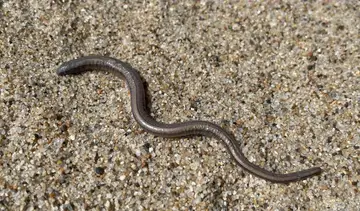
Photo: Henrik Kibak · CC BY 4.0 · iNaturalist California Legless Lizard Anniella pulchra
Not stated
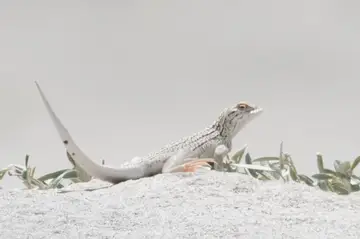
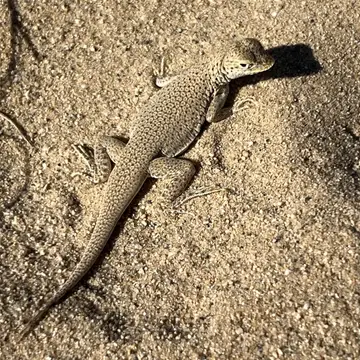
Venom No official source we use states whether this animal is venomous. That does not mean it is harmless: do not handle it. Photo: Adam Jackson · CC0 1.0 · iNaturalist Coachella Fringe-toed Lizard Uma inornata
Not stated
Venom No official source we use states whether this animal is venomous. That does not mean it is harmless: do not handle it. Photo: (c) kclarksdnhmorg, some rights reserved (CC BY) · CC BY 4.0 · Wikimedia Commons Colorado Desert Fringe-toed Lizard Uma notata
Not stated
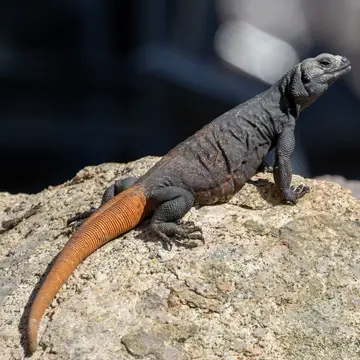
Venom No official source we use states whether this animal is venomous. That does not mean it is harmless: do not handle it. Photo: Dan Vickers · CC BY 4.0 · iNaturalist Sauromalus ater
Not stated
Venom No official source we use states whether this animal is venomous. That does not mean it is harmless: do not handle it. Size Adults 11 to 16.5 inches (28 to 42 cm) long (AZGFD); up to 9 inches snout to vent. NPS gives up to 20 inches. AZGFD calls it the largest native iguanid in the US. How to recognize it Flat, wide body with loose skin folds on neck and sides; flattened broad head; tail blunt at the tip and broad at the base Small, granular body scales (Gila monster has large bead-like scales) Larger and stockier than other US iguanid lizards, without head spines or enlarged scales along the back
J F M A M J J A S O N D
679 records by month. Full Common Chuckwalla guide
Photo: Ben · CC0 1.0 · iNaturalist Common Sagebrush Lizard Sceloporus graciosus
Not stated
Venom No official source we use states whether this animal is venomous. That does not mean it is harmless: do not handle it. Photo: William Walker · CC BY 4.0 · iNaturalist Common Side-blotched Lizard Uta stansburiana
Not stated
Venom No official source we use states whether this animal is venomous. That does not mean it is harmless: do not handle it.
J F M A M J J A S O N D
4,877 records by month. No confirmed photo of Cope's Leopard Lizard Cope's Leopard Lizard Gambelia copeii
Not stated
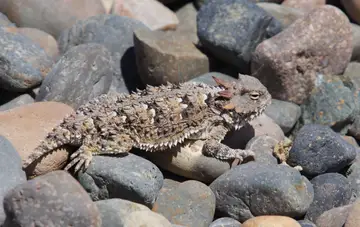
Venom No official source we use states whether this animal is venomous. That does not mean it is harmless: do not handle it. Photo: colorful-corvid · CC BY 4.0 · iNaturalist Desert Horned Lizard Phrynosoma platyrhinos
Not stated
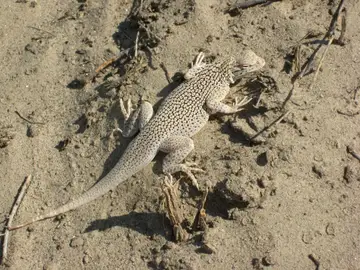
Venom No official source we use states whether this animal is venomous. That does not mean it is harmless: do not handle it. Photo: Joshua Tree National Park · Public domain · Wikimedia Commons Dipsosaurus dorsalis
Not stated
Venom No official source we use states whether this animal is venomous. That does not mean it is harmless: do not handle it. Size Up to 5.75 inches (146 mm) snout to vent; NDOW says the tail is usually longer than the body. Total length not stated. How to recognize it A single row of enlarged, pointed scales down the middle of the back Small, blunt head; tail taller than wide; short, stocky limbs Adults have two large rust patches on the belly during breeding season
J F M A M J J A S O N D
536 records by month. Full Desert Iguana guide
Photo: Pinnacles National Park · CC BY 4.0 · iNaturalist Desert Night Lizard Xantusia vigilis
Not stated
Venom No official source we use states whether this animal is venomous. That does not mean it is harmless: do not handle it. Photo: Ken-ichi Ueda · CC BY 4.0 · iNaturalist Desert Spiny Lizard Sceloporus magister
Not stated
Venom No official source we use states whether this animal is venomous. That does not mean it is harmless: do not handle it. Photo: kclarksdnhmorg · CC BY 4.0 · Wikimedia Commons Flat-tailed Horned Lizard Phrynosoma mcallii
Not stated
Venom No official source we use states whether this animal is venomous. That does not mean it is harmless: do not handle it. No confirmed photo of Gilbert's Skink Gilbert's Skink Plestiodon gilberti
Not stated
Venom No official source we use states whether this animal is venomous. That does not mean it is harmless: do not handle it. Photo: Trevor Van Loon · CC BY 4.0 · iNaturalist Granite Night Lizard Xantusia henshawi
Not stated
Venom No official source we use states whether this animal is venomous. That does not mean it is harmless: do not handle it. Photo: Millie Basden · CC BY 4.0 · iNaturalist Granite Spiny Lizard Sceloporus orcutti
Not stated
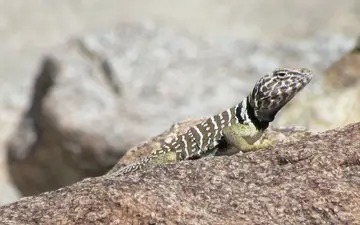
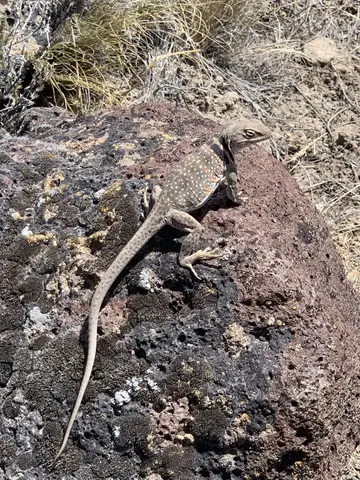
Venom No official source we use states whether this animal is venomous. That does not mean it is harmless: do not handle it. Photo: Joshua Zupan · CC0 1.0 · iNaturalist Great Basin Collared Lizard Crotaphytus bicinctores
Not stated
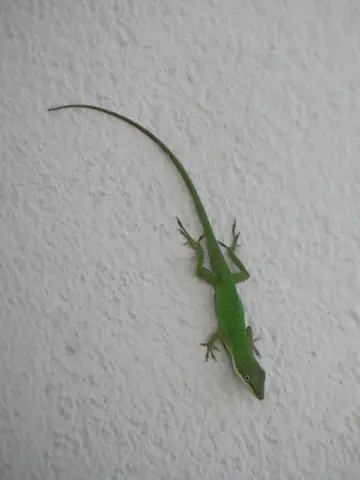
Venom No official source we use states whether this animal is venomous. That does not mean it is harmless: do not handle it. Photo: Donald Hobern from Copenhagen, Denmark · CC BY 2.0 · Wikimedia Commons Anolis carolinensis
Not stated Nonnative
Venom No official source we use states whether this animal is venomous. That does not mean it is harmless: do not handle it. Size 5 to 8 inches (12.5 to 20 cm) including the tail; the tail can be twice as long as the body. How to recognize it Males have a pink throat fan (dewlap); TWRA says females have a white throat. Sticky toe pads for climbing walls, fences, shrubs and trees. Can change color between green and brown.
J F M A M J J A S O N D
103 records by month. Full Green Anole guide
Photo: Tsirtalis · CC BY-SA 3.0 · Wikimedia Commons · resized Island Night Lizard Xantusia riversiana
Not stated
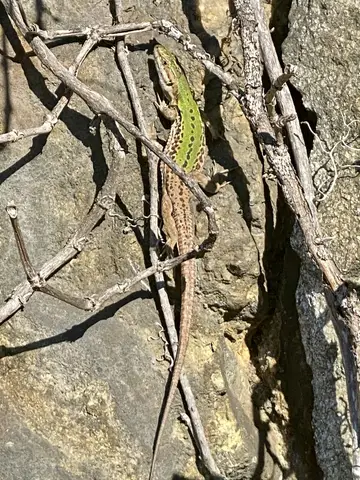
Venom No official source we use states whether this animal is venomous. That does not mean it is harmless: do not handle it. Photo: Sandy Wolkenberg · CC BY 4.0 · iNaturalist Italian Wall Lizard Podarcis siculus
Not stated Nonnative
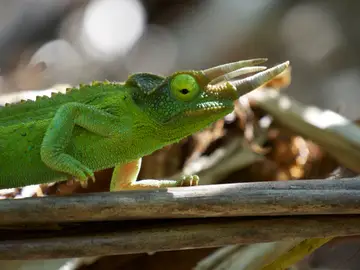
Venom No official source we use states whether this animal is venomous. That does not mean it is harmless: do not handle it. Photo: Nils · CC BY 4.0 · iNaturalist Jackson’s Chameleon Chamaeleo jacksonii
Not stated Nonnative
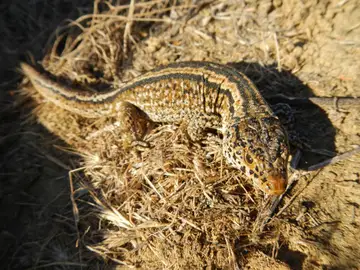
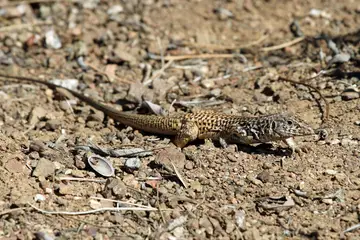
Venom No official source we use states whether this animal is venomous. That does not mean it is harmless: do not handle it. Photo: ALAN SCHMIERER · CC0 · Wikimedia Commons Long-nosed Leopard Lizard Gambelia wislizenii
Not stated
Venom No official source we use states whether this animal is venomous. That does not mean it is harmless: do not handle it. No confirmed photo of Long-tailed Brush Lizard Long-tailed Brush Lizard Urosaurus graciosus
Not stated
Venom No official source we use states whether this animal is venomous. That does not mean it is harmless: do not handle it. Photo: Jamie Lantzy · CC BY-SA 3.0 · Wikimedia Commons · resized Mearns’ Rock Lizard Petrosaurus mearnsi
Not stated
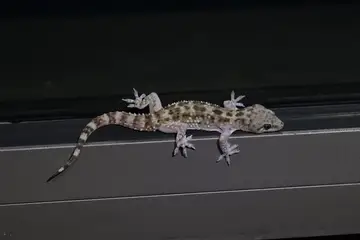
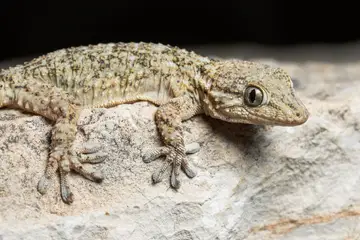
Venom No official source we use states whether this animal is venomous. That does not mean it is harmless: do not handle it. Photo: Stephanie Tran · CC BY 4.0 · iNaturalist Hemidactylus turcicus
Not stated Nonnative
Venom No official source we use states whether this animal is venomous. That does not mean it is harmless: do not handle it. Size Adults about 4 to 5 inches long in total (Missouri gives 3.9 to 5.0 inches); up to 2.4 inches from snout to vent. How to recognize it Warty skin, large bulging eyes with vertical pupils, and wide toe pads for climbing. Large eyes without eyelids, covered by a clear scale. Unlike any native lizard in Georgia and South Carolina, geckos have sticky toe pads, vertical pupils and lidless eyes.
J F M A M J J A S O N D
101 records by month. Full Mediterranean House Gecko guide
Photo: Mark Pollock · CC BY 4.0 · iNaturalist Mohave Fringe-toed Lizard Uma scoparia
Not stated
Venom No official source we use states whether this animal is venomous. That does not mean it is harmless: do not handle it. Photo: Konstantinos Kalaentzis · CC BY-SA 4.0 · Wikimedia Commons · resized Moorish Wall Gecko Tarentola mauritanica
Not stated Nonnative
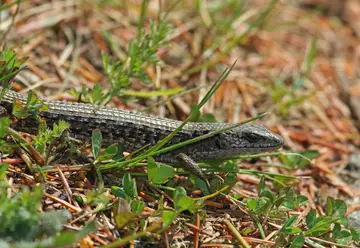
Venom No official source we use states whether this animal is venomous. That does not mean it is harmless: do not handle it. Photo: USFWS - Pacific Region · Public domain · Wikimedia Commons Northern Alligator Lizard Elgaria coerulea
Not stated
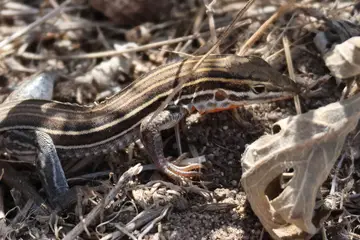
Venom No official source we use states whether this animal is venomous. That does not mean it is harmless: do not handle it. Photo: Eric Klug · CC BY 4.0 · iNaturalist Orange-throated Whiptail Aspidoscelis hyperythra
Not stated
Venom No official source we use states whether this animal is venomous. That does not mean it is harmless: do not handle it. Photo: Jason Leduc · CC0 1.0 · iNaturalist Ornate Tree Lizard Urosaurus ornatus
Not stated
Venom No official source we use states whether this animal is venomous. That does not mean it is harmless: do not handle it. No confirmed photo of Panamint Alligator Lizard Panamint Alligator Lizard Elgaria panamintina
Not stated
Venom No official source we use states whether this animal is venomous. That does not mean it is harmless: do not handle it. Photo: Madeleine Claire · CC BY 4.0 · iNaturalist Peninsula Leaf-toed Gecko Phyllodactylus nocticolus
Not stated
Venom No official source we use states whether this animal is venomous. That does not mean it is harmless: do not handle it. Photo: Walter Siegmund (talk) · CC BY-SA 3.0 · Wikimedia Commons · resized Pygmy Short-horned Lizard Phrynosoma douglasii
Not stated
Venom No official source we use states whether this animal is venomous. That does not mean it is harmless: do not handle it. Photo: kylieknight · CC0 1.0 · iNaturalist Ringed Wall Gecko Tarentola annularis
Not stated Nonnative
Venom No official source we use states whether this animal is venomous. That does not mean it is harmless: do not handle it. No confirmed photo of Sandstone Night Lizard Sandstone Night Lizard Xantusia gracilis
Not stated
Venom No official source we use states whether this animal is venomous. That does not mean it is harmless: do not handle it. No confirmed photo of Sierra Night Lizard Sierra Night Lizard Xantusia sierra
Not stated
Venom No official source we use states whether this animal is venomous. That does not mean it is harmless: do not handle it. Photo: Pacific Southwest Region USFWS from Sacramento, US · Public domain · Wikimedia Commons Southern Alligator Lizard Elgaria multicarinata
Not stated
Venom No official source we use states whether this animal is venomous. That does not mean it is harmless: do not handle it.
J F M A M J J A S O N D
2,589 records by month. Photo: Adam J. Searcy · CC BY 4.0 · iNaturalist Switak’s Banded Gecko Coleonyx switaki
Not stated
Venom No official source we use states whether this animal is venomous. That does not mean it is harmless: do not handle it. Photo: Greg Schechter · CC BY 2.0 · Wikimedia Commons Tiger Whiptail Aspidoscelis tigris
Not stated
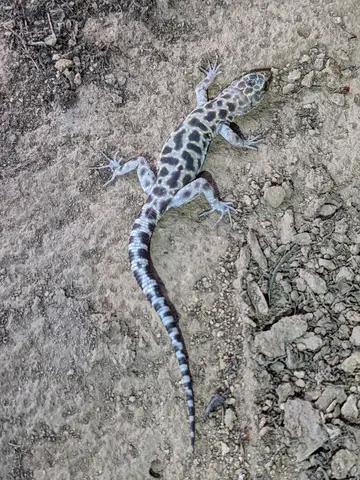
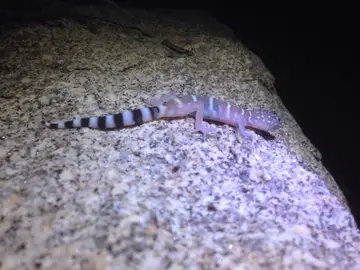
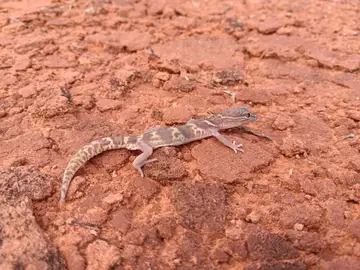
Venom No official source we use states whether this animal is venomous. That does not mean it is harmless: do not handle it. Photo: Dylan C Thomas · CC0 1.0 · iNaturalist Western Banded Gecko Coleonyx variegatus
Not stated
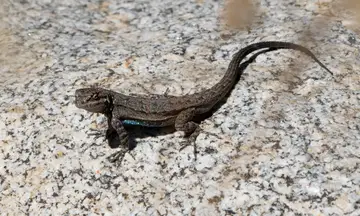
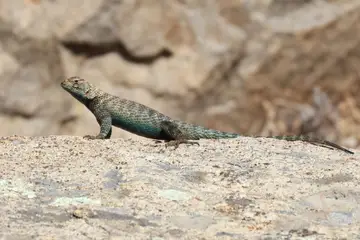
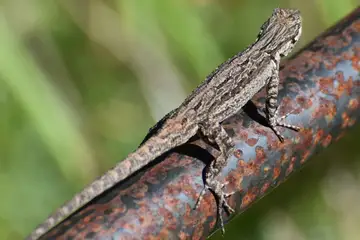
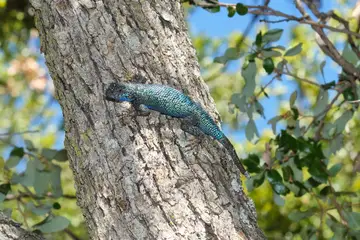
Venom No official source we use states whether this animal is venomous. That does not mean it is harmless: do not handle it. Photo: Shawn O'Donnell · CC BY 4.0 · iNaturalist Sceloporus occidentalis
Not stated
Venom No official source we use states whether this animal is venomous. That does not mean it is harmless: do not handle it. Size Adults 2.2 to 3.4 inches snout to vent (body without tail). How to recognize it Keeled, spiny scales on the back In mature males the entire throat is blue and the blue belly patches are outlined in black Yellow scales on the back of the thighs
J F M A M J J A S O N D
17,638 records by month. Full Western Fence Lizard guide
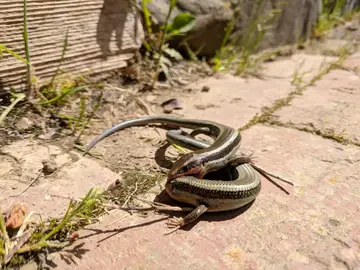
Photo: Andy Kleinhesselink · CC0 1.0 · iNaturalist Western Skink Plestiodon skiltonianus
Not stated
Venom No official source we use states whether this animal is venomous. That does not mean it is harmless: do not handle it. No confirmed photo of Wiggins’ Night Lizard Wiggins’ Night Lizard Xantusia wigginsi
Not stated
Venom No official source we use states whether this animal is venomous. That does not mean it is harmless: do not handle it. No confirmed photo of Yellow-backed Spiny Lizard Yellow-backed Spiny Lizard Sceloporus uniformis
Not stated
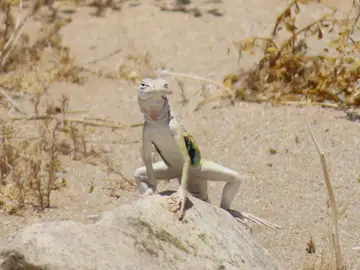
Venom No official source we use states whether this animal is venomous. That does not mean it is harmless: do not handle it. Photo: Nicole · CC BY 4.0 · iNaturalist Zebra-tailed Lizard Callisaurus draconoides
Not stated
Venom No official source we use states whether this animal is venomous. That does not mean it is harmless: do not handle it. Lizards people confuse Mediterranean house gecko or Western banded gecko? In Arizona, the small pale tubercles (bumps) on the upper surfaces set the Mediterranean house gecko apart from the similar-looking western banded gecko.
Gila monster or Western banded gecko? NPS says Gila monster hatchlings are sometimes confused with the banded gecko, a small, thin-skinned lizard. Hatchlings are much larger than an adult banded gecko. US National Park Service
Chuckwalla (common chuckwalla) or Gila monster? AZGFD: the chuckwalla has small granular body scales; the Gila monster has large bead-like scales. NPS: the Gila monster has bright orange to salmon-pink bands over black skin and a swollen tail.
Chuckwalla (common chuckwalla) or Desert iguana? Photo: Joshua Tree National Park · Public domain · Wikimedia Commons Desert iguana Not stated
Arizona Game and Fish: the desert iguana has a small, blunt head, a long tail and short, stocky limbs, with a single row of enlarged, pointed scales down the middle of the back.
Western Fence Lizard or Sagebrush lizard? Smaller (adults under 2.4 in snout to vent), less robust, with orange or rust armpits, no yellow on the back of the thighs and smaller spiny scales. Male sagebrush lizards have blue mottling on the throat; male fence lizards have an entirely blue throat.
Western Fence Lizard or Side-blotched lizard? Smaller, with fine granular (not spiny) back scales, a fold of skin across the throat and a black spot on the side behind the front leg.
Photos show typical adults; individuals vary. Never get close to compare.
When lizards are active in California Records of lizards in California peak in March to June. They show when people record lizards, not how many there are (about month bars ).
Jan Feb Mar Apr May Jun Jul Aug Sep Oct Nov Dec
35,219 records of lizards in California by month (GBIF, CC0 and CC BY records). If you are bitten or stung Call 911 or Poison Help at 1-800-222-1222 right away. Poison Help connects you to your local poison center, any time of day.
How to report Wildlife conflicts: CDFW Wildlife Incident Reporting (WIR) system https://apps.wildlife.ca.gov/wir, emergencies 9-1-1. Invasive animal sightings: CDFW Invasive Species Program (866) 440-9530 or [email protected] ; invasive insects/spiders/terrestrial invertebrates: California Department of Food and Agriculture 1-800-491-1899. California Department of Fish and Wildlife
Sources Human-Wildlife Conflicts Toolkit . California Department of Fish and Wildlife. undated page; checked November 3, 2026. Complete List of Amphibian, Reptile, Bird and Mammal Species in California . California Department of Fish and Wildlife (CWHR Program). 2016-05 (document dated "May, 2016"; checked November 3, 2026. Gila Monster - Saguaro National Park . U.S. National Park Service. August 19, 2026; checked November 3, 2026. Quoted passages (4) “Gila Monsters are venomous.” “Short, stout legs possess long toes with sharp claws used in digging and climbing.” “A Gila Monster bite is a serious and painful medical emergency and always calls for a trip to the Emergency Room.” “This may seem small, but hatchlings are considerably larger than the size of an adult Banded Gecko (Coleonyx variegatus), a little, thin-skinned lizard with which it is sometimes confused.” Report an Invasive Species Sighting . California Department of Fish and Wildlife (Invasive Species Program). undated page; checked November 3, 2026. Quoted passages (1) “To report a sighting of a known, or suspected invasive species of an animal (mammal, bird, reptile, amphibian, fish, aquatic invertebrate) or marine plant, complete and submit the Suspect Invasive Species Sighting Report form below or contact us at (866) 440-9530. / For a known invasive plant, terrestrial invertebrate (worm, beetle, spider, bug, bee, fly, ant, snail, etc.) or plant/tree disease, or one that you suspect may be new to your area of California, contact the California Department of Food and Agriculture at 1-800-491-1899. / [ca-cdfw-hwc] Wildlife Incident Reporting (WIR) System For Emergencies, call 9-1-1” GBIF.org occurrence records, human observations licensed CC0 1.0 or CC BY 4.0 only, accessed November 3, 2026. The datasets behind these counts are listed on our Sources page.