States Wildlife

California Turtles: Identification Guide With Pictures

Last checked November 3, 2026 against official sources.

On this page
  1. All 12 turtles
  2. Lookalikes
  3. When they are active
  4. How to report
  5. About this list
  6. Sources

This page lists 12 turtles: all from CWHR Program's Complete List of Amphibian, Reptile, Bird and Mammal Species in California. 4 are nonnative.

All 12 turtles

From A to Z.

No confirmed photo of Green Sea Turtle

Green Sea Turtle

Chelonia mydas

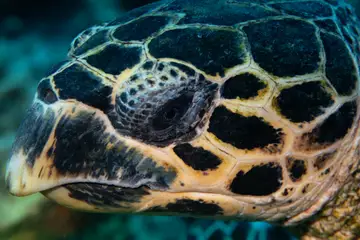
Hawksbill Sea Turtle
Photo: cello caruso-turiello · CC BY 4.0 · iNaturalist

Hawksbill Sea Turtle

Eretmochelys imbricata

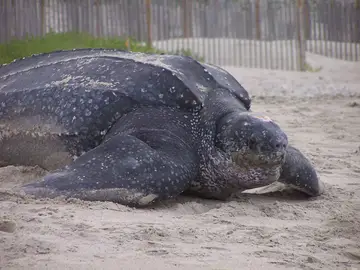
Leatherback Sea Turtle
Photo: Rabon David, U.S. Fish and Wildlife Service · Public domain · Wikimedia Commons

Leatherback Sea Turtle

Dermochelys coriacea

Size
Adults 5 to 6 feet long, 750 to 1,000 pounds (NOAA). Texas Parks and Wildlife cites weights up to 1,300 lb and shells up to 8 feet.
How to recognize it
  • The only sea turtle that lacks scales and a hard shell.
  • Front flippers proportionally longer than in other sea turtles; rear flippers paddle-shaped.
  • Usually a pink spot on top of the head that can identify individuals.

Full Leatherback Sea Turtle guide

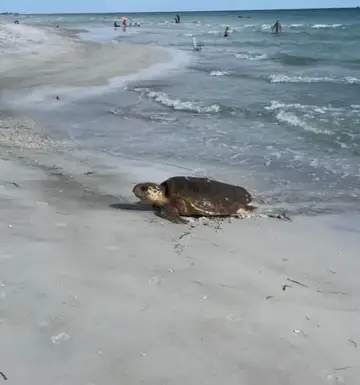
Loggerhead Sea Turtle
Photo: Kristiina Hurme · CC BY 4.0 · iNaturalist

Loggerhead Sea Turtle

Caretta caretta

Size
Adults 2.5 to 3.5 feet long and 200 to 350 pounds (NOAA). NCWRC gives 31 to 45 inches shell length and 170 to 350 pounds; SCDNR says adults can weigh as much as 300 pounds and reach up to four feet in shell length.
How to recognize it
  • Very large head with powerful jaws.
  • Slightly heart-shaped top shell.
  • Two pairs of scales (prefrontal scutes) between the eyes above the nostrils; two claws on each flipper.

Full Loggerhead Sea Turtle guide

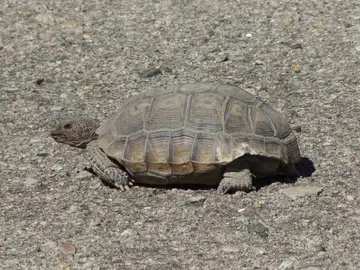
Mohave Desert Tortoise
Photo: Wendy St. John · CC BY-SA 4.0 · iNaturalist · resized

Mohave Desert Tortoise

Gopherus agassizii

Size
Shell 8 to 15 inches long and 4 to 6 inches high; adults weigh 8 to 15 pounds.
How to recognize it
  • Short tail, flattened front legs for digging, elephant-like hind legs and a high-domed shell
  • Males have throat shields on the underside that extend out beneath the throat
222 records by month.

Full Mohave Desert Tortoise guide

No confirmed photo of Olive Ridley Sea Turtle

Olive Ridley Sea Turtle

Lepidochelys olivacea

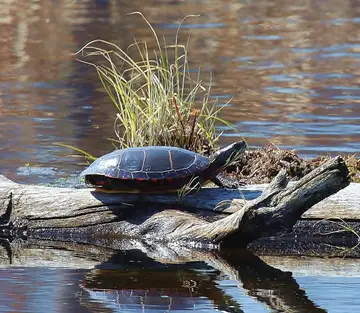
Painted Turtle
Photo: U. S. Fish and Wildlife Service - Northeast Region · Public domain · Wikimedia Commons

Painted Turtle

Chrysemys picta

Nonnative

Size
Small: adult shell usually 4 to 7 inches, up to about 10 inches; females are larger than males.
How to recognize it
  • Smooth, fairly flat shell with no keel and a smooth (not saw-toothed) rear edge
  • Red markings on the marginal shell plates
  • Yellow spot behind each eye and yellow stripes on the chin

Full Painted Turtle guide

No confirmed photo of Pond Slider

Pond Slider

Trachemys scripta

Invasive

2,366 records by month.
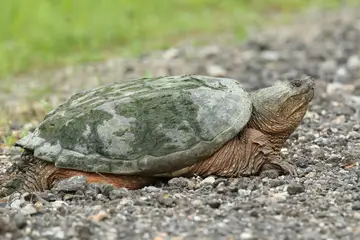
Snapping Turtle
Photo: Cephas · CC BY-SA 4.0 · Wikimedia Commons · resized

Snapping Turtle

Chelydra serpentina

Nonnative

Size
Upper shell usually 8 to 14 inches, occasionally to nearly 20; usually 10 to 35 lb, occasionally to 75 lb in the wild.
How to recognize it
  • Large head, long tail
  • Saw-toothed scales on the long tail
  • Small, cross-shaped lower shell

Full Snapping Turtle guide

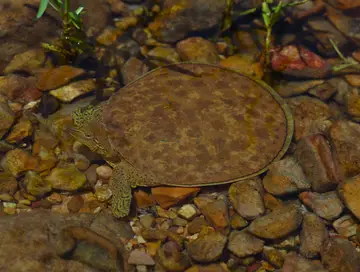
Spiny Softshell
Photo: Peter Paplanus · CC BY 2.0 · Wikimedia Commons

Spiny Softshell

Apalone spinifera

Nonnative

78 records by month.

Turtles people confuse

Loggerhead sea turtle or Leatherback sea turtle?

Loggerhead sea turtle
Photo: Kristiina Hurme · CC BY 4.0 · iNaturalist

Loggerhead sea turtle Not stated

Leatherback sea turtle
Photo: Rabon David, U.S. Fish and Wildlife Service · Public domain · Wikimedia Commons

Leatherback sea turtle Not stated

Adult leatherbacks differ from all other sea turtles, including the loggerhead, in their large size, spindle-shaped body and leathery shell without scales.

Photos show typical adults; individuals vary. Never get close to compare.

When turtles are active in California

Records of turtles in California peak in March to July. They show when people record turtles, not how many there are (about month bars).

3,967 records of turtles in California by month (GBIF, CC0 and CC BY records).

How to report

Wildlife conflicts: CDFW Wildlife Incident Reporting (WIR) system https://apps.wildlife.ca.gov/wir, emergencies 9-1-1. Invasive animal sightings: CDFW Invasive Species Program (866) 440-9530 or [email protected]; invasive insects/spiders/terrestrial invertebrates: California Department of Food and Agriculture 1-800-491-1899. California Department of Fish and Wildlife

About this list

The species list comes from Complete List of Amphibian, Reptile, Bird and Mammal Species in California (California Department of Fish and Wildlife (CWHR Program), 2016-05).

Venom labels come only from official sources and link to them; "Not stated" never means harmless. How labels work.

"Nonnative" and "Invasive" follow the wording of the source list. See invasive species in California.

Sources

  1. Human-Wildlife Conflicts Toolkit. California Department of Fish and Wildlife. undated page; checked November 3, 2026.
  2. Complete List of Amphibian, Reptile, Bird and Mammal Species in California. California Department of Fish and Wildlife (CWHR Program). 2016-05 (document dated "May, 2016"; checked November 3, 2026.
  3. Report an Invasive Species Sighting. California Department of Fish and Wildlife (Invasive Species Program). undated page; checked November 3, 2026.
    Quoted passages (1)
    “To report a sighting of a known, or suspected invasive species of an animal (mammal, bird, reptile, amphibian, fish, aquatic invertebrate) or marine plant, complete and submit the Suspect Invasive Species Sighting Report form below or contact us at (866) 440-9530. / For a known invasive plant, terrestrial invertebrate (worm, beetle, spider, bug, bee, fly, ant, snail, etc.) or plant/tree disease, or one that you suspect may be new to your area of California, contact the California Department of Food and Agriculture at 1-800-491-1899. / [ca-cdfw-hwc] Wildlife Incident Reporting (WIR) System For Emergencies, call 9-1-1”
  4. GBIF.org occurrence records, human observations licensed CC0 1.0 or CC BY 4.0 only, accessed November 3, 2026. The datasets behind these counts are listed on our Sources page.