Invasive and nonnative animals in California
Last checked November 3, 2026 against official sources.
On this page
- Nutria Infestation
- California's Invaders: Northern Watersnake
- California's Invaders: Southern Watersnake
- California's Invaders: Red-Eared Slider
- California's Invaders: American Bullfrog
- California's Invaders: African Clawed Frog
- California's Invaders: Common Coqui
- California's Invaders: Mute Swan
- California's Invaders: Brown-Headed Cowbird
- USGS established records
- How to report
- Sources
9 nonnative animals are named on 9 official lists for California: “Nutria Infestation” (California Department of Fish and Wildlife), “California's Invaders: Northern Watersnake” (California Department of Fish and Wildlife), “California's Invaders: Southern Watersnake” (California Department of Fish and Wildlife), “California's Invaders: Red-Eared Slider” (California Department of Fish and Wildlife), “California's Invaders: American Bullfrog” (California Department of Fish and Wildlife), “California's Invaders: African Clawed Frog” (California Department of Fish and Wildlife), “California's Invaders: Common Coqui” (California Department of Fish and Wildlife), “California's Invaders: Mute Swan” (California Department of Fish and Wildlife) and “California's Invaders: Brown-Headed Cowbird” (California Department of Fish and Wildlife).
The USGS Nonindigenous Aquatic Species database records an established population in California for 4 nonnative animals in the groups this guide covers.
To report a sighting, see how to report.
Being on a list of nonnative species does not always mean an animal is harmful or established: each list below is described in its source's terms. A sighting of a listed animal is still worth reporting to the agency.
Nutria Infestation
California Department of Fish and Wildlife (Invasive Species Program), undated page. 1 animal.
-
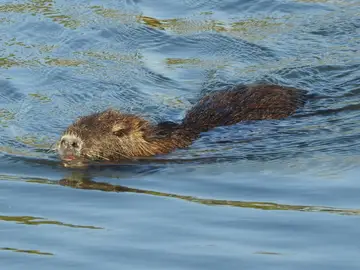
Photo: Sam Kieschnick · CC BY 4.0 · iNaturalist Nutria Myocastor coypus
March 2017: the first nutria (a pregnant female) is incidentally taken in a private wetland in Gustine (Merced County). California Department of Fish and Wildlife
California's Invaders: Northern Watersnake
California Department of Fish and Wildlife, undated page. 1 animal.
-
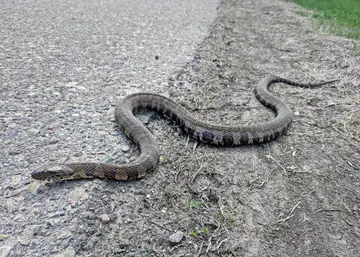
Photo: U.S. Fish and Wildlife Service - Midwest Region · Public domain · Wikimedia Commons Northern Watersnake Nerodia sipedon
In California, northern watersnakes have been established and reproducing in Kaseberg Creek in the City of Roseville, Placer County since 2007. California Department of Fish and Wildlife

California's Invaders: Southern Watersnake
California Department of Fish and Wildlife, undated page. 1 animal.
-
Southern Watersnake Nerodia fasciata
In California, southern watersnakes are found in Sacramento, Yolo, and Los Angeles counties. California Department of Fish and Wildlife
California's Invaders: Red-Eared Slider
California Department of Fish and Wildlife (Invasive Species Program), undated page. 1 animal.
-
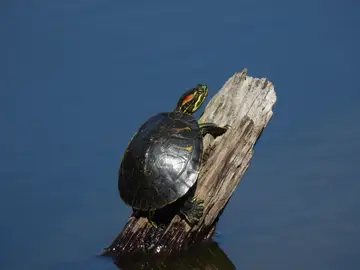
Photo: ncb1221 · CC BY 4.0 · iNaturalist Red-eared Slider Trachemys scripta elegans
California's Invaders: American Bullfrog
California Department of Fish and Wildlife (Invasive Species Program), undated page. 1 animal.
-
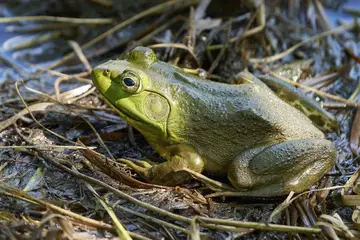
Photo: Paul Danese · CC BY-SA 4.0 · Wikimedia Commons · resized American Bullfrog Lithobates catesbeianus
Although American bullfrogs have become widespread throughout California, they are rarely found in elevations above 7000 ft. in the Sierra Nevada Mountains. California Department of Fish and Wildlife

California's Invaders: African Clawed Frog
California Department of Fish and Wildlife (Invasive Species Program), undated page. 1 animal.
-
African Clawed Frog Xenopus laevis
African clawed frogs have become established in watersheds throughout southern California in Imperial, Kern, Los Angeles, Orange, Riverside, San Bernardino, San Diego, Santa Barbara, and Ventura Counties. California Department of Fish and Wildlife
California's Invaders: Common Coqui
California Department of Fish and Wildlife (Invasive Species Program), undated page. 1 animal.
-
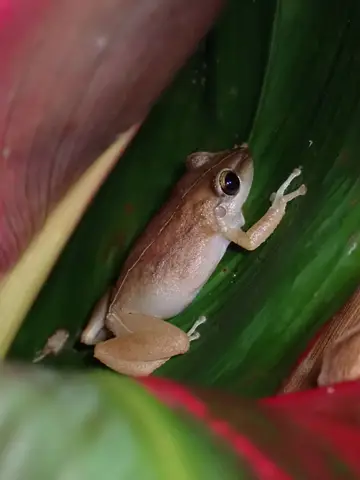
Photo: Cricket Raspet · CC BY 4.0 · Wikimedia Commons Common Coqui Eleutherodactylus coqui

California's Invaders: Mute Swan
California Department of Fish and Wildlife (Invasive Species Program), undated page. 1 animal.
-
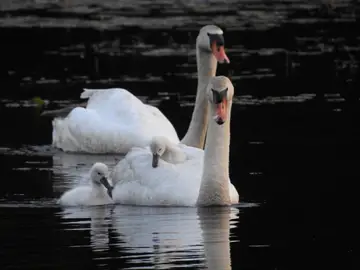
Photo: Laura Mae · CC BY 4.0 · iNaturalist Mute Swan Cygnus olor
They have been observed in the wild in Suisun Marsh (Solano County) and Petaluma Marsh Wildlife Area (Marin and Sonoma Counties). California Department of Fish and Wildlife
California's Invaders: Brown-Headed Cowbird
California Department of Fish and Wildlife (Invasive Species Program), undated page. 1 animal.
-
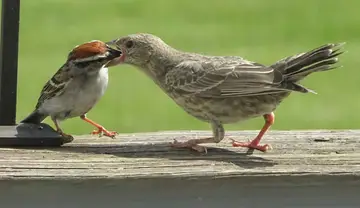
Photo: Shirley Zundell · CC BY 4.0 · iNaturalist Brown-headed Cowbird Molothrus ater
In California, brown-headed cowbirds are a common resident and summer visitor that breed throughout much of the state. California Department of Fish and Wildlife
Established in California, per USGS records
The U.S. Geological Survey's Nonindigenous Aquatic Species (NAS) database tracks nonnative aquatic animals. These have at least one record with the status "established" in California, which USGS defines as a population showing evidence of reproduction and overwinter survival.
| Animal | Group | First record | Latest record | Counties |
|---|---|---|---|---|
| African Clawed Frog Xenopus laevis | Frogs and Toads | 1965 | 2022 | 11 |
| Australian spotted jellyfish Phyllorhiza punctata | Sharks and Marine Life | 1981 | 2026 | 1 |
| Coqui Eleutherodactylus coqui | Frogs and Toads | 2012 | 2015 | 2 |
| Nutria Myocastor coypus | Mammals | 1899 | 2024 | 7 |
Source: U.S. Geological Survey. [2026]. Nonindigenous Aquatic Species Database. Gainesville, Florida. Accessed [11/3/2026]. "Native Transplant" animals are native elsewhere in the US but not in California.
How to report a sighting in California
Wildlife conflicts: CDFW Wildlife Incident Reporting (WIR) system https://apps.wildlife.ca.gov/wir, emergencies 9-1-1. Invasive animal sightings: CDFW Invasive Species Program (866) 440-9530 or [email protected]; invasive insects/spiders/terrestrial invertebrates: California Department of Food and Agriculture 1-800-491-1899. California Department of Fish and Wildlife
Do not try to catch or handle the animal. A photo taken from a safe distance, the place and the date help the agency.
Sources
- Nutria Infestation. California Department of Fish and Wildlife (Invasive Species Program). undated page; checked November 3, 2026.
Quoted passages (1)
“In 2017, a reproducing population of nutria was discovered in California's San Joaquin Valley.”
- California's Invaders: Northern Watersnake. California Department of Fish and Wildlife. undated page; checked November 3, 2026.
Quoted passages (1)
“Northern watersnakes do not naturally occur west of the Rocky Mountains.”
- California's Invaders: Southern Watersnake. California Department of Fish and Wildlife. undated page; checked November 3, 2026.
Quoted passages (1)
“Southern watersnakes are native to the southeastern United States;”
- California's Invaders: American Bullfrog. California Department of Fish and Wildlife (Invasive Species Program). undated page; checked November 3, 2026.
Quoted passages (1)
“Although American bullfrogs have become widespread throughout California, they are rarely found in elevations above 7000 ft. in the Sierra Nevada Mountains.”
- California's Invaders: African Clawed Frog. California Department of Fish and Wildlife (Invasive Species Program). undated page; checked November 3, 2026.
Quoted passages (1)
“African clawed frogs have become established in watersheds throughout southern California in Imperial, Kern, Los Angeles, Orange, Riverside, San Bernardino, San Diego, Santa Barbara, and Ventura Counties.”
- California's Invaders: Mute Swan. California Department of Fish and Wildlife (Invasive Species Program). undated page; checked November 3, 2026.
Quoted passages (1)
“They have been observed in the wild in Suisun Marsh (Solano County) and Petaluma Marsh Wildlife Area (Marin and Sonoma Counties).”
- California's Invaders: Brown-Headed Cowbird. California Department of Fish and Wildlife (Invasive Species Program). undated page; checked November 3, 2026.
Quoted passages (1)
“Brown-headed cowbirds are native to the Great Plains region of the United States”
- California's Invaders: Red-Eared Slider. California Department of Fish and Wildlife (Invasive Species Program). undated page; checked November 3, 2026.
Quoted passages (1)
“Introduced red-eared sliders compete with native species for food and habitat.”
- California's Invaders: Common Coqui. California Department of Fish and Wildlife (Invasive Species Program). undated page; checked November 3, 2026.
Quoted passages (1)
“A single coqui was collected from a private residence in Orange County in 2012 and was determined to have originated by ‘hitchhiking’ on a tropical house plant.”
- Report an Invasive Species Sighting. California Department of Fish and Wildlife (Invasive Species Program). undated page; checked November 3, 2026.
Quoted passages (1)
“To report a sighting of a known, or suspected invasive species of an animal (mammal, bird, reptile, amphibian, fish, aquatic invertebrate) or marine plant, complete and submit the Suspect Invasive Species Sighting Report form below or contact us at (866) 440-9530. / For a known invasive plant, terrestrial invertebrate (worm, beetle, spider, bug, bee, fly, ant, snail, etc.) or plant/tree disease, or one that you suspect may be new to your area of California, contact the California Department of Food and Agriculture at 1-800-491-1899. / [ca-cdfw-hwc] Wildlife Incident Reporting (WIR) System For Emergencies, call 9-1-1”
- U.S. Geological Survey. [2026]. Nonindigenous Aquatic Species Database. Gainesville, Florida. Accessed [11/3/2026].