States Wildlife

New Mexico Snakes: Identification Guide With Pictures

Last checked November 3, 2026 against official sources.

On this page
  1. Venomous snakes
  2. The other 48 snakes
  3. Lookalikes
  4. When they are active
  5. If you are bitten or stung
  6. How to report
  7. What official sources say
  8. About this list
  9. Sources

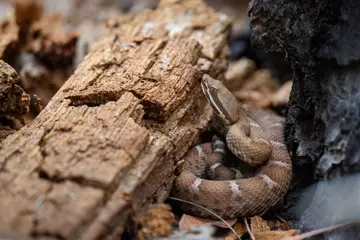
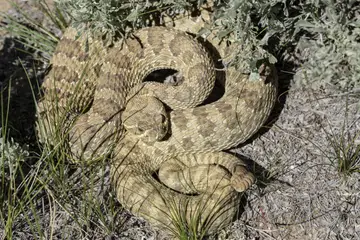
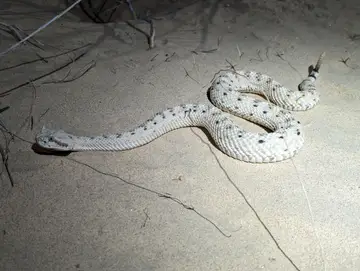
This page lists 61 snakes: 59 from New Mexico Department of Wildlife's BISON-M species search, taxonomic name "Serpentes" and 2 named in other official sources. 12 species are venomous by official accounts: Western Coral Snake, Western Diamond-backed Rattlesnake, Sidewinder Rattlesnake, Banded Rock Rattlesnake and Mottled Rock Rattlesnake (two forms of one species), Western Black-tailed Rattlesnake, Eastern Black-tailed Rattlesnake, Mojave Rattlesnake, Tiger Rattlesnake, Prairie Rattlesnake, New Mexico Ridge-nosed Rattlesnake, Western Massasauga and Arizona Black Rattlesnake.

Venomous snakes in New Mexico

Official sources label these snakes venomous in New Mexico. Venomous snakes in New Mexico has more on each one.

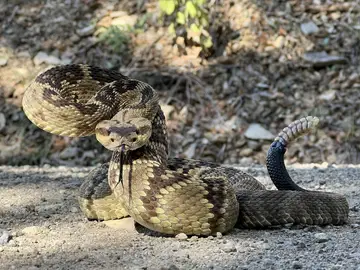
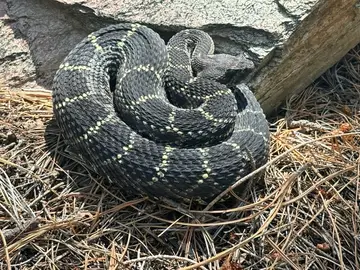
Arizona Black Rattlesnake
Photo: tzeducation · CC BY 4.0 · iNaturalist

Arizona Black Rattlesnake

Crotalus cerberus

Venomous per New Mexico Poison & Drug Information Center

Conservation
State NM: Species of Greatest Conservation Need (SGCN) 2025
What the sources say

Venom: “The two types of venomous snakes in New Mexico are the rattlesnake and the coral snake.” (New Mexico Poison & Drug Information Center)

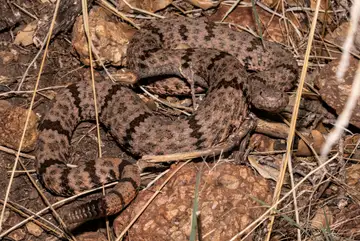
Banded Rock Rattlesnake
Photo: Jake Nitta · CC BY 4.0 · iNaturalist

Banded Rock Rattlesnake

Crotalus lepidus klauberi

Venomous per BISON-M

Conservation
State NM: Species of Greatest Conservation Need (SGCN) 2025
What the sources say

Venom: “Rattlesnakes have rattles on the ends of their tails, and they all have venom.” (BISON-M)

Eastern Black-tailed Rattlesnake
Photo: Sam Kieschnick · CC BY 4.0 · iNaturalist

Eastern Black-tailed Rattlesnake

Crotalus ornatus

Venomous per BISON-M

What the sources say

Venom: “Rattlesnakes have rattles on the ends of their tails, and they all have venom.” (BISON-M)

Mojave Rattlesnake
Photo: Court Harding · CC BY 4.0 · iNaturalist

Mojave Rattlesnake

Crotalus scutulatus scutulatus

Venomous per BISON-M

Conservation
State NM: Species of Greatest Conservation Need (SGCN) 2025
What the sources say

Venom: “Mojave rattlesnakes in Hidalgo County, New Mexico appear to have two types of venom present, specifically neurotoxic and hemorrhagic.” (BISON-M)

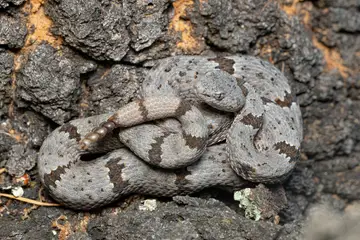
Mottled Rock Rattlesnake
Photo: Jeremiah Degenhardt · CC BY 4.0 · iNaturalist

Mottled Rock Rattlesnake

Crotalus lepidus lepidus

Venomous per New Mexico Poison & Drug Information Center

Conservation
State NM: Species of Greatest Conservation Need (SGCN) 2025; State NM: Threatened
What the sources say

Venom: “Many different types of rattlesnakes live in New Mexico, including: prairie, western diamondback, black-tailed, rock, ridgenose, massasauga and Mojave.” (New Mexico Poison & Drug Information Center)

New Mexico Ridge-nosed Rattlesnake
Photo: Court Harding · CC BY 4.0 · iNaturalist

New Mexico Ridge-nosed Rattlesnake

Crotalus willardi obscurus

Venomous per New Mexico Poison & Drug Information Center

Conservation
Federal: Threatened; State NM: Endangered; State NM: Species of Greatest Conservation Need (SGCN) 2025
What the sources say

Venom: “Many different types of rattlesnakes live in New Mexico, including: prairie, western diamondback, black-tailed, rock, ridgenose, massasauga and Mojave.” (New Mexico Poison & Drug Information Center)

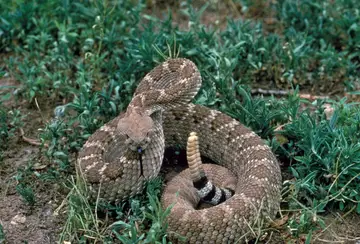
Prairie Rattlesnake
Photo: Cecelia Alexander · CC0 1.0 · iNaturalist

Prairie Rattlesnake

Crotalus viridis

Venomous per National Park Service

Size
Usually about 3 to 4 feet; Montana gives 15 to 60 inches and NPS says up to 5 feet. Arizona gives a maximum of 28 to 64 inches (excluding rattle) depending on subspecies; in Colorado it is rarely over 39 inches.
How to recognize it
  • Rattle (or a button in newborns) at the tail tip
  • Head much broader than the neck, many small scales on top of the head, heat-sensing pit between eye and nostril
  • Vertical (cat-like) pupils
122 records by month.
What the sources say

Venom: “Prairie rattlesnakes are also venomous to people and pets” (National Park Service)

Full Prairie Rattlesnake guide

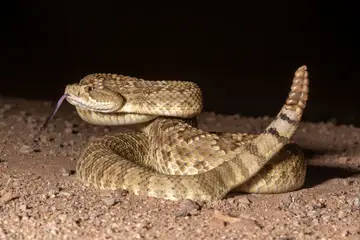
Sidewinder Rattlesnake
Photo: Ken-ichi Ueda · CC BY 4.0 · iNaturalist

Sidewinder Rattlesnake

Crotalus cerastes

Venomous per BISON-M

Size
Small: up to 25 in excluding the rattle (Arizona); typically 1.5 ft or less but can reach 3 ft (Death Valley NPS); 17-33 in (Nevada).
How to recognize it
  • Enlarged, upturned, horn-like scales above the eyes
  • Rattle on the tail, though rattles can break off (UC IPM)
  • Broad, triangular head and slender neck
What the sources say

Venom: “The sidewinder rattlesnake is slightly less poisonous than the western diamondback rattlesnake” (BISON-M)

Full Sidewinder Rattlesnake guide

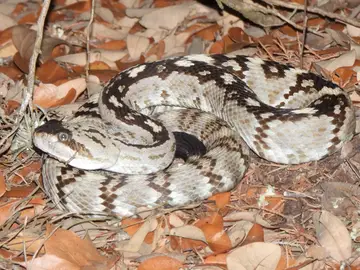
Western Black-tailed Rattlesnake
Photo: Brandon Bourassa · CC BY 4.0 · iNaturalist

Western Black-tailed Rattlesnake

Crotalus molossus molossus

Venomous per National Park Service

What the sources say

Venom: “Black-tailed rattlesnakes are sometimes seen along the trail sunning themselves in the summer. Watch your step so you don't disturb these venomous snakes.” (National Park Service)

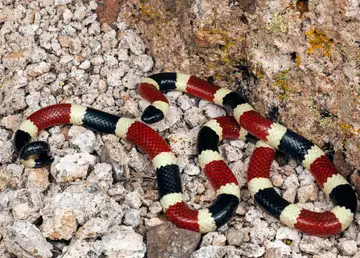
Western Coral Snake
Photo: David Jahn · CC BY-SA 2.0 · Wikimedia Commons · resized

Western Coral Snake

Micruroides euryxanthus euryxanthus

Venomous per College of ACES

What the sources say

Venom: “Although coral snakes rarely bite, their venom is highly poisonous, so they should not be handled.” (College of ACES)

Western Diamond-backed Rattlesnake
Photo: Gary Stolz (original) · Public domain · Wikimedia Commons

Western Diamond-backed Rattlesnake

Crotalus atrox

Venomous per National Park Service

Size
Usually about 3.5 to 4.5 feet; Texas says it can reach seven feet. Arizona's maximum is 66 inches excluding the rattle; Saguaro National Park gives a range of 30 to 90 inches.
How to recognize it
  • Rattle at the end of the tail
  • Broad triangular head on a slender neck; vertical pupils
  • Thin light stripe from behind the eye down to the upper lip
350 records by month.
What the sources say

Venom: “…western diamondback rattlesnakes (Crotalus atrox) are one of the venomous species of snake at El Malpais.” (National Park Service)

Full Western Diamond-backed Rattlesnake guide

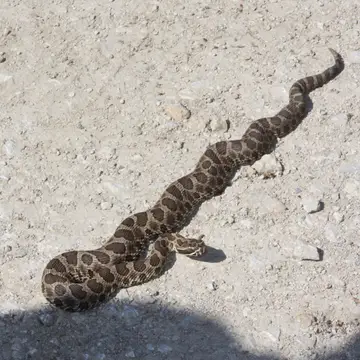
Western Massasauga
Photo: NPS photo · Public domain · Wikimedia Commons

Western Massasauga

Sistrurus tergeminus

Venomous per BISON-M

Conservation
State NM: Species of Greatest Conservation Need (SGCN) 2025
What the sources say

Venom: “Like all rattlesnakes, the desert massasauga is venomous” (BISON-M)

The other 48 snakes

From A to Z. "Not stated" means no official source we use gives a venom status, not that the snake is harmless. Some harmless snakes mimic venomous ones: leave every snake alone.

Arid Land Ribbonsnake
Photo: Tom Kennedy · CC BY 4.0 · iNaturalist

Arid Land Ribbonsnake

Thamnophis proximus diabolicus

Not stated

Venom
No official source we use states whether this animal is venomous. That does not mean it is harmless: do not handle it.
Conservation
State NM: Species of Greatest Conservation Need (SGCN) 2025; State NM: Threatened
Big Bend Patchnose Snake
Photo: William · CC0 1.0 · iNaturalist

Big Bend Patchnose Snake

Salvadora hexalepis deserticola

Not stated

Venom
No official source we use states whether this animal is venomous. That does not mean it is harmless: do not handle it.
Black-necked Gartersnake
Photo: Jared Shorma · CC BY 4.0 · iNaturalist

Black-necked Gartersnake

Thamnophis cyrtopsis cyrtopsis

Not stated

Venom
No official source we use states whether this animal is venomous. That does not mean it is harmless: do not handle it.
California Kingsnake
Photo: Pacific Southwest Region USFWS from Sacramento, US · Public domain · Wikimedia Commons

California Kingsnake

Lampropeltis californiae

Non-venomous per College of ACES

Size
Usually 2.5-3.5 ft, up to about 4 ft (NPS Cabrillo). Arizona Game and Fish gives up to 56 inches for the common kingsnake; NPS Tuzigoot (Arizona) gives 40-80 inches for kingsnakes there. These official figures differ.
How to recognize it
  • Smooth, glossy scales ('Lampropeltis' means 'shiny shield').
  • Arizona form: black or dark brown with 21 to 45 white bands that widen low on the sides; snout and face usually have small white blotches.
  • Round pupils (Arizona Game and Fish, common kingsnake).
What the sources say

Venom: “Some harmless snakes (such as king snakes and coachwhips) eat other snakes, including poisonous ones.” (College of ACES)

Full California Kingsnake guide

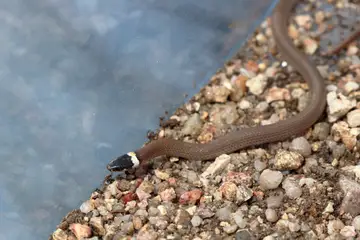
Chihuahuan Black-headed Snake
Photo: Rstanton13 · CC BY-SA 4.0 · Wikimedia Commons · resized

Chihuahuan Black-headed Snake

Tantilla wilcoxi

Not stated

Venom
No official source we use states whether this animal is venomous. That does not mean it is harmless: do not handle it.
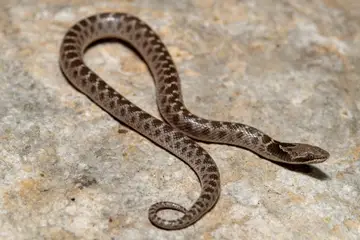
Chihuahuan Nightsnake
Photo: Court Harding · CC BY 4.0 · iNaturalist

Chihuahuan Nightsnake

Hypsiglena jani

Not stated

Venom
No official source we use states whether this animal is venomous. That does not mean it is harmless: do not handle it.
Coachwhip
Photo: Peter Paplanus from St. Louis, Missouri · CC BY 2.0 · Wikimedia Commons

Coachwhip

Coluber flagellum

Non-venomous per National Park Service

Size
Most adults about 42 to 60 inches (3.5 to 5 ft); record 102 inches (8.5 ft). Ranges given by agencies: 41 to 84 in (Louisiana), 36 to 82 in (Oklahoma), adults average 50 to 72 in (Alabama), up to 94 in (NC State Extension), up to 80 in in Colorado and up to 68 in in Arizona.
How to recognize it
  • Long, slowly tapering tail whose scales look like a braided whip
  • Very long and slender, with smooth scales
  • Large eyes with round pupils
47 records by month.
What the sources say

Venom: “Harmless to humans, the coachwhip is a long, slender, tan or brown snake that can reach up to seven feet in length.” (National Park Service)

Full Coachwhip guide

Desert Kingsnake
Photo: Court Harding · CC BY 4.0 · iNaturalist

Desert Kingsnake

Lampropeltis splendida

Non-venomous per College of ACES

What the sources say

Venom: “Some harmless snakes (such as king snakes and coachwhips) eat other snakes, including poisonous ones.” (College of ACES)

Desert Nightsnake
Photo: iNaturalist user: nmoorhatch · CC BY 4.0 · Wikimedia Commons

Desert Nightsnake

Hypsiglena chlorophaea

Not stated

Venom
No official source we use states whether this animal is venomous. That does not mean it is harmless: do not handle it.
Desert Striped Whipsnake
Photo: Wendy St. John · CC BY-SA 4.0 · iNaturalist · resized

Desert Striped Whipsnake

Masticophis taeniatus taeniatus

Not stated

Venom
No official source we use states whether this animal is venomous. That does not mean it is harmless: do not handle it.
Eastern Hognose Snake
Photo: Joshua Liverman · CC BY 4.0 · iNaturalist

Eastern Hognose Snake

Heterodon platirhinos

Not stated

Venom
No official source we use states whether this animal is venomous. That does not mean it is harmless: do not handle it.
Eastern Milksnake
Photo: Tom Norton · CC BY 4.0 · iNaturalist

Eastern Milksnake

Lampropeltis triangulum

Non-venomous per New Mexico Poison & Drug Information Center

Size
Eastern milksnake 24 to 52 inches (Alabama); TN gives 24 to 36 inches for eastern and 21 to 28 for red milksnake.
How to recognize it
  • Eastern milksnake: black-and-white checkerboard belly (Ohio). Western milksnake in Louisiana: underside dull white with scattered black marks.
  • Eastern milksnake: a light Y- or V-shaped mark is usually present on the nape
  • Smooth, shiny scales and round pupils
What the sources say

Venom: “Coral snakes can easily be confused with non-venomous milk snakes because of their similar banding patterns.” (New Mexico Poison & Drug Information Center)

Full Eastern Milksnake guide

Glossy Snake
Photo: Linda Jo Conn · CC BY 4.0 · iNaturalist

Glossy Snake

Arizona elegans

Not stated

Venom
No official source we use states whether this animal is venomous. That does not mean it is harmless: do not handle it.
Gophersnake
Photo: National Park Service from USA · Public domain · Wikimedia Commons

Gophersnake

Pituophis catenifer

Non-venomous per National Park Service

Size
Usually 3 to 6 feet; Arizona's longest snake, up to 92 inches (AZGFD); Missouri record 105 inches
How to recognize it
  • No rattle: tail tapers to a point
  • Round pupils; keeled back scales (separates it from the similar glossy snake)
  • Head somewhat triangular, more so when agitated (so head shape alone is not a safe test)
272 records by month.
What the sources say

Venom: “Bull snakes are not venomous and do not have rattles on the end of their tail.” (National Park Service)

Full Gophersnake guide

Gray-banded Kingsnake
Photo: Tom Kennedy · CC BY 4.0 · iNaturalist

Gray-banded Kingsnake

Lampropeltis alterna

Non-venomous per College of ACES

Conservation
State NM: Endangered; State NM: Species of Greatest Conservation Need (SGCN) 2025
What the sources say

Venom: “Some harmless snakes (such as king snakes and coachwhips) eat other snakes, including poisonous ones.” (College of ACES)

Great Plains Rat Snake
Photo: Peter Paplanus · CC BY 2.0 · Wikimedia Commons

Great Plains Rat Snake

Pantherophis emoryi

Non-venomous per College of ACES

What the sources say

Venom: “Some non-poisonous snakes, such as bull snakes, coachwhips and rat snakes, behave like rattlesnakes when confronted.” (College of ACES)

Green Rat Snake
Photo: Gordon C. Snelling · CC BY 4.0 · iNaturalist

Green Rat Snake

Senticolis triaspis intermedia

Non-venomous per College of ACES

Conservation
State NM: Species of Greatest Conservation Need (SGCN) 2025; State NM: Threatened
What the sources say

Venom: “Some non-poisonous snakes, such as bull snakes, coachwhips and rat snakes, behave like rattlesnakes when confronted.” (College of ACES)

Ground Snake
Photo: Peter Paplanus · CC BY 2.0 · Wikimedia Commons

Ground Snake

Sonora semiannulata

Non-venomous per BISON-M

What the sources say

Venom: “It is typically not aggressive and is not venomous” (BISON-M)

Knobloch's Mountain Kingsnake
Photo: Dan Riley · CC BY 4.0 · iNaturalist

Knobloch's Mountain Kingsnake

Lampropeltis knoblochi

Non-venomous per College of ACES

Conservation
State NM: Species of Greatest Conservation Need (SGCN) 2025
What the sources say

Venom: “Some harmless snakes (such as king snakes and coachwhips) eat other snakes, including poisonous ones.” (College of ACES)

Lined Snake
Photo: Peter Paplanus from St. Louis, Missouri · CC BY 2.0 · Wikimedia Commons

Lined Snake

Tropidoclonion lineatum

Not stated

Venom
No official source we use states whether this animal is venomous. That does not mean it is harmless: do not handle it.
Marcy's Checkered Gartersnake
Photo: Cole Wolf · CC BY 4.0 · iNaturalist

Marcy's Checkered Gartersnake

Thamnophis marcianus marcianus

Not stated

Venom
No official source we use states whether this animal is venomous. That does not mean it is harmless: do not handle it.
No confirmed photo of Mexican Black-headed Snake

Mexican Black-headed Snake

Tantilla atriceps

Not stated

Venom
No official source we use states whether this animal is venomous. That does not mean it is harmless: do not handle it.
Mexican Hog-nosed Snake
Photo: Jeremiah Degenhardt · CC BY 4.0 · iNaturalist

Mexican Hog-nosed Snake

Heterodon kennerlyi

Not stated

Venom
No official source we use states whether this animal is venomous. That does not mean it is harmless: do not handle it.
Milk Snake
Photo: Joshua Smith · CC0 1.0 · iNaturalist

Milk Snake

Lampropeltis gentilis

Non-venomous per New Mexico Poison & Drug Information Center

What the sources say

Venom: “Coral Snakes are often confused with the non-venomous New Mexico milk snake because they have similar banding patterns.” (New Mexico Poison & Drug Information Center)

Mountain Patchnose Snake
Photo: Brandon Bourassa · CC BY 4.0 · iNaturalist

Mountain Patchnose Snake

Salvadora grahamiae grahamiae

Non-venomous per National Park Service

What the sources say

Venom: “Among the non-venomous snakes are the Chihuahuan hook-nosed snake, Trans-Pecos ratsnake, and mountain patch-nosed snake.” (National Park Service)

Narrow-headed Gartersnake
Photo: Vincent Plat · CC BY 4.0 · iNaturalist

Narrow-headed Gartersnake

Thamnophis rufipunctatus

Not stated

Venom
No official source we use states whether this animal is venomous. That does not mean it is harmless: do not handle it.
Conservation
Federal: Threatened; State NM: Endangered; State NM: Species of Greatest Conservation Need (SGCN) 2025
New Mexico Gartersnake
Photo: Tom Kennedy · CC BY 4.0 · iNaturalist

New Mexico Gartersnake

Thamnophis sirtalis dorsalis

Not stated

Venom
No official source we use states whether this animal is venomous. That does not mean it is harmless: do not handle it.
North American Racer
Photo: Everglades NPS from Homestead, Florida, United States · Public domain · Wikimedia Commons

North American Racer

Coluber constrictor

Not stated

Venom
No official source we use states whether this animal is venomous. That does not mean it is harmless: do not handle it.
Size
Most adults about 3 to 5 ft. Sources range from 20 to 56 inches (Florida Museum) to 34 to 77 inches (New Jersey); Alabama says some exceed 6 ft.
How to recognize it
  • Smooth scales
  • Long and slender with large eyes
  • White chin
Conservation
State NM: Species of Greatest Conservation Need (SGCN) 2025

Full North American Racer guide

Northern Mexican Gartersnake
Photo: NS777 · CC BY-SA 4.0 · Wikimedia Commons · resized

Northern Mexican Gartersnake

Thamnophis eques megalops

Not stated

Venom
No official source we use states whether this animal is venomous. That does not mean it is harmless: do not handle it.
Conservation
Federal: Threatened; State NM: Endangered; State NM: Species of Greatest Conservation Need (SGCN) 2025
No confirmed photo of Plains Black-headed Snake

Plains Black-headed Snake

Tantilla nigriceps

Not stated

Venom
No official source we use states whether this animal is venomous. That does not mean it is harmless: do not handle it.
Plains Gartersnake
Photo: Photo Credit: Krista Lundgren/USFWS USFWS Mountain-Prairie · Public domain · Wikimedia Commons

Plains Gartersnake

Thamnophis radix

Not stated

Venom
No official source we use states whether this animal is venomous. That does not mean it is harmless: do not handle it.
Conservation
State NM: Species of Greatest Conservation Need (SGCN) 2025
Plains Hog-nosed Snake
Photo: Dean Hester · CC BY 4.0 · iNaturalist

Plains Hog-nosed Snake

Heterodon nasicus

Not stated

Venom
No official source we use states whether this animal is venomous. That does not mean it is harmless: do not handle it.
Pyro Mountain Kingsnake
Photo: Patrick Alexander from Las Cruces, NM · CC0 · Wikimedia Commons

Pyro Mountain Kingsnake

Lampropeltis pyromelana

Non-venomous per College of ACES

Conservation
State NM: Species of Greatest Conservation Need (SGCN) 2025
What the sources say

Venom: “Some harmless snakes (such as king snakes and coachwhips) eat other snakes, including poisonous ones.” (College of ACES)

Ringneck Snake
Photo: Peter Paplanus from St. Louis, Missouri · CC BY 2.0 · Wikimedia Commons

Ringneck Snake

Diadophis punctatus

Not stated

Venom
No official source we use states whether this animal is venomous. That does not mean it is harmless: do not handle it.
Size
Usually 8 to 15 inches long; Alabama reports up to about 18 inches, rarely 24. AZGFD gives a maximum of 34 inches for Arizona animals.
How to recognize it
  • A yellow, cream or orange ring around the neck; it may be incomplete, and some Lower Florida Keys and western Arizona snakes lack it.
  • Bright yellow to orange or red belly, often with a row of black half-moon spots; the underside of the tail is often red.
  • Smooth, shiny scales and a small head only slightly wider than the neck.

Full Ringneck Snake guide

Rough Greensnake
Photo: Joshua Liverman · CC BY 4.0 · iNaturalist

Rough Greensnake

Opheodrys aestivus

Not stated

Venom
No official source we use states whether this animal is venomous. That does not mean it is harmless: do not handle it.
Size
Most adults are 14 to 33 inches long (Florida Museum), with a record of 46 inches. Maryland, Missouri, Tennessee and Arkansas give 22 to 32 inches. The tail is long and thin, about a third or more of the total length.
How to recognize it
  • Keeled (ridged) scales in 17 rows, which feel rough; the smooth green snake has smooth scales.
  • Extremely long, thin tail and round pupils.
  • Large eyes.

Full Rough Greensnake guide

No confirmed photo of Smith's Black-headed Snake

Smith's Black-headed Snake

Tantilla hobartsmithi

Not stated

Venom
No official source we use states whether this animal is venomous. That does not mean it is harmless: do not handle it.
Smooth Greensnake
Photo: Alison Northup · CC BY 4.0 · iNaturalist

Smooth Greensnake

Opheodrys vernalis blanchardi

Not stated

Venom
No official source we use states whether this animal is venomous. That does not mean it is harmless: do not handle it.
Conservation
State NM: Species of Greatest Conservation Need (SGCN) 2025
Sonoran Lyresnake
Photo: Jodhan Fine · CC0 1.0 · iNaturalist

Sonoran Lyresnake

Trimorphodon lambda

Not stated

Venom
No official source we use states whether this animal is venomous. That does not mean it is harmless: do not handle it.
Conservation
State NM: Species of Greatest Conservation Need (SGCN) 2025
Sonoran Whipsnake
Photo: Jake Nitta · CC BY 4.0 · iNaturalist

Sonoran Whipsnake

Coluber bilineatus

Not stated

Venom
No official source we use states whether this animal is venomous. That does not mean it is harmless: do not handle it.
Texas Blind Snake
Photo: Turner Brockman · CC BY-SA 4.0 · iNaturalist · resized

Texas Blind Snake

Rena dulcis

Not stated

Venom
No official source we use states whether this animal is venomous. That does not mean it is harmless: do not handle it.
Texas Long-nosed Snake
Photo: Patrick Alexander from Las Cruces, NM · CC0 · Wikimedia Commons

Texas Long-nosed Snake

Rhinocheilus lecontei

Not stated

Venom
No official source we use states whether this animal is venomous. That does not mean it is harmless: do not handle it.
Texas Lyresnake
Photo: highsinger · CC BY 4.0 · iNaturalist

Texas Lyresnake

Trimorphodon vilkinsonii

Not stated

Venom
No official source we use states whether this animal is venomous. That does not mean it is harmless: do not handle it.
Conservation
State NM: Species of Greatest Conservation Need (SGCN) 2025
Trans-Pecos Rat Snake
Photo: Tom Kennedy · CC BY 4.0 · iNaturalist

Trans-Pecos Rat Snake

Bogertophis subocularis subocularis

Non-venomous per National Park Service

Conservation
State NM: Species of Greatest Conservation Need (SGCN) 2025
What the sources say

Venom: “Among the non-venomous snakes are the Chihuahuan hook-nosed snake, Trans-Pecos ratsnake, and mountain patch-nosed snake.” (National Park Service)

Wandering Gartersnake
Photo: Yellowstone National Park · Public domain · Wikimedia Commons

Wandering Gartersnake

Thamnophis elegans

Not stated

Venom
No official source we use states whether this animal is venomous. That does not mean it is harmless: do not handle it.
Western Blind Snake
Photo: cglamb · CC0 1.0 · iNaturalist

Western Blind Snake

Rena humilis segrega

Not stated

Venom
No official source we use states whether this animal is venomous. That does not mean it is harmless: do not handle it.
Conservation
State NM: Species of Greatest Conservation Need (SGCN) 2025
Western Hooknose Snake
Photo: L. Miles Horne · CC BY 4.0 · iNaturalist

Western Hooknose Snake

Gyalopion canum

Non-venomous per National Park Service

What the sources say

Venom: “Among the non-venomous snakes are the Chihuahuan hook-nosed snake, Trans-Pecos ratsnake, and mountain patch-nosed snake.” (National Park Service)

Yaqui Black-headed Snake
Photo: Sue Carnahan · CC BY 4.0 · iNaturalist

Yaqui Black-headed Snake

Tantilla yaquia

Not stated

Venom
No official source we use states whether this animal is venomous. That does not mean it is harmless: do not handle it.
Conservation
State NM: Species of Greatest Conservation Need (SGCN) 2025
Yellow-bellied watersnake
Photo: Peter Paplanus · CC BY 2.0 · Wikimedia Commons

Yellow-bellied watersnake

Nerodia erythrogaster transversa

Non-venomous per BISON-M

Conservation
State NM: Endangered; State NM: Species of Greatest Conservation Need (SGCN) 2025
What the sources say

Venom: “Although non-venomous, it can bite rather effectively (Stebbins 1985).” (BISON-M)

Snakes people confuse

Black Racer or Eastern coachwhip (black variant)?

Black Racer
Photo: Everglades NPS from Homestead, Florida, United States · Public domain · Wikimedia Commons

Black Racer Not stated

Eastern coachwhip (black variant)
Photo: NOAA · Public domain · Wikimedia Commons

Eastern coachwhip (black variant) Non-venomous

Distinctly lighter or reddish toward the rear of the body.

Coachwhip or North American racer (black racer)?

Coachwhip
Photo: NOAA · Public domain · Wikimedia Commons

Coachwhip Non-venomous

North American racer (black racer)
Photo: Everglades NPS from Homestead, Florida, United States · Public domain · Wikimedia Commons

North American racer (black racer) Not stated

TWRA: the racer lacks the coachwhip's reddish tint along the sides of the tail; an all-black coachwhip is distinctly lighter or reddish toward the rear. Oklahoma: the coachwhip is much larger.

Rough green snake or Eastern yellow-bellied racer (some populations)?

Rough green snake
Photo: Joshua Liverman · CC BY 4.0 · iNaturalist

Rough green snake Not stated

Eastern yellow-bellied racer (some populations)
Photo: Everglades NPS from Homestead, Florida, United States · Public domain · Wikimedia Commons

Eastern yellow-bellied racer (some populations) Not stated

Oklahoma: some central and western Oklahoma populations of the eastern yellow-bellied racer can look green. Rough greensnakes have distinctly keeled scales; racers have smooth scales.

Gopher snake (gophersnake) or Glossy snake?

Gopher snake (gophersnake)
Photo: National Park Service from USA · Public domain · Wikimedia Commons

Gopher snake (gophersnake) Non-venomous

Glossy snake
Photo: Linda Jo Conn · CC BY 4.0 · iNaturalist

Glossy snake Not stated

AZGFD: gopher snake back scales are keeled, which distinguishes it from the similar-looking glossy snake

Western Diamondback Rattlesnake or Bullsnake?

Western Diamondback Rattlesnake
Photo: Gary Stolz (original) · Public domain · Wikimedia Commons

Western Diamondback Rattlesnake Venomous

Bullsnake
Photo: Cephas · CC BY-SA 4.0 · Wikimedia Commons · resized

Bullsnake Non-venomous

Bullsnakes lack a rattle but copy rattlesnake color and back pattern, and can hiss and shake the tail. In dry brush that can sound like a buzzing rattlesnake. National Park Service

Western Diamondback Rattlesnake or Gopher snake?

Western Diamondback Rattlesnake
Photo: Gary Stolz (original) · Public domain · Wikimedia Commons

Western Diamondback Rattlesnake Venomous

Gopher snake
Photo: National Park Service from USA · Public domain · Wikimedia Commons

Gopher snake Non-venomous

Can mimic a rattlesnake in appearance but has no rattle.

Photos show typical adults; individuals vary. Never get close to compare.

When snakes are active in New Mexico

Records of snakes in New Mexico peak in July to September. They show when people record snakes, not how many there are (about month bars).

1,472 records of snakes in New Mexico by month (GBIF, CC0 and CC BY records).

If you are bitten or stung

Call 911 or Poison Help at 1-800-222-1222 right away. Poison Help connects you to your local poison center, any time of day.

Official advice from New Mexico Poison & Drug Information Center and National Park Service:

How to report

Dangerous wildlife encounter: contact the nearest NMDOW conservation officer (Mon-Fri 8 a.m.-5 p.m.; enforcement contacts map at https://wildlife.dgf.nm.gov/enforcement/law-enforcement-contact-information/), otherwise State Police dispatch. Suspected New World screwworm in game animals: NMDOW 888-248-6866. New Mexico Department of Wildlife

What official sources say

Are there venomous snakes in New Mexico?

Yes. The NM Poison Center says the state has two types of venomous snakes, rattlesnakes and the coral snake, and that rattlesnakes are the most common. New Mexico Poison & Drug Information Center

“The two types of venomous snakes in New Mexico are the rattlesnake and the coral snake.”

Are there coral snakes in New Mexico?

Yes. The western coral snake occurs in the far southwest of the state. College of ACES

“The western coral snake (Microroides euryxanthus) is found in extreme southwestern Catron County and western Hidalgo and Grant counties.”

About this list

The species list comes from BISON-M (Biota Information System of New Mexico) species search, taxonomic name "Serpentes" (New Mexico Department of Wildlife) (New Mexico Department of Wildlife (BISON-M, with Natural Heritage New Mexico), live database export 2026-11-03). 2 more entries come from other official sources named on each card.

Venom labels come only from official sources and link to them; "Not stated" never means harmless. How labels work.

Want a paper copy? Print the New Mexico snakes ID chart.

Sources

  1. Living With Wildlife. New Mexico Department of Wildlife (formerly New Mexico Department of Game and Fish). page modified 2026-10-26; checked November 3, 2026.
    Quoted passages (1)
    “In the event of a dangerous encounter, please reach out to your nearest Department conservation officer during regular business hours (Monday-Friday, 8 a.m.-5 p.m.).”
  2. BISON-M (Biota Information System of New Mexico) species search export: taxonomic name "Serpentes". New Mexico Department of Wildlife (BISON-M, with Natural Heritage New Mexico). database queried November 3, 2026; checked November 3, 2026.
  3. Reptiles - Carlsbad Caverns National Park. National Park Service. updated May 6, 2025; checked November 3, 2026.
    Quoted passages (1)
    “Among the non-venomous snakes are the Chihuahuan hook-nosed snake, Trans-Pecos ratsnake, and mountain patch-nosed snake.”
  4. Reptiles - White Sands National Park. National Park Service. updated September 24, 2023; checked November 3, 2026.
    Quoted passages (1)
    “Harmless to humans, the coachwhip is a long, slender, tan or brown snake that can reach up to seven feet in length.”
  5. New Mexico Snakes: Information for New Mexico Homeowners (Circular 541). New Mexico State University Cooperative Extension Service (College of ACES). Revised and electronically distributed July 1998; checked November 3, 2026.
    Quoted passages (4)
    “Some harmless snakes (such as king snakes and coachwhips) eat other snakes, including poisonous ones.”
    “Some non-poisonous snakes, such as bull snakes, coachwhips and rat snakes, behave like rattlesnakes when confronted.”
    “Although coral snakes rarely bite, their venom is highly poisonous, so they should not be handled.”
    “The western coral snake (Microroides euryxanthus) is found in extreme southwestern Catron County and western Hidalgo and Grant counties.”
  6. Bites and Stings. New Mexico Poison & Drug Information Center (UNM Health Sciences; New Mexico's poison-control program). undated page; checked November 3, 2026.
    Quoted passages (4)
    “Coral Snakes are often confused with the non-venomous New Mexico milk snake because they have similar banding patterns.”
    “The two types of venomous snakes in New Mexico are the rattlesnake and the coral snake.”
    “Do not try to capture or handle a venomous snake.”
    “Snake season is usually April through October in New Mexico, when snakes come out of their winter dens to hunt for food and water.”
  7. BISON-M Species Booklet 030400: Yellow-bellied watersnake. New Mexico Department of Wildlife (BISON-M). updated April 8, 2025; checked November 3, 2026.
    Quoted passages (1)
    “Although non-venomous, it can bite rather effectively (Stebbins 1985).”
  8. Reptiles - Gila Cliff Dwellings National Monument. National Park Service. updated April 24, 2025; checked November 3, 2026.
    Quoted passages (2)
    “Bull snakes are not venomous and do not have rattles on the end of their tail.”
    “Black-tailed rattlesnakes are sometimes seen along the trail sunning themselves in the summer. Watch your step so you don't disturb these venomous snakes.”
  9. BISON-M Species Booklet 030300: Ground Snake. New Mexico Department of Wildlife (BISON-M). updated February 17, 2024; checked November 3, 2026.
    Quoted passages (1)
    “It is typically not aggressive and is not venomous”
  10. Reptiles - El Malpais National Monument. National Park Service. updated May 6, 2025; checked November 3, 2026.
    Quoted passages (4)
    “…western diamondback rattlesnakes (Crotalus atrox) are one of the venomous species of snake at El Malpais.”
    “Prairie rattlesnakes are also venomous to people and pets”
    “Often confused with rattlesnakes, bullsnakes lack a rattle.”
    “Although prairie rattlesnakes are smaller than western diamondback rattlesnakes, prairie rattlesnake coloration is similar with a range of green to brown with a series of brown or black blotches. No black and white striping is present at the base of the rattle.”
  11. BISON-M Species Booklet 030161: Sidewinder Rattlesnake. New Mexico Department of Wildlife (BISON-M). updated August 9, 2023; checked November 3, 2026.
    Quoted passages (1)
    “The sidewinder rattlesnake is slightly less poisonous than the western diamondback rattlesnake”
  12. BISON-M Species Booklet 030174: Banded Rock Rattlesnake. New Mexico Department of Wildlife (BISON-M). updated April 9, 2026; checked November 3, 2026.
    Quoted passages (1)
    “Rattlesnakes have rattles on the ends of their tails, and they all have venom.”
  13. New Mexico's Venomous Snakes: Facts, Prevention, and First Aid Advice (brochure). New Mexico Poison & Drug Information Center (UNM Health Sciences; New Mexico's poison-control program). undated page; checked November 3, 2026.
    Quoted passages (2)
    “Many different types of rattlesnakes live in New Mexico, including: prairie, western diamondback, black-tailed, rock, ridgenose, massasauga and Mojave.”
    “Call 911 for transport to a medical facility.”
  14. BISON-M Species Booklet 030154: Eastern Black-tailed Rattlesnake. New Mexico Department of Wildlife (BISON-M). updated August 22, 2024; checked November 3, 2026.
    Quoted passages (1)
    “Rattlesnakes have rattles on the ends of their tails, and they all have venom.”
  15. BISON-M Species Booklet 030165: Mojave Rattlesnake. New Mexico Department of Wildlife (BISON-M). updated August 28, 2024; checked November 3, 2026.
    Quoted passages (1)
    “Mojave rattlesnakes in Hidalgo County, New Mexico appear to have two types of venom present, specifically neurotoxic and hemorrhagic.”
  16. BISON-M Species Booklet 030130: Western Massasauga. New Mexico Department of Wildlife (BISON-M). updated August 7, 2026; checked November 3, 2026.
    Quoted passages (1)
    “Like all rattlesnakes, the desert massasauga is venomous”
  17. BISON-M (Biota Information System of New Mexico) species search export: taxonomic name "Squamata". New Mexico Department of Wildlife (BISON-M, with Natural Heritage New Mexico). database queried November 3, 2026; checked November 3, 2026.
  18. Venomous & Toxic Creatures of New Mexico (brochure). New Mexico Poison & Drug Information Center (UNM Health Sciences Center). brochure "23" in file name; checked November 3, 2026.
    Quoted passages (1)
    “Coral snakes can easily be confused with non-venomous milk snakes because of their similar banding patterns.”
  19. Snakes - Petroglyph National Monument. National Park Service. updated September 9, 2025; checked November 3, 2026.
    Quoted passages (2)
    “The most important thing to remember about snakes is to give them plenty of room to leave an area if encountered.”
    “Snake season typically will be the most likely time to encounter any snake, which is spring through summer.”
  20. GBIF.org occurrence records, human observations licensed CC0 1.0 or CC BY 4.0 only, accessed November 3, 2026. The datasets behind these counts are listed on our Sources page.