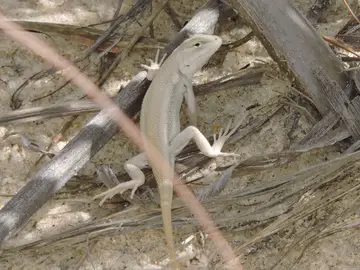
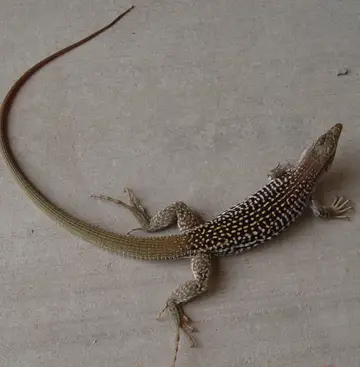
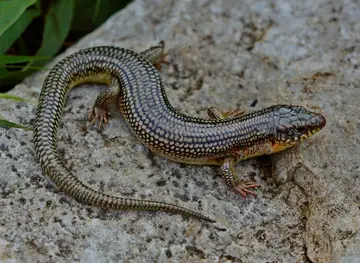
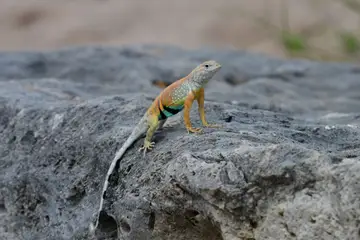
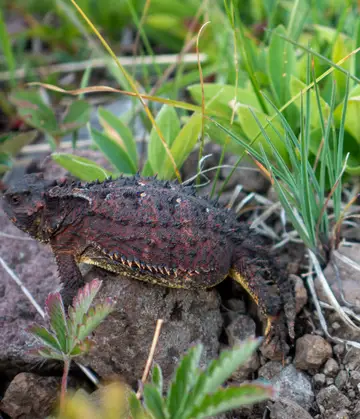
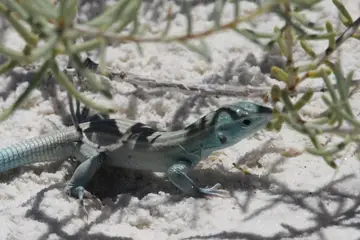
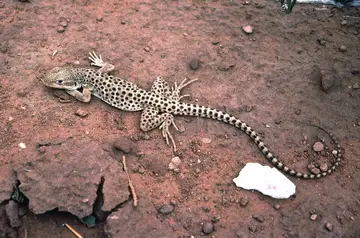
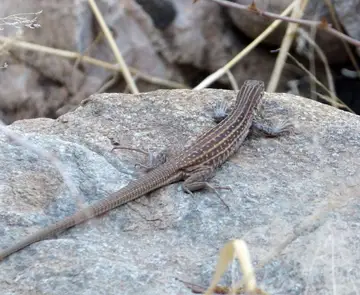
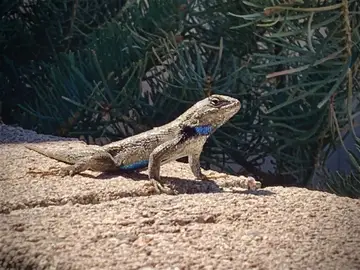
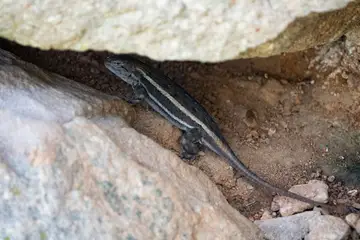
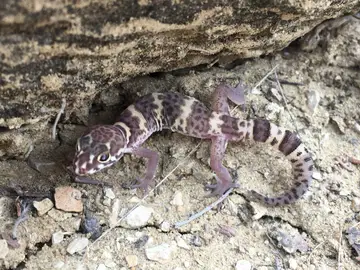
On this page Which lizards can hurt you All 50 lizards When they are active If you are bitten or stung How to report Common questions About this list Sources
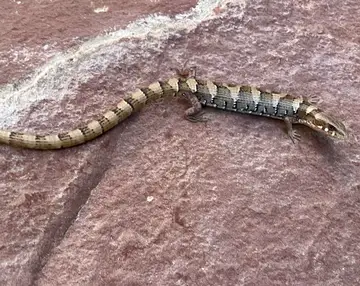
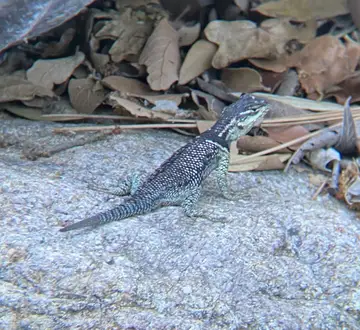
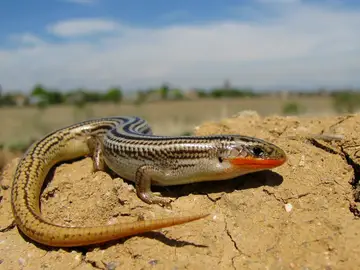
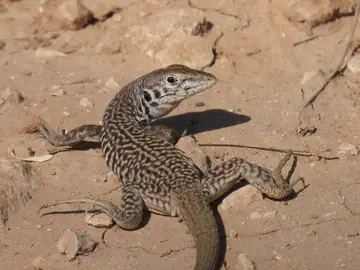
This page lists 50 lizards : all from New Mexico Department of Wildlife's BISON-M species search, taxonomic name "Squamata", records in order Squamata excluding suborder Serpentes.
1 is venomous by official accounts. 1 is nonnative.
Which lizards can hurt you Official sources single out these lizards in New Mexico, in their own words:
All 50 lizards Venomous species first, then A to Z. Do not handle them.
Find by name
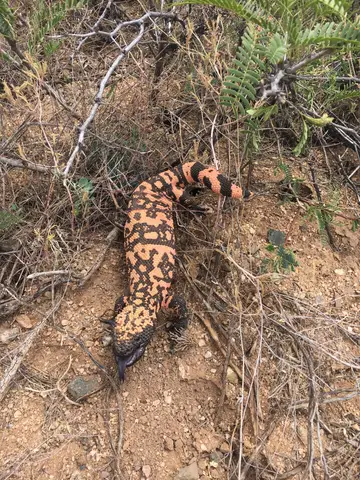
Photo: Matt Berger · CC BY 4.0 · iNaturalist Heloderma suspectum
Venomous per New Mexico Department of Wildlife
Size NPS: up to 22 inches (560 mm) long and over a pound (450 g), the largest lizard in the United States. AZGFD: up to 14 inches from snout to vent. NDOW lists 18-24 inches and 2-4 lb. How to recognize it Hard, rounded, beadlike scales; dark forked tongue; short fat tail Short, stout legs with long, sharp-clawed toes; big head and round tail Conservation State NM: Endangered; State NM: Species of Greatest Conservation Need (SGCN) 2025 What the sources say Venom: “Heloderma suspectum is the largest native, and only venomous, lizard in the United States.” (New Mexico Department of Wildlife)
Full Gila Monster guide
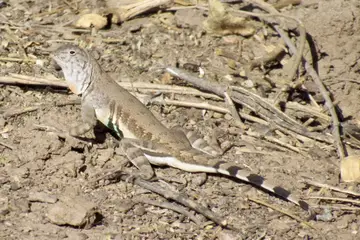
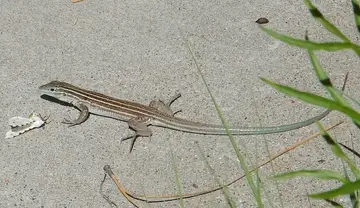
Photo: CK2AZ · CC BY 4.0 · iNaturalist Arizona Zebratail Lizard Callisaurus draconoides ventralis
Not stated
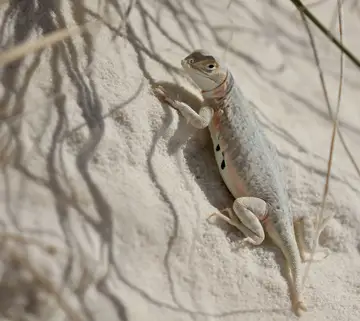
Venom No official source we use states whether this animal is venomous. That does not mean it is harmless: do not handle it. Photo: Jodhan Fine · CC0 1.0 · iNaturalist Bleached Earless Lizard Holbrookia maculata ruthveni
Not stated
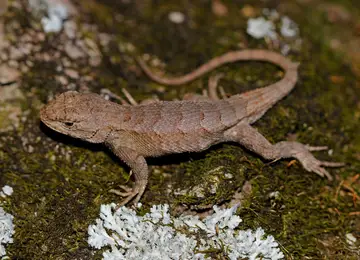
Venom No official source we use states whether this animal is venomous. That does not mean it is harmless: do not handle it. Conservation State NM: Endemic to New Mexico; State NM: Species of Greatest Conservation Need (SGCN) 2025 Photo: Peter Paplanus · CC BY 2.0 · Wikimedia Commons Central Fence Lizard Sceloporus consobrinus
Not stated
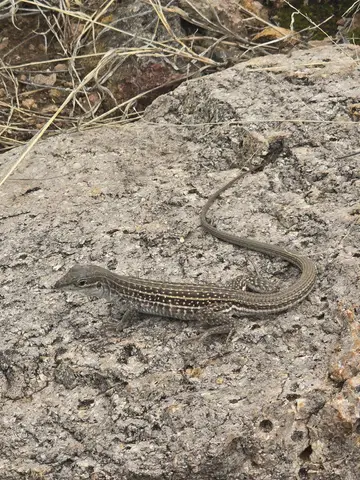
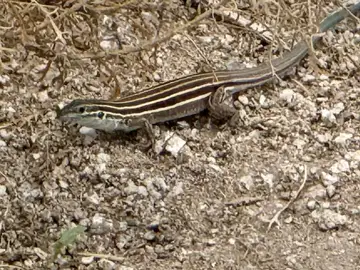
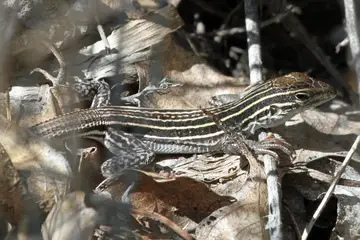
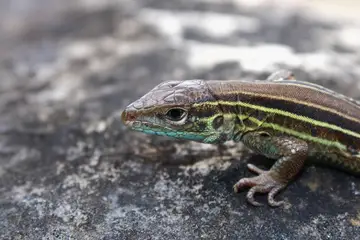
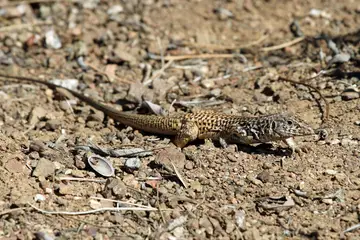
Venom No official source we use states whether this animal is venomous. That does not mean it is harmless: do not handle it. Photo: William · CC0 1.0 · iNaturalist Chihuahuan Spotted Whiptail Aspidoscelis exsanguis
Not stated
Venom No official source we use states whether this animal is venomous. That does not mean it is harmless: do not handle it. Photo: Tom Kennedy · CC BY 4.0 · iNaturalist Clark's Spiny Lizard Sceloporus clarkii clarkii
Not stated
Venom No official source we use states whether this animal is venomous. That does not mean it is harmless: do not handle it. Photo: Catherine C. Galley · CC BY 4.0 · iNaturalist Common Checkered Whiptail Aspidoscelis tesselata
Not stated
Venom No official source we use states whether this animal is venomous. That does not mean it is harmless: do not handle it. Photo: dconvertini · CC BY-SA 2.0 · Wikimedia Commons · resized Common Lesser Earless Lizard Holbrookia maculata maculata; bunkeri; ruthveni
Not stated
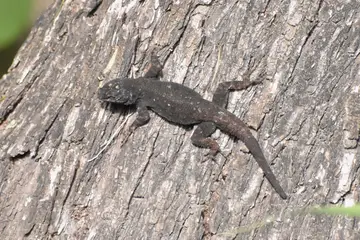
Venom No official source we use states whether this animal is venomous. That does not mean it is harmless: do not handle it. Photo: William Walker · CC BY 4.0 · iNaturalist Common Side-blotched Lizard Uta stansburiana
Not stated
Venom No official source we use states whether this animal is venomous. That does not mean it is harmless: do not handle it.
J F M A M J J A S O N D
319 records by month. Photo: Patrick Alexander from Las Cruces, NM · CC0 · Wikimedia Commons Crevice Spiny Lizard Sceloporus poinsettii poinsettii
Not stated
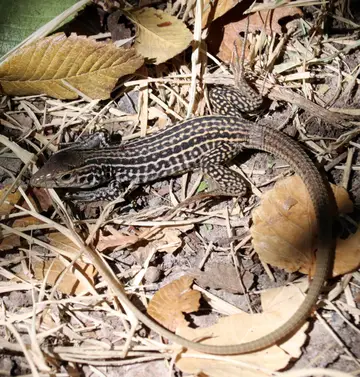
Venom No official source we use states whether this animal is venomous. That does not mean it is harmless: do not handle it. Photo: CK2AZ · CC BY 4.0 · iNaturalist Desert Grassland Whiptail Aspidoscelis uniparens
Not stated
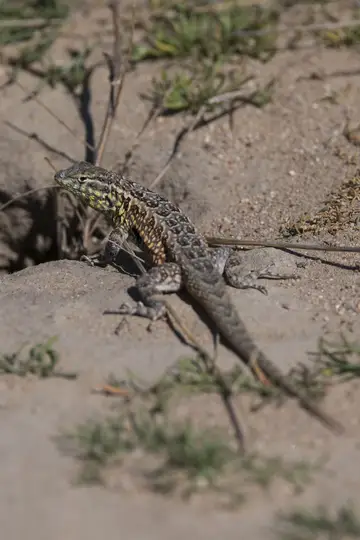
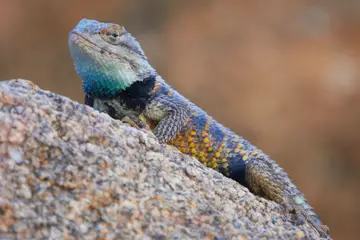
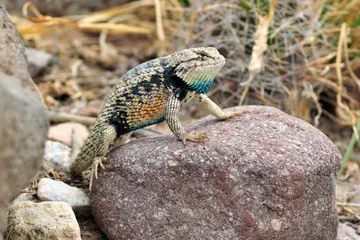
Venom No official source we use states whether this animal is venomous. That does not mean it is harmless: do not handle it. Photo: Ken-ichi Ueda · CC BY 4.0 · iNaturalist Desert Spiny Lizard Sceloporus magister
Not stated
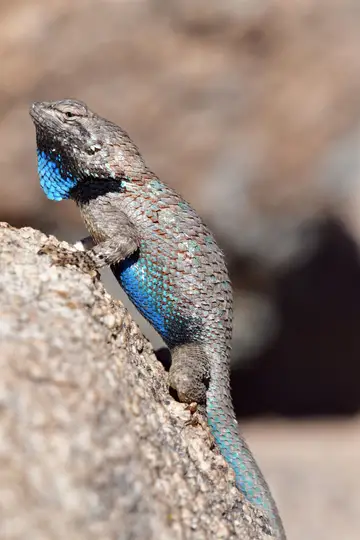
Venom No official source we use states whether this animal is venomous. That does not mean it is harmless: do not handle it. Photo: Sam Kieschnick · CC BY 4.0 · iNaturalist Dunes Sagebrush Lizard Sceloporus arenicolus
Not stated
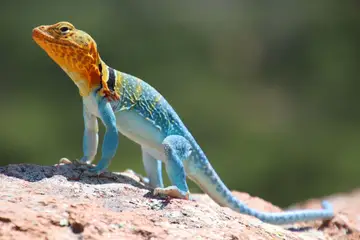
Venom No official source we use states whether this animal is venomous. That does not mean it is harmless: do not handle it. Conservation State NM: Endangered; State NM: Species of Greatest Conservation Need (SGCN) 2025 Photo: B. P. White · CC BY-SA 4.0 · iNaturalist · resized Crotaphytus collaris
Non-venomous per National Park Service
Size Adult total length 8 to 14 inches (Missouri); up to about 14 inches (Colorado). Snout to vent up to 4.65 inches (Arizona). How to recognize it Large head, long tail about twice the body length, distinct black collar Round tail in cross-section, separating it from the Great Basin collared lizard; inside of mouth and throat often black Runs on its hind legs at top speed
J F M A M J J A S O N D
143 records by month. What the sources say Venom: “You might see a Western Rattlesnake, which is venomous, or a harmless Collared Lizard.” (National Park Service)
Full Eastern Collared Lizard guide
No confirmed photo of Elegant Earless Lizard Elegant Earless Lizard Holbrookia elegans
Not stated
Venom No official source we use states whether this animal is venomous. That does not mean it is harmless: do not handle it. Photo: Cole Wolf · CC BY 4.0 · iNaturalist Giant Spotted Whiptail Aspidoscelis stictogramma
Not stated
Venom No official source we use states whether this animal is venomous. That does not mean it is harmless: do not handle it. Conservation State NM: Species of Greatest Conservation Need (SGCN) 2025; State NM: Threatened No confirmed photo of Gray-checkered Whiptail Gray-checkered Whiptail Aspidoscelis dixoni
Not stated
Venom No official source we use states whether this animal is venomous. That does not mean it is harmless: do not handle it. Conservation State NM: Endangered; State NM: Species of Greatest Conservation Need (SGCN) 2025 Photo: Peter Paplanus from St. Louis, Missouri · CC BY 2.0 · Wikimedia Commons Great Plains Skink Plestiodon obsoletus
Not stated
Venom No official source we use states whether this animal is venomous. That does not mean it is harmless: do not handle it. Photo: Cody Stricker · CC BY 4.0 · iNaturalist Greater Earless Lizard Cophosaurus texanus
Not stated
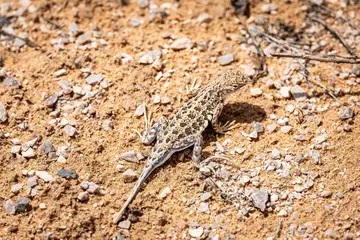
Venom No official source we use states whether this animal is venomous. That does not mean it is harmless: do not handle it. Photo: Bob Walker · CC BY 4.0 · iNaturalist Hernandez's Short-horned Lizard Phrynosoma hernandesi hernandesi
Not stated
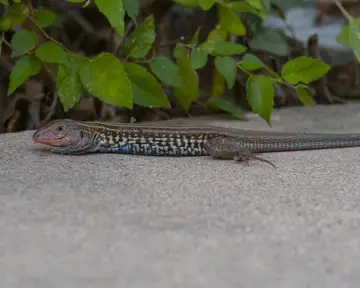
Venom No official source we use states whether this animal is venomous. That does not mean it is harmless: do not handle it. Photo: Isaac Krone · CC BY 4.0 · iNaturalist Little White Whiptail Aspidoscelis inornatus gypsi
Not stated
Venom No official source we use states whether this animal is venomous. That does not mean it is harmless: do not handle it. Conservation State NM: Endemic to New Mexico; State NM: Species of Greatest Conservation Need (SGCN) 2025 Photo: ALAN SCHMIERER · CC0 · Wikimedia Commons Long-nosed Leopard Lizard Gambelia wislizenii
Not stated
Venom No official source we use states whether this animal is venomous. That does not mean it is harmless: do not handle it. Photo: River Ahlquist · CC BY 4.0 · iNaturalist Madrean Alligator Lizard Elgaria kingii nobilis
Not stated
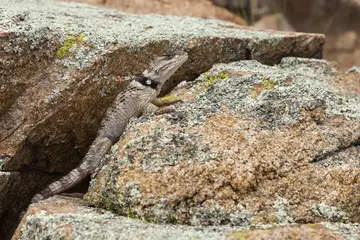
Venom No official source we use states whether this animal is venomous. That does not mean it is harmless: do not handle it. Photo: Tristan A. McKnight · CC BY 4.0 · iNaturalist Madrean mountain spiny lizard Sceloporus jarrovii jarrovii
Not stated
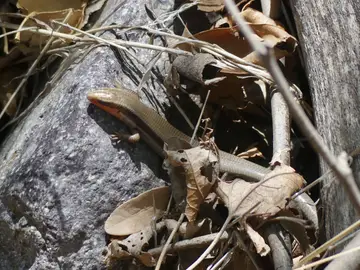
Venom No official source we use states whether this animal is venomous. That does not mean it is harmless: do not handle it. Conservation State NM: Species of Greatest Conservation Need (SGCN) 2025 Photo: Joefarah · CC BY-SA 3.0 · Wikimedia Commons · resized Many-lined Skink Plestiodon multivirgatus epipleurotus
Not stated
Venom No official source we use states whether this animal is venomous. That does not mean it is harmless: do not handle it. Photo: Bob Nieman · CC BY 4.0 · Wikimedia Commons Marbled Whiptail Aspidoscelis marmorata
Not stated
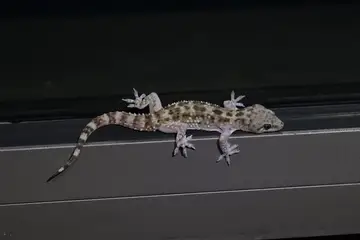
Venom No official source we use states whether this animal is venomous. That does not mean it is harmless: do not handle it. Photo: Stephanie Tran · CC BY 4.0 · iNaturalist Hemidactylus turcicus
Not stated Nonnative
Venom No official source we use states whether this animal is venomous. That does not mean it is harmless: do not handle it. Size Adults about 4 to 5 inches long in total (Missouri gives 3.9 to 5.0 inches); up to 2.4 inches from snout to vent. How to recognize it Warty skin, large bulging eyes with vertical pupils, and wide toe pads for climbing. Large eyes without eyelids, covered by a clear scale. Unlike any native lizard in Georgia and South Carolina, geckos have sticky toe pads, vertical pupils and lidless eyes. Full Mediterranean Gecko guide
Photo: brendanboyd · CC BY 4.0 · iNaturalist Mesquite Lizard Sceloporus grammicus
Not stated
Venom No official source we use states whether this animal is venomous. That does not mean it is harmless: do not handle it. Photo: Sue Carnahan · CC BY 4.0 · iNaturalist Mountain Skink Plestiodon callicephalus
Not stated
Venom No official source we use states whether this animal is venomous. That does not mean it is harmless: do not handle it. Conservation State NM: Species of Greatest Conservation Need (SGCN) 2025; State NM: Threatened Photo: Greg Schechter from San Francisco, USA · CC BY 2.0 · Wikimedia Commons New Mexico Whiptail Aspidoscelis neomexicana
Not stated
Venom No official source we use states whether this animal is venomous. That does not mean it is harmless: do not handle it. Photo: zookanthos · CC BY 4.0 · iNaturalist Northern Sagebrush Lizard Sceloporus graciosus graciosus
Not stated
Venom No official source we use states whether this animal is venomous. That does not mean it is harmless: do not handle it. Photo: Jason Leduc · CC0 1.0 · iNaturalist Northern Tree Lizard Urosaurus ornatus
Not stated
Venom No official source we use states whether this animal is venomous. That does not mean it is harmless: do not handle it. Photo: Tom Kennedy · CC BY 4.0 · Wikimedia Commons Plains Striped Whiptail Aspidoscelis inornata llanuras
Not stated
Venom No official source we use states whether this animal is venomous. That does not mean it is harmless: do not handle it. Conservation State NM: Endemic to New Mexico Photo: Robbie Hannawacker · CC0 1.0 · iNaturalist Plateau Fence Lizard Sceloporus tristichus
Not stated
Venom No official source we use states whether this animal is venomous. That does not mean it is harmless: do not handle it. Photo: Lon Brehmer · CC BY 4.0 · iNaturalist Plateau Striped Whiptail Aspidoscelis velox
Not stated
Venom No official source we use states whether this animal is venomous. That does not mean it is harmless: do not handle it. Photo: Dominic · CC BY 4.0 · iNaturalist Prairie Racerunner Aspidoscelis sexlineata viridis
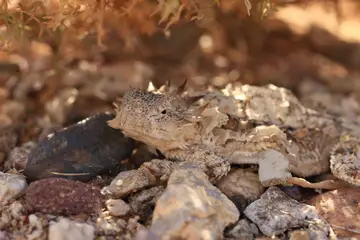
Not stated
Venom No official source we use states whether this animal is venomous. That does not mean it is harmless: do not handle it. Photo: Harrison J Elkins · CC BY 4.0 · iNaturalist Regal Horned Lizard Phrynosoma solare
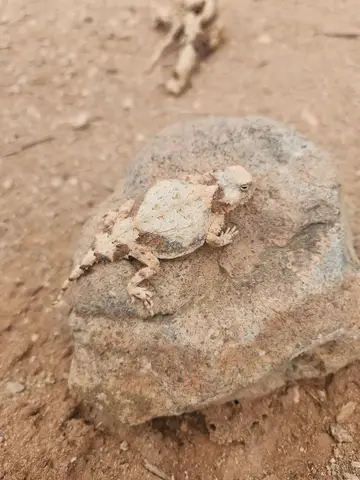
Not stated
Venom No official source we use states whether this animal is venomous. That does not mean it is harmless: do not handle it. Photo: William · CC0 1.0 · iNaturalist Round-tailed Horned Lizard Phrynosoma modestum
Not stated
Venom No official source we use states whether this animal is venomous. That does not mean it is harmless: do not handle it. No confirmed photo of Slevin's Bunchgrass Lizard Slevin's Bunchgrass Lizard Sceloporus slevini
Not stated
Venom No official source we use states whether this animal is venomous. That does not mean it is harmless: do not handle it. Conservation State NM: Species of Greatest Conservation Need (SGCN) 2025; State NM: Threatened Photo: gailhampshire from Cradley, Malvern, U.K · CC BY 2.0 · Wikimedia Commons Sonoran Spotted Whiptail Aspidoscelis sonorae
Not stated
Venom No official source we use states whether this animal is venomous. That does not mean it is harmless: do not handle it. Photo: Ethan Wright-Magoon · CC0 1.0 · iNaturalist Southwestern Fence Lizard Sceloporus cowlesi
Not stated
Venom No official source we use states whether this animal is venomous. That does not mean it is harmless: do not handle it. Photo: Bettina Arrigoni · CC BY 2.0 · Wikimedia Commons Striped Plateau Lizard Sceloporus virgatus
Not stated
Venom No official source we use states whether this animal is venomous. That does not mean it is harmless: do not handle it. Photo: Matt Berger · CC BY 4.0 · Wikimedia Commons Texas Banded Gecko Coleonyx brevis
Not stated
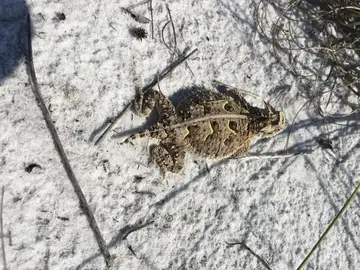
Venom No official source we use states whether this animal is venomous. That does not mean it is harmless: do not handle it. Photo: Gabriel Campbell-Martinez · CC BY 4.0 · iNaturalist Texas Horned Lizard Phrynosoma cornutum
Not stated
Venom No official source we use states whether this animal is venomous. That does not mean it is harmless: do not handle it.
J F M A M J J A S O N D
157 records by month. Photo: lwolfartist · CC BY 2.0 · Wikimedia Commons Texas Spotted Whiptail Aspidoscelis gularis gularis
Not stated
Venom No official source we use states whether this animal is venomous. That does not mean it is harmless: do not handle it. Conservation State NM: Species of Greatest Conservation Need (SGCN) 2025 Photo: Greg Schechter · CC BY 2.0 · Wikimedia Commons Tiger Whiptail Aspidoscelis tigris
Not stated
Venom No official source we use states whether this animal is venomous. That does not mean it is harmless: do not handle it. No confirmed photo of Trans-pecos Striped Whiptail Trans-pecos Striped Whiptail Aspidoscelis inornatus heptagramma
Not stated
Venom No official source we use states whether this animal is venomous. That does not mean it is harmless: do not handle it. Photo: Tom Kennedy · CC BY 4.0 · iNaturalist Twin-spotted Spiny Lizard Sceloporus bimaculosus
Not stated
Venom No official source we use states whether this animal is venomous. That does not mean it is harmless: do not handle it. Photo: Dylan C Thomas · CC0 1.0 · iNaturalist Western Banded Gecko Coleonyx variegatus bogerti
Not stated
Venom No official source we use states whether this animal is venomous. That does not mean it is harmless: do not handle it. Photo: Tom Kennedy · CC BY 4.0 · Wikimedia Commons Woodland Striped Whiptail Aspidoscelis inornata junipera
Not stated
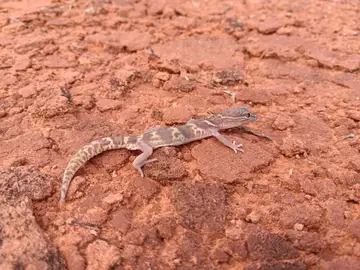
Venom No official source we use states whether this animal is venomous. That does not mean it is harmless: do not handle it. Conservation State NM: Endemic to New Mexico When lizards are active in New Mexico Records of lizards in New Mexico peak in May to August. They show when people record lizards, not how many there are (about month bars ).
Jan Feb Mar Apr May Jun Jul Aug Sep Oct Nov Dec
2,812 records of lizards in New Mexico by month (GBIF, CC0 and CC BY records). If you are bitten or stung Call 911 or Poison Help at 1-800-222-1222 right away. Poison Help connects you to your local poison center, any time of day.
How to report Dangerous wildlife encounter: contact the nearest NMDOW conservation officer (Mon-Fri 8 a.m.-5 p.m.; enforcement contacts map at https://wildlife.dgf.nm.gov/enforcement/law-enforcement-contact-information/), otherwise State Police dispatch. Suspected New World screwworm in game animals: NMDOW 888-248-6866. New Mexico Department of Wildlife
Sources Living With Wildlife . New Mexico Department of Wildlife (formerly New Mexico Department of Game and Fish). page modified 2026-10-26; checked November 3, 2026. Quoted passages (1) “In the event of a dangerous encounter, please reach out to your nearest Department conservation officer during regular business hours (Monday-Friday, 8 a.m.-5 p.m.).” BISON-M (Biota Information System of New Mexico) species search export: taxonomic name "Squamata" . New Mexico Department of Wildlife (BISON-M, with Natural Heritage New Mexico). database queried November 3, 2026; checked November 3, 2026. Reptiles - Salinas Pueblo Missions National Monument . National Park Service. updated March 20, 2025; checked November 3, 2026. Quoted passages (1) “You might see a Western Rattlesnake, which is venomous, or a harmless Collared Lizard.” Gila Monster (Heloderma suspectum) Recovery Plan . New Mexico Department of Wildlife (formerly New Mexico Department of Game and Fish). 5 April 2017; checked November 3, 2026. Quoted passages (1) “Heloderma suspectum is the largest native, and only venomous, lizard in the United States.” GBIF.org occurrence records, human observations licensed CC0 1.0 or CC BY 4.0 only, accessed November 3, 2026. The datasets behind these counts are listed on our Sources page.