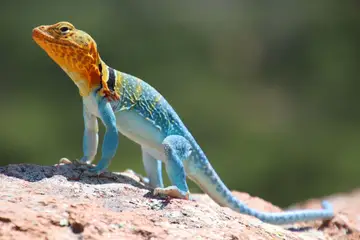
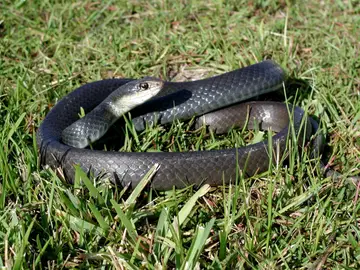
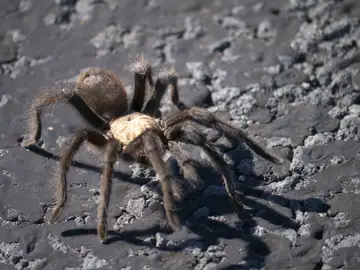
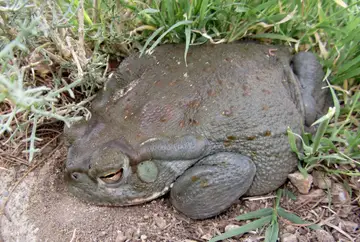
New Mexico has 12 venomous snakes named by official sources: Western Coral Snake, Western Diamond-backed Rattlesnake, Sidewinder Rattlesnake, Banded Rock Rattlesnake and Mottled Rock Rattlesnake (two forms of one species), Western Black-tailed Rattlesnake, Eastern Black-tailed Rattlesnake, Mojave Rattlesnake, Tiger Rattlesnake, Prairie Rattlesnake, New Mexico Ridge-nosed Rattlesnake, Western Massasauga and Arizona Black Rattlesnake, as labelled by College of ACES, National Park Service, BISON-M and New Mexico Poison & Drug Information Center. This guide covers 9 animal groups from New Mexico Department of Wildlife (NMDOW lists and other official sources, with photos, venomous status and when each group is active.
Identification help has limits: a photo cannot confirm that an animal is safe. Watch from a distance and never handle a wild animal.
These are the animals official sources describe as venomous or as a risk to people in New Mexico, across 7 groups. The reason is given in the source's own terms.
Venomous: “Many different types of rattlesnakes live in New Mexico, including: prairie, western diamondback, black-tailed, rock, ridgenose, massasauga and Mojave.”
Venomous: “Black-tailed rattlesnakes are sometimes seen along the trail sunning themselves in the summer. Watch your step so you don't disturb these venomous snakes.”
Venomous: “Many different types of rattlesnakes live in New Mexico, including: prairie, western diamondback, black-tailed, rock, ridgenose, massasauga and Mojave.”
Larvae infest wounds: “New World screwworm (Cochliomyia hominivorax) is a foreign animal disease and a serious threat to wildlife, livestock, pets and people.”
Disease: “The vast majority of rabies cases reported to the Centers for Disease Control and Prevention (CDC) each year occur in wild animals like raccoons, skunks, bats, and foxes.”
5 nonnative animals are named on New Mexico's official lists (BISON-M). The USGS Nonindigenous Aquatic Species database records 1 nonnative animal in our groups with an established population in New Mexico.
Darker cells are the months with more open-licence observation records of each group in New Mexico (GBIF). They show when people see and record these animals, not how many there are. The current month, this month, is highlighted.
Report: Dangerous wildlife encounter: contact the nearest NMDOW conservation officer (Mon-Fri 8 a.m.-5 p.m.; enforcement contacts map at https://wildlife.dgf.nm.gov/enforcement/law-enforcement-contact-information/), otherwise State Police dispatch. Suspected New World screwworm in game animals: NMDOW 888-248-6866. New Mexico Department of Wildlife
Yes. The NM Poison Center says the state has two types of venomous snakes, rattlesnakes and the coral snake, and that rattlesnakes are the most common. New Mexico Poison & Drug Information Center
How many venomous snakes are in New Mexico?
Sources differ. NMSU Extension (1998) says 8 of 46 snake species are venomous (7 rattlesnakes and a coral snake). The NM Poison Center brochure says "Eight species of rattlesnakes inhabit New Mexico" plus the coral snake. The BISON-M list has more rattlesnake records. College of ACES
Are there coral snakes in New Mexico?
Yes. The western coral snake occurs in the far southwest of the state. College of ACES
Are there gila monsters in New Mexico?
Yes. The Gila monster's range reaches the Chihuahuan Desert in southwestern New Mexico. It is state-listed endangered and venomous. New Mexico Department of Wildlife · More
Yes. The NM Poison Center describes black widow venom as strong enough to cause serious illness. BISON-M lists Latrodectus hesperus as NM: Extant. New Mexico Poison & Drug Information Center
Are there brown recluse spiders in New Mexico?
BISON-M lists Loxosceles reclusa as NM: Extant. Its booklet says it was probably introduced into Bernalillo County and shows records from Bernalillo, Lea and Roosevelt counties. BISON-M
Yes. NMDOW refers to Mexican gray wolves in the Gila National Forest. BISON-M lists Canis lupus baileyi as NM: Extant and other gray wolf subspecies as extirpated. New Mexico Department of Wildlife
Living With Wildlife. New Mexico Department of Wildlife (formerly New Mexico Department of Game and Fish). page modified 2026-10-26; checked November 3, 2026.Quoted passages (4)
“If a black bear attacks, fight back aggressively using anything you can find.”
“In the event of a dangerous encounter, please reach out to your nearest Department conservation officer during regular business hours (Monday-Friday, 8 a.m.-5 p.m.).”
“If you encounter a bear, remain calm and do not run.”
“There has been an increase in the number of bears involved in human-bear encounters throughout New Mexico in 2026.”
“Many different types of rattlesnakes live in New Mexico, including: prairie, western diamondback, black-tailed, rock, ridgenose, massasauga and Mojave.”
“Black-tailed rattlesnakes are sometimes seen along the trail sunning themselves in the summer. Watch your step so you don't disturb these venomous snakes.”
“Mojave rattlesnakes in Hidalgo County, New Mexico appear to have two types of venom present, specifically neurotoxic and hemorrhagic.”
Bites and Stings. New Mexico Poison & Drug Information Center (UNM Health Sciences; New Mexico's poison-control program). undated page; checked November 3, 2026.Quoted passages (6)
“The two types of venomous snakes in New Mexico are the rattlesnake and the coral snake.”
“Black widow venom is strong enough to cause serious illness, especially in children and the elderly.”
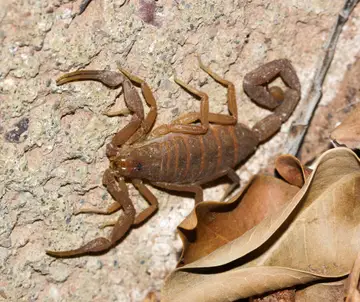
“The Arizona bark scorpion, found in the southwestern corner of New Mexico, is the only species that causes serious illness.”
“If you think that you have been stung by a scorpion, call 1-800-222-1222 immediately for first aid advice.”
“Do not try to capture or handle a venomous snake.”
“Snake season is usually April through October in New Mexico, when snakes come out of their winter dens to hunt for food and water.”
“Like all rattlesnakes, the desert massasauga is venomous”
Venomous Spiders at Work. CDC / NIOSH. archived copy, captured October 6, 2026; checked November 3, 2026.Quoted passages (1)
“Venomous spiders found in the United States include the black widow and the brown recluse.”
Gila Monster (Heloderma suspectum) Recovery Plan. New Mexico Department of Wildlife (formerly New Mexico Department of Game and Fish). 5 April 2017; checked November 3, 2026.Quoted passages (2)
“Heloderma suspectum is the largest native, and only venomous, lizard in the United States.”
“It occurs primarily in Sonoran Desert habitats of Arizona and Mexico, … with the limits of its range overlapping potions of the Mojave Desert in Utah, Nevada, and California, and the Chihuahuan Desert in southwestern New Mexico.”
“The skin secretion is toxic to dogs and other animals”
Guide L-110: Honey Bees in New Mexico. New Mexico State University Cooperative Extension Service (College of ACES). Revised January 2017; checked November 3, 2026.Quoted passages (1)
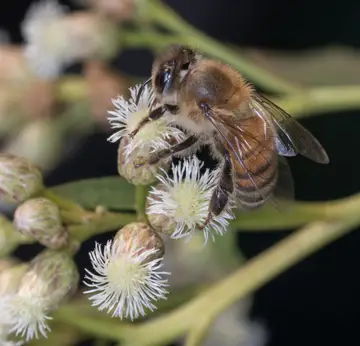
“The toxic dose (LD50) of honey bee venom is 8.6 stings per pound of body weight for an average person.”
West Nile Virus. New Mexico Department of Health. undated page; checked November 3, 2026.Quoted passages (2)
“Cases of West Nile Virus in New Mexico have occurred every year since 2003.”
“West Nile Virus infections in humans occur seasonally, with the peak of cases in late summer and early fall.”
Plague. New Mexico Department of Health. undated page; checked November 3, 2026.Quoted passages (2)
“People usually get plague from the bite of a rodent flea that is carrying plague bacteria or by handling an infected animal.”
“Although plague is a rare disease, about half of US cases each year occur in New Mexico.”
Invasive Species and Diseases. New Mexico Department of Wildlife (formerly New Mexico Department of Game and Fish). page modified 2026-08-31; checked November 3, 2026.Quoted passages (1)
“New World screwworm (Cochliomyia hominivorax) is a foreign animal disease and a serious threat to wildlife, livestock, pets and people.”
“These bacteria live in certain rodents (e.g., squirrels, prairie dogs or mice) and other small mammals (e.g., rabbits or hares).”
Rabies. New Mexico Department of Health. undated page; checked November 3, 2026.Quoted passages (1)
“The vast majority of rabies cases reported to the Centers for Disease Control and Prevention (CDC) each year occur in wild animals like raccoons, skunks, bats, and foxes.”
“Evidence suggest this species was introduced into New Mexico west of the Continental Divide and was native east of the Continental Divide”
New World Screwworm. New Mexico Department of Wildlife (formerly New Mexico Department of Game and Fish). page modified 2026-06-09; checked November 3, 2026.Quoted passages (1)
“This pest was eradicated from the U.S. decades ago, but recent detections in Mexico, south Texas and New Mexico pose a risk of northward spread.”
Aquatic Invasive Species. New Mexico Department of Wildlife (formerly New Mexico Department of Game and Fish). page modified 2026-06-02; checked November 3, 2026.Quoted passages (1)
“New Mexico Department of Game and Fish has adopted new rules to combat the spread of zebra mussels, quagga mussels and other AIS.”
“NEW MEXICO This species was probably introduced into Bernalillo Co. (Richman, 1999)”
Keeping Bears Alive and Yourself Safe (brochure). New Mexico Department of Wildlife (formerly New Mexico Department of Game and Fish). undated page; checked November 3, 2026.Quoted passages (2)
“Black bears occur in all mountainous areas of New Mexico, from Chama in the north to the Guadalupe and Peloncillo Mountains in the south.”
“Grizzly bears no longer occur in New Mexico.”
Mammals (Wildlife Species Information). New Mexico Department of Wildlife (formerly New Mexico Department of Game and Fish). page modified 2022-11-21; checked November 3, 2026.Quoted passages (1)
“Mexican Gray Wolves in the Gila National Forest.”