Wisconsin Department of Natural Resources: Of Wisconsin's 21 species, 14 are considered "rare" and listed as endangered, threatened or of particular concern.
This page lists 22 snakes: all from Wisconsin Department of Natural Resources's Herps of Wisconsin: Snakes of Wisconsin table, checked against Wisconsin's Amphibians and Reptiles checklist PUB ER-110.
2 are venomous by official accounts: Eastern Massasauga and Timber Rattlesnake. Wisconsin Department of Natural Resources gives a total of 21; the 22 here are the snakes official sources name one by one.
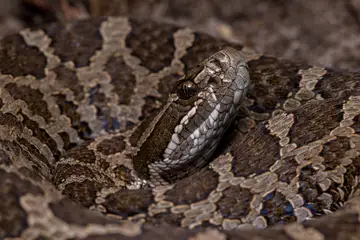
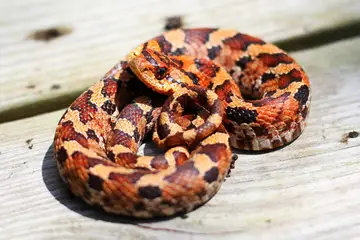
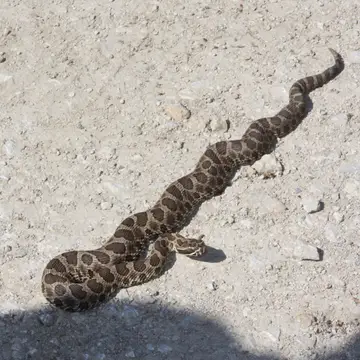
Usually 18 to 30 inches long (New York DEC: 18 to 40 inches, average 27.5). The western massasauga in Arizona reaches only about 22 inches.
How to recognize it
A segmented rattle (a single button in newborns) and vertical, catlike pupils. In Michigan it is the only snake with both.
Nine large plates on top of the head (the timber rattlesnake has many small scales there)
A heat-sensing pit on each side of the head between the eye and nostril; the head is flat and much wider than the neck
Where in Wisconsin
A few isolated populations in the southwestern third of the state, as far east as Walworth County (UW-Extension 2010); DNR 2023: only 9 sites within its historic range University of Wisconsin-Extension, Cooperative Extension
Conservation
federally threatened; state endangered
What the sources say
Venom: “…only two of Wisconsin’s 20-plus snake species are venomous: the timber rattlesnake (Crotalus horridus) and the massasauga, or swamp rattle-snake (Sistrurus catenatus).” (University of Wisconsin-Extension, Cooperative Extension)
Habitat: This rattlesnake is strongly associated with floodplain habitats along medium to large rivers, especially near river confluences, where they primarily occupy open canopy wetlands, such as sedge meadows, fresh wet meadows, shrub-carrs, and adjacent upland prairies, floodplain forests, and old fields. (Wisconsin Department of Natural Resources)
state special concern (fully protected); Protected Wild Animal
What the sources say
Venom: “…only two of Wisconsin’s 20-plus snake species are venomous: the timber rattlesnake (Crotalus horridus) and the massasauga, or swamp rattle-snake (Sistrurus catenatus).” (University of Wisconsin-Extension, Cooperative Extension)
Habitat: Adult males and non-gravid adult females prefer deciduous forests and woodland edges during the summer. Gravid females and juveniles prefer to remain in open-canopy bluff prairies during the summer because of higher preferred body temperatures, but avoid overheating by taking advantage of such things as brush, trees, and rock shelves to provide shade. (Wisconsin Department of Natural Resources)
Venom: “…only two of Wisconsin’s 20-plus snake species are venomous: the timber rattlesnake (Crotalus horridus) and the massasauga, or swamp rattle-snake (Sistrurus catenatus).” (University of Wisconsin-Extension, Cooperative Extension)
Habitat: Butler's Gartersnake (Thamnophis butleri), a Special Concern species in Wisconsin, prefers almost any open or semi-open canopy wetland habitat and adjacent open or semi-open canopy upland habitat, including prairies, old fields, and weedy vacant lots. (Wisconsin Department of Natural Resources)
Venom: “Several nonvenomous Wisconsin snakes, including the bull snake, fox snake, rat snake, and racer, can reach lengths of 4 feet or more.” (University of Wisconsin-Extension, Cooperative Extension)
Habitat: It prefers savanna and oak forest habitats in southwestern Wisconsin and is known to communally overwinter with other bluff prairie species. (Wisconsin Department of Natural Resources)
Venom: “Family: Colubridae (Non-venomous snakes)” (Wisconsin Department of Natural Resources)
Habitat: They are found in every county of the state and nearly every habitat type, although they have a preference for forest and woodlot edges and rely heavily on open canopy wetlands for overwintering. (Wisconsin Department of Natural Resources)
Photo: U.S. Fish and Wildlife Service - Midwest Region · Public domain · Wikimedia Commons
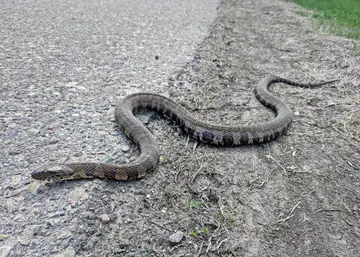
Adults 22 to 42 inches long, occasionally to 59 inches (Missouri). Pennsylvania gives 24 to over 50 inches; females are usually bigger than males.
How to recognize it
Dark crossbands on the front part of the body break up into rows of blotches from the middle of the body to the tail.
Belly white, yellow or orange, usually with dark half-moon-shaped spots.
Keeled (ridged) scales, so it feels rough; round pupils like other nonvenomous snakes in Missouri.
JFMAMJJASOND
60 records by month.What the sources say
Venom: “Family: Colubridae (Non-venomous snakes)” (Wisconsin Department of Natural Resources)
Habitat: Common watersnakes are usually found in or close to any permanent waterbody but they prefer clean rivers. (Wisconsin Department of Natural Resources)
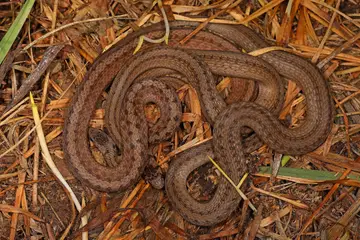
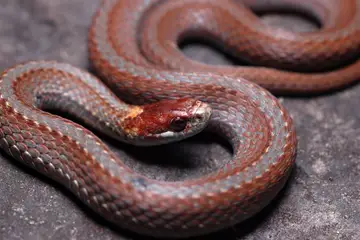
Most adults 9 to 13 inches; occasionally up to about 20 inches.
How to recognize it
Dark top of head; a dark spot under each eye and on each side of the neck
Keeled (ridged) scales in 17 rows; round pupil
Tennessee: a small dark downward streak on the side of the head
JFMAMJJASOND
48 records by month.What the sources say
Venom: “Family: Colubridae (Non-venomous snakes)” (Wisconsin Department of Natural Resources)
Habitat: Brownsnakes live in the surface litter in many habitats, including oak savannas, prairies, southern lowland hardwoods, marshes, old fields and under rubbish in vacant city lots. (Wisconsin Department of Natural Resources)
Venom: “Family: Colubridae (Non-venomous snakes)” (Wisconsin Department of Natural Resources)
Habitat: They live in a variety of open habitats including marshes, sedge meadows, prairies and old fields. (Wisconsin Department of Natural Resources)
Venom: “Family: Colubridae (Non-venomous snakes)” (Wisconsin Department of Natural Resources)
Habitat: Habitats include bracken grassland, oak savanna and sand prairies, but may be seen in the southern forest. (Wisconsin Department of Natural Resources)
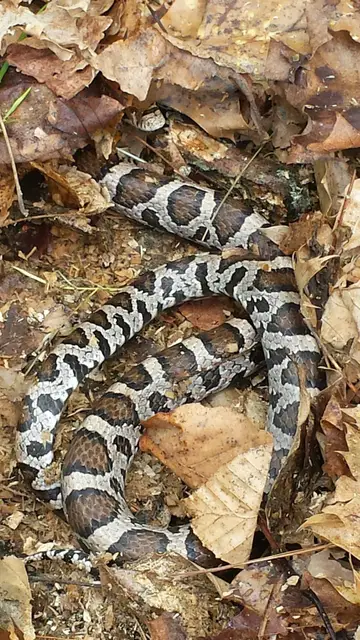
Eastern milksnake 24 to 52 inches (Alabama); TN gives 24 to 36 inches for eastern and 21 to 28 for red milksnake.
How to recognize it
Eastern milksnake: black-and-white checkerboard belly (Ohio). Western milksnake in Louisiana: underside dull white with scattered black marks.
Eastern milksnake: a light Y- or V-shaped mark is usually present on the nape
Smooth, shiny scales and round pupils
What the sources say
Venom: “Family: Colubridae (Non-venomous snakes)” (Wisconsin Department of Natural Resources)
Habitat: Milksnakes live in oak savannas, northern and southern upland hardwoods, prairies and old woodlots and pastures. (Wisconsin Department of Natural Resources)
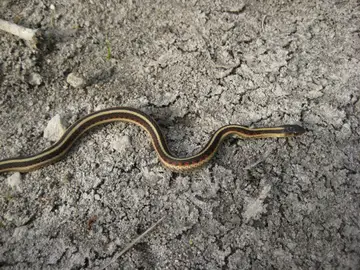
Eastern: most adults 18 to 26 inches (record 41 inches). Western: 16 to 42 inches in Louisiana; Oklahoma's orange-striped ribbonsnakes average 20 to 30 inches and can reach nearly 40.
How to recognize it
Very slender body; long tail, about one-third of total length.
Side stripes sit on the 3rd and 4th scale rows above the belly.
Upper lip scales white and unmarked; a distinct white spot in front of each eye; keeled (ridged) scales.
Venom: “…only two of Wisconsin’s 20-plus snake species are venomous: the timber rattlesnake (Crotalus horridus) and the massasauga, or swamp rattle-snake (Sistrurus catenatus).” (University of Wisconsin-Extension, Cooperative Extension)
Habitat: Eastern Ribbonsnake (Thamnophis saurita), listed as Endangered in Wisconsin, is semi-aquatic and primarily found in bog relicts near or south of the Tension Zone. (Wisconsin Department of Natural Resources)
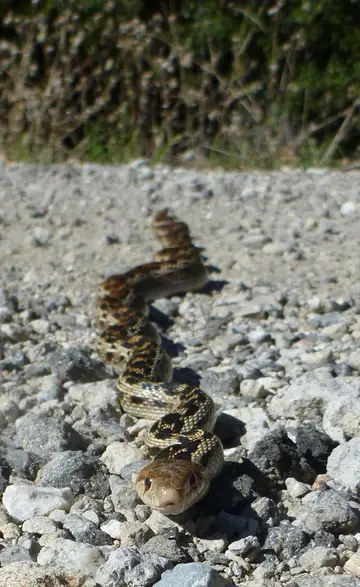
Usually 3 to 6 feet; Arizona's longest snake, up to 92 inches (AZGFD); Missouri record 105 inches
How to recognize it
No rattle: tail tapers to a point
Round pupils; keeled back scales (separates it from the similar glossy snake)
Head somewhat triangular, more so when agitated (so head shape alone is not a safe test)
Conservation
state special concern (fully protected)
What the sources say
Venom: “Many non-venomous snakes are often misidentified as rattlesnakes, especially species such as the foxsnake (pine snake) and gophersnake (bullsnake)” (Wisconsin Department of Natural Resources, Bureau of Natural Heritage Conservation)
Habitat: Gophersnake (Pituophis catenifer), a Special Concern species and a Protected Wild Animal, prefers sand prairies, bluff prairies, oak savannas, and pine and oak barrens. (Wisconsin Department of Natural Resources)
Venom: “…only two of Wisconsin’s 20-plus snake species are venomous: the timber rattlesnake (Crotalus horridus) and the massasauga, or swamp rattle-snake (Sistrurus catenatus).” (University of Wisconsin-Extension, Cooperative Extension)
Habitat: Lined Snake (Tropidoclonion lineatum), listed as a Special Concern in Wisconsin, is primarily found in open prairies and sparsely timbered areas featuring soft, moist soils. (Wisconsin Department of Natural Resources)
Photo: Everglades NPS from Homestead, Florida, United States · Public domain · Wikimedia Commons
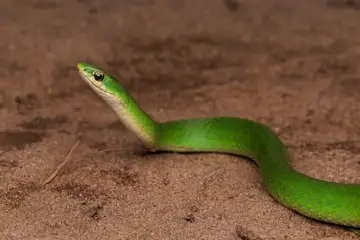
Most adults about 3 to 5 ft. Sources range from 20 to 56 inches (Florida Museum) to 34 to 77 inches (New Jersey); Alabama says some exceed 6 ft.
How to recognize it
Smooth scales
Long and slender with large eyes
White chin
Conservation
state special concern (fully protected)
What the sources say
Venom: “Several nonvenomous Wisconsin snakes, including the bull snake, fox snake, rat snake, and racer, can reach lengths of 4 feet or more.” (University of Wisconsin-Extension, Cooperative Extension)
Habitat: Racers prefer moderate to dry sand prairies and bluff prairies. (Wisconsin Department of Natural Resources)
Venom: “…only two of Wisconsin’s 20-plus snake species are venomous: the timber rattlesnake (Crotalus horridus) and the massasauga, or swamp rattle-snake (Sistrurus catenatus).” (University of Wisconsin-Extension, Cooperative Extension)
Habitat: Plains Gartersnake (Thamnophis radix), a Special Concern species in Wisconsin, prefers almost any open-canopy wetland type (not open water) and adjacent open to semi-open canopy upland, including prairies, old fields, and weedy vacant lots. (Wisconsin Department of Natural Resources)
Venom: “…only two of Wisconsin’s 20-plus snake species are venomous: the timber rattlesnake (Crotalus horridus) and the massasauga, or swamp rattle-snake (Sistrurus catenatus).” (University of Wisconsin-Extension, Cooperative Extension)
Habitat: Prairie Ring-necked Snake (Diadophis punctatus arnyi), a Special Concern species, prefers to live in a variety of open or partially open canopy settings including bluff prairies, open rocky road cuts (usually southerly exposed), old fields with rocky structure at the surface or along railroad grades where access to underground retreats and overwintering habitat is suitable. (Wisconsin Department of Natural Resources)
Venom: “…only two of Wisconsin’s 20-plus snake species are venomous: the timber rattlesnake (Crotalus horridus) and the massasauga, or swamp rattle-snake (Sistrurus catenatus).” (University of Wisconsin-Extension, Cooperative Extension)
Habitat: Queensnake (Regina septemvittata), listed as Endangered in Wisconsin, prefers clear warm-water streams and small rivers. (Wisconsin Department of Natural Resources)
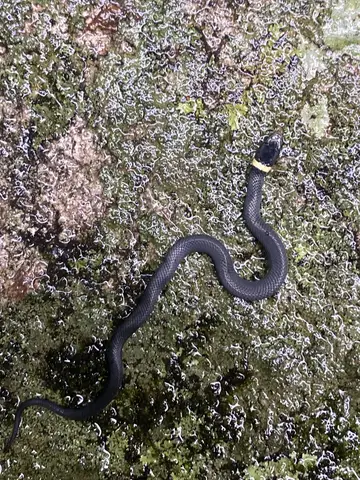
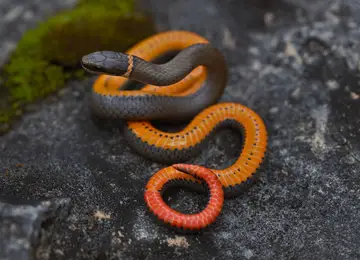
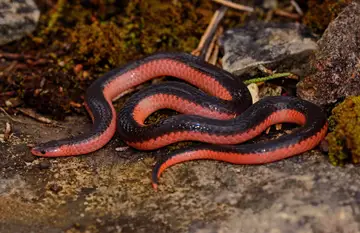
Usually 8 to 10 inches; state figures run from about 4 to 16 inches, with a Florida record of 16.6 inches.
How to recognize it
Plain, unmarked red or orange belly.
Three light spots just behind the head, which may fuse into a collar.
Keeled (ridged) scales in 15 rows at midbody and round pupils.
JFMAMJJASOND
52 records by month.What the sources say
Venom: “Family: Colubridae (Non-venomous snakes)” (Wisconsin Department of Natural Resources)
Habitat: Habitats include boreal forests, sphagnum bogs, and northern and southern hardwood forests and adjacent fields. (Wisconsin Department of Natural Resources)
Venom: “Family: Colubridae (Non-venomous snakes)” (Wisconsin Department of Natural Resources)
Habitat: Smooth greensnakes frequent prairies, oak savannas, bracken grasslands, open areas in pine barrens and grassy areas along forest edges. (Wisconsin Department of Natural Resources)
Venom: “…only two of Wisconsin’s 20-plus snake species are venomous: the timber rattlesnake (Crotalus horridus) and the massasauga, or swamp rattle-snake (Sistrurus catenatus).” (University of Wisconsin-Extension, Cooperative Extension)
Habitat: Western Ribbonsnake (Thamnophis proximus), a State Endangered Species, is found along rivers as well as within and adjacent to wetlands. (Wisconsin Department of Natural Resources)
Venom: “…only two of Wisconsin’s 20-plus snake species are venomous: the timber rattlesnake (Crotalus horridus) and the massasauga, or swamp rattle-snake (Sistrurus catenatus).” (University of Wisconsin-Extension, Cooperative Extension)
Habitat: Western Wormsnake (Carphophis vermis), a Special Concern species, prefers southerly exposed bluff prairies, and adjacent savannas and open woodlands, where they spend most of their time under partially imbedded rocks or underground. (Wisconsin Department of Natural Resources)
Snakes people confuse
Brown Snake (Dekay's Brownsnake) or Red-bellied Snake?
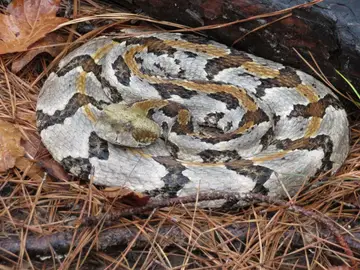
The timber rattlesnake has many small scales on top of the head (the massasauga has nine large plates), a uniformly black tail (the massasauga's tail has 4 to 7 black rings) and narrow, often chevron-shaped back bands rather than bow-tie-shaped blotches. INHS warns that head plates are hard to see on a live snake and says not to get close enough to check, because this is a venomous species.
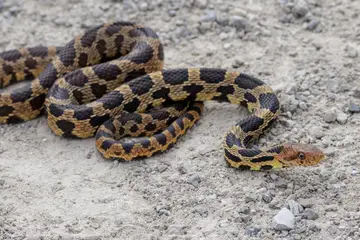
Massasauga rattlesnake or Fox snake (eastern and western foxsnakes)?
Fox snake (eastern and western foxsnakes) Non-venomous
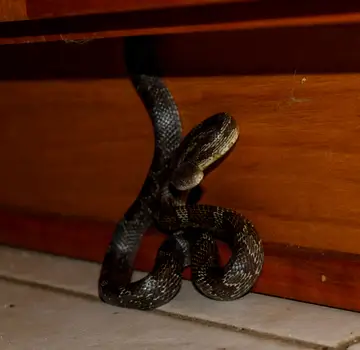
The fox snake has rounder back blotches (not bow-tie shaped) and only one row of smaller blotches on each side. INHS warns it is not always feasible to rely on the rattle, because segments can break and very young snakes have an inconspicuous rattle.
Massasauga rattlesnake or Common (northern) watersnake?
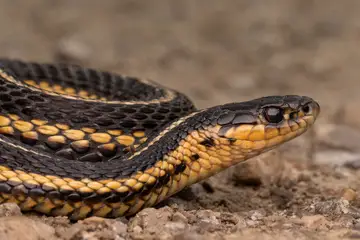
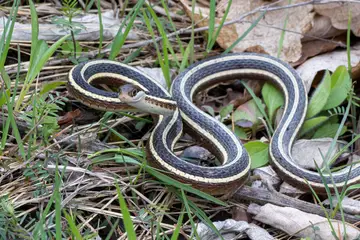
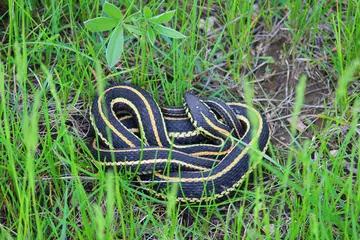
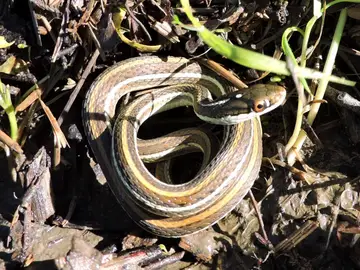
Ribbon snakes are more slender, have plain (unmarked) lip scales and a longer tail, and their side stripes are on scale rows 3 and 4; on garter snakes the side stripes are on rows 2 and 3.
Photos show typical adults; individuals vary. Never get close to compare.
When snakes are active in Wisconsin
Records of snakes in Wisconsin peak in May to July and September. They show when people record snakes, not how many there are (about month bars).
JanFebMarAprMayJunJulAugSepOctNovDec
590 records of snakes in Wisconsin by month (GBIF, CC0 and CC BY records).
Rattlesnake sightings: call DNR 1-888-WDNRINFO (1-888-936-7463), or use the DNR Rare Species Observation Form / DNR Wildlife Switchboard ([email protected], 608-267-0866). Threatening wolves or wolf depredation: USDA-Wildlife Services (north 1-800-228-1368, south 1-800-433-0663). Spongy moth outside quarantined counties: 1-800-642-MOTH (6684). Other invasive species: DNR Report invasive species page. Feral pig sightings: DNR reporting form or USDA Wildlife Services (north 800-228-1368, south 800-433-0663). Wisconsin Department of Natural Resources, Bureau of Endangered Resources
“…only two of Wisconsin’s 20-plus snake species are venomous: the timber rattlesnake (Crotalus horridus) and the massasauga, or swamp rattle-snake (Sistrurus catenatus).”
Are there rattlesnakes in Wisconsin?
Yes, but rare. Two rattlesnakes live in Wisconsin, both rare, the eastern massasauga especially. Many harmless snakes mimic rattlesnakes by vibrating their tails. Wisconsin Department of Natural Resources
“There are two species of rattlesnakes in Wisconsin (timber rattlesnake and eastern massasauga), although both species, especially the eastern massasauga, are rare.”
Wisconsin Animals. Wisconsin Department of Natural Resources. undated page; checked November 3, 2026.
Herps of Wisconsin. Wisconsin Department of Natural Resources. undated page; checked November 3, 2026.Quoted passages (2)
“Of Wisconsin's 21 species, 14 are considered "rare" and listed as endangered, threatened or of particular concern.”
“There are two species of rattlesnakes in Wisconsin (timber rattlesnake and eastern massasauga), although both species, especially the eastern massasauga, are rare.”
“…only two of Wisconsin’s 20-plus snake species are venomous: the timber rattlesnake (Crotalus horridus) and the massasauga, or swamp rattle-snake (Sistrurus catenatus).”
“Several nonvenomous Wisconsin snakes, including the bull snake, fox snake, rat snake, and racer, can reach lengths of 4 feet or more.”
“The massasauga has lethal venom and humans have died from its bite, though no record of such deaths exists in Wisconsin.”
“The larger and more dangerous of Wisconsin’s two venomous snakes is the timber rattlesnake, which sometimes reaches lengths of 4½ feet or more.”
“Many non-venomous snakes are often misidentified as rattlesnakes, especially species such as the foxsnake (pine snake) and gophersnake (bullsnake)”
“Seek immediate medical attention”
“Handle, harass, or try to kill the snake; this is how most bites occur”
“The timber rattlesnake is a protected wild animal, meaning it is illegal to collect, possess or kill this species except in cases where there is an immediate threat to humans or domestic animals.”
“Timber rattlesnakes emerge from hibernation as early as April 1 but may continue to emerge well into June. They remain active until as late as mid-October, females that gave birth that year remain active longer than other individuals.”