Wisconsin Department of Natural Resources: Wisconsin has 11 turtle species.
This page lists 11 turtles: all from Wisconsin Department of Natural Resources's Herps of Wisconsin: Turtles of Wisconsin table, checked against PUB ER-110.
Which turtles can hurt you
Official sources single out these turtles in Wisconsin, in their own words:
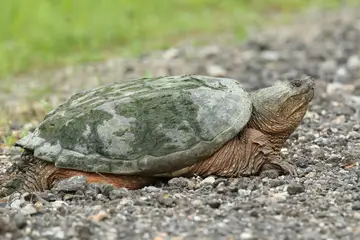
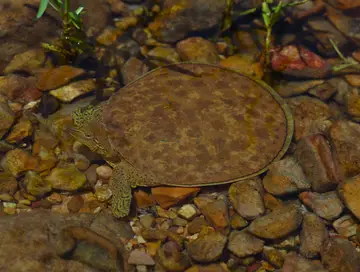
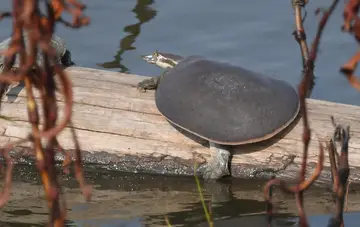
Bites. “Two species that are especially prone to biting are the snapping turtle (which is found in most water bodies throughout the state) and spiny softshell (which is found in most water bodies aside from wetlands and ponds throughout the state).” Wisconsin Department of Natural Resources, Bureau of Endangered Resources
Bites. “Two species that are especially prone to biting are the snapping turtle (which is found in most water bodies throughout the state) and spiny softshell (which is found in most water bodies aside from wetlands and ponds throughout the state).” Wisconsin Department of Natural Resources, Bureau of Endangered Resources
All 11 turtles
From A to Z. Do not handle them.
No confirmed photo of Blanding's Turtle
Blanding's Turtle
Emydoidea blandingii
Conservation
state special concern (fully protected); federal species of concern
What the sources say
Habitat: Blanding's Turtle (Emydoidea blandingii) is a Special Concern species in Wisconsin, utilizes a wide variety of aquatic habitats including deep and shallow marshes, shallow bays of lakes and impoundments where areas of dense emergent and submergent vegetation exists, sluggish streams, oxbows and other backwaters of rivers, drainage ditches (usually where wetlands have been drained), sedge meadows, and wet meadows adjacent to these habitats. (Wisconsin Department of Natural Resources)
Habitat: Lakes and backwaters are their preferred habitats although they can occasionally be found in streams and rivers. (Wisconsin Department of Natural Resources)
No confirmed photo of False Map Turtle
False Map Turtle
Graptemys pseudogeographica
What the sources say
Habitat: Strictly aquatic, the false map is another large river species. (Wisconsin Department of Natural Resources)
Habitat: Snapping turtles live in most aquatic habitats but prefer ponds, lakes and the backwaters of rivers. (Wisconsin Department of Natural Resources)
Habitat: They prefer habitats with slow to moderate currents, soft bottoms and abundant aquatic vegetation, such as side channels, backwaters, and some rivers and reservoirs. (Wisconsin Department of Natural Resources)
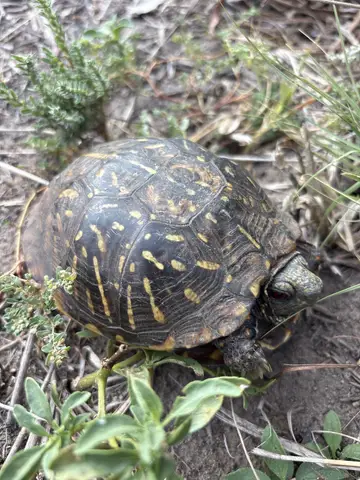
Habitat: Ornate Box Turtle (Terrapene ornata), listed as Endangered in Wisconsin, prefers mesic prairies, dry-mesic prairies, sand prairies, oak savannas, and open to semi-open woodlands. (Wisconsin Department of Natural Resources)
No confirmed photo of Ouachita Map Turtle
Ouachita Map Turtle
Graptemys ouachitensis
What the sources say
Habitat: Southern map turtles are strictly a large river species. They prefer moderate to fast currents. (Wisconsin Department of Natural Resources)
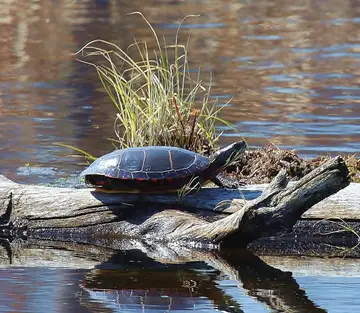
Photo: U. S. Fish and Wildlife Service - Northeast Region · Public domain · Wikimedia Commons
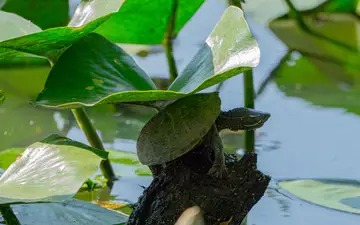
Habitat: Painted turtles prefer to live in marshes, ponds, shallow bays of lakes and backwaters of rivers that support dense aquatic vegetation. (Wisconsin Department of Natural Resources)
Habitat: Smooth Softshell (Apalone mutica), a Special Concern species, is exclusively a large river species, and has a preference for clean water and sandy substrates. (Wisconsin Department of Natural Resources)
Habitat: Spiny softshells can be found in large rivers, lakes and reservoirs, especially those with muddy or sandy bottoms. (Wisconsin Department of Natural Resources)
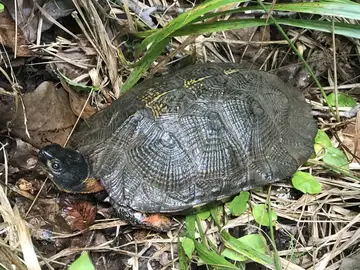
Combination of brown shell, orange front limbs and a lower shell solidly fused to the upper shell
Males: concave lower shell, long thick tail, broader head
Conservation
state threatened; federal species of concern
What the sources say
Habitat: Wood Turtle (Glyptemys insculpta), a Threatened Species in Wisconsin, prefers rivers and streams with adjacent riparian wetlands and upland deciduous forests. (Wisconsin Department of Natural Resources)
Rattlesnake sightings: call DNR 1-888-WDNRINFO (1-888-936-7463), or use the DNR Rare Species Observation Form / DNR Wildlife Switchboard ([email protected], 608-267-0866). Threatening wolves or wolf depredation: USDA-Wildlife Services (north 1-800-228-1368, south 1-800-433-0663). Spongy moth outside quarantined counties: 1-800-642-MOTH (6684). Other invasive species: DNR Report invasive species page. Feral pig sightings: DNR reporting form or USDA Wildlife Services (north 800-228-1368, south 800-433-0663). Wisconsin Department of Natural Resources, Bureau of Endangered Resources
“Two species that are especially prone to biting are the snapping turtle (which is found in most water bodies throughout the state) and spiny softshell (which is found in most water bodies aside from wetlands and ponds throughout the state).”
“Give both turtles plenty of space (3-5 ft) if encountered on land.”
“If it is mid-May through early July, the turtle in your yard is likely looking for a place to lay eggs.”