Wisconsin wildlife: what lives here and what is dangerous
Last checked November 3, 2026 against official sources.
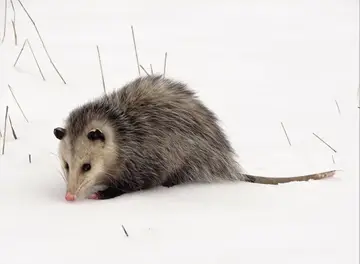
Photo: U. S. Fish and Wildlife Service - Northeast Region · Public domain · Wikimedia Commons
Wisconsin has 2 venomous snakes named by official sources: Eastern Massasauga and Timber Rattlesnake, as labelled by University of Wisconsin-Extension, Cooperative Extension. This guide covers 8 animal groups from Wisconsin Department of Natural Resources (DNR) lists and other official sources, with photos, venomous status and when each group is active.
Identification help has limits: a photo cannot confirm that an animal is safe. Watch from a distance and never handle a wild animal.
These are the animals official sources describe as venomous or as a risk to people in Wisconsin, across 7 groups. The reason is given in the source's own terms.
Venomous: “…only two of Wisconsin’s 20-plus snake species are venomous: the timber rattlesnake (Crotalus horridus) and the massasauga, or swamp rattle-snake (Sistrurus catenatus).”
Venomous: “…only two of Wisconsin’s 20-plus snake species are venomous: the timber rattlesnake (Crotalus horridus) and the massasauga, or swamp rattle-snake (Sistrurus catenatus).”
Not venomous, but its back glands secrete a milky fluid that can irritate human eye and nose membranes (UW-Extension): “These glands secrete a foul-smelling milky fluid that protects the toad from being eaten by predators and can irritate humans’ eye and nose membranes.”
Bites: “Two species that are especially prone to biting are the snapping turtle (which is found in most water bodies throughout the state) and spiny softshell (which is found in most water bodies aside from …”
Bites: “Two species that are especially prone to biting are the snapping turtle (which is found in most water bodies throughout the state) and spiny softshell (which is found in most water bodies aside from …”
Venomous: “All other stinging bees and wasps have unbarbed stingers and can sting repeatedly if given the opportunity. The amount of venom injected will affect the severity of the reaction.”
Venomous stings: “All other stinging bees and wasps have unbarbed stingers and can sting repeatedly if given the opportunity. The amount of venom injected will affect the severity of the reaction.”
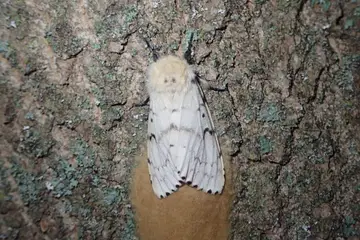
Caterpillar hairs can cause skin rashes and other reactions in some people (DNR): “In addition, the caterpillar hairs can cause skin rashes and other reactions in some people.”
Urticating hairs can cause blisters, burns or rashes (UW-Extension): “Some types of hairy or spiny caterpil-lars are covered with urticating, or stinging, hairs.”
Nesting birds in urban and suburban settings are especially aggressive: “Cooper’s hawks nesting in urban and suburban settings are especially aggressive.”
Dangerous when defending nests or when injured: “Birds can be dangerous in two situations: when they are defending their nests or territories and when they have been injured or incapacitated.”
Venomous: “All shrews are carnivorous, and the short-tailed shrew uses its venomous saliva to help subdue prey (such as mice), which may be as large as it is.”
Capable of injuring or killing humans, but attacks are rare (UW-Extension). DNR: “They are capable of injuring or killing humans, but attacks are rare.”
Deer-vehicle collisions cause human death and injury (UW-Extension): “Deer-vehicle collisions result in human death and injury, millions of dollars in property loss, death and injury to the deer (35,000 or more annually in Wisconsin), and mental anguish for the driver.”
Quills can embed in hands or a pet's mouth: “If a person or pet comes in direct contact with a porcupine, a large number of quills can become embedded in the person’s hands or the pet’s mouth.”
Official sources say the brown recluse and the striped bark scorpion are not native to Wisconsin or not found there. They are not counted among the dangerous animals above; each entry quotes the source.
Darker cells are the months with more open-licence observation records of each group in Wisconsin (GBIF). They show when people see and record these animals, not how many there are. The current month, this month, is highlighted.
Ticks: check especially in spring, summer and early fall; deer tick season runs from early April through November (UW-Extension 2010). Wisconsin Department of Health Services
Report: Rattlesnake sightings: call DNR 1-888-WDNRINFO (1-888-936-7463), or use the DNR Rare Species Observation Form / DNR Wildlife Switchboard ([email protected], 608-267-0866). Threatening wolves or wolf depredation: USDA-Wildlife Services (north 1-800-228-1368, south 1-800-433-0663). Spongy moth outside quarantined counties: 1-800-642-MOTH (6684). Other invasive species: DNR Report invasive species page. Feral pig sightings: DNR reporting form or USDA Wildlife Services (north 800-228-1368, south 800-433-0663). Wisconsin Department of Natural Resources, Bureau of Endangered Resources
Black bears: never feed or approach bears; in the woods stay calm, do not run, wave your arms, make noise and back away slowly. Wisconsin Department of Natural Resources
Wolves: do not approach or feed; if a wolf does not leave, do not run, keep eye contact, act aggressively, shout and back away slowly. Wisconsin Department of Natural Resources
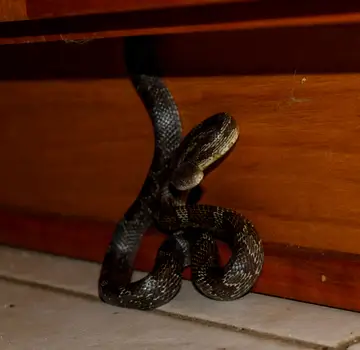
Yes, but rare. Two rattlesnakes live in Wisconsin, both rare, the eastern massasauga especially. Many harmless snakes mimic rattlesnakes by vibrating their tails. Wisconsin Department of Natural Resources
No. No wild population. USGS lists 4 American alligator records in Wisconsin (2007-2023: Washington, Fond du Lac, Waukesha and Milwaukee counties), every one with status "failed" (not established). NAS
Yes. Gray wolves live in Wisconsin and are federally endangered; DNR says verified attacks by healthy wolves on people are extremely rare, with no documented cases in Wisconsin. Wisconsin Department of Natural Resources
“…only two of Wisconsin’s 20-plus snake species are venomous: the timber rattlesnake (Crotalus horridus) and the massasauga, or swamp rattle-snake (Sistrurus catenatus).”
“These glands secrete a foul-smelling milky fluid that protects the toad from being eaten by predators and can irritate humans’ eye and nose membranes.”
“All other stinging bees and wasps have unbarbed stingers and can sting repeatedly if given the opportunity. The amount of venom injected will affect the severity of the reaction.”
“The muscular poison sac will continue to pump venom”
“Some types of hairy or spiny caterpil-lars are covered with urticating, or stinging, hairs.”
“Cooper’s hawks nesting in urban and suburban settings are especially aggressive.”
“Birds can be dangerous in two situations: when they are defending their nests or territories and when they have been injured or incapacitated.”
“All shrews are carnivorous, and the short-tailed shrew uses its venomous saliva to help subdue prey (such as mice), which may be as large as it is.”
“They are capable of injuring or killing humans, but attacks are rare.”
“The risk of a coyote attack on a person is low, but it does exist.”
“Deer-vehicle collisions result in human death and injury, millions of dollars in property loss, death and injury to the deer (35,000 or more annually in Wisconsin), and mental anguish for the driver.”
“If a person or pet comes in direct contact with a porcupine, a large number of quills can become embedded in the person’s hands or the pet’s mouth.”
“Yellow jackets are responsible for a marked increase in stings and related problems from early August through September.”
Herps of Wisconsin. Wisconsin Department of Natural Resources. undated page; checked November 3, 2026.Quoted passages (6)
“Of Wisconsin's 21 species, 14 are considered "rare" and listed as endangered, threatened or of particular concern.”
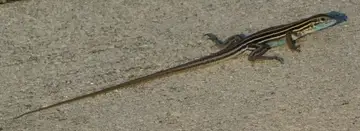
“Wisconsin's four lizard species share several traits.”
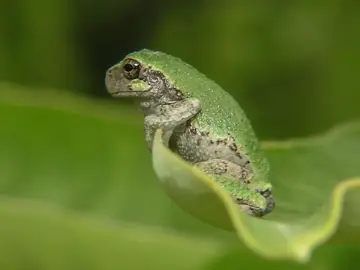
“Wisconsin is home to twelve species of frogs, including the American toad.”
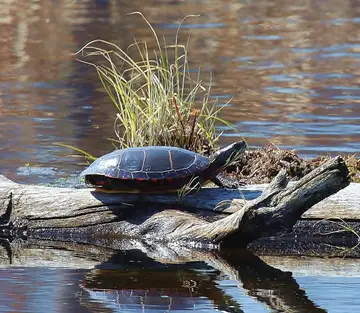
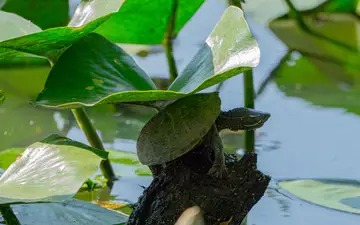
“Wisconsin has 11 turtle species.”
“There are two species of rattlesnakes in Wisconsin (timber rattlesnake and eastern massasauga), although both species, especially the eastern massasauga, are rare.”
“Lizards have the shortest active season of any Wisconsin herptile, emerging from hibernation in late April or May and re-entering in early September.”
Black Widows: The Hermits of Door County. UW-Madison Insect Diagnostic Lab (Division of Extension / Department of Entomology), P.J. Liesch. May 22, 2018; checked November 3, 2026.Quoted passages (3)
“Wisconsin is home to approximately 500 species of spiders, and essentially all of these are harmless, beneficial creatures that provide us with an astonishing amount of free pest control*.”
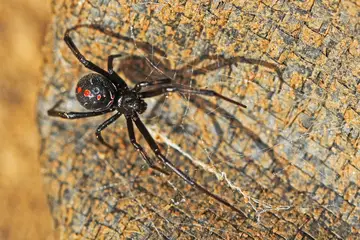
“While we’re outside the native range of the dreaded, but horribly misunderstood brown recluse spider (Loxosceles reclusa), Wisconsin is actually home to a native black widow species—the northern black widow (Latrodectus variolus).”
“In Wisconsin, these spiders are rare and have been documented in fewer than 10 counties.”
Checklist of the Birds of Wisconsin 2025. Wisconsin Society for Ornithology (Records Committee). Updated 23 March 2025; checked November 3, 2026.Quoted passages (1)
“The final revision of the mammal checklist contains 72 species in 19 fam-ilies.”
“An unknown number of the non-native Beech Marten (Martes foina; also referred to as the Stone Marten) were released from a fur farm and are now established in and around the southern unit of the Kettle Moraine State Forest (Jefferson, Racine, Waukesha, and Walworth counties)”
“Two species that are especially prone to biting are the snapping turtle (which is found in most water bodies throughout the state) and spiny softshell (which is found in most water bodies aside from wetlands and ponds throughout the state).”
“Generally speaking, no, turtles are not dangerous.”
“Give both turtles plenty of space (3-5 ft) if encountered on land.”
“If it is mid-May through early July, the turtle in your yard is likely looking for a place to lay eggs.”
Spongy moth. Wisconsin Department of Natural Resources. undated page; checked November 3, 2026.Quoted passages (3)
“In addition, the caterpillar hairs can cause skin rashes and other reactions in some people.”
“The European spongy moth (Lymantria dispar) was introduced into Massachusetts in 1869.”
“Homeowners may see spongy moth caterpillars resting on tree trunks and buildings in June and July.”
Gray wolf. Wisconsin Department of Natural Resources. undated page; checked November 3, 2026.Quoted passages (2)
“Verified cases of healthy wolves attacking humans are extremely rare, and there have been no documented cases in Wisconsin.”
“If the wolf does not move off on its own, do not run, as this may initiate a chase response by the wolf.”
Rabies. Wisconsin Department of Health Services. undated page; checked November 3, 2026.Quoted passages (1)
“The primary reservoirs of the rabies virus in Wisconsin are bats and skunks.”
Cougar. Wisconsin Department of Natural Resources. undated page; checked November 3, 2026.Quoted passages (2)
“Although encounters are rare, you can take steps to enhance your own and your friends' and family's safety.”
“While several cougar sightings in Wisconsin have occurred recently, there is currently no evidence that they are breeding here.”
Nuisance wildlife. Wisconsin Department of Natural Resources. undated page; checked November 3, 2026.Quoted passages (2)
“Feral pigs can transmit diseases and parasites and can be extremely destructive to recently planted fields and gardens.”
“The Wisconsin DNR has adopted the position that feral pigs are exotic, non-native animals that pose significant threats to both the environment and to agricultural operations.”
Scorpion Hitchhikers in Wisconsin. UW-Madison Insect Diagnostic Lab (Division of Extension / Department of Entomology), P.J. Liesch. August 29, 2024; checked November 3, 2026.Quoted passages (1)
“While scorpions are common in southern parts of the US, they aren’t native to Wisconsin or the Upper Midwest.”
Emerald Ash Borer. Wisconsin Department of Natural Resources. undated page; checked November 3, 2026.Quoted passages (1)
“Emerald ash borer (Agrilus planipennis) is an invasive, wood-boring beetle that kills ash trees (Fraxinus spp.) by eating the tissues under the bark.”
“Timber rattlesnake bites have averaged one every four years in recent history and only one rattlesnake fatality has been documented in Wisconsin since 1900.”
“Seek immediate medical attention”
“Handle, harass, or try to kill the snake; this is how most bites occur”
“The timber rattlesnake is a protected wild animal, meaning it is illegal to collect, possess or kill this species except in cases where there is an immediate threat to humans or domestic animals.”
“Yes, there are four lizard species native to Wisconsin.”
Black bear management. Wisconsin Department of Natural Resources. undated page; checked November 3, 2026.Quoted passages (2)
“Wisconsin's bear population is managed regionally through annual hunting seasons, while local issues related to human/bear conflicts are typically addressed through more focused abatement strategies.”
“If you encounter a black bear while in the woods, stay calm and do not run.”
Elk. Wisconsin Department of Natural Resources. undated page; checked November 3, 2026.Quoted passages (1)
“From a population of 25 elk reintroduced in 1995, and with the help of the second reintroduction effort that started in 2015, the state's total elk population has now surpassed 400 animals.”
Illnesses Spread by Ticks. Wisconsin Department of Health Services. undated page; checked November 3, 2026.Quoted passages (1)
“Illnesses spread by ticks are common in Wisconsin.”
“Timber rattlesnakes emerge from hibernation as early as April 1 but may continue to emerge well into June. They remain active until as late as mid-October, females that gave birth that year remain active longer than other individuals.”
“Massasaugas begin to emerge in spring, usually in early-April, from overwintering habitats. They can remain active until mid-November, depending on air temperatures.”
“As the end of summer approaches and brings cooler temperatures, herptiles will soon begin crossing roads as they migrate from breeding and summer foraging locations to hibernation areas.”
About Ticks. Wisconsin Department of Health Services. undated page; checked November 3, 2026.Quoted passages (1)
“After you, your family members, or your pets spend time in the woods or areas with tall grass or brush, it is always important to check for ticks, especially in the spring, summer, and early fall.”