Invasive and nonnative animals in Wisconsin
Last checked November 3, 2026 against official sources.
On this page
4 nonnative animals are named on 4 official lists for Wisconsin: “Spongy moth” (Wisconsin Department of Natural Resources), “Emerald Ash Borer” (Wisconsin Department of Natural Resources), “Checklists of Wisconsin Vertebrates (PUB-SS-954), Watermolen and Murrell” (Wisconsin Department of Natural Resources, Bureau of Integrated Science Services) and “Nuisance wildlife” (Wisconsin Department of Natural Resources).
To report a sighting, see how to report.
Being on a list of nonnative species does not always mean an animal is harmful or established: each list below is described in its source's terms. A sighting of a listed animal is still worth reporting to the agency.
Spongy moth
Wisconsin Department of Natural Resources, undated page. 1 animal.
-
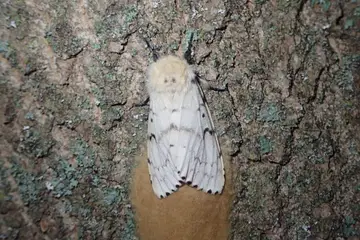
Photo: Emmett Collins-Sussman · CC BY 4.0 · iNaturalist Spongy moth Lymantria dispar
Quarantined counties of Wisconsin; DNR asks people in non-quarantined counties to report it (1-800-642-MOTH). Wisconsin Department of Natural Resources
Emerald Ash Borer
Wisconsin Department of Natural Resources, undated page. 1 animal.
-
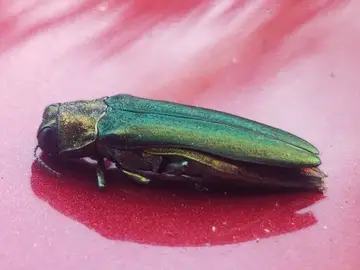
Photo: Brandon McCracken · CC BY 4.0 · iNaturalist Emerald ash borer Agrilus planipennis
See the DATCP interactive map linked from the DNR page; locations not listed in the text read. Wisconsin Department of Natural Resources
Checklists of Wisconsin Vertebrates (PUB-SS-954), Watermolen and Murrell
Wisconsin Department of Natural Resources, Bureau of Integrated Science Services, 2001. 1 animal.
-
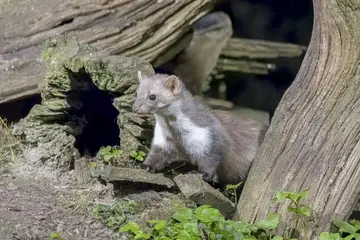
Photo: Charles J. Sharp · CC BY-SA 4.0 · Wikimedia Commons · resized Beech Marten (Stone Marten) Martes foina
Around the southern unit of the Kettle Moraine State Forest (Jefferson, Racine, Waukesha and Walworth counties), as of 2001; population size and reproduction unknown. Wisconsin Department of Natural Resources, Bureau of Integrated Science Services

Nuisance wildlife
Wisconsin Department of Natural Resources, undated page. 1 animal.
-
Feral pig
No confirmed free-ranging population; sightings are typically escaped domestics or illegally held captive feral swine (DNR). Wisconsin Department of Natural Resources
How to report a sighting in Wisconsin
Rattlesnake sightings: call DNR 1-888-WDNRINFO (1-888-936-7463), or use the DNR Rare Species Observation Form / DNR Wildlife Switchboard ([email protected], 608-267-0866). Threatening wolves or wolf depredation: USDA-Wildlife Services (north 1-800-228-1368, south 1-800-433-0663). Spongy moth outside quarantined counties: 1-800-642-MOTH (6684). Other invasive species: DNR Report invasive species page. Feral pig sightings: DNR reporting form or USDA Wildlife Services (north 800-228-1368, south 800-433-0663). Wisconsin Department of Natural Resources, Bureau of Endangered Resources
Do not try to catch or handle the animal. A photo taken from a safe distance, the place and the date help the agency.
Sources
- Spongy moth. Wisconsin Department of Natural Resources. undated page; checked November 3, 2026.
Quoted passages (1)
“The European spongy moth (Lymantria dispar) was introduced into Massachusetts in 1869.”
- Emerald Ash Borer. Wisconsin Department of Natural Resources. undated page; checked November 3, 2026.
Quoted passages (1)
“Emerald ash borer (Agrilus planipennis) is an invasive, wood-boring beetle that kills ash trees (Fraxinus spp.) by eating the tissues under the bark.”
- Checklists of Wisconsin Vertebrates (PUB-SS-954), Watermolen and Murrell. Wisconsin Department of Natural Resources, Bureau of Integrated Science Services. 2001; checked November 3, 2026.
Quoted passages (1)
“An unknown number of the non-native Beech Marten (Martes foina; also referred to as the Stone Marten) were released from a fur farm and are now established in and around the southern unit of the Kettle Moraine State Forest (Jefferson, Racine, Waukesha, and Walworth counties)”
- Nuisance wildlife. Wisconsin Department of Natural Resources. undated page; checked November 3, 2026.
Quoted passages (1)
“The Wisconsin DNR has adopted the position that feral pigs are exotic, non-native animals that pose significant threats to both the environment and to agricultural operations.”
- Amphibian and Reptile Frequently Asked Questions #4 - Snakes, PUB-ER-670. Wisconsin Department of Natural Resources, Bureau of Endangered Resources (Kapfer 2011). 2011; checked November 3, 2026.
Quoted passages (1)
“If you have a confirmed rattlesnake sighting, you can report it by calling: 1-888-WDNRINFO (1-888-936-7463).”