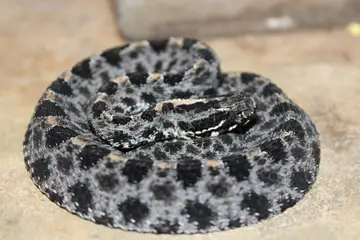
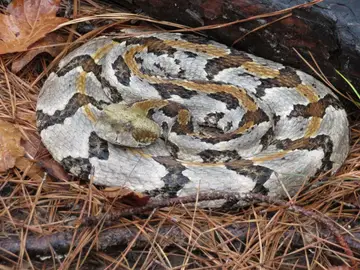
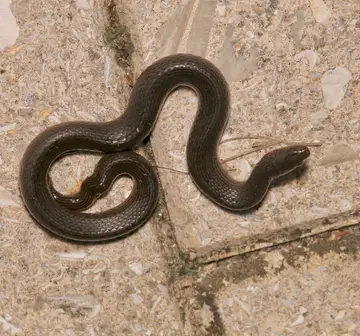
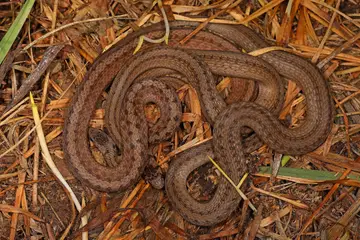
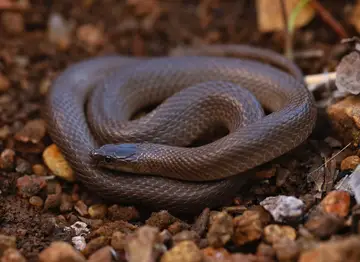
South Carolina Department of Natural Resources: There are 38 snake species in South Carolina, only six of which are venomous.
This page lists 39 snakes.
6 are venomous by official accounts: Timber Rattlesnake, Copperhead, Cottonmouth / Water Moccasin, Eastern Coral Snake, Eastern Diamondback Rattlesnake and Pigmy Rattlesnake. South Carolina Department of Natural Resources gives a total of 38; the 39 here are the snakes official sources name one by one.
Venom: “The six venomous species are the coral snake, pigmy rattlesnake, cottonmouth (aka water moccasin), copperhead, canebrake or timber rattlesnake, and the eastern diamondback rattlesnake.” (South Carolina Department of Natural Resources)
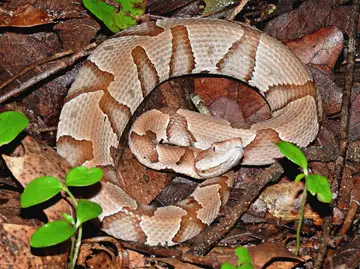
Habitat: Copperheads occur in a wide range of habitat types including mountain coves, piedmont and coastal plain hardwood forests, longleaf pine forests and swamp forests. (SCDNR and South Carolina Wildlife Magazine)
Typically 30 to 48 inches (about 3 to 4 feet); recorded up to 75 inches.
How to recognize it
Heat-sensing pit between nostril and eye; no rattle
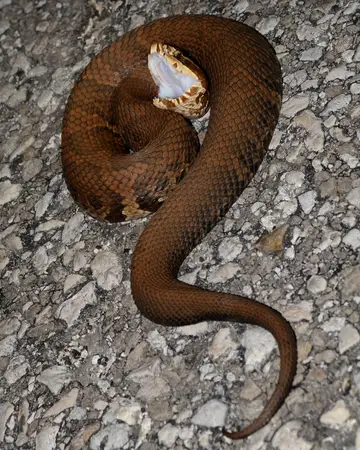
Head much wider than the neck, with a dark bar from the eye to the jaw; vertical (cat-eye) pupils
Gapes to show the white lining of its mouth when threatened
Where in South Carolina
In South Carolina, cottonmouths typically live in the sandhills and coastal plain regions, but do not enter the piedmont nor mountain regions of the state. South Carolina Department of Natural Resources
JFMAMJJASOND
60 records by month.What the sources say
Venom: “The six venomous species are the coral snake, pigmy rattlesnake, cottonmouth (aka water moccasin), copperhead, canebrake or timber rattlesnake, and the eastern diamondback rattlesnake.” (South Carolina Department of Natural Resources)
Venom: “The six venomous species are the coral snake, pigmy rattlesnake, cottonmouth (aka water moccasin), copperhead, canebrake or timber rattlesnake, and the eastern diamondback rattlesnake.” (South Carolina Department of Natural Resources)
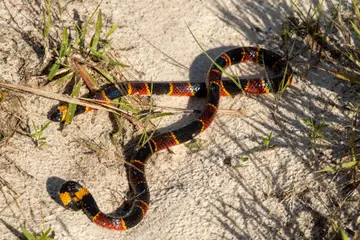
Habitat: The species is very secretive, spending much of its time underground, and loose, sandy soil typifies most of the habitats frequented by the coral snake. (SCDNR and South Carolina Wildlife Magazine)
"considered a species of concern in South Carolina"
What the sources say
Venom: “The six venomous species are the coral snake, pigmy rattlesnake, cottonmouth (aka water moccasin), copperhead, canebrake or timber rattlesnake, and the eastern diamondback rattlesnake.” (South Carolina Department of Natural Resources)
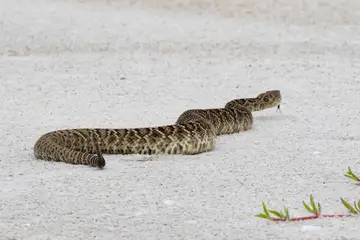
Habitat: Longleaf pine flatwoods, rolling pine-hills and in maritime grasslands of the lower coast (SCDNR and South Carolina Wildlife Magazine)
Venom: “The six venomous species are the coral snake, pigmy rattlesnake, cottonmouth (aka water moccasin), copperhead, canebrake or timber rattlesnake, and the eastern diamondback rattlesnake.” (South Carolina Department of Natural Resources)
Habitat: They occur in a variety of habitats but are seldom found far from fresh water, such as marshes, swamps and ponds. (SCDNR and South Carolina Wildlife Magazine)
Venom: “The six venomous species are the coral snake, pigmy rattlesnake, cottonmouth (aka water moccasin), copperhead, canebrake or timber rattlesnake, and the eastern diamondback rattlesnake.” (South Carolina Department of Natural Resources)
Habitat: The canebrake of the piedmont and coastal plain is a species of forested woodlands, wooded bluffs near rivers, river swamps and wet thickets. (SCDNR and South Carolina Wildlife Magazine)
From A to Z. "Not stated" means no official source we use gives a venom status, not that the snake is harmless. Some harmless snakes mimic venomous ones: leave every snake alone.
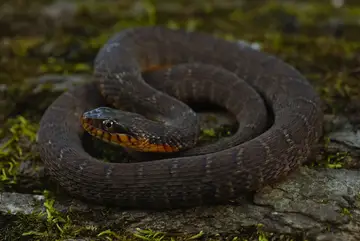
In our region, banded watersnakes are restricted to the Coastal Plain, where they are replaced by the closely related northern watersnake (Nerodia sipedon) in the … University of Georgia Savannah River Ecology Laboratory
JFMAMJJASOND
52 records by month.What the sources say
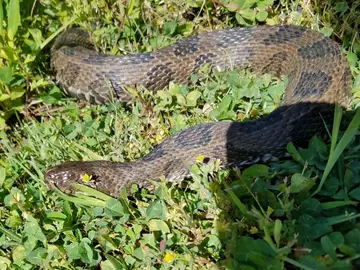
Venom: “The banded water snake and brown water snake are large-bodied, non-venomous water snakes that are commonly mistaken for the cottonmouth.” (SCDNR and South Carolina Wildlife Magazine)
Range: In our region, banded watersnakes are restricted to the Coastal Plain, where they are replaced by the closely related northern watersnake (Nerodia sipedon) in the Piedmont and mountain regions.
Habitat: They occur in nearly all freshwater habitats, including ponds, lakes, rivers, streams, swamps, wetlands, and marshes. (University of Georgia Savannah River Ecology Laboratory)
Photo: Everglades NPS from Homestead, Florida, United States · Public domain · Wikimedia Commons
Venom: “Family Colubridae (Non-venomous Snakes)” (University of Georgia Savannah River Ecology Laboratory)
Habitat: They inhabit a wide variety of ecosystems, including pine flatwoods, hardwood forests, scrub, grasslands, old fields, wetlands, and suburban edges. (University of Georgia Savannah River Ecology Laboratory)
Venom: “Family Colubridae (Non-venomous Snakes)” (University of Georgia Savannah River Ecology Laboratory)
Habitat: They are highly aquatic and inhabit a variety of open aquatic habitats including Carolina bays, roadside ditches, sphagnum bogs, sawgrass prairies, and the margins of heavily-vegetated ponds and lakes. (University of Georgia Savannah River Ecology Laboratory)
Brown watersnakes are found throughout Georgia and South Carolina with the exception of mountainous regions of extreme northwestern South Carolina and northern Georgia. University of Georgia Savannah River Ecology Laboratory
What the sources say
Venom: “The banded water snake and brown water snake are large-bodied, non-venomous water snakes that are commonly mistaken for the cottonmouth.” (SCDNR and South Carolina Wildlife Magazine)
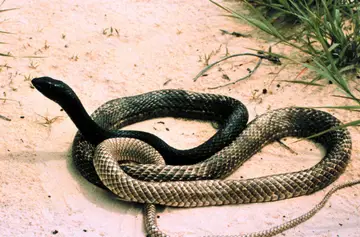
Most adults about 42 to 60 inches (3.5 to 5 ft); record 102 inches (8.5 ft). Ranges given by agencies: 41 to 84 in (Louisiana), 36 to 82 in (Oklahoma), adults average 50 to 72 in (Alabama), up to 94 in (NC State Extension), up to 80 in in Colorado and up to 68 in in Arizona.
How to recognize it
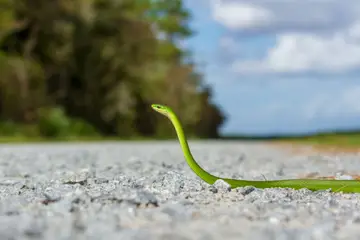
Long, slowly tapering tail whose scales look like a braided whip
Very long and slender, with smooth scales
Large eyes with round pupils
What the sources say
Venom: “Family Colubridae (Non-venomous Snakes)” (University of Georgia Savannah River Ecology Laboratory)
Habitat: In the Southeast, eastern coachwhips are strongly associated with xeric, open canopy habitats. (University of Georgia Savannah River Ecology Laboratory)
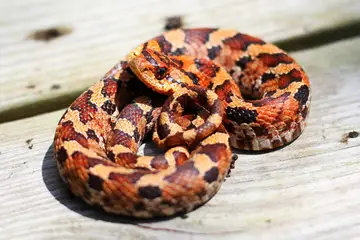
Corn snakes range across the southeastern United States, from southern New Jersey, extending south through the Carolinas to the Florida Keys, and westward toward eastern … University of Georgia Savannah River Ecology Laboratory
What the sources say
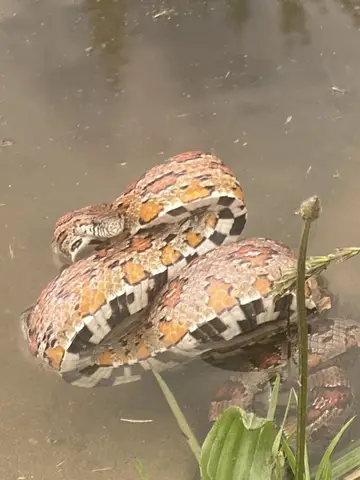
Venom: “…non-venomous snake that may be confused with the copperhead.” (SCDNR and South Carolina Wildlife Magazine)
Range: Corn snakes range across the southeastern United States, from southern New Jersey, extending south through the Carolinas to the Florida Keys, and westward toward eastern Louisiana.
Habitat: Within this range, they occupy a variety of habitats, including open pine woodlands (e.g., longleaf sandhill habitat), abandoned fields, hardwood hammocks, and agricultural edges. (University of Georgia Savannah River Ecology Laboratory)
Venom: “Family Colubridae (Non-venomous Snakes)” (University of Georgia Savannah River Ecology Laboratory)
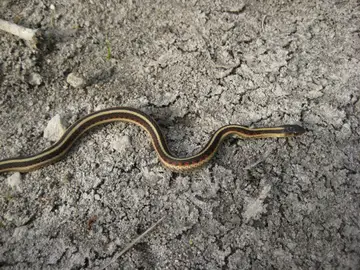
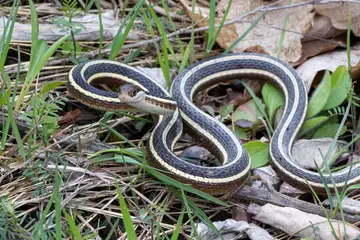
Habitat: Garter snakes are common throughout the Southeast and most of North America and are found in a wide variety of habitats, including meadows, marshes, woodlands, and hillsides. (University of Georgia Savannah River Ecology Laboratory)
Most adults are about 36-48 inches. Maryland gives a record of 82 inches; Alabama gives up to 6.9 feet.
How to recognize it
Smooth, shiny scales and an indistinct neck.
Round pupil.
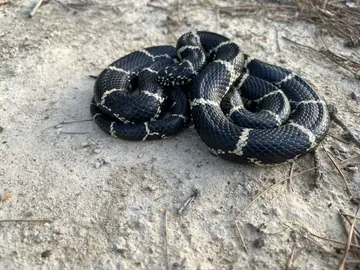
Florida Museum counts 19-32 crossbands in Florida; Alabama counts 23 to 52.
Where in South Carolina
Eastern Kingsnake (L. getula): Ranges from southern New Jersey south through peninsular Florida, westward into Alabama, and is found across Georgia and South Carolina. University of Georgia Savannah River Ecology Laboratory
JFMAMJJASOND
36 records by month.What the sources say
Venom: “Family Colubridae (Non-venomous Snakes)” (University of Georgia Savannah River Ecology Laboratory)
Habitat: They are most frequently encountered in sandy uplands, but also occur in pine flatwoods, mixed hardwood forests, river floodplains, and habitats near wetlands. (University of Georgia Savannah River Ecology Laboratory)
Venom: “Family Colubridae (Non-venomous Snakes)” (University of Georgia Savannah River Ecology Laboratory)
Habitat: Ribbon snakes are semiaquatic and are frequently found at the edges of lakes, bogs, and salt marshes. (University of Georgia Savannah River Ecology Laboratory)
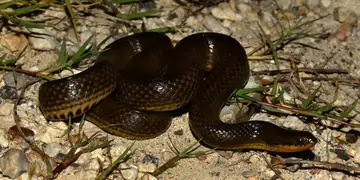
The glossy crayfish snake is found in the Coastal Plain of the southeastern United States from eastern North Carolina to eastern Texas but is absent from the southern … University of Georgia Savannah River Ecology Laboratory
What the sources say
Venom: “Family Colubridae (Non-venomous Snakes)” (University of Georgia Savannah River Ecology Laboratory)
Range: The glossy crayfish snake is found in the Coastal Plain of the southeastern United States from eastern North Carolina to eastern Texas but is absent from the southern portion of peninsular Florida.
Habitat: They are highly aquatic and inhabit a variety of wetland habitats including cypress swamps, Carolina bays, roadside ditches, and the margins of heavily-vegetated ponds and lakes. (University of Georgia Savannah River Ecology Laboratory)
Within the Southeast, the Mole Kingsnake is characteristic of the Piedmont, where it is most common, though it also occurs in limited portions of the Coastal Plain of … University of Georgia Savannah River Ecology Laboratory
What the sources say
Venom: “Family Colubridae (Non-venomous Snakes)” (University of Georgia Savannah River Ecology Laboratory)
Range: Within the Southeast, the Mole Kingsnake is characteristic of the Piedmont, where it is most common, though it also occurs in limited portions of the Coastal Plain of the Carolinas.
Habitat: Habitats include fields, cultivated lands, thickets, and forest edges, with highest abundance in open areas. (University of Georgia Savannah River Ecology Laboratory)
Venom: “Family Colubridae (Non-venomous Snakes)” (University of Georgia Savannah River Ecology Laboratory)
Range: Eastern mudsnakes occur throughout the southeastern United States, from southeastern Virginia through the coastal plain of South Carolina and Georgia, throughout Florida, and westward into southwestern Alabama.
Habitat: They are strongly associated with aquatic habitats and are most abundant in shallow, heavily vegetated wetlands with muddy bottoms, including Carolina bays, cypress swamps, slow-moving creeks, and marshes. (University of Georgia Savannah River Ecology Laboratory)
Photo: U.S. Fish and Wildlife Service - Midwest Region · Public domain · Wikimedia Commons
Venom: “Family Colubridae (Non-venomous Snakes)” (University of Georgia Savannah River Ecology Laboratory)
Habitat: They inhabit a variety of aquatic habitats including lakes, ponds, marshes, rivers, and streams. (University of Georgia Savannah River Ecology Laboratory)
Most adults are 48 to 66 inches long. The Florida Museum gives a record of 90 inches; Alabama gives a maximum of 83 inches for the northern and 74 inches for the black subspecies. New Jersey gives 48 to 100 inches.
How to recognize it
Pointed snout covered by a large, triangular, cone-shaped scale, used for pushing into soft earth.
Strongly keeled (ridged) body scales and round pupils.
Four prefrontal scales between and just in front of the eyes, where most similar snakes have two.
Where in South Carolina
They are found throughout the Coastal Plain of North Carolina, South Carolina, Georgia, and throughout Florida, and in disjunct populations in the dry mountains of … University of Georgia Savannah River Ecology Laboratory
What the sources say
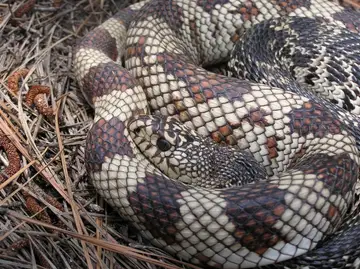
Venom: “The pine snake is a large, blotched non-venomous snake that can be mistaken for a rattlesnake.” (SCDNR and South Carolina Wildlife Magazine)
Range: They are found throughout the Coastal Plain of North Carolina, South Carolina, Georgia, and throughout Florida, and in disjunct populations in the dry mountains of Virginia, Tennessee, and northern Georgia.
Habitat: Pine snakes are found across the Southeast, but their range is patchy. (University of Georgia Savannah River Ecology Laboratory)
Venom: “Although not dangerous to humans, this species has toxic saliva that it uses to subdue its prey.” (University of Georgia Savannah River Ecology Laboratory)
Range: Pine woods snakes are found in scattered populations throughout the Coastal Plain in the southeastern U.S. Although common in a few sections of Florida they are generally uncommon to rare in our region.
Habitat: The most inland populations that have been discovered are in South Carolina on the Savannah River Site. (University of Georgia Savannah River Ecology Laboratory)
Venom: “Family Colubridae (Non-venomous Snakes)” (University of Georgia Savannah River Ecology Laboratory)
Habitat: Prefers flowing-water habitats such as blackwater creeks, streams, and rivers, as well as cypress swamps. (University of Georgia Savannah River Ecology Laboratory)
Usually 8 to 10 inches; state figures run from about 4 to 16 inches, with a Florida record of 16.6 inches.
How to recognize it
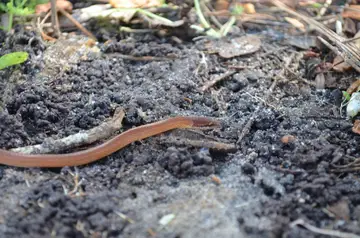
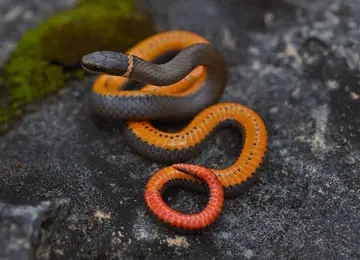
Plain, unmarked red or orange belly.
Three light spots just behind the head, which may fuse into a collar.
Keeled (ridged) scales in 15 rows at midbody and round pupils.
Where in South Carolina
Although the closely-related brown snake (Storeria dekayi) adapts well to suburban habitats, this species is usually most commonly associated with forested habitats in … University of Georgia Savannah River Ecology Laboratory
JFMAMJJASOND
34 records by month.What the sources say
Venom: “Family Colubridae (Non-venomous Snakes)” (University of Georgia Savannah River Ecology Laboratory)
Range: Although the closely-related brown snake (Storeria dekayi) adapts well to suburban habitats, this species is usually most commonly associated with forested habitats in our region.
Habitat: This species can be found in a variety of woodland habitats but in the Coastal Plain is most common in or around the margins of small wetlands. (University of Georgia Savannah River Ecology Laboratory)
Venom: “They possess mild venom in their saliva and enlarged rear teeth that help subdue prey, but they are harmless to humans.” (University of Georgia Savannah River Ecology Laboratory)
Habitat: They favor moist woodlands, forest edges, and areas with loose soil and abundant cover. (University of Georgia Savannah River Ecology Laboratory)
Venom: “Family Colubridae (Non-venomous Snakes)” (University of Georgia Savannah River Ecology Laboratory)
Habitat: This species can be found throughout most of the southern Coastal Plain of the United States but is absent from the Mississippi River Valley, peninsular Florida and southwestern Georgia. (University of Georgia Savannah River Ecology Laboratory)
Most adults are 14 to 33 inches long (Florida Museum), with a record of 46 inches. Maryland, Missouri, Tennessee and Arkansas give 22 to 32 inches. The tail is long and thin, about a third or more of the total length.
How to recognize it
Keeled (ridged) scales in 17 rows, which feel rough; the smooth green snake has smooth scales.
Venom: “Family Colubridae (Non-venomous Snakes)” (University of Georgia Savannah River Ecology Laboratory)
Habitat: Rough Green Snakes are found throughout the Mid-Atlantic and Southeast from the Pine Barrens of New Jersey west to central Texas and south throughout Florida. (University of Georgia Savannah River Ecology Laboratory)
Most adults about 14-20 inches (36-51 cm); record 29.1 inches (Florida Museum). Louisiana gives 12 to 24 inches; NC State Extension says up to 27 inches.
How to recognize it
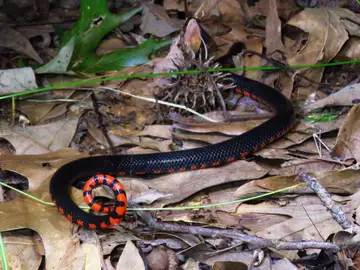
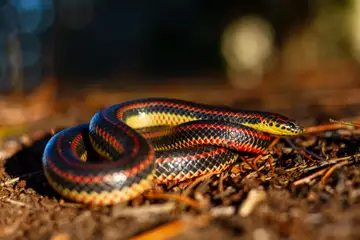
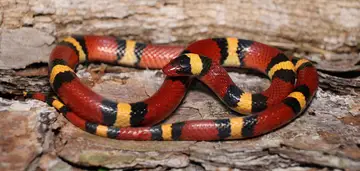
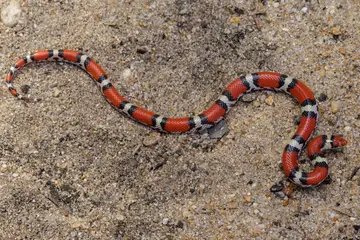
Red and yellow rings are separated by black rings, so red and yellow do not touch.
Venom: “The non-venomous scarlet kingsnake and scarlet snake both possess patterns similar to the coral snake.” (SCDNR and South Carolina Wildlife Magazine)
Venom: “The non-venomous scarlet kingsnake and scarlet snake both possess patterns similar to the coral snake.” (SCDNR and South Carolina Wildlife Magazine)
Habitat: Within the northern scarlet snake range, they are most often found in wooded areas, including sandy uplands, pinewoods, and mixed forests, but they also occur in fields, grassy ecotones, and along roadsides near wooded habitat. (University of Georgia Savannah River Ecology Laboratory)
Venom: “Family Colubridae (Non-venomous Snakes)” (University of Georgia Savannah River Ecology Laboratory)
Habitat: Its geographic range includes much of the Coastal Plain, Piedmont, and mountains, from southern Virginia to Louisiana, but the species is absent from peninsular Florida and most of the region of either side of the Mississippi River. (University of Georgia Savannah River Ecology Laboratory)
Venom: “It is rear-fanged but its tiny size make it no danger to humans or their pets.” (University of Georgia Savannah River Ecology Laboratory)
Habitat: They can be found in a variety of habitats, but are normally collected under rocks, logs, leaf litter, and other ground debris. (University of Georgia Savannah River Ecology Laboratory)
State: Non-Game Species in Need of Management (SCDNR FAQ)
What the sources say
Venom: “Family Colubridae (Non-venomous Snakes)” (University of Georgia Savannah River Ecology Laboratory)
Habitat: They can be found in upland sandhills, xeric pine-oak with wiregrass, and coastal dune habitats. (University of Georgia Savannah River Ecology Laboratory)
Venom: “Family Colubridae (Non-venomous Snakes)” (University of Georgia Savannah River Ecology Laboratory)
Habitat: The Eastern Wormsnake is distributed widely across the eastern United States, from southern Massachusetts south to Georgia, and west to the Mississippi River. (University of Georgia Savannah River Ecology Laboratory)
Snakes people confuse
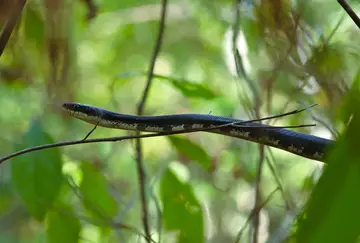
Black Racer or Cottonmouth?
Photo: Everglades NPS from Homestead, Florida, United States · Public domain · Wikimedia Commons
NPS says black racers can resemble the venomous water moccasin and advises leaving alone any snake you cannot identify. It gives no safe field mark, and none is offered here.
Black Racer or Timber rattlesnake?
Photo: Everglades NPS from Homestead, Florida, United States · Public domain · Wikimedia Commons
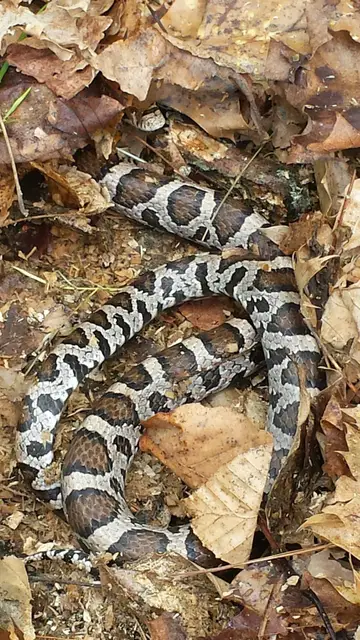
Copperheads have bold hourglass-shaped bands, and young copperheads under about 12 inches have bright yellow tail tips. Brown snakes have small spots, not hourglass bands. University of Georgia Savannah River Ecology Laboratory
Photos show typical adults; individuals vary. Never get close to compare.
When snakes are active in South Carolina
Records of snakes in South Carolina peak in March to June. They show when people record snakes, not how many there are (about month bars).
JanFebMarAprMayJunJulAugSepOctNovDec
882 records of snakes in South Carolina by month (GBIF, CC0 and CC BY records).
Call 911 or Poison Help at 1-800-222-1222 right away. Poison Help connects you to your local poison center, any time of day.
Official advice from SCDNR and South Carolina Wildlife Magazine, University of Georgia Savannah River Ecology Laboratory, posted by SCDNR and South Carolina Department of Natural Resources:
After a venomous snake bite, call 911 or Poison Help at 1-800-222-1222. SCDNR itself says to get to a hospital and call 911 if appropriate. South Carolina Department of Natural Resources
How to report
Alligator and other wildlife emergencies, injured manatees: SCDNR Operation Game Thief 1-800-922-5431. Herp questions: [email protected], (843) 527-8448. SCDNR does not remove nuisance snakes; it keeps a list of wildlife removal specialists. South Carolina Department of Natural Resources
“In South Carolina, cottonmouths typically live in the sandhills and coastal plain regions, but do not enter the piedmont nor mountain regions of the state.”
About this list
The species list comes from Snakes of South Carolina and Georgia (University of Georgia Savannah River Ecology Laboratory (linked by SCDNR as its species information), undated web page; retrieved 2026-11-03). 39 more entries come from other official sources named on each card.
Venom labels come only from official sources and link to them; "Not stated" never means harmless. How labels work.
Reptiles and Amphibians of SC. South Carolina Department of Natural Resources. page footer 2020; checked November 3, 2026.
Snakes of South Carolina and Georgia. University of Georgia Savannah River Ecology Laboratory (linked by SCDNR as its species information). undated page; checked November 3, 2026.Quoted passages (1)
“Family Colubridae (Non-venomous Snakes)”
Common Snakes in South Carolina. South Carolina Department of Natural Resources. page footer 2024; checked November 3, 2026.Quoted passages (1)
“There are 38 snake species in South Carolina, only six of which are venomous.”
Banded Watersnake (Nerodia fasciata). University of Georgia Savannah River Ecology Laboratory (linked by SCDNR as its species information). undated page; checked November 3, 2026.
“The banded water snake and brown water snake are large-bodied, non-venomous water snakes that are commonly mistaken for the cottonmouth.”
“…non-venomous snake that may be confused with the copperhead.”
“The pine snake is a large, blotched non-venomous snake that can be mistaken for a rattlesnake.”
“The non-venomous scarlet kingsnake and scarlet snake both possess patterns similar to the coral snake.”
“It is best to leave all snakes alone, if you don’t know how to identify them, and to avoid trying to kill venomous snakes.”
“The copperhead is South Carolina’s most common venomous snake.”
Black Racer (Coluber constrictor). University of Georgia Savannah River Ecology Laboratory (linked by SCDNR as its species information). undated page; checked November 3, 2026.
Black Swamp Snake (Seminatrix pygaea). University of Georgia Savannah River Ecology Laboratory (linked by SCDNR as its species information). undated page; checked November 3, 2026.
Brown Snake (Storeria dekayi). University of Georgia Savannah River Ecology Laboratory (linked by SCDNR as its species information). undated page; checked November 3, 2026.Quoted passages (2)
“Copperheads have prominent hourglass-shaped bands and have bright yellow tail tips when less than 12 in long.”
“They can be distinguished from redbellied snakes (Storeria occipitomaculata) by their lack of red underside”
Brown Watersnake (Nerodia taxispilota). University of Georgia Savannah River Ecology Laboratory (linked by SCDNR as its species information). undated page; checked November 3, 2026.
“The six venomous species are the coral snake, pigmy rattlesnake, cottonmouth (aka water moccasin), copperhead, canebrake or timber rattlesnake, and the eastern diamondback rattlesnake.”
Coachwhip (Masticophis flagellum). University of Georgia Savannah River Ecology Laboratory (linked by SCDNR as its species information). undated page; checked November 3, 2026.
Corn Snake (Elaphe [Pantherophis] guttatus). University of Georgia Savannah River Ecology Laboratory (linked by SCDNR as its species information). undated page; checked November 3, 2026.
“The best advice is to try to remain calm, and get to a hospital as soon as possible. Call 911 if that is appropriate”
“In South Carolina, cottonmouths typically live in the sandhills and coastal plain regions, but do not enter the piedmont nor mountain regions of the state.”
Eastern Garter Snake (Thamnophis sirtalis). University of Georgia Savannah River Ecology Laboratory (linked by SCDNR as its species information). undated page; checked November 3, 2026.
Eastern Hognose Snake (Heterodon platirhinos). University of Georgia Savannah River Ecology Laboratory (linked by SCDNR as its species information). undated page; checked November 3, 2026.
Eastern Kingsnake (Lampropeltis getula). University of Georgia Savannah River Ecology Laboratory (linked by SCDNR as its species information). undated page; checked November 3, 2026.
Eastern Ribbon Snake (Thamnophis sauritus). University of Georgia Savannah River Ecology Laboratory (linked by SCDNR as its species information). undated page; checked November 3, 2026.
Glossy Crayfish Snake (Regina rigida). University of Georgia Savannah River Ecology Laboratory (linked by SCDNR as its species information). undated page; checked November 3, 2026.
Green Watersnake (Nerodia floridana). University of Georgia Savannah River Ecology Laboratory (linked by SCDNR as its species information). undated page; checked November 3, 2026.
Mole Kingsnake (Lampropeltis calligaster). University of Georgia Savannah River Ecology Laboratory (linked by SCDNR as its species information). undated page; checked November 3, 2026.
Mud Snake (Farancia abacura). University of Georgia Savannah River Ecology Laboratory (linked by SCDNR as its species information). undated page; checked November 3, 2026.
Northern Watersnake (Nerodia sipedon). University of Georgia Savannah River Ecology Laboratory (linked by SCDNR as its species information). undated page; checked November 3, 2026.
Pine Snake (Pituophis melanoleucus). University of Georgia Savannah River Ecology Laboratory (linked by SCDNR as its species information). undated page; checked November 3, 2026.Quoted passages (1)
“They have four prefrontal scales, unlike most other colubrids, which have two.”
Pine Woods Snake (Rhadinaea flavilata). University of Georgia Savannah River Ecology Laboratory (linked by SCDNR as its species information). undated page; checked November 3, 2026.Quoted passages (1)
“Although not dangerous to humans, this species has toxic saliva that it uses to subdue its prey.”
Queen Snake (Regina septemvittata). University of Georgia Savannah River Ecology Laboratory (linked by SCDNR as its species information). undated page; checked November 3, 2026.
Rainbow Snake (Farancia erytrogramma). University of Georgia Savannah River Ecology Laboratory (linked by SCDNR as its species information). undated page; checked November 3, 2026.
Red-bellied Watersnake (Nerodia erythrogaster). University of Georgia Savannah River Ecology Laboratory (linked by SCDNR as its species information). undated page; checked November 3, 2026.
Redbellied Snake (Storeria occipitomaculata). University of Georgia Savannah River Ecology Laboratory (linked by SCDNR as its species information). undated page; checked November 3, 2026.Quoted passages (1)
“This species can easily be distinguished from all other small woodland snakes by their unmarked bright orange to red underside.”
Ringneck Snake (Diadophis punctatus). University of Georgia Savannah River Ecology Laboratory (linked by SCDNR as its species information). undated page; checked November 3, 2026.Quoted passages (2)
“They possess mild venom in their saliva and enlarged rear teeth that help subdue prey, but they are harmless to humans.”
“The head is small and only slightly wider than the neck, and the scales are smooth, giving a shiny appearance.”
Rough Earth Snake (Virginia striatula). University of Georgia Savannah River Ecology Laboratory (linked by SCDNR as its species information). undated page; checked November 3, 2026.
Rough Green Snake (Opheodrys aestivus). University of Georgia Savannah River Ecology Laboratory (linked by SCDNR as its species information). undated page; checked November 3, 2026.Quoted passages (1)
“Rough Green Snakes have keeled scales and large eyes.”
Scarlet Kingsnake (Lampropeltis elapsoides). University of Georgia Savannah River Ecology Laboratory (linked by SCDNR as its species information). undated page; checked November 3, 2026.
Scarlet Snake (Cemophora coccinea). University of Georgia Savannah River Ecology Laboratory (linked by SCDNR as its species information). undated page; checked November 3, 2026.
Smooth Earth Snake (Virginia valeriae). University of Georgia Savannah River Ecology Laboratory (linked by SCDNR as its species information). undated page; checked November 3, 2026.
Southeastern Crowned Snake (Tantilla coronata). University of Georgia Savannah River Ecology Laboratory (linked by SCDNR as its species information). undated page; checked November 3, 2026.Quoted passages (1)
“It is rear-fanged but its tiny size make it no danger to humans or their pets.”
Southern Hognose Snake (Heterodon simus). University of Georgia Savannah River Ecology Laboratory (linked by SCDNR as its species information). undated page; checked November 3, 2026.
Worm Snake (Carphophis amoenus). University of Georgia Savannah River Ecology Laboratory (linked by SCDNR as its species information). undated page; checked November 3, 2026.
Snakebite Fact Sheet. University of Georgia Savannah River Ecology Laboratory, posted by SCDNR. undated page; checked November 3, 2026.Quoted passages (1)
“If you see an unknown species of snake, it is best to treat it as venomous and leave it alone if at all possible.”
Upstate Snakes: General Information. South Carolina Department of Natural Resources. page footer 2020; checked November 3, 2026.Quoted passages (1)
“…most active in the warmer months (April thru October)”
American Alligator. South Carolina Department of Natural Resources. undated page; checked November 3, 2026.Quoted passages (1)
“For alligator and other wildlife emergencies, contact Operation Game Thief: 1-800-922-5431”