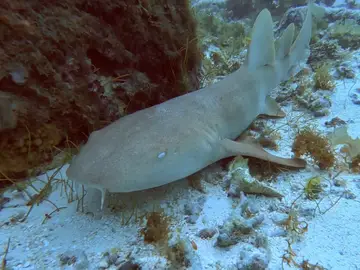
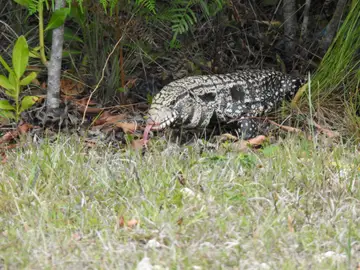
South Carolina has 6 venomous snakes named by official sources: Timber Rattlesnake, Copperhead, Cottonmouth / Water Moccasin, Eastern Coral Snake, Eastern Diamondback Rattlesnake and Pigmy Rattlesnake, as labelled by South Carolina Department of Natural Resources. This guide covers 9 animal groups from South Carolina Department of Natural Resources lists and other official sources, with photos, venomous status and when each group is active.
Identification help has limits: a photo cannot confirm that an animal is safe. Watch from a distance and never handle a wild animal.
These are the animals official sources describe as venomous or as a risk to people in South Carolina, across 5 groups. The reason is given in the source's own terms.
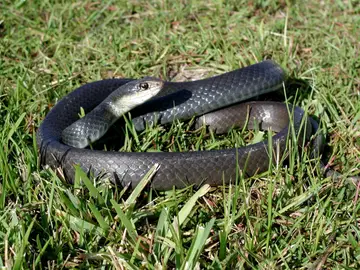
Venomous: “The six venomous species are the coral snake, pigmy rattlesnake, cottonmouth (aka water moccasin), copperhead, canebrake or timber rattlesnake, and the eastern diamondback rattlesnake.”
Venomous: “The six venomous species are the coral snake, pigmy rattlesnake, cottonmouth (aka water moccasin), copperhead, canebrake or timber rattlesnake, and the eastern diamondback rattlesnake.”
Venomous: “The six venomous species are the coral snake, pigmy rattlesnake, cottonmouth (aka water moccasin), copperhead, canebrake or timber rattlesnake, and the eastern diamondback rattlesnake.”
Venomous: “The six venomous species are the coral snake, pigmy rattlesnake, cottonmouth (aka water moccasin), copperhead, canebrake or timber rattlesnake, and the eastern diamondback rattlesnake.”
Venomous: “The six venomous species are the coral snake, pigmy rattlesnake, cottonmouth (aka water moccasin), copperhead, canebrake or timber rattlesnake, and the eastern diamondback rattlesnake.”
Venomous: “The six venomous species are the coral snake, pigmy rattlesnake, cottonmouth (aka water moccasin), copperhead, canebrake or timber rattlesnake, and the eastern diamondback rattlesnake.”
Venomous: “Some species have hollow, stinging hairs with poison glands at the base. These special defensive hairs (called urticating setae) can puncture the skin and release venom.”
Venomous: “Some species have hollow, stinging hairs with poison glands at the base. These special defensive hairs (called urticating setae) can puncture the skin and release venom.”
Shark: “Unquestionably very dangerous to man. … Known to attack and kill swimmers, surfers, and abalone divers in shallow waters in other regions. … It is well-documented that large white sharks off South …”
Shark: “One of the more dangerous species of sharks, however, due to its infrequent occurrence close to shore, the probability of attack on local swimmers is remote.”
Shark: “A dangerous shark because of its size and frequent occurrence in areas where people swim. … Numerous attacks have been attributed to the bull shark elsewhere with a few probably occurring in South …”
Venomous spines: “The skates and rays have pectoral fins that are connected to the head (not separated) and a more tapered, or even whip-like tail, often with venomous spines.”
8 nonnative animals are named on South Carolina's official lists (South Carolina Department of Natural Resources). The USGS Nonindigenous Aquatic Species database records 3 nonnative animals in our groups with an established population in South Carolina.
Darker cells are the months with more open-licence observation records of each group in South Carolina (GBIF). They show when people see and record these animals, not how many there are. The current month, this month, is highlighted.
Report: Alligator and other wildlife emergencies, injured manatees: SCDNR Operation Game Thief 1-800-922-5431. Herp questions: [email protected], (843) 527-8448. SCDNR does not remove nuisance snakes; it keeps a list of wildlife removal specialists. South Carolina Department of Natural Resources
After a venomous snake bite, call 911 or Poison Help at 1-800-222-1222. SCDNR itself says to get to a hospital and call 911 if appropriate. South Carolina Department of Natural Resources
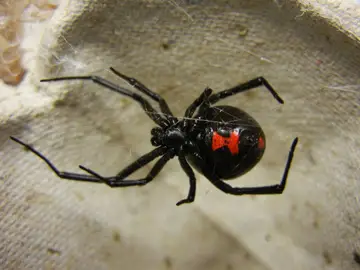
Yes. Three widow spiders occur: southern black widow (Latrodectus mactans, statewide), northern black widow (L. variolus, mainly Piedmont and Upstate) and the non-native brown widow (L. geometricus, statewide, densest on the coast). Clemson Cooperative Extension, Home & Garden Information Center
Are there brown recluse spiders in South Carolina?
CDC says only that the species is venomous and lives in the midwestern and southern US. CDC/NIOSH
Are there sharks in South Carolina?
Yes. SCDNR presents 39 species from 13 families; it reports no fatal attack in SC for at least the half century before 2004. SCDNR Marine Resources Division
Yes. SCDNR publishes an armadillo nuisance-species sheet for SC; range detail is not stated in the passage used. SCDNR · More
Are there crocodiles in South Carolina?
Not established. The alligator is the only native crocodilian. USGS NAS lists an American crocodile record for SC as a nonindigenous occurrence; that is an occurrence record, not a resident population claim. South Carolina Department of Natural Resources · More
Sources
Reptiles and Amphibians of SC. South Carolina Department of Natural Resources. page footer 2020; checked November 3, 2026.
“The six venomous species are the coral snake, pigmy rattlesnake, cottonmouth (aka water moccasin), copperhead, canebrake or timber rattlesnake, and the eastern diamondback rattlesnake.”
“Alligators are protected under South Carolina Regulation 123-151, and it is against the law to feed or harass them.”
Common Snakes in South Carolina. South Carolina Department of Natural Resources. page footer 2024; checked November 3, 2026.Quoted passages (1)
“There are 38 snake species in South Carolina, only six of which are venomous.”
Lizards in South Carolina. South Carolina Department of Natural Resources. page footer 2020; checked November 3, 2026.Quoted passages (2)
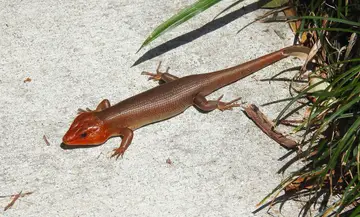
“Lizards are a common sight throughout South Carolina; however, there are only 12 native species.”
“The Mediterranean gecko (Hemidactylus turcicus) is a recent introduction”
“As of 2024, 445 species of birds have been documented in South Carolina.”
“South Carolina is home to approximately 101 native species of mammals”
“Nonnative species continue to be problematic for native reptile and amphibian populations in South Carolina. Feral hogs, red imported fire ants, Red-eared Sliders, and Argentine Black-and-white Tegus have been studied throughout the southeast and their negative impacts to native wildlife and habitats are well known.”
“This nonnative species has been released in South Carolina resulting in concerns about the genetic integrity of the Yellowbelly Slider”
“However, back in colonial times, South Carolina was also home to several additional species including the American Bison, Eastern Elk, Red Wolf, Gray Wolf, and Eastern Cougar.”
Sharks of South Carolina. SCDNR Marine Resources Division (C. H. Farmer III). 2004; checked November 3, 2026.Quoted passages (17)
“The sharks presented in this guide represent 13 families and 39 species.”
“Only dangerous to man if accidentally stepped on.”
“So sluggish that it can be easily approached by divers, however, this practice is unwise and dangerous as it could provoke an attack.”
“Considered potentially dangerous to swimmers and divers and has been implicated in attacks in other regions of the world.”
“Unquestionably very dangerous to man. … Known to attack and kill swimmers, surfers, and abalone divers in shallow waters in other regions. … It is well-documented that large white sharks off South Africa, the Farallon Islands near San Francisco, and elsewhere propel themselves completely clear of the surface of the water when attacking seals from below, attributing to the phrase ‘flying white sharks.’ Long been considered a prized game fish by anglers to the point that its numbers have been greatly reduced throughout the world.”
“One of the more dangerous species of sharks, however, due to its infrequent occurrence close to shore, the probability of attack on local swimmers is remote.”
“A dangerous shark known to attack stranded sailors far out at sea.”
“A very dangerous shark, especially when aroused.”
“A dangerous shark known to attack humans when sea disasters occur.”
“A dangerous shark because of its size and frequent occurrence in areas where people swim. … Numerous attacks have been attributed to the bull shark elsewhere with a few probably occurring in South Carolina waters.”
“Only dangerous when being handled.”
“Large adults are potentially dangerous to swimmers.”
“A potentially dangerous shark capable of attacking swimmers.”
“The skates and rays have pectoral fins that are connected to the head (not separated) and a more tapered, or even whip-like tail, often with venomous spines.”
“A fatal attack has not occurred in South Carolina for at least the past half century.”
“All sharks should be treated with caution and respect.”
“…found in South Carolina coastal waters during the winter.”
Widow Spiders in South Carolina (HGIC 2518). Clemson Cooperative Extension, Home & Garden Information Center. Published Sep 17, 2026; checked November 3, 2026.Quoted passages (3)
“All three types of widow spiders have venom that is toxic to people.”
“Brown widow spiders are not native to the U.S. but can now be found throughout South Carolina, with higher densities in the coastal regions.”
“There are three species of widow spiders in South Carolina: the southern black widow (Latrodectus mactans), the northern black widow (L. variolus), and the brown widow (L. geometricus).”
“As an invasive species, they do not have natural enemies.”
Stinging Caterpillars (HGIC 2482). Clemson University Cooperative Extension, Home & Garden Information Center. Published Feb 6, 2001; checked November 3, 2026.Quoted passages (1)
“Some species have hollow, stinging hairs with poison glands at the base. These special defensive hairs (called urticating setae) can puncture the skin and release venom.”
Paper Wasps (HGIC 2481). Clemson University Cooperative Extension, Home & Garden Information Center. Published Dec 6, 2002; checked November 3, 2026.Quoted passages (1)
“…they will sting if they feel threatened or provoked.”
Raccoon. South Carolina Department of Natural Resources. undated page; checked November 3, 2026.Quoted passages (1)
“Rabies limits numbers in some areas.”
Striped Skunk. South Carolina Department of Natural Resources. undated page; checked November 3, 2026.Quoted passages (1)
“Skunks are highly susceptible to highway mortality, and are affected by a variety of diseases including rabies, distemper, and tularemia.”
Spotted Skunk. South Carolina Department of Natural Resources. undated page; checked November 3, 2026.Quoted passages (1)
“Skunks are highly susceptible to highway mortality, and are affected by a variety of diseases including rabies, distemper, and tularemia.”
Red Fox. South Carolina Department of Natural Resources. undated page; checked November 3, 2026.Quoted passages (1)
“Red foxes are also subject to rabies and predation.”
Sea Science: Jellyfish. South Carolina Department of Natural Resources. undated page; checked November 3, 2026.Quoted passages (5)
“Cannonball jellyfish are the most common jellyfish in our area, and fortunately, one of the least venomous.”
“…the sea wasp is the most venomous jellyfish inhabiting our waters.”
“Though they visit our coast only infrequently, swimmers should learn to identify these highly venomous creatures.”
“The moon jelly is only slightly venomous.”
“Considered moderate to severe, sea nettle stings are similar to those of the lion’s mane.”
Restricted Nonnative Wildlife. South Carolina Department of Natural Resources. page footer 2020; checked November 3, 2026.Quoted passages (1)
“Black and White Tegu (Salvator merianae) and, as used in this regulation, their hybrids (listing date: May 28, 2021)”
“In South Carolina, cottonmouths typically live in the sandhills and coastal plain regions, but do not enter the piedmont nor mountain regions of the state.”
“The best advice is to try to remain calm, and get to a hospital as soon as possible. Call 911 if that is appropriate”
Venomous Spiders at Work. CDC/NIOSH. page dated Sept. 28, 2026; checked November 3, 2026.Quoted passages (1)
“In the midwestern and southern United States.”
Black Bear. South Carolina Department of Natural Resources. undated page; checked November 3, 2026.Quoted passages (1)
“In South Carolina, there are two resident populations of black bears, one in the mountains and upper piedmont and one in the coastal plain.”
Coyote. South Carolina Department of Natural Resources. undated page; checked November 3, 2026.Quoted passages (1)
“Coyotes first appeared in the upstate in 1978, they are now present in all counties of South Carolina.”
Wild Hog. South Carolina Department of Natural Resources. undated page; checked November 3, 2026.Quoted passages (1)
“By 2008 wild pigs were documented in all 46 counties”
Manatees in South Carolina. South Carolina Department of Natural Resources. undated page; checked November 3, 2026.Quoted passages (2)
“Every year, manatees migrate from Florida to South Carolina (S.C.) waters during the spring and stay through fall with peak sightings taking place during the summer.”
“…during the spring and stay through fall with peak sightings taking place during the summer.”
Black and White Tegu. South Carolina Department of Natural Resources. undated page; checked November 3, 2026.Quoted passages (1)
“This species has recently been documented in numerous counties in South Carolina”
Snakebite Fact Sheet. University of Georgia Savannah River Ecology Laboratory, posted by SCDNR. undated page; checked November 3, 2026.Quoted passages (1)
“If you see an unknown species of snake, it is best to treat it as venomous and leave it alone if at all possible.”
Upstate Snakes: General Information. South Carolina Department of Natural Resources. page footer 2020; checked November 3, 2026.Quoted passages (1)
“…most active in the warmer months (April thru October)”
Sea Science: Sea Turtles. South Carolina Department of Natural Resources. undated page; checked November 3, 2026.Quoted passages (1)
“…can be found in South Carolina's near shore waters April through November or nesting on our beaches from May through October.”
Alligators of South Carolina and Georgia. University of Georgia Savannah River Ecology Laboratory (linked by SCDNR as its species information). undated page; checked November 3, 2026.Quoted passages (1)
“Alligators are active year-round, but activity peaks during the warmer months in Georgia and South Carolina.”
Velvet Ants (HGIC 2485). Clemson University Cooperative Extension, Home & Garden Information Center. Published Jan 6, 1998; checked November 3, 2026.Quoted passages (1)
“In South Carolina, they are common from about May through September.”