Invasive and nonnative animals in South Carolina
Last checked November 3, 2026 against official sources.
On this page
- Restricted Nonnative Wildlife
- SC State Wildlife Action Plan 2025, Chapter 4: Overview of the Taxonomic Groups
- Fire Ant Management in the Home Lawn (HGIC 2501)
- Lizards in South Carolina
- Widow Spiders in South Carolina (HGIC 2518)
- NAS species list: Amphibians, South Carolina
- USGS established records
- How to report
- Sources
8 nonnative animals are named on 6 official lists for South Carolina: “Restricted Nonnative Wildlife” (South Carolina Department of Natural Resources), “SC State Wildlife Action Plan 2025, Chapter 4: Overview of the Taxonomic Groups” (South Carolina Department of Natural Resources), “Fire Ant Management in the Home Lawn (HGIC 2501)” (Clemson University Cooperative Extension, Home & Garden Information Center), “Lizards in South Carolina” (South Carolina Department of Natural Resources), “Widow Spiders in South Carolina (HGIC 2518)” (Clemson Cooperative Extension, Home & Garden Information Center) and “NAS species list: Amphibians, South Carolina” (US Geological Survey, Nonindigenous Aquatic Species Database).
The USGS Nonindigenous Aquatic Species database records an established population in South Carolina for 3 nonnative animals in the groups this guide covers.
To report a sighting, see how to report.
Being on a list of nonnative species does not always mean an animal is harmful or established: each list below is described in its source's terms. A sighting of a listed animal is still worth reporting to the agency.
Restricted Nonnative Wildlife
South Carolina Department of Natural Resources, page footer 2020. 1 animal.
-
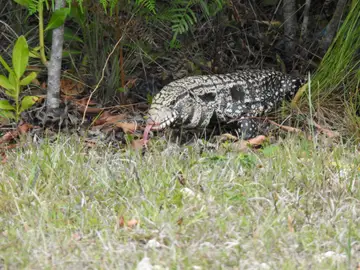
Photo: Andrew Durso · CC BY 4.0 · iNaturalist Argentine Black and White Tegu Salvator merianae
Documented in numerous SC counties (SCDNR tegu page) South Carolina Department of Natural Resources
SC State Wildlife Action Plan 2025, Chapter 4: Overview of the Taxonomic Groups
South Carolina Department of Natural Resources, 2025. 2 animals.
-
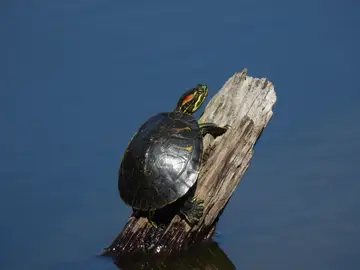
Photo: ncb1221 · CC BY 4.0 · iNaturalist Red-eared Slider Trachemys scripta elegans
-
Wild Pig / Wild Hog
All 46 counties by 2008 (sc-dnr-hog: "By 2008 wild pigs were documented in all 46 counties") South Carolina Department of Natural Resources
Fire Ant Management in the Home Lawn (HGIC 2501)
Clemson University Cooperative Extension, Home & Garden Information Center, Updated Jun 6, 2011. 1 animal.
-
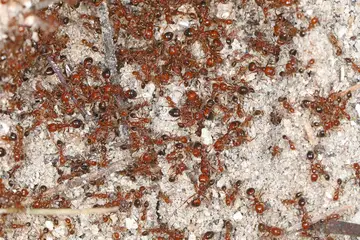
Photo: Judy Gallagher · CC BY 2.0 · Wikimedia Commons Red Imported Fire Ant

Lizards in South Carolina
South Carolina Department of Natural Resources, page footer 2020. 1 animal.
-
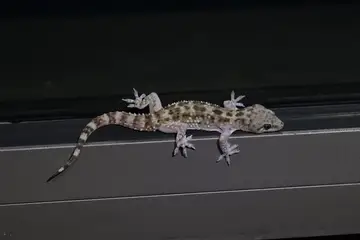
Photo: Stephanie Tran · CC BY 4.0 · iNaturalist Mediterranean Gecko Hemidactylus turcicus
Most commonly observed in Columbia and Charleston South Carolina Department of Natural Resources
Widow Spiders in South Carolina (HGIC 2518)
Clemson Cooperative Extension, Home & Garden Information Center, Published Sep 17, 2026. 1 animal.
-
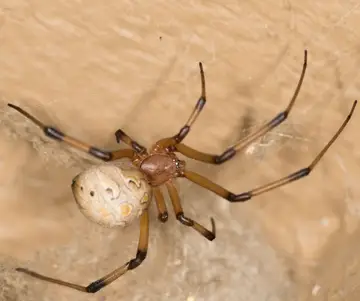
Photo: Jesse Rorabaugh · CC0 1.0 · iNaturalist Brown Widow Latrodectus geometricus
Throughout South Carolina, higher densities in coastal regions Clemson Cooperative Extension, Home & Garden Information Center
NAS species list: Amphibians, South Carolina
U.S. Geological Survey, Nonindigenous Aquatic Species Database, database queried November 3, 2026. 2 animals.
-
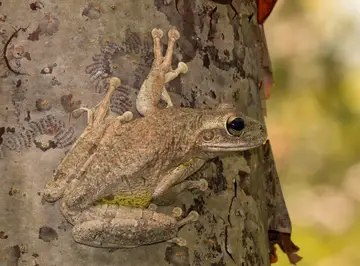
Photo: Charles J. Sharp · CC BY-SA 4.0 · Wikimedia Commons · resized Cuban Treefrog Osteopilus septentrionalis
USGS NAS state list; occurrence record, establishment not stated; USGS NAS labels it "Exotic" for SC; not called invasive by an SC agency US Geological Survey, Nonindigenous Aquatic Species Database
-
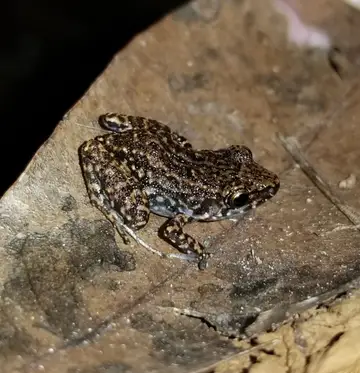
Photo: Rachel Crane · CC BY 4.0 · iNaturalist Greenhouse Frog Eleutherodactylus planirostris
USGS NAS state list; occurrence record, establishment not stated; USGS NAS labels it "Exotic" for SC; not called invasive by an SC agency US Geological Survey, Nonindigenous Aquatic Species Database

Established in South Carolina, per USGS records
The U.S. Geological Survey's Nonindigenous Aquatic Species (NAS) database tracks nonnative aquatic animals. These have at least one record with the status "established" in South Carolina, which USGS defines as a population showing evidence of reproduction and overwinter survival.
| Animal | Group | First record | Latest record | Counties |
|---|---|---|---|---|
| Cuban Treefrog Osteopilus septentrionalis | Frogs and Toads | 2017 | 2025 | 11 |
| Greenhouse Frog Eleutherodactylus planirostris | Frogs and Toads | 2015 | 2024 | 2 |
| Lionfish Pterois volitans/miles | Sharks and Marine Life | 2000 | 2020 | 3 |
Source: U.S. Geological Survey. [2026]. Nonindigenous Aquatic Species Database. Gainesville, Florida. Accessed [11/3/2026]. "Native Transplant" animals are native elsewhere in the US but not in South Carolina.
How to report a sighting in South Carolina
Alligator and other wildlife emergencies, injured manatees: SCDNR Operation Game Thief 1-800-922-5431. Herp questions: [email protected], (843) 527-8448. SCDNR does not remove nuisance snakes; it keeps a list of wildlife removal specialists. South Carolina Department of Natural Resources
Do not try to catch or handle the animal. A photo taken from a safe distance, the place and the date help the agency.
Sources
- Restricted Nonnative Wildlife. South Carolina Department of Natural Resources. page footer 2020; checked November 3, 2026.
Quoted passages (1)
“Black and White Tegu (Salvator merianae) and, as used in this regulation, their hybrids (listing date: May 28, 2021)”
- SC State Wildlife Action Plan 2025, Chapter 4: Overview of the Taxonomic Groups. South Carolina Department of Natural Resources. 2025; checked November 3, 2026.
Quoted passages (2)
“This nonnative species has been released in South Carolina resulting in concerns about the genetic integrity of the Yellowbelly Slider”
“Nonnative species continue to be problematic for native reptile and amphibian populations in South Carolina. Feral hogs, red imported fire ants, Red-eared Sliders, and Argentine Black-and-white Tegus have been studied throughout the southeast and their negative impacts to native wildlife and habitats are well known.”
- Lizards in South Carolina. South Carolina Department of Natural Resources. page footer 2020; checked November 3, 2026.
Quoted passages (1)
“The Mediterranean gecko (Hemidactylus turcicus) is a recent introduction”
- Widow Spiders in South Carolina (HGIC 2518). Clemson Cooperative Extension, Home & Garden Information Center. Published Sep 17, 2026; checked November 3, 2026.
Quoted passages (1)
“Brown widow spiders are not native to the U.S. but can now be found throughout South Carolina, with higher densities in the coastal regions.”
- NAS species list: Amphibians, South Carolina. U.S. Geological Survey, Nonindigenous Aquatic Species Database. database queried November 3, 2026; checked November 3, 2026.
- Fire Ant Management in the Home Lawn (HGIC 2501). Clemson University Cooperative Extension, Home & Garden Information Center. Updated Jun 6, 2011; checked November 3, 2026.
Quoted passages (1)
“As an invasive species, they do not have natural enemies.”
- American Alligator. South Carolina Department of Natural Resources. undated page; checked November 3, 2026.
Quoted passages (1)
“For alligator and other wildlife emergencies, contact Operation Game Thief: 1-800-922-5431”
- U.S. Geological Survey. [2026]. Nonindigenous Aquatic Species Database. Gainesville, Florida. Accessed [11/3/2026].