States Wildlife

South Carolina Lizards: Identification Guide With Pictures

Last checked November 3, 2026 against official sources.

On this page
  1. All 15 lizards
  2. Lookalikes
  3. When they are active
  4. How to report
  5. About this list
  6. Sources

South Carolina Department of Natural Resources: Lizards are a common sight throughout South Carolina; however, there are only 12 native species.

This page lists 15 lizards. 3 are nonnative. South Carolina Department of Natural Resources gives a total of 12; the 15 here are the lizards official sources name one by one.

All 15 lizards

From A to Z.

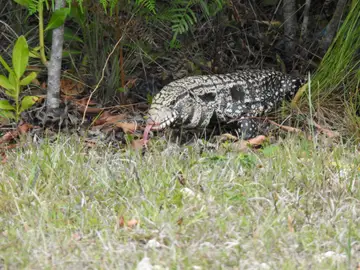
Argentine Black and White Tegu
Photo: Andrew Durso · CC BY 4.0 · iNaturalist

Argentine Black and White Tegu

Salvator merianae

Not stated Invasive

Venom
No official source we use states whether this animal is venomous. That does not mean it is harmless: do not handle it.
Size
FWC: can reach nearly 5 feet. UF/IFAS: 4 to 5 feet and as much as 10 pounds. Georgia DNR: up to 4 feet, with adults documented in the wild in Georgia averaging slightly less than 2 feet.
How to recognize it
  • Head and neck much thicker than a Nile monitor's; fleshy, forked red tongue
  • Rarely climbs more than a few feet off the ground; a strong swimmer
Where in South Carolina
Documented in numerous counties South Carolina Department of Natural Resources
Conservation
Restricted Nonnative Wildlife (listing date May 28, 2021)

Full Argentine Black and White Tegu guide

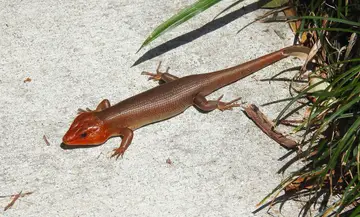
Broadhead Skink
Photo: Laura Gaudette · CC BY 4.0 · iNaturalist

Broadhead Skink

Plestiodon laticeps

Not stated

Venom
No official source we use states whether this animal is venomous. That does not mean it is harmless: do not handle it.
Size
About 6.5 to 12.75 inches in total length. Oklahoma gives about 12 inches for large adults and SREL up to 13 inches. Males are larger than females.
How to recognize it
  • Large, wide head; breeding males have swollen orange-red jowls.
  • Smooth, glass-like scales, short legs and a stocky body.
  • Upper-lip scales separate it from five-lined skinks: Maryland, Tennessee and North Carolina count five labial scales between the nostril and the eye rather than four. Oklahoma and Missouri count differently, around 8 or 9 in the full lip row.
78 records by month.
What the sources say

Habitat: They are found throughout the southeast from cypress swamps and moist hardwood forest to pine stands. (University of Georgia Savannah River Ecology Laboratory)

Full Broadhead Skink guide

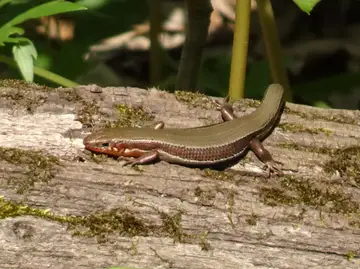
Coal Skink
Photo: Thomas Koffel · CC BY 4.0 · iNaturalist

Coal Skink

Eumeces [Plestiodon] anthracinus

Not stated

Venom
No official source we use states whether this animal is venomous. That does not mean it is harmless: do not handle it.
Where in South Carolina
Within our region, they are only found in mountainous areas of northern Georgia and western South Carolina and in a small distinct area of western Georgia. University of Georgia Savannah River Ecology Laboratory
Conservation
State: Non-Game Species in Need of Management (SCDNR FAQ)
What the sources say

Habitat: Within this region, they are found most often in moist forests and are usually associated with stream margins. (University of Georgia Savannah River Ecology Laboratory)

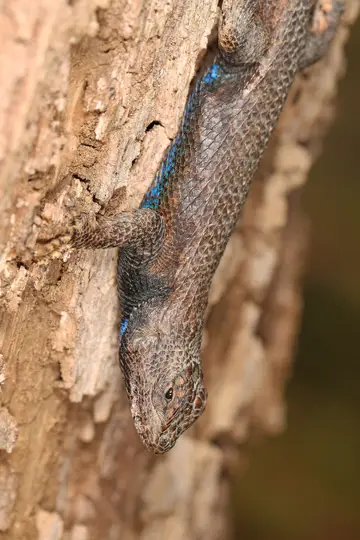
Eastern Fence Lizard
Photo: Judy Gallagher · CC BY 2.0 · Wikimedia Commons

Eastern Fence Lizard

Sceloporus undulatus

Not stated

Venom
No official source we use states whether this animal is venomous. That does not mean it is harmless: do not handle it.
Size
About 4 to 7.25 inches total length (SREL, Ohio DNR); Illinois gives up to about 19 cm (7.5 in).
How to recognize it
  • Rough, spiny, keeled scales: the only native lizard in North Carolina (and in Georgia and South Carolina) that looks rough or spiny
  • Often on fences, trees, logs, stumps, rocks and buildings; dashes up a tree and keeps to the far side when approached
Where in South Carolina
Fence lizards range across the Southeast and are common in many habitats from the mountains to the coast. University of Georgia Savannah River Ecology Laboratory
101 records by month.
What the sources say

Habitat: While seldom found far from trees, fence lizards are most common in dry, open forests, particularly if there are abundant logs and stumps where they may hide. (University of Georgia Savannah River Ecology Laboratory)

Full Eastern Fence Lizard guide

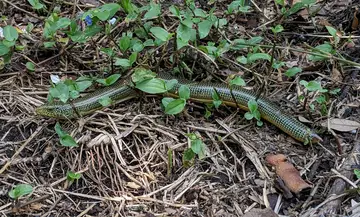
Eastern Glass Lizard
Photo: Semiv87 · CC BY-SA 4.0 · Wikimedia Commons · resized

Eastern Glass Lizard

Ophisaurus ventralis

Not stated

Venom
No official source we use states whether this animal is venomous. That does not mean it is harmless: do not handle it.
Where in South Carolina
They are primarily found throughout the Coastal Plain and in the Piedmont. University of Georgia Savannah River Ecology Laboratory
37 records by month.
What the sources say

Habitat: They are normally found in pine flatwoods but can be found in wetter habitats such as the edges of freshwater wetlands, salt marshes, and beaches. (University of Georgia Savannah River Ecology Laboratory)

No confirmed photo of Five-lined Skink

Five-lined Skink

Eumeces [Plestiodon] fasciatus

Not stated

Venom
No official source we use states whether this animal is venomous. That does not mean it is harmless: do not handle it.
Size
5 to 8.5 inches
How to recognize it
  • Smooth, shiny scales
  • Enlarged middle row of scales under the tail (separates it from the southeastern five-lined skink)
  • Tail breaks off easily and twitches to distract predators; it grows back shorter
Where in South Carolina
Five-lined skinks range throughout Georgia and South Carolina and are equally at home on the ground and in trees. University of Georgia Savannah River Ecology Laboratory
83 records by month.
What the sources say

Habitat: Five-lined skinks may be found in almost any habitat, but are most common in wooded areas with an abundance of fallen trees and stumps to hide in. (University of Georgia Savannah River Ecology Laboratory)

Full Five-lined Skink guide

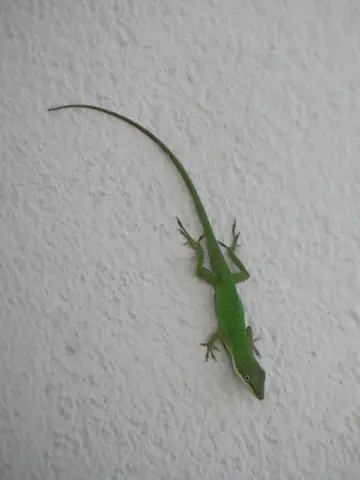
Green Anole
Photo: Donald Hobern from Copenhagen, Denmark · CC BY 2.0 · Wikimedia Commons

Green Anole

Anolis carolinensis

Not stated

Venom
No official source we use states whether this animal is venomous. That does not mean it is harmless: do not handle it.
Size
5 to 8 inches (12.5 to 20 cm) including the tail; the tail can be twice as long as the body.
How to recognize it
  • Males have a pink throat fan (dewlap); TWRA says females have a white throat.
  • Sticky toe pads for climbing walls, fences, shrubs and trees.
  • Can change color between green and brown.
Where in South Carolina
The green anole is a common lizard throughout Georgia and South Carolina, but is absent from some areas in the mountains. University of Georgia Savannah River Ecology Laboratory
624 records by month.

Full Green Anole guide

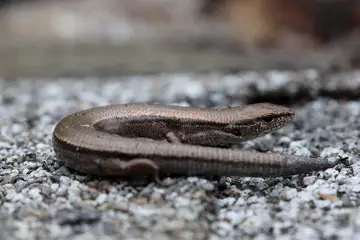
Ground Skink
Photo: Rstanton13 · CC BY-SA 4.0 · Wikimedia Commons · resized

Ground Skink

Scincella lateralis

Not stated

Venom
No official source we use states whether this animal is venomous. That does not mean it is harmless: do not handle it.
Where in South Carolina
Ground skinks range throughout Georgia and South Carolina and are abundant in all but the wettest habitats. University of Georgia Savannah River Ecology Laboratory
61 records by month.
What the sources say

Habitat: They prefer areas with loose soil and abundant leaf litter and are often found beneath logs, boards, and other cover objects. (University of Georgia Savannah River Ecology Laboratory)

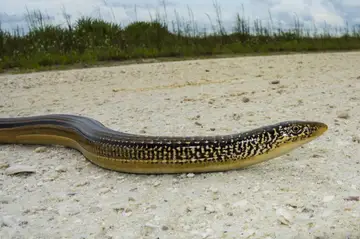
Island Glass Lizard
Photo: Glenn Bartolotti · CC BY-SA 4.0 · Wikimedia Commons · resized

Island Glass Lizard

Ophisaurus compressus

Not stated

Venom
No official source we use states whether this animal is venomous. That does not mean it is harmless: do not handle it.
Where in South Carolina
Island glass lizards are found along the coast of South Carolina in coastal and southern Georgia. University of Georgia Savannah River Ecology Laboratory
What the sources say

Habitat: Like the slender glass lizard, this species tend to prefer drier habitats than eastern glass lizards and is most common in sandy scrub habitats. (University of Georgia Savannah River Ecology Laboratory)

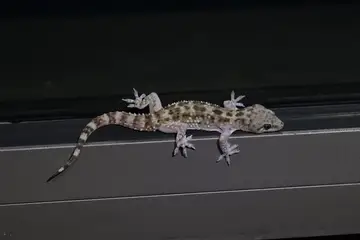
Mediterranean Gecko
Photo: Stephanie Tran · CC BY 4.0 · iNaturalist

Mediterranean Gecko

Hemidactylus turcicus

Not stated Nonnative

Venom
No official source we use states whether this animal is venomous. That does not mean it is harmless: do not handle it.
Size
Adults about 4 to 5 inches long in total (Missouri gives 3.9 to 5.0 inches); up to 2.4 inches from snout to vent.
How to recognize it
  • Warty skin, large bulging eyes with vertical pupils, and wide toe pads for climbing.
  • Large eyes without eyelids, covered by a clear scale.
  • Unlike any native lizard in Georgia and South Carolina, geckos have sticky toe pads, vertical pupils and lidless eyes.
Where in South Carolina
Most commonly observed in Columbia and Charleston South Carolina Department of Natural Resources
37 records by month.

Full Mediterranean Gecko guide

No confirmed photo of Mimic Glass Lizard

Mimic Glass Lizard

Ophisaurus mimicus

Not stated

Venom
No official source we use states whether this animal is venomous. That does not mean it is harmless: do not handle it.
Where in South Carolina
Mimic glass lizards are found along the coast of South Carolina and in coastal and southern Georgia. University of Georgia Savannah River Ecology Laboratory
What the sources say

Habitat: Like the slender glass lizard, this species tends to prefer dry habitats and is most common in longleaf pine flatwoods. (University of Georgia Savannah River Ecology Laboratory)

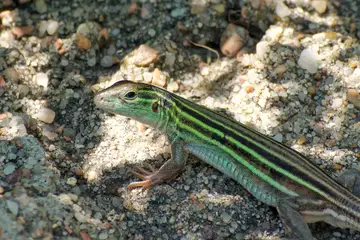
Six-lined Racerunner
Photo: Joe Brewer · CC BY 4.0 · iNaturalist

Six-lined Racerunner

Cnemidophorus [Aspidoscelis] sexlineatus

Not stated

Venom
No official source we use states whether this animal is venomous. That does not mean it is harmless: do not handle it.
32 records by month.
What the sources say

Habitat: They prefer open and dry habitats from coastal sand dunes, longleaf pine, and some agricultural fields and forest clearcuts. (University of Georgia Savannah River Ecology Laboratory)

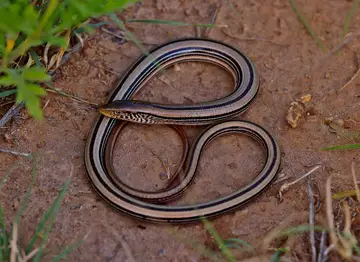
Slender Glass Lizard
Photo: Peter Paplanus from St. Louis, Missouri · CC BY 4.0 · Wikimedia Commons

Slender Glass Lizard

Ophisaurus attenuatus

Not stated

Venom
No official source we use states whether this animal is venomous. That does not mean it is harmless: do not handle it.
Where in South Carolina
Slender glass lizards are found throughout Georgia and South Carolina but are most common in sandy areas of the Coastal Plain. University of Georgia Savannah River Ecology Laboratory
What the sources say

Habitat: Slender glass lizards tend to prefer drier habitats than eastern glass lizards and are common in old field and sandhill habitats. (University of Georgia Savannah River Ecology Laboratory)

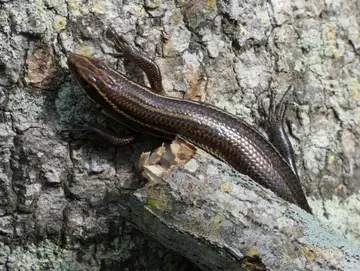
Southeastern Five-lined Skink
Photo: Kai Squires · CC BY 4.0 · iNaturalist

Southeastern Five-lined Skink

Eumeces [Plestiodon] inexpectatus

Not stated

Venom
No official source we use states whether this animal is venomous. That does not mean it is harmless: do not handle it.
Where in South Carolina
Southeastern five-lined skinks range throughout South Carolina and all but extreme northern Georgia. University of Georgia Savannah River Ecology Laboratory
What the sources say

Habitat: This species may be found on the ground or in trees and is often common in dry, wooded habitats where there are an abundance of fallen trees and stumps to hide in. (University of Georgia Savannah River Ecology Laboratory)

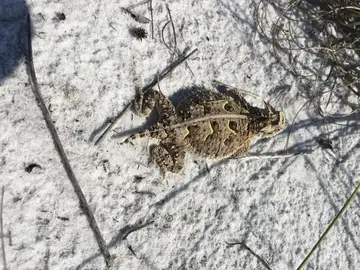
Texas Horned Lizard
Photo: Gabriel Campbell-Martinez · CC BY 4.0 · iNaturalist

Texas Horned Lizard

Phrynosoma cornutum

Not stated Nonnative

Venom
No official source we use states whether this animal is venomous. That does not mean it is harmless: do not handle it.
Where in South Carolina
Most established populations in South Carolina and Georgia are near the coast where sand dunes mimic their natural desert habitat. University of Georgia Savannah River Ecology Laboratory

Lizards people confuse

Broad-headed skink or Common five-lined skink?

Broad-headed skink
Photo: Laura Gaudette · CC BY 4.0 · iNaturalist

Broad-headed skink Not stated

No confirmed photo of Common five-lined skink

Common five-lined skink Not stated

Young and females are very similar. Missouri: five-lined skinks do not grow as large, to only 5 to 8.75 inches. Illinois: the only reliable way to tell them apart is by counting lip scales, which usually requires a hand lens.

Broad-headed skink or Argentine black and white tegu (invasive)?

Broad-headed skink
Photo: Laura Gaudette · CC BY 4.0 · iNaturalist

Broad-headed skink Not stated

Georgia DNR: tegus might be confused with native reptiles such as broadhead skinks, although even adult native lizards would be no larger than a hatchling tegu.

Argentine Black and White Tegu or Gold Tegu?

Argentine Black and White Tegu
Photo: Andrew Durso · CC BY 4.0 · iNaturalist

Argentine Black and White Tegu Not stated

No confirmed photo of Gold Tegu

Gold Tegu Not stated

UF/IFAS: black-and-white tegus have a grayish body with dark bands and many light spots; other tegus are marked similarly but their base color varies, and the gold tegu has a yellow-tan base color.

Photos show typical adults; individuals vary. Never get close to compare.

When lizards are active in South Carolina

Records of lizards in South Carolina peak in March to July. They show when people record lizards, not how many there are (about month bars).

1,107 records of lizards in South Carolina by month (GBIF, CC0 and CC BY records).

How to report

Alligator and other wildlife emergencies, injured manatees: SCDNR Operation Game Thief 1-800-922-5431. Herp questions: [email protected], (843) 527-8448. SCDNR does not remove nuisance snakes; it keeps a list of wildlife removal specialists. South Carolina Department of Natural Resources

About this list

The species list comes from Lizards of South Carolina and Georgia (University of Georgia Savannah River Ecology Laboratory (linked by SCDNR as its species information), undated web page; retrieved 2026-11-03). 15 more entries come from other official sources named on each card.

Venom labels come only from official sources and link to them; "Not stated" never means harmless. How labels work.

"Nonnative" and "Invasive" follow the wording of the source list. See invasive species in South Carolina.

Want a paper copy? Print the South Carolina lizards ID chart.

Sources

  1. Reptiles and Amphibians of SC. South Carolina Department of Natural Resources. page footer 2020; checked November 3, 2026.
  2. Lizards of South Carolina and Georgia. University of Georgia Savannah River Ecology Laboratory (linked by SCDNR as its species information). undated page; checked November 3, 2026.
  3. Lizards in South Carolina. South Carolina Department of Natural Resources. page footer 2020; checked November 3, 2026.
    Quoted passages (1)
    “Lizards are a common sight throughout South Carolina; however, there are only 12 native species.”
  4. Broadhead Skink (Plestiodon laticeps). University of Georgia Savannah River Ecology Laboratory (linked by SCDNR as its species information). undated page; checked November 3, 2026.
  5. Coal Skink (Eumeces [Plestiodon] anthracinus). University of Georgia Savannah River Ecology Laboratory (linked by SCDNR as its species information). undated page; checked November 3, 2026.
  6. Eastern Fence Lizard (Sceloporus undulatus). University of Georgia Savannah River Ecology Laboratory (linked by SCDNR as its species information). undated page; checked November 3, 2026.
    Quoted passages (2)
    “When pursued, the fence lizard will stay on the opposite side of the tree from the predator, in the same fashion as a squirrel.”
    “Description: 4 – 7.25 in (10 – 18.5 cm).”
  7. Eastern Glass Lizard (Ophisaurus ventralis). University of Georgia Savannah River Ecology Laboratory (linked by SCDNR as its species information). undated page; checked November 3, 2026.
  8. Five-lined Skink (Eumeces [Plestiodon] fasciatus). University of Georgia Savannah River Ecology Laboratory (linked by SCDNR as its species information). undated page; checked November 3, 2026.
  9. Green Anole (Anolis carolinensis). University of Georgia Savannah River Ecology Laboratory (linked by SCDNR as its species information). undated page; checked November 3, 2026.
  10. Ground Skink (Scincella lateralis). University of Georgia Savannah River Ecology Laboratory (linked by SCDNR as its species information). undated page; checked November 3, 2026.
  11. Island Glass Lizard (Ophisaurus compressus). University of Georgia Savannah River Ecology Laboratory (linked by SCDNR as its species information). undated page; checked November 3, 2026.
  12. Mimic Glass Lizard (Ophisaurus mimicus). University of Georgia Savannah River Ecology Laboratory (linked by SCDNR as its species information). undated page; checked November 3, 2026.
  13. Six-lined Racerunner (Cnemidophorus [Aspidoscelis] sexlineatus). University of Georgia Savannah River Ecology Laboratory (linked by SCDNR as its species information). undated page; checked November 3, 2026.
  14. Slender Glass Lizard (Ophisaurus attenuatus). University of Georgia Savannah River Ecology Laboratory (linked by SCDNR as its species information). undated page; checked November 3, 2026.
  15. Southeastern Five-lined Skink (Eumeces [Plestiodon] inexpectatus). University of Georgia Savannah River Ecology Laboratory (linked by SCDNR as its species information). undated page; checked November 3, 2026.
  16. Texas Horned Lizard (Phrynosoma cornutum) – Introduced. University of Georgia Savannah River Ecology Laboratory (linked by SCDNR as its species information). undated page; checked November 3, 2026.
  17. Black and White Tegu. South Carolina Department of Natural Resources. undated page; checked November 3, 2026.
  18. American Alligator. South Carolina Department of Natural Resources. undated page; checked November 3, 2026.
    Quoted passages (1)
    “For alligator and other wildlife emergencies, contact Operation Game Thief: 1-800-922-5431”
  19. GBIF.org occurrence records, human observations licensed CC0 1.0 or CC BY 4.0 only, accessed November 3, 2026. The datasets behind these counts are listed on our Sources page.