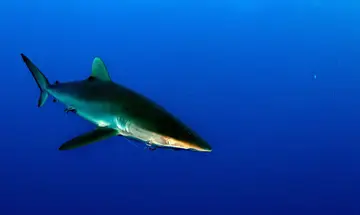
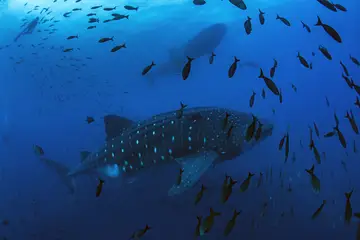
SCDNR Marine Resources Division: The sharks presented in this guide represent 13 families and 39 species.
This page lists 62 sharks, rays and other marine animals: 54 from SCDNR Marine Resources Division's Sharks of South Carolina and 8 named in other official sources.
4 are venomous by official accounts. SCDNR Marine Resources Division gives a total of 39; the 62 here are the sharks, rays and other marine animals official sources name one by one.
Which sharks, rays and other marine animals can hurt you
Official sources single out these sharks, rays and other marine animals in South Carolina, in their own words:
Shark. “So sluggish that it can be easily approached by divers, however, this practice is unwise and dangerous as it could provoke an attack.” SCDNR Marine Resources Division
Shark. “Considered potentially dangerous to swimmers and divers and has been implicated in attacks in other regions of the world.” SCDNR Marine Resources Division
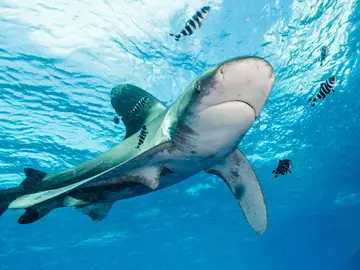
Shark. “Unquestionably very dangerous to man. … Known to attack and kill swimmers, surfers, and abalone divers in shallow waters in other regions. … It is well-documented that large white sharks off South Africa, the Farallon Islands near San Francisco, and elsewhere …” SCDNR Marine Resources Division
Shark. “One of the more dangerous species of sharks, however, due to its infrequent occurrence close to shore, the probability of attack on local swimmers is remote.” SCDNR Marine Resources Division
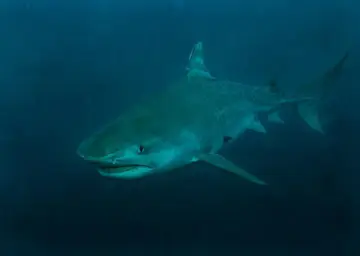
Shark. “A dangerous shark because of its size and frequent occurrence in areas where people swim. … Numerous attacks have been attributed to the bull shark elsewhere with a few probably occurring in South Carolina waters.” SCDNR Marine Resources Division
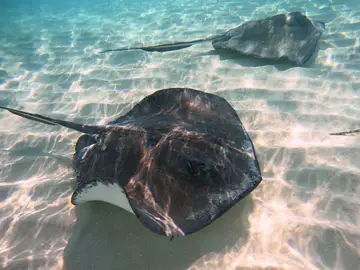
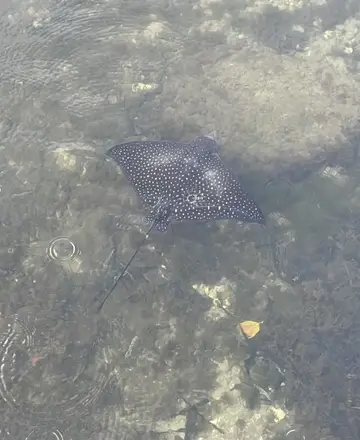
Venomous spines. “The skates and rays have pectoral fins that are connected to the head (not separated) and a more tapered, or even whip-like tail, often with venomous spines.” SCDNR Marine Resources Division
All 62 sharks, rays and other marine animals
Venomous species first, then A to Z. Do not handle them.
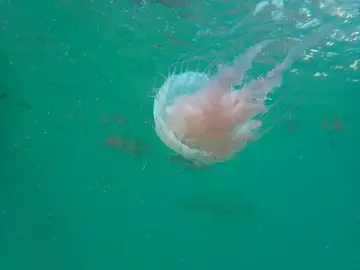
Venom: “Cannonball jellyfish are the most common jellyfish in our area, and fortunately, one of the least venomous.” (South Carolina Department of Natural Resources)
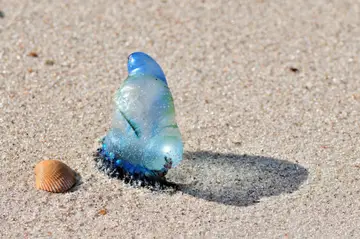
Venom: “Though they visit our coast only infrequently, swimmers should learn to identify these highly venomous creatures.” (South Carolina Department of Natural Resources)
No official source we use states whether this animal is venomous. That does not mean it is harmless: do not handle it.
What the sources say
Habitat: During the summer months, occurs abundantly in South Carolina along beaches and in sounds, inlets, rivers, and estuaries. (SCDNR Marine Resources Division)
No confirmed photo of Broadband dogfish
Broadband dogfish
Etmopterus gracilispinis
Not stated
Venom
No official source we use states whether this animal is venomous. That does not mean it is harmless: do not handle it.
No official source we use states whether this animal is venomous. That does not mean it is harmless: do not handle it.
Danger to people
“A dangerous shark because of its size and frequent occurrence in areas where people swim. … Numerous attacks have been attributed to the bull shark elsewhere with a few probably occurring in South …” SCDNR Marine Resources Division
Size
Reported maximum varies by source: about 11 ft (Alabama), over 10 ft with a 6 to 8 ft average (South Carolina), about 13 ft (Florida Museum).
How to recognize it
Very short, broadly rounded snout
Stout, heavy body
No ridge between the dorsal fins
What the sources say
Habitat: A rather sluggish, bottom-dwelling species that occurs abundantly in South Carolina coastal waters and offshore. (SCDNR Marine Resources Division)
No official source we use states whether this animal is venomous. That does not mean it is harmless: do not handle it.
No confirmed photo of Lion's Mane
Lion's Mane
Not stated
Venom
No official source we use states whether this animal is venomous. That does not mean it is harmless: do not handle it.
No confirmed photo of Longfin mako
Longfin mako
Isurus paucus
Not stated
Venom
No official source we use states whether this animal is venomous. That does not mean it is harmless: do not handle it.
What the sources say
Habitat: A pelagic shark restricted to waters well offshore. (SCDNR Marine Resources Division)
No confirmed photo of Mushroom Jelly
Mushroom Jelly
Not stated
Venom
No official source we use states whether this animal is venomous. That does not mean it is harmless: do not handle it.
No confirmed photo of Night shark
Night shark
Carcharhinus signatus
Not stated
Venom
No official source we use states whether this animal is venomous. That does not mean it is harmless: do not handle it.
What the sources say
Habitat: The presence of greenish eyes indicates this is a deep water species, usually found in depths of more than 600 feet. (SCDNR Marine Resources Division)
No official source we use states whether this animal is venomous. That does not mean it is harmless: do not handle it.
Danger to people
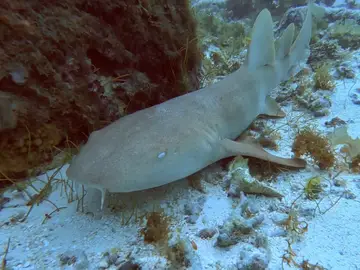
“So sluggish that it can be easily approached by divers, however, this practice is unwise and dangerous as it could provoke an attack.” SCDNR Marine Resources Division
Size
Usually 4 to 8 ft (SCDNR); adults average 7.5 to 8 ft and over 200 lb (Florida Museum); maximum about 9 ft (FWC).
How to recognize it
A distinct, long barbel ('feeler') on each nostril, which no other shark has
First dorsal fin starts above the pelvic fins; both dorsal fins rounded
Small mouth near the tip of a very short, rounded snout
What the sources say
Habitat: A sluggish shark that lives primarily on or near the bottom usually in shallow coastal waters. (SCDNR Marine Resources Division)
No official source we use states whether this animal is venomous. That does not mean it is harmless: do not handle it.
Danger to people
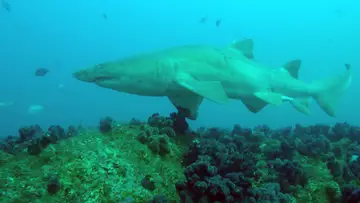
“Considered potentially dangerous to swimmers and divers and has been implicated in attacks in other regions of the world.” SCDNR Marine Resources Division
What the sources say
Habitat: A relatively sluggish shark most often found in shallow coastal waters but also well offshore at considerable depths. (SCDNR Marine Resources Division)
No confirmed photo of Sandbar shark
Sandbar shark
Carcharhinus plumbeus
Not stated
Venom
No official source we use states whether this animal is venomous. That does not mean it is harmless: do not handle it.
What the sources say
Habitat: One of the most abundant sharks inhabiting the shallow coastal waters and estuaries of South Carolina from May through September. (SCDNR Marine Resources Division)
No official source we use states whether this animal is venomous. That does not mean it is harmless: do not handle it.
Danger to people
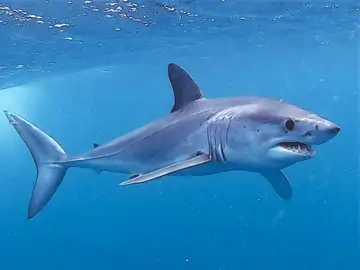
“One of the more dangerous species of sharks, however, due to its infrequent occurrence close to shore, the probability of attack on local swimmers is remote.” SCDNR Marine Resources Division
Size
Up to about 13 ft (NOAA, Atlantic; Florida Museum); Pacific: up to 12 ft, averaging 6 to 7 ft (NOAA). SCDNR: averages 5 to 8 ft.
How to recognize it
Very pointed snout and long gill slits
Crescent-shaped (lunate) tail with a single strong keel on each side of the tail base
Long, slender, smooth-edged teeth, visible even with the mouth closed
What the sources say
Habitat: An extremely active and fast-swimming pelagic shark restricted to waters well offshore. (SCDNR Marine Resources Division)
No official source we use states whether this animal is venomous. That does not mean it is harmless: do not handle it.
Danger to people
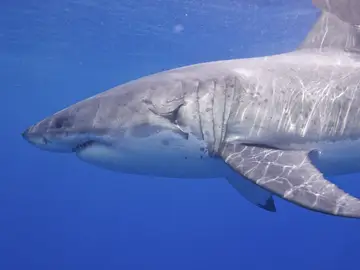
“Unquestionably very dangerous to man. … Known to attack and kill swimmers, surfers, and abalone divers in shallow waters in other regions. … It is well-documented that large white sharks off South …” SCDNR Marine Resources Division
Size
Born about 4 feet long; grows to about 20-21 feet and over 4,000 pounds (NOAA quick facts: up to 4,500 pounds).
How to recognize it
Torpedo-shaped body, conical snout, prominent keel at the base of a crescent-shaped tail
Large first dorsal fin, usually with a pointed tip
Broad, triangular, serrated teeth
What the sources say
Habitat: A solitary and powerful shark found most often in cooler waters but nowhere in abundance. (SCDNR Marine Resources Division)
Also has a large second dorsal fin, but its first dorsal fin sits over the pelvic fins and it has barbels at the nostrils. SCDNR Marine Resources Division
Sandbar sharks (and oceanic whitetip, bignose, silky, dusky and night sharks) have a ridge between the dorsal fins; bull sharks do not. SCDNR Marine Resources Division
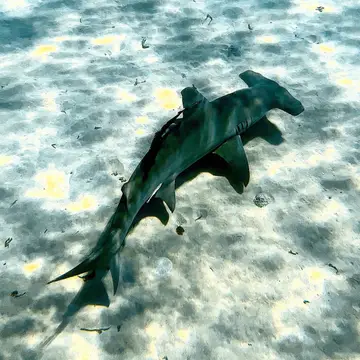
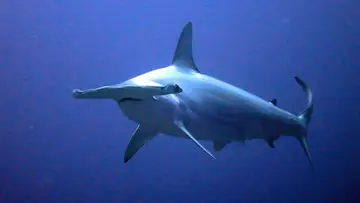
Photos show typical adults; individuals vary. Never get close to compare.
When sharks, rays and other marine animals are active in South Carolina
Records of sharks, rays and other marine animals in South Carolina peak in March to June. They show when people record sharks, rays and other marine animals, not how many there are (about month bars).
JanFebMarAprMayJunJulAugSepOctNovDec
357 records of sharks, rays and other marine animals in South Carolina by month (GBIF, CC0 and CC BY records).
If you are bitten or stung
Call 911 or Poison Help at 1-800-222-1222 right away. Poison Help connects you to your local poison center, any time of day.
Official advice from SCDNR Marine Resources Division:
Yes. SCDNR presents 39 species from 13 families; it reports no fatal attack in SC for at least the half century before 2004. SCDNR Marine Resources Division
“The sharks presented in this guide represent 13 families and 39 species.”
About this list
The species list comes from Sharks of South Carolina (SCDNR Marine Resources Division (C. H. Farmer III), 2004). 8 more entries come from other official sources named on each card.
Venom labels come only from official sources and link to them; "Not stated" never means harmless. How labels work.
Sources
Reptiles and Amphibians of SC. South Carolina Department of Natural Resources. page footer 2020; checked November 3, 2026.
Sharks of South Carolina. SCDNR Marine Resources Division (C. H. Farmer III). 2004; checked November 3, 2026.Quoted passages (27)
“The sharks presented in this guide represent 13 families and 39 species.”
“Only dangerous to man if accidentally stepped on.”
“The presence of a long and tapering barbel on each nostril separates it from all other sharks.”
“Recognized by 1) the presence of distinct nasal barbels, 2) a first dorsal fin that originates above pelvic fins, and 3) a fan-like caudal fin, not separated into two distinct lobes. … First dorsal fin large, rounded, originates over pelvic fins; second dorsal fin slightly smaller than first, similar in shape”
“…snout very short, broadly rounded; mouth noticeably small, positioned near tip of snout”
“So sluggish that it can be easily approached by divers, however, this practice is unwise and dangerous as it could provoke an attack.”
“Considered potentially dangerous to swimmers and divers and has been implicated in attacks in other regions of the world.”
“Unquestionably very dangerous to man. … Known to attack and kill swimmers, surfers, and abalone divers in shallow waters in other regions. … It is well-documented that large white sharks off South Africa, the Farallon Islands near San Francisco, and elsewhere propel themselves completely clear of the surface of the water when attacking seals from below, attributing to the phrase ‘flying white sharks.’ Long been considered a prized game fish by anglers to the point that its numbers have been greatly reduced throughout the world.”
“…a single, well-developed lateral keel on each side of caudal peduncle, 6) a lunate caudal fin”
“One of the more dangerous species of sharks, however, due to its infrequent occurrence close to shore, the probability of attack on local swimmers is remote.”
“A dangerous shark known to attack stranded sailors far out at sea.”
“…a short and broadly rounded snout that is much shorter than width of mouth”
“Both jaws have large, broad-based, triangular teeth with strongly serrated edges and very deeply notched outer margins.”
“A very dangerous shark, especially when aroused.”
“A dangerous shark known to attack humans when sea disasters occur.”
“Both dorsals large, similar in size and shape”
“…a very short, broadly rounded snout that is much shorter than width of mouth”
“A dangerous shark because of its size and frequent occurrence in areas where people swim. … Numerous attacks have been attributed to the bull shark elsewhere with a few probably occurring in South Carolina waters.”
“Only dangerous when being handled.”
“Large adults are potentially dangerous to swimmers.”
“A potentially dangerous shark capable of attacking swimmers.”
“The skates and rays have pectoral fins that are connected to the head (not separated) and a more tapered, or even whip-like tail, often with venomous spines.”
“All sharks should be treated with caution and respect.”
“7) long, slender, smooth-edged teeth without lateral points on sides of cusps. … SIMILAR SPECIES: • The white shark (p. 72) has broad, triangular teeth with serrated edges.”
“The nurse shark (p. 60) also has a large second dorsal fin; however, the first dorsal fin originates over the pelvic fins, and nasal barbels are present.”
“…a second dorsal fin much smaller than first … The sand tiger shark (p. 64) and the lemon shark (p. 98) have a large second dorsal fin. … Both dorsals large, similar in size and shape”
“4) the absence of an interdorsal ridge … SIMILAR SPECIES: The oceanic whitetip shark (p. 82), the sandbar shark (p. 84), the bignose shark (p. 86), the silky shark (p. 88), the dusky shark (p. 90), and the night shark (p. 92) have an interdorsal ridge.”
Sea Science: Jellyfish. South Carolina Department of Natural Resources. undated page; checked November 3, 2026.Quoted passages (7)
“Cannonball jellyfish are the most common jellyfish in our area, and fortunately, one of the least venomous.”
“Considered moderate to severe, sea nettle stings are similar to those of the lion’s mane.”
“…the sea wasp is the most venomous jellyfish inhabiting our waters.”
“Their potent sting can cause severe skin irritation and may require hospitalization.”
“Though they visit our coast only infrequently, swimmers should learn to identify these highly venomous creatures.”
“Severe stings can occur even when the animal is beached or dead.”