Lemon Shark
Negaprion brevirostris · Last checked November 3, 2026.
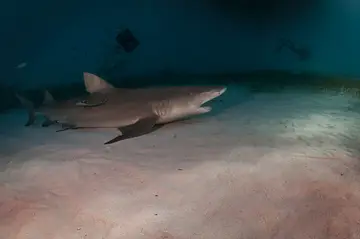

The lemon shark is a large, yellowish-brown shark of shallow coastal waters, with two dorsal fins of nearly equal size. It has bitten people, though few cases are recorded: the International Shark Attack File lists 10 confirmed unprovoked attacks worldwide and no deaths (table page last updated 01/25/2022), and the Florida Museum says caution is still warranted because it is a large predator that lives close to swimmers, surfers and divers. In the US, official sources confirm it in Florida (both coasts) and South Carolina; the Florida Museum gives its northwestern Atlantic range as New Jersey to southern Brazil. FWC
On this page
Is the lemon shark dangerous?
Has been involved in only a few attacks on humans. FWC
“Has been involved in only a few attacks on humans.”
Bites and stings: Yes, but few cases are recorded. The International Shark Attack File lists 10 non-fatal and 0 fatal confirmed unprovoked attacks worldwide (10 total; ISAF page last updated 01/25/2022). The Florida Museum profile (citing ISAF 2018) says all occurred in Florida and the Caribbean.
No official source we use states whether this animal is venomous. That does not mean it is harmless: do not handle it.
If someone is bitten or stung, call 911 or Poison Help at 1-800-222-1222.
How to identify a lemon shark
A photo or description can narrow it down, but cannot confirm what an animal is or that it is safe. Look from a distance and do not handle wild animals.
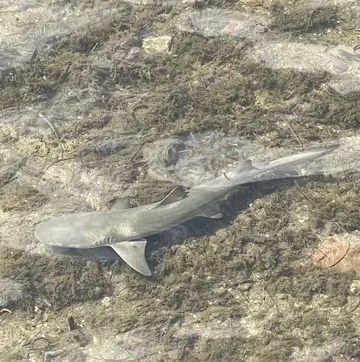
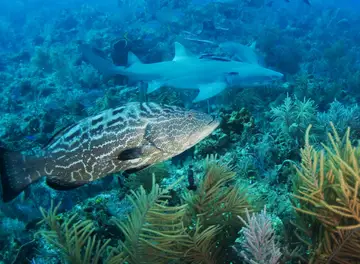

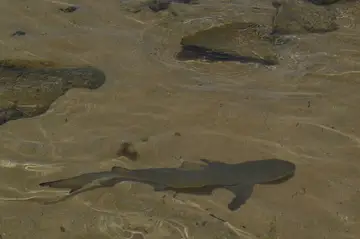

Size: Maximum about 10.5 ft (Florida). FWC
Colors: Yellowish-brown or dark brown above, paler on the lower sides, dirty white or yellowish below. Pattern: No conspicuous markings.
Key features
- Two large dorsal fins of similar size and shape SCDNR Marine Resources Division
- Blunt, rounded snout shorter than the mouth is wide Florida Museum of Natural History
- No ridge between the dorsal fins Florida Museum of Natural History
Young
About 2 ft at birth; young use shallow bays and coastal lagoons as nurseries.
Animals mistaken for the lemon shark
Lemon Shark or Sand tiger shark?
Lemon Shark
Sand tiger shark Carcharias taurus
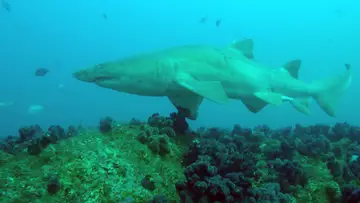
Often confused with the lemon shark, but the sand tiger has a pointed snout, a first dorsal fin set well behind the pectoral fins, narrow teeth with side points, and often yellowish-brown spots. SCDNR Marine Resources Division
International Shark Attack File: 36 non-fatal, 0 fatal confirmed unprovoked attacks worldwide (row "Sand Tiger"; ISAF page last updated 01/25/2022).
Lemon Shark or Nurse shark?
Lemon Shark
Nurse shark Ginglymostoma cirratum
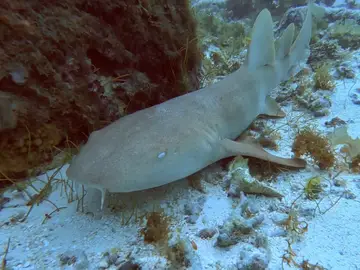
Also has a large second dorsal fin, but its first dorsal fin sits over the pelvic fins and it has barbels at the nostrils. SCDNR Marine Resources Division
International Shark Attack File: 9 non-fatal, 0 fatal confirmed unprovoked attacks worldwide (row "Nurse"; ISAF page last updated 01/25/2022).
Lemon Shark or Bull shark?
Lemon Shark
Bull shark Carcharhinus leucas
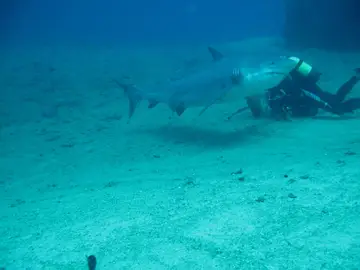

Bull sharks have a second dorsal fin much smaller than the first; in lemon sharks the two are nearly the same size. SCDNR Marine Resources Division
International Shark Attack File: 93 non-fatal, 26 fatal confirmed unprovoked attacks worldwide (row "Bull"; ISAF page last updated 01/25/2022). SCDNR: "A dangerous shark because of its size and frequent occurrence in areas where people swim."
Where the lemon shark lives
- Native or listed
- Nonnative or not established
- No official record in our data
- 1–9
- 10–99
- 100–999
- 1,000+
On our state guides
- Delaware sharks and marine life
- Florida sharks and marine life
- Maryland sharks and marine life
- Mississippi sharks and marine life
- New Jersey sharks and marine life
- South Carolina sharks and marine life
State boundaries: U.S. Census Bureau, cartographic boundary file cb_2024_us_state_20m.
When it is active
Moves south and into deeper water in winter (Florida). FWC
US open-licence records peak in May to July and December.
Habitat and habits
Habitat: Abundant inshore in estuaries and nearshore waters of the Gulf and Atlantic coasts of Florida; often enters fresh water but not as far up rivers as the bull shark. FWC
Behavior: Sluggish and slow-swimming, usually on or near the bottom in shallow inshore water.
Diet: Bony fishes, crustaceans, mollusks, rays, small sharks and sometimes seabirds.
Young: Live birth; litters of 4 to 17 pups.
Legal status and reporting
Federal: Listed under 'Large Coastal Sharks' in Table 1 (Oceanic Sharks) of the federal Atlantic highly migratory species rules (50 CFR 635 Appendix A). eCFR / NOAA Fisheries
Protection: Florida: prohibited from harvest in state waters; prohibited sharks must stay in the water with gills submerged, and when fishing from shore must be released without delay. FWC
Questions about the lemon shark
Lemon shark
A large, yellowish-brown coastal shark with two nearly equal dorsal fins. It reaches about 10.5 feet. Florida's wildlife agency says it has been involved in only a few attacks on humans; the Florida Museum says caution is still warranted.
Are lemon sharks dangerous?
They can bite: the International Shark Attack File lists 10 confirmed unprovoked attacks and no deaths (page last updated 01/25/2022). The Florida Museum says they represent little threat to humans but caution is still warranted because they are large predators living close to swimmers, surfers and divers. SCDNR's 2004 guide says they are generally considered harmless to swimmers and divers.
Are there lemon sharks in wisconsin?
No official source checked places lemon sharks in Wisconsin. The Florida Museum describes them as coastal sharks from New Jersey to Brazil that do not go far into fresh water.
Sources
- Lemon Shark (FWRI shark species). Florida Fish and Wildlife Conservation Commission (FWC). archived copy, captured July 10, 2026; checked November 3, 2026. Archived copy.
Quoted passages (7)
“Has been involved in only a few attacks on humans.”
“Maximum size about 10.5 feet.”
“Size at birth about 2 feet. Utilizes shallow bays and coastal lagoons as nursery areas.”
“An abundant, inshore tropical shark that inhabits both estuarine and nearshore waters of the Gulf and Atlantic coasts of Florida. Commonly enters estuarine waters and often ventures into freshwater areas, but does not penetrate as far up rivers as the Bull shark.”
“Feeds on a variety of bony fishes, crustaceans, mollusks, rays, small sharks, and occasionally on sea birds.”
“Migrates southward and into deeper waters in the winter months.”
“Gives birth to live young. Litters contain 4-17 pups.”
- Species Implicated in Attacks - International Shark Attack File. Florida Museum of Natural History. updated January 25, 2022; checked November 3, 2026.
- Lemon Shark - Discover Fishes. Florida Museum of Natural History. updated February 3, 2025; checked November 3, 2026.
Quoted passages (2)
“The snout is round and shorter than the width of the mouth.”
“There is no mid-dorsal ridge present on this species”
- Sharks of South Carolina. SCDNR Marine Resources Division (C. H. Farmer III). 2004; checked November 3, 2026.
Quoted passages (5)
“Both dorsals large, similar in size and shape”
“A sluggish, slow-swimming shark common in shallow inshore waters, most often on or near the bottom.”
“The sand tiger shark (p. 64), with which the lemon shark is often confused, has a pointed snout, a first dorsal fin that originates well posterior to the pectoral fins, narrow teeth with lateral points, and is often marked with yellowish-brown spots.”
“The nurse shark (p. 60) also has a large second dorsal fin; however, the first dorsal fin originates over the pelvic fins, and nasal barbels are present.”
“…a second dorsal fin much smaller than first … The sand tiger shark (p. 64) and the lemon shark (p. 98) have a large second dorsal fin. … Both dorsals large, similar in size and shape”
- 50 CFR Part 635 Appendix A — Species Tables (Oceanic Sharks). eCFR / NOAA Fisheries. eCFR 'up to date as of 10/30/2026', retrieved 2026-11-03; checked November 3, 2026.
Quoted passages (1)
“Lemon, Negaprion brevirostris”
- Sharks (saltwater recreational regulations). Florida Fish and Wildlife Conservation Commission (FWC). archived copy, captured October 14, 2026; checked November 3, 2026. Archived copy.
Quoted passages (1)
“Sharks that are prohibited from harvest in state waters include: … Lemon shark (Negaprion brevirostris) … Prohibited shark species must remain in the water with the gills submerged when fishing from shore or from a vessel, and prohibited shark species must be released without delay when fishing from the shore.”
- GBIF.org occurrence records, human observations licensed CC0 1.0 or CC BY 4.0 only, accessed November 3, 2026. The datasets behind these counts are listed on our Sources page.
- State boundaries: U.S. Census Bureau, cartographic boundary file cb_2024_us_state_20m.