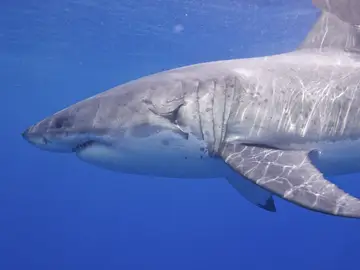
This page lists 48 sharks, rays and other marine animals: 43 from FWC's FWC saltwater recreational shark regulations and 5 named in other official sources.
4 are venomous by official accounts. 1 is nonnative.
Which sharks, rays and other marine animals can hurt you
Official sources single out these sharks, rays and other marine animals in Florida, in their own words:
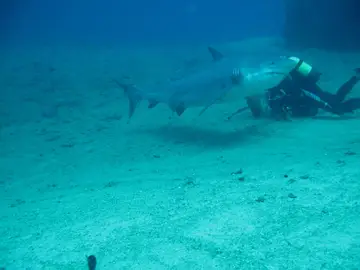
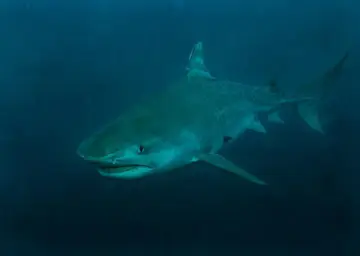
Second only to the white shark in attacks on humans worldwide. “Tiger sharks are second only to the Great White shark in the number of attacks on humans worldwide.” FWC
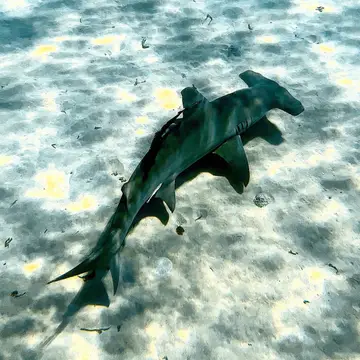
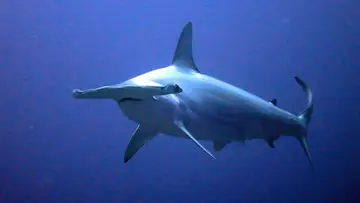
Considered dangerous. “Considered to be dangerous, ranking seventh in unprovoked attacks on humans (often confused with more abundant Scalloped Hammerhead shark).” FWC
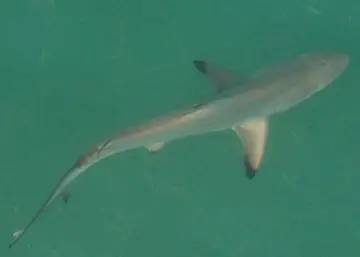
Implicated in attacks on bathers. “Has been implicated in attacks on bathers.” FWC
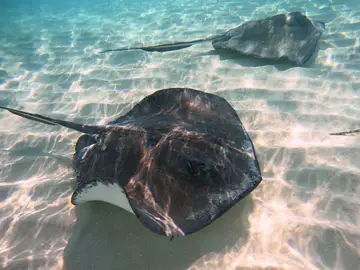
Stingrays (Atlantic, southern, yellow)
Defensive venomous barb near the base of the tail. “Non-aggressive species of little danger to humans except for their defensive venomous barb located near the base of the tail.” FWC
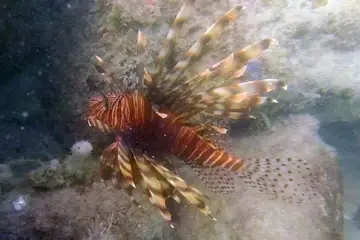
Venomous spines cause painful stings. “Use care when handling lionfish, as they have up to 18 venomous spines on their dorsal, pelvic and anal fins that can cause painful stings.” FWC
Jellyfish
Stinging cells. “The stings of some jellyfish can be quite painful, causing reactions ranging from mild rashes to death (in extreme allergic-reaction instances.)” FWC
All 48 sharks, rays and other marine animals
Venomous species first, then A to Z. Do not handle them.
Adults grow to about 18 inches (NOAA); USGS lists 47 cm. Juveniles can be 1 inch or less.
How to recognize it
Fleshy tentacles above the eyes and below the mouth, fan-like pectoral fins and long, separated dorsal spines.
13 dorsal spines and 3 anal spines.
Slow-moving and conspicuous.
Where in Florida
Native to the Indo-Pacific and Red Sea, lionfish can be found year-round in Florida waters FWC
JFMAMJJASOND
827 records by month.What the sources say
Venom: “Use care when handling lionfish, as they have up to 18 venomous spines on their dorsal, pelvic and anal fins that can cause painful stings.” (FWC)
Habitat: They can be found in almost all estuarine and marine habitat types and have been found in waters up to 1,000 feet deep. (FWC)
No official source we use states whether this animal is venomous. That does not mean it is harmless: do not handle it.
Danger to people
“Considered to be dangerous, ranking seventh in unprovoked attacks on humans (often confused with more abundant Scalloped Hammerhead shark).” FWC
Where in Florida
A common tropical and subtropical shark that inhabits the open ocean and the shallow coastal waters of both the Gulf and Atlantic coasts of Florida. FWC
Conservation
FWC: prohibited from harvest in state waters
No confirmed photo of Gulf smoothhound shark
Gulf smoothhound shark
Mustelus sinusmexicanus
Not stated
Venom
No official source we use states whether this animal is venomous. That does not mean it is harmless: do not handle it.
Conservation
FWC recreational: harvestable, Group 1 (no minimum size limit)
No confirmed photo of Jellyfish
Jellyfish
Not stated
Venom
No official source we use states whether this animal is venomous. That does not mean it is harmless: do not handle it.
Danger to people
“The stings of some jellyfish can be quite painful, causing reactions ranging from mild rashes to death (in extreme allergic-reaction instances.)” FWC
Venom note
“The stings of some jellyfish can be quite painful, causing reactions ranging from mild rashes to death (in extreme allergic-reaction instances.)”
Red lionfish and devil firefish (each other) Venomous
USGS: the two invasive species look the same; positive identification takes genetic analysis.
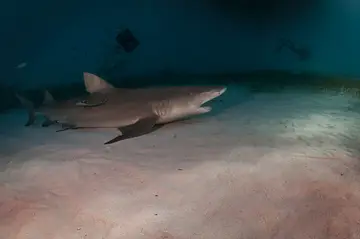
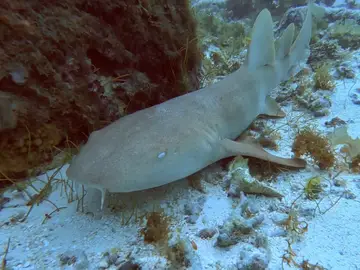
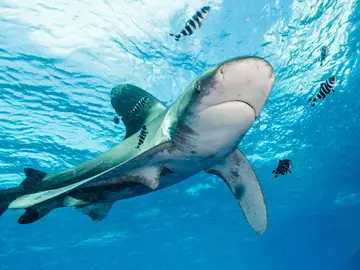
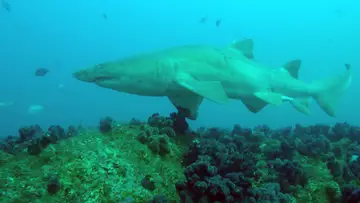
Photos show typical adults; individuals vary. Never get close to compare.
When sharks, rays and other marine animals are active in Florida
Records of sharks, rays and other marine animals in Florida peak in May to September. They show when people record sharks, rays and other marine animals, not how many there are (about month bars).
JanFebMarAprMayJunJulAugSepOctNovDec
5,914 records of sharks, rays and other marine animals in Florida by month (GBIF, CC0 and CC BY records).
Blacktip sharks migrate south and into deeper coastal waters in winter; females give birth in shallow bays in spring and early summer. FWC
Lemon sharks migrate south and into deeper waters in winter. FWC
Lionfish are found year-round in Florida waters. FWC
Sharks are most active at darkness or twilight. FWC
If you are bitten or stung
Call 911 or Poison Help at 1-800-222-1222 right away. Poison Help connects you to your local poison center, any time of day.
Official advice from FWC:
Never feed an alligator, keep your distance, swim only in designated areas in daylight, keep pets leashed and away from water. FWC
Shuffle your feet in shallow water to avoid stepping on stingrays. FWC
Stingray injuries: most require immediate medical attention; Poison Control 1-800-222-1222. FWC
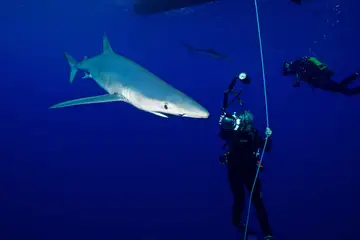
To reduce shark-bite risk: swim in groups, stay near shore, avoid dusk, dark and fishing areas, and leave the water if sharks are seen. FWC
Report nonnative animals to the FWC Invasive Species Hotline 888-Ive-Got1 (888-483-4681); FWC asks the public to call the Hotline for high-priority species: all nonnative snakes, monitor lizards and tegus. Other nonnative species can be reported via the IveGot1 app or IveGot1.org. Alligator or crocodile concerns: 866-FWC-GATOR (866-392-4286). FWC
What official sources say
Are there sharks in Florida?
Yes. Bull, tiger, blacktip and other sharks live in Florida waters; bites are extremely unlikely. FWC
“It is extremely unlikely for a person to be bitten by a shark in Florida waters, and bites are rarely life threatening.”
Are there lionfish in Florida?
Yes. Lionfish can be found year-round in Florida waters and have venomous spines. FWC
“…lionfish can be found year-round in Florida waters”
“Non-aggressive species of little danger to humans except for their defensive venomous barb located near the base of the tail.”
Yellow Stingray (FWRI ray species). Florida Fish and Wildlife Conservation Commission (FWC). archived copy, captured March 9, 2026; checked November 3, 2026.Archived copy. Quoted passages (1)
“Non-aggressive species of little danger to humans except for their defensive venomous barb located near the base of the tail.”
Species Not Native to Florida. Florida Fish and Wildlife Conservation Commission (FWC). archived copy, captured September 9, 2025; checked November 3, 2026.Archived copy.
“Use care when handling lionfish, as they have up to 18 venomous spines on their dorsal, pelvic and anal fins that can cause painful stings.”
“…lionfish can be found year-round in Florida waters”
Jellyfish (species profile). Florida Fish and Wildlife Conservation Commission (FWC). archived copy, captured June 9, 2026; checked November 3, 2026.Archived copy. Quoted passages (2)
“The stings of some jellyfish can be quite painful, causing reactions ranging from mild rashes to death (in extreme allergic-reaction instances.)”
“Even jellyfish that have washed ashore should not be handled, since the stinging cells may still fire.”
Living with Alligators. Florida Fish and Wildlife Conservation Commission (FWC). archived copy, captured October 25, 2026; checked November 3, 2026.Archived copy. Quoted passages (1)
“Remember, never feed an alligator and keep your distance if you see one. Swim only in designated swimming areas during daylight hours. And keep pets on a leash and away from the water.”
Ray Species (FWRI). Florida Fish and Wildlife Conservation Commission (FWC). archived copy, captured May 12, 2026; checked November 3, 2026.Archived copy. Quoted passages (1)
“Most stingray injuries require immediate medical attention. For more information contact the National Poison Control Center 1-800-222-1222.”
“Do not enter the water if sharks are known to be present, and get out of the water if sharks are sighted.”
“Avoid being in the water during darkness or twilight hours when sharks are most active.”
“It is extremely unlikely for a person to be bitten by a shark in Florida waters, and bites are rarely life threatening.”
Report Nonnative Species. Florida Fish and Wildlife Conservation Commission (FWC). archived copy, captured October 25, 2026; checked November 3, 2026.Archived copy. Quoted passages (1)
“You can call the FWC’s Invasive Species Hotline at 888-Ive-Got1 (483-4681) to report nonnative animals. We ask the public to call the Hotline to report high priority species, which include all nonnative snakes, monitor lizards, and tegus.”