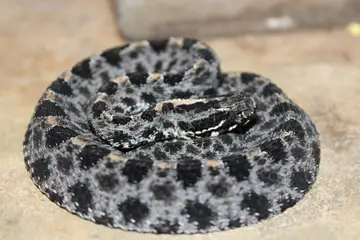
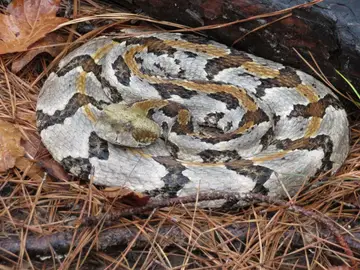
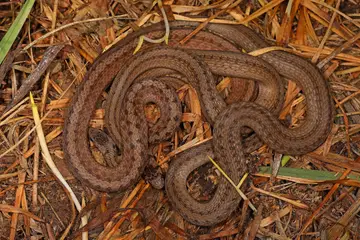
South Carolina has 6 venomous snakes named by official sources: Timber Rattlesnake, Copperhead, Cottonmouth / Water Moccasin, Eastern Coral Snake, Eastern Diamondback Rattlesnake and Pigmy Rattlesnake. Each one is labelled venomous by South Carolina Department of Natural Resources.
The 6 venomous snakes of South Carolina
Recognize them from a distance; a photo cannot confirm that a snake is safe. Identifying animals safely.
Venom: “The six venomous species are the coral snake, pigmy rattlesnake, cottonmouth (aka water moccasin), copperhead, canebrake or timber rattlesnake, and the eastern diamondback rattlesnake.” (South Carolina Department of Natural Resources)
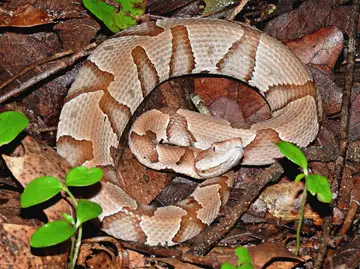
Habitat: Copperheads occur in a wide range of habitat types including mountain coves, piedmont and coastal plain hardwood forests, longleaf pine forests and swamp forests. (SCDNR and South Carolina Wildlife Magazine)
Typically 30 to 48 inches (about 3 to 4 feet); recorded up to 75 inches.
How to recognize it
Heat-sensing pit between nostril and eye; no rattle
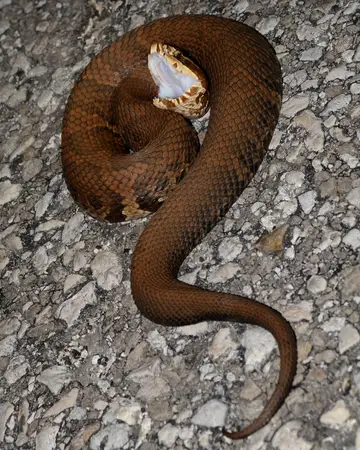
Head much wider than the neck, with a dark bar from the eye to the jaw; vertical (cat-eye) pupils
Gapes to show the white lining of its mouth when threatened
Where in South Carolina
In South Carolina, cottonmouths typically live in the sandhills and coastal plain regions, but do not enter the piedmont nor mountain regions of the state. South Carolina Department of Natural Resources
JFMAMJJASOND
60 records by month.What the sources say
Venom: “The six venomous species are the coral snake, pigmy rattlesnake, cottonmouth (aka water moccasin), copperhead, canebrake or timber rattlesnake, and the eastern diamondback rattlesnake.” (South Carolina Department of Natural Resources)
Venom: “The six venomous species are the coral snake, pigmy rattlesnake, cottonmouth (aka water moccasin), copperhead, canebrake or timber rattlesnake, and the eastern diamondback rattlesnake.” (South Carolina Department of Natural Resources)
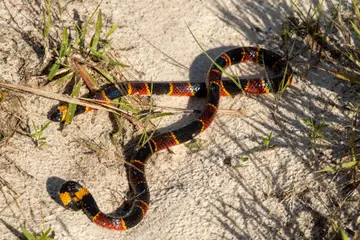
Habitat: The species is very secretive, spending much of its time underground, and loose, sandy soil typifies most of the habitats frequented by the coral snake. (SCDNR and South Carolina Wildlife Magazine)
"considered a species of concern in South Carolina"
What the sources say
Venom: “The six venomous species are the coral snake, pigmy rattlesnake, cottonmouth (aka water moccasin), copperhead, canebrake or timber rattlesnake, and the eastern diamondback rattlesnake.” (South Carolina Department of Natural Resources)
Habitat: Longleaf pine flatwoods, rolling pine-hills and in maritime grasslands of the lower coast (SCDNR and South Carolina Wildlife Magazine)
Venom: “The six venomous species are the coral snake, pigmy rattlesnake, cottonmouth (aka water moccasin), copperhead, canebrake or timber rattlesnake, and the eastern diamondback rattlesnake.” (South Carolina Department of Natural Resources)
Habitat: They occur in a variety of habitats but are seldom found far from fresh water, such as marshes, swamps and ponds. (SCDNR and South Carolina Wildlife Magazine)
Venom: “The six venomous species are the coral snake, pigmy rattlesnake, cottonmouth (aka water moccasin), copperhead, canebrake or timber rattlesnake, and the eastern diamondback rattlesnake.” (South Carolina Department of Natural Resources)
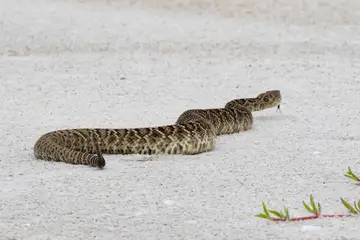
Habitat: The canebrake of the piedmont and coastal plain is a species of forested woodlands, wooded bluffs near rivers, river swamps and wet thickets. (SCDNR and South Carolina Wildlife Magazine)
For 1 other snake on South Carolina's list, no official source we use states whether it is venomous: Milk Snake. That does not make them harmless. Leave every snake alone.
See all 39 snakes, venomous and not, on South Carolina snakes. South Carolina Department of Natural Resources gives South Carolina 38 snake species in all; that page lists the 39 that official sources name one by one.
Snakes people confuse
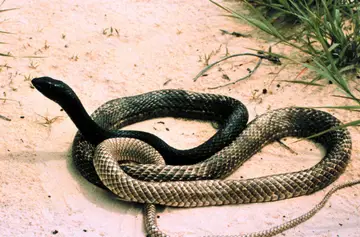
Black Racer or Cottonmouth?
Photo: Everglades NPS from Homestead, Florida, United States · Public domain · Wikimedia Commons
NPS says black racers can resemble the venomous water moccasin and advises leaving alone any snake you cannot identify. It gives no safe field mark, and none is offered here.
Black Racer or Timber rattlesnake?
Photo: Everglades NPS from Homestead, Florida, United States · Public domain · Wikimedia Commons
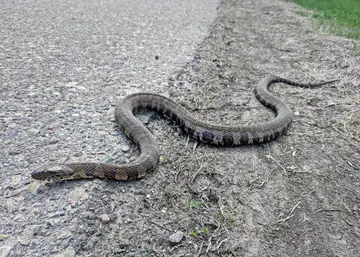
Copperheads have bold hourglass-shaped bands, and young copperheads under about 12 inches have bright yellow tail tips. Brown snakes have small spots, not hourglass bands. University of Georgia Savannah River Ecology Laboratory
Photos show typical adults; individuals vary. Never get close to compare.
When venomous snakes are active in South Carolina
Records of snakes in South Carolina peak in March to June. They show when people record snakes, not how many there are (about month bars).
JanFebMarAprMayJunJulAugSepOctNovDec
882 records of snakes in South Carolina by month (GBIF, CC0 and CC BY records).
Call 911 or Poison Help at 1-800-222-1222 right away. Poison Help connects you to your local poison center, any time of day.
Official advice from SCDNR and South Carolina Wildlife Magazine, University of Georgia Savannah River Ecology Laboratory, posted by SCDNR and South Carolina Department of Natural Resources:
After a venomous snake bite, call 911 or Poison Help at 1-800-222-1222. SCDNR itself says to get to a hospital and call 911 if appropriate. South Carolina Department of Natural Resources
How to report
Alligator and other wildlife emergencies, injured manatees: SCDNR Operation Game Thief 1-800-922-5431. Herp questions: [email protected], (843) 527-8448. SCDNR does not remove nuisance snakes; it keeps a list of wildlife removal specialists. South Carolina Department of Natural Resources
The species list comes from Snakes of South Carolina and Georgia (University of Georgia Savannah River Ecology Laboratory (linked by SCDNR as its species information), undated web page; retrieved 2026-11-03). 39 more entries come from other official sources named on each card.
Venom labels come only from official sources and link to them; "Not stated" never means harmless. How labels work.
Sources
Reptiles and Amphibians of SC. South Carolina Department of Natural Resources. page footer 2020; checked November 3, 2026.
Snakes of South Carolina and Georgia. University of Georgia Savannah River Ecology Laboratory (linked by SCDNR as its species information). undated page; checked November 3, 2026.Quoted passages (1)
“Family Colubridae (Non-venomous Snakes)”
Common Snakes in South Carolina. South Carolina Department of Natural Resources. page footer 2024; checked November 3, 2026.Quoted passages (1)
“There are 38 snake species in South Carolina, only six of which are venomous.”
Banded Watersnake (Nerodia fasciata). University of Georgia Savannah River Ecology Laboratory (linked by SCDNR as its species information). undated page; checked November 3, 2026.
“The banded water snake and brown water snake are large-bodied, non-venomous water snakes that are commonly mistaken for the cottonmouth.”
“…non-venomous snake that may be confused with the copperhead.”
“The pine snake is a large, blotched non-venomous snake that can be mistaken for a rattlesnake.”
“The non-venomous scarlet kingsnake and scarlet snake both possess patterns similar to the coral snake.”
“It is best to leave all snakes alone, if you don’t know how to identify them, and to avoid trying to kill venomous snakes.”
“The copperhead is South Carolina’s most common venomous snake.”
Black Racer (Coluber constrictor). University of Georgia Savannah River Ecology Laboratory (linked by SCDNR as its species information). undated page; checked November 3, 2026.
Black Swamp Snake (Seminatrix pygaea). University of Georgia Savannah River Ecology Laboratory (linked by SCDNR as its species information). undated page; checked November 3, 2026.
Brown Snake (Storeria dekayi). University of Georgia Savannah River Ecology Laboratory (linked by SCDNR as its species information). undated page; checked November 3, 2026.Quoted passages (2)
“Copperheads have prominent hourglass-shaped bands and have bright yellow tail tips when less than 12 in long.”
“They can be distinguished from redbellied snakes (Storeria occipitomaculata) by their lack of red underside”
Brown Watersnake (Nerodia taxispilota). University of Georgia Savannah River Ecology Laboratory (linked by SCDNR as its species information). undated page; checked November 3, 2026.
“The six venomous species are the coral snake, pigmy rattlesnake, cottonmouth (aka water moccasin), copperhead, canebrake or timber rattlesnake, and the eastern diamondback rattlesnake.”
Coachwhip (Masticophis flagellum). University of Georgia Savannah River Ecology Laboratory (linked by SCDNR as its species information). undated page; checked November 3, 2026.
Corn Snake (Elaphe [Pantherophis] guttatus). University of Georgia Savannah River Ecology Laboratory (linked by SCDNR as its species information). undated page; checked November 3, 2026.
“The best advice is to try to remain calm, and get to a hospital as soon as possible. Call 911 if that is appropriate”
“In South Carolina, cottonmouths typically live in the sandhills and coastal plain regions, but do not enter the piedmont nor mountain regions of the state.”
Eastern Garter Snake (Thamnophis sirtalis). University of Georgia Savannah River Ecology Laboratory (linked by SCDNR as its species information). undated page; checked November 3, 2026.
Eastern Hognose Snake (Heterodon platirhinos). University of Georgia Savannah River Ecology Laboratory (linked by SCDNR as its species information). undated page; checked November 3, 2026.
Eastern Kingsnake (Lampropeltis getula). University of Georgia Savannah River Ecology Laboratory (linked by SCDNR as its species information). undated page; checked November 3, 2026.
Eastern Ribbon Snake (Thamnophis sauritus). University of Georgia Savannah River Ecology Laboratory (linked by SCDNR as its species information). undated page; checked November 3, 2026.
Glossy Crayfish Snake (Regina rigida). University of Georgia Savannah River Ecology Laboratory (linked by SCDNR as its species information). undated page; checked November 3, 2026.
Green Watersnake (Nerodia floridana). University of Georgia Savannah River Ecology Laboratory (linked by SCDNR as its species information). undated page; checked November 3, 2026.
Mole Kingsnake (Lampropeltis calligaster). University of Georgia Savannah River Ecology Laboratory (linked by SCDNR as its species information). undated page; checked November 3, 2026.
Mud Snake (Farancia abacura). University of Georgia Savannah River Ecology Laboratory (linked by SCDNR as its species information). undated page; checked November 3, 2026.
Northern Watersnake (Nerodia sipedon). University of Georgia Savannah River Ecology Laboratory (linked by SCDNR as its species information). undated page; checked November 3, 2026.
Pine Snake (Pituophis melanoleucus). University of Georgia Savannah River Ecology Laboratory (linked by SCDNR as its species information). undated page; checked November 3, 2026.Quoted passages (1)
“They have four prefrontal scales, unlike most other colubrids, which have two.”
Pine Woods Snake (Rhadinaea flavilata). University of Georgia Savannah River Ecology Laboratory (linked by SCDNR as its species information). undated page; checked November 3, 2026.Quoted passages (1)
“Although not dangerous to humans, this species has toxic saliva that it uses to subdue its prey.”
Queen Snake (Regina septemvittata). University of Georgia Savannah River Ecology Laboratory (linked by SCDNR as its species information). undated page; checked November 3, 2026.
Rainbow Snake (Farancia erytrogramma). University of Georgia Savannah River Ecology Laboratory (linked by SCDNR as its species information). undated page; checked November 3, 2026.
Red-bellied Watersnake (Nerodia erythrogaster). University of Georgia Savannah River Ecology Laboratory (linked by SCDNR as its species information). undated page; checked November 3, 2026.
Redbellied Snake (Storeria occipitomaculata). University of Georgia Savannah River Ecology Laboratory (linked by SCDNR as its species information). undated page; checked November 3, 2026.Quoted passages (1)
“This species can easily be distinguished from all other small woodland snakes by their unmarked bright orange to red underside.”
Ringneck Snake (Diadophis punctatus). University of Georgia Savannah River Ecology Laboratory (linked by SCDNR as its species information). undated page; checked November 3, 2026.Quoted passages (2)
“They possess mild venom in their saliva and enlarged rear teeth that help subdue prey, but they are harmless to humans.”
“The head is small and only slightly wider than the neck, and the scales are smooth, giving a shiny appearance.”
Rough Earth Snake (Virginia striatula). University of Georgia Savannah River Ecology Laboratory (linked by SCDNR as its species information). undated page; checked November 3, 2026.
Rough Green Snake (Opheodrys aestivus). University of Georgia Savannah River Ecology Laboratory (linked by SCDNR as its species information). undated page; checked November 3, 2026.Quoted passages (1)
“Rough Green Snakes have keeled scales and large eyes.”
Scarlet Kingsnake (Lampropeltis elapsoides). University of Georgia Savannah River Ecology Laboratory (linked by SCDNR as its species information). undated page; checked November 3, 2026.
Scarlet Snake (Cemophora coccinea). University of Georgia Savannah River Ecology Laboratory (linked by SCDNR as its species information). undated page; checked November 3, 2026.
Smooth Earth Snake (Virginia valeriae). University of Georgia Savannah River Ecology Laboratory (linked by SCDNR as its species information). undated page; checked November 3, 2026.
Southeastern Crowned Snake (Tantilla coronata). University of Georgia Savannah River Ecology Laboratory (linked by SCDNR as its species information). undated page; checked November 3, 2026.Quoted passages (1)
“It is rear-fanged but its tiny size make it no danger to humans or their pets.”
Southern Hognose Snake (Heterodon simus). University of Georgia Savannah River Ecology Laboratory (linked by SCDNR as its species information). undated page; checked November 3, 2026.
Worm Snake (Carphophis amoenus). University of Georgia Savannah River Ecology Laboratory (linked by SCDNR as its species information). undated page; checked November 3, 2026.
Snakebite Fact Sheet. University of Georgia Savannah River Ecology Laboratory, posted by SCDNR. undated page; checked November 3, 2026.Quoted passages (1)
“If you see an unknown species of snake, it is best to treat it as venomous and leave it alone if at all possible.”
Upstate Snakes: General Information. South Carolina Department of Natural Resources. page footer 2020; checked November 3, 2026.Quoted passages (1)
“…most active in the warmer months (April thru October)”
American Alligator. South Carolina Department of Natural Resources. undated page; checked November 3, 2026.Quoted passages (1)
“For alligator and other wildlife emergencies, contact Operation Game Thief: 1-800-922-5431”