States Wildlife

New Jersey Snakes: Identification Guide With Pictures

Last checked November 3, 2026 against official sources.

On this page
  1. Venomous snakes
  2. The other 21 snakes
  3. Lookalikes
  4. When they are active
  5. If you are bitten or stung
  6. How to report
  7. Common questions
  8. What official sources say
  9. About this list
  10. Sources

NJDEP Division of Fish & Wildlife, Endangered and Nongame Species Program: 22 species of snakes can still be found in the most densely populated state in the country.

This page lists 23 snakes: all from NJDEP Division of Fish & Wildlife, Endangered and Nongame Species Program's Snakes of New Jersey. 2 are venomous by official accounts: Northern Copperhead and Timber Rattlesnake. NJDEP Division of Fish & Wildlife, Endangered and Nongame Species Program gives a total of 22; the 23 here are the snakes official sources name one by one.

Venomous snakes in New Jersey

Official sources label these snakes venomous in New Jersey. Venomous snakes in New Jersey has more on each one.

Northern Copperhead
Photo: USFWSmidwest · Public domain · Wikimedia Commons

Northern Copperhead

Agkistrodon contortrix mokasen

Venomous per NJDEP Division of Fish & Wildlife, Endangered and Nongame Species Program

Where in New Jersey
Northern NJ, south to the Sourlands of Hunterdon and Somerset counties and north through western Bergen County NJDEP Division of Fish & Wildlife, Endangered and Nongame Species Program
Conservation
State Threatened
What the sources say

Venom: “This is one of two VENOMOUS SNAKES found in NJ.” (NJDEP Division of Fish & Wildlife, Endangered and Nongame Species Program)

Habitat: Rocky fields, berry thickets, woodlands, farmlands, old mulch piles (NJDEP Division of Fish & Wildlife, Endangered and Nongame Species Program)

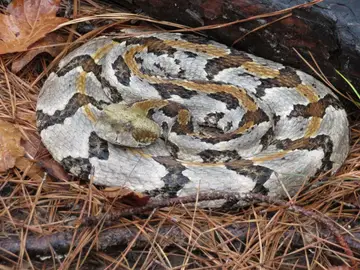
Timber Rattlesnake
Photo: NPS Photo · Public domain · Wikimedia Commons

Timber Rattlesnake

Crotalus horridus horridus

Venomous per NJDEP Division of Fish & Wildlife, Endangered and Nongame Species Program

Size
Most adults 36 to 60 inches (3 to 5 feet); record 74.5 inches.
How to recognize it
  • Black tail ending in a rattle
  • Heat-sensing pit between nostril and eye
  • Large, thick head distinct from the neck; cat-like vertical pupil
Where in New Jersey
Three populations: Kittatinny Ridge, the Highlands, and the Pine Barrens NJDEP Division of Fish & Wildlife, Endangered and Nongame Species Program
Conservation
State Endangered
What the sources say

Venom: “This is one of two VENOMOUS SNAKES found in NJ.” (NJDEP Division of Fish & Wildlife, Endangered and Nongame Species Program)

Habitat: Rocky wooded areas in the north (NJDEP Division of Fish & Wildlife, Endangered and Nongame Species Program)

Full Timber Rattlesnake guide

The other 21 snakes

From A to Z. Some harmless snakes mimic venomous ones: leave every snake alone.

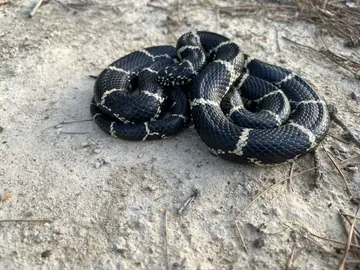
Black Rat Snake
Photo: Chrissy McClarren and Andy Reago · CC0 1.0 · iNaturalist

Black Rat Snake

Elaphe obsoleta obsoleta

Non-venomous per NJDEP Division of Fish & Wildlife, Endangered and Nongame Species Program

Size
Adults 42 to 72 inches (3.5 to 6 feet), occasionally to 86 inches (MDC); Michigan adults frequently exceed 6 feet, record over 8 feet.
How to recognize it
  • Body shaped like a loaf of bread in cross section (flat belly meets the sides at an angle)
  • Weakly keeled scales, divided anal plate, squarish head
  • Freezes when approached; may kink its body like a crooked stick
Where in New Jersey
Statewide in rural and semi-suburban areas NJDEP Division of Fish & Wildlife, Endangered and Nongame Species Program
What the sources say

Venom: “Two of our snake species are venomous, the timber rattlesnake and the northern copperhead, and the remaining twenty species are non-venomous.” (NJDEP Division of Fish & Wildlife, Endangered and Nongame Species Program)

Habitat: Climbs trees and rock crevices (NJDEP Division of Fish & Wildlife, Endangered and Nongame Species Program)

Full Black Rat Snake guide

No confirmed photo of Coastal Plain Milk Snake (intergrade)

Coastal Plain Milk Snake (intergrade)

Lampropeltis t. triangulum x L.t. elapsoides

Non-venomous per NJDEP Division of Fish & Wildlife, Endangered and Nongame Species Program

Where in New Jersey
Southern NJ; rare NJDEP Division of Fish & Wildlife, Endangered and Nongame Species Program
What the sources say

Venom: “Two of our snake species are venomous, the timber rattlesnake and the northern copperhead, and the remaining twenty species are non-venomous.” (NJDEP Division of Fish & Wildlife, Endangered and Nongame Species Program)

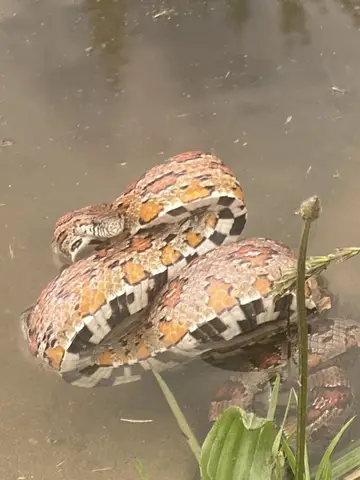
Corn Snake
Photo: Bea Leiderman · CC BY 4.0 · iNaturalist

Corn Snake

Elaphe guttata guttata

Non-venomous per NJDEP Division of Fish & Wildlife, Endangered and Nongame Species Program

Size
Most adults 30-48 inches (76-122 cm); record 74 inches (188 cm)
How to recognize it
  • Spear-shaped head marking from the neck to a point between the eyes is a reliable identification feature
  • Weakly keeled scales and round pupil
Where in New Jersey
Pine Barrens NJDEP Division of Fish & Wildlife, Endangered and Nongame Species Program
Conservation
State Endangered
What the sources say

Venom: “Two of our snake species are venomous, the timber rattlesnake and the northern copperhead, and the remaining twenty species are non-venomous.” (NJDEP Division of Fish & Wildlife, Endangered and Nongame Species Program)

Habitat: Sandy pine-oak forest with low brush (NJDEP Division of Fish & Wildlife, Endangered and Nongame Species Program)

Full Corn Snake guide

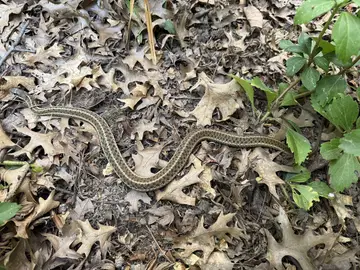
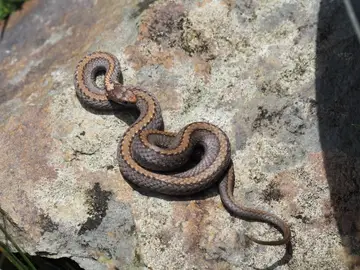
Eastern Garter Snake
Photo: Famartin · CC BY-SA 4.0 · Wikimedia Commons · resized

Eastern Garter Snake

Thamnophis sirtalis sirtalis

Non-venomous per NJDEP Division of Fish & Wildlife, Endangered and Nongame Species Program

Where in New Jersey
Statewide; the most common snake in NJ NJDEP Division of Fish & Wildlife, Endangered and Nongame Species Program
What the sources say

Venom: “Two of our snake species are venomous, the timber rattlesnake and the northern copperhead, and the remaining twenty species are non-venomous.” (NJDEP Division of Fish & Wildlife, Endangered and Nongame Species Program)

Habitat: Woods, fields, meadows and near water (NJDEP Division of Fish & Wildlife, Endangered and Nongame Species Program)

No confirmed photo of Eastern Hognose Snake

Eastern Hognose Snake

Heterodon platyrhinos

Non-venomous per NJDEP Division of Fish & Wildlife, Endangered and Nongame Species Program

Where in New Jersey
Statewide except metropolitan areas NJDEP Division of Fish & Wildlife, Endangered and Nongame Species Program
Conservation
State Special Concern
What the sources say

Venom: “Two of our snake species are venomous, the timber rattlesnake and the northern copperhead, and the remaining twenty species are non-venomous.” (NJDEP Division of Fish & Wildlife, Endangered and Nongame Species Program)

Habitat: Habitats with sandy substrate (NJDEP Division of Fish & Wildlife, Endangered and Nongame Species Program)

Eastern Kingsnake
Photo: Matthew Lumsden · CC BY 4.0 · iNaturalist

Eastern Kingsnake

Lampropeltis getula getula

Non-venomous per NJDEP Division of Fish & Wildlife, Endangered and Nongame Species Program

Size
Most adults are about 36-48 inches. Maryland gives a record of 82 inches; Alabama gives up to 6.9 feet.
How to recognize it
  • Smooth, shiny scales and an indistinct neck.
  • Round pupil.
  • Florida Museum counts 19-32 crossbands in Florida; Alabama counts 23 to 52.
Where in New Jersey
Southern NJ only NJDEP Division of Fish & Wildlife, Endangered and Nongame Species Program
Conservation
State Special Concern
What the sources say

Venom: “Two of our snake species are venomous, the timber rattlesnake and the northern copperhead, and the remaining twenty species are non-venomous.” (NJDEP Division of Fish & Wildlife, Endangered and Nongame Species Program)

Habitat: Borders of swamps and streambeds (NJDEP Division of Fish & Wildlife, Endangered and Nongame Species Program)

Full Eastern Kingsnake guide

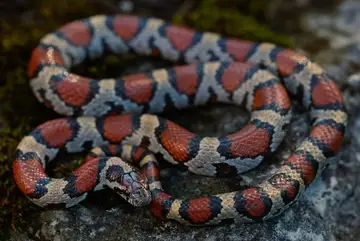
Eastern Milk Snake
Photo: Peter Paplanus · CC BY 2.0 · Wikimedia Commons

Eastern Milk Snake

Lampropeltis triangulum triangulum

Non-venomous per NJDEP Division of Fish & Wildlife, Endangered and Nongame Species Program

Size
Eastern milksnake 24 to 52 inches (Alabama); TN gives 24 to 36 inches for eastern and 21 to 28 for red milksnake.
How to recognize it
  • Eastern milksnake: black-and-white checkerboard belly (Ohio). Western milksnake in Louisiana: underside dull white with scattered black marks.
  • Eastern milksnake: a light Y- or V-shaped mark is usually present on the nape
  • Smooth, shiny scales and round pupils
Where in New Jersey
Common in NJ NJDEP Division of Fish & Wildlife, Endangered and Nongame Species Program
What the sources say

Venom: “Two of our snake species are venomous, the timber rattlesnake and the northern copperhead, and the remaining twenty species are non-venomous.” (NJDEP Division of Fish & Wildlife, Endangered and Nongame Species Program)

Habitat: Fields, wooded areas, riverbanks and rocky hillsides (NJDEP Division of Fish & Wildlife, Endangered and Nongame Species Program)

Full Eastern Milk Snake guide

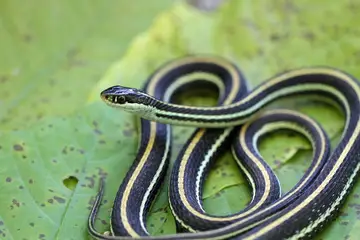
Eastern Ribbon Snake
Photo: Greg Schechter from San Francisco, USA · CC BY 2.0 · Wikimedia Commons

Eastern Ribbon Snake

Thamnophis sauritus sauritus

Non-venomous per NJDEP Division of Fish & Wildlife, Endangered and Nongame Species Program

Where in New Jersey
Common in NJ NJDEP Division of Fish & Wildlife, Endangered and Nongame Species Program
What the sources say

Venom: “Two of our snake species are venomous, the timber rattlesnake and the northern copperhead, and the remaining twenty species are non-venomous.” (NJDEP Division of Fish & Wildlife, Endangered and Nongame Species Program)

Habitat: Bogs, swamps and streams (NJDEP Division of Fish & Wildlife, Endangered and Nongame Species Program)

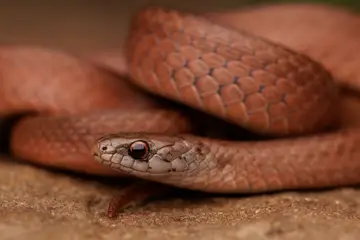
Eastern Smooth Earth Snake
Photo: Stanton · CC BY-SA 4.0 · Wikimedia Commons · resized

Eastern Smooth Earth Snake

Virginia valeriae valeriae

Non-venomous per NJDEP Division of Fish & Wildlife, Endangered and Nongame Species Program

Where in New Jersey
Mainly Piedmont and Coastal Plain; uncommon NJDEP Division of Fish & Wildlife, Endangered and Nongame Species Program
Conservation
State Special Concern
What the sources say

Venom: “Two of our snake species are venomous, the timber rattlesnake and the northern copperhead, and the remaining twenty species are non-venomous.” (NJDEP Division of Fish & Wildlife, Endangered and Nongame Species Program)

Eastern Worm Snake
Photo: Dominic · CC BY 4.0 · iNaturalist

Eastern Worm Snake

Carphophis amoenus amoenus

Non-venomous per NJDEP Division of Fish & Wildlife, Endangered and Nongame Species Program

Where in New Jersey
Statewide in rural and suburban areas NJDEP Division of Fish & Wildlife, Endangered and Nongame Species Program
What the sources say

Venom: “Two of our snake species are venomous, the timber rattlesnake and the northern copperhead, and the remaining twenty species are non-venomous.” (NJDEP Division of Fish & Wildlife, Endangered and Nongame Species Program)

Habitat: Moist soil under stones, boards and rotten logs (NJDEP Division of Fish & Wildlife, Endangered and Nongame Species Program)

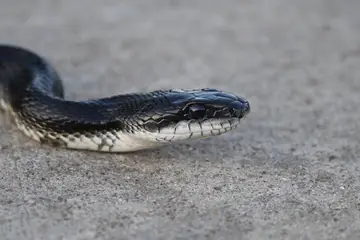
Northern Black Racer
Photo: Dilrukshan Priyantha Wijesinghe · CC BY 4.0 · iNaturalist

Northern Black Racer

Coluber constrictor constrictor

Non-venomous per NJDEP Division of Fish & Wildlife, Endangered and Nongame Species Program

Where in New Jersey
Statewide in rural and semi-suburban areas NJDEP Division of Fish & Wildlife, Endangered and Nongame Species Program
What the sources say

Venom: “Two of our snake species are venomous, the timber rattlesnake and the northern copperhead, and the remaining twenty species are non-venomous.” (NJDEP Division of Fish & Wildlife, Endangered and Nongame Species Program)

Habitat: Fields, woodlands, sometimes gardens (NJDEP Division of Fish & Wildlife, Endangered and Nongame Species Program)

Northern Brown Snake
Photo: Michael J. Papay · CC BY 4.0 · iNaturalist

Northern Brown Snake

Storeria dekayi dekayi

Non-venomous per NJDEP Division of Fish & Wildlife, Endangered and Nongame Species Program

Size
Most adults 9 to 13 inches; occasionally up to about 20 inches.
How to recognize it
  • Dark top of head; a dark spot under each eye and on each side of the neck
  • Keeled (ridged) scales in 17 rows; round pupil
  • Tennessee: a small dark downward streak on the side of the head
Where in New Jersey
Common in NJ NJDEP Division of Fish & Wildlife, Endangered and Nongame Species Program
72 records by month.
What the sources say

Venom: “Two of our snake species are venomous, the timber rattlesnake and the northern copperhead, and the remaining twenty species are non-venomous.” (NJDEP Division of Fish & Wildlife, Endangered and Nongame Species Program)

Habitat: Moist woodlands and lowlands; under logs, rocks and debris (NJDEP Division of Fish & Wildlife, Endangered and Nongame Species Program)

Full Northern Brown Snake guide

Northern Pine Snake
Photo: Scott Ward · CC BY 4.0 · iNaturalist

Northern Pine Snake

Pituophis melanoleucus melanoleucus

Non-venomous per NJDEP Division of Fish & Wildlife, Endangered and Nongame Species Program

Where in New Jersey
Pine Barrens NJDEP Division of Fish & Wildlife, Endangered and Nongame Species Program
Conservation
State Threatened
What the sources say

Venom: “Two of our snake species are venomous, the timber rattlesnake and the northern copperhead, and the remaining twenty species are non-venomous.” (NJDEP Division of Fish & Wildlife, Endangered and Nongame Species Program)

Habitat: Sandy habitat (NJDEP Division of Fish & Wildlife, Endangered and Nongame Species Program)

Northern Redbelly Snake
Photo: Clay Gibbons · CC BY 4.0 · iNaturalist

Northern Redbelly Snake

Storeria occipitomaculata occipitomaculata

Non-venomous per NJDEP Division of Fish & Wildlife, Endangered and Nongame Species Program

Where in New Jersey
Statewide but hard to find NJDEP Division of Fish & Wildlife, Endangered and Nongame Species Program
What the sources say

Venom: “Two of our snake species are venomous, the timber rattlesnake and the northern copperhead, and the remaining twenty species are non-venomous.” (NJDEP Division of Fish & Wildlife, Endangered and Nongame Species Program)

Habitat: Hedgerows, stone walls, fields, bogs and wood lots (NJDEP Division of Fish & Wildlife, Endangered and Nongame Species Program)

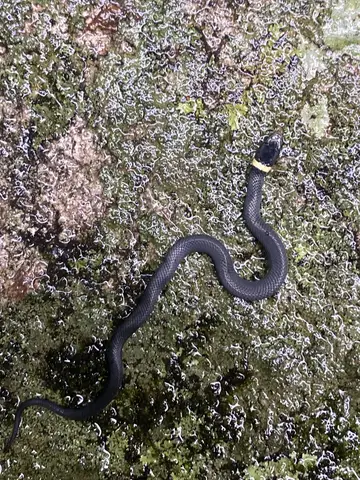
Northern Ringneck Snake
Photo: Sinéad Tuttle-Lerner · CC BY 4.0 · iNaturalist

Northern Ringneck Snake

Diadophis punctatus edwardsii

Non-venomous per NJDEP Division of Fish & Wildlife, Endangered and Nongame Species Program

Where in New Jersey
Statewide NJDEP Division of Fish & Wildlife, Endangered and Nongame Species Program
What the sources say

Venom: “Two of our snake species are venomous, the timber rattlesnake and the northern copperhead, and the remaining twenty species are non-venomous.” (NJDEP Division of Fish & Wildlife, Endangered and Nongame Species Program)

Habitat: Woodland and rocky areas (NJDEP Division of Fish & Wildlife, Endangered and Nongame Species Program)

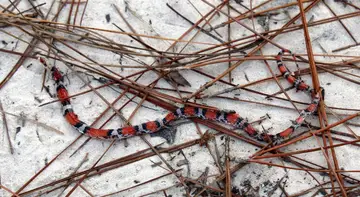
Northern Scarlet Snake
Photo: Lauren McLaurin · CC BY 4.0 · iNaturalist

Northern Scarlet Snake

Cemophora coccinea copei

Non-venomous per NJDEP Division of Fish & Wildlife, Endangered and Nongame Species Program

Where in New Jersey
Uncommon in NJ NJDEP Division of Fish & Wildlife, Endangered and Nongame Species Program
Conservation
State Threatened
What the sources say

Venom: “Two of our snake species are venomous, the timber rattlesnake and the northern copperhead, and the remaining twenty species are non-venomous.” (NJDEP Division of Fish & Wildlife, Endangered and Nongame Species Program)

Habitat: Sandy soils, under logs, boards or debris (NJDEP Division of Fish & Wildlife, Endangered and Nongame Species Program)

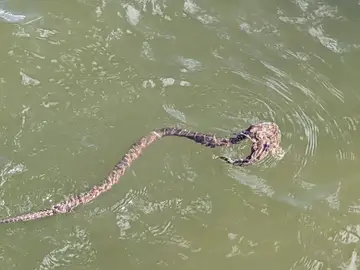
Northern Water Snake
Photo: Adrienne van den Beemt · CC BY 4.0 · iNaturalist

Northern Water Snake

Nerodia sipedon sipedon

Non-venomous per NJDEP Division of Fish & Wildlife, Endangered and Nongame Species Program

Where in New Jersey
Statewide; one of the most common snakes in NJ NJDEP Division of Fish & Wildlife, Endangered and Nongame Species Program
What the sources say

Venom: “Two of our snake species are venomous, the timber rattlesnake and the northern copperhead, and the remaining twenty species are non-venomous.” (NJDEP Division of Fish & Wildlife, Endangered and Nongame Species Program)

Habitat: Freshwater streams, ponds, lakes, swamps, marshes and bogs (NJDEP Division of Fish & Wildlife, Endangered and Nongame Species Program)

Queen Snake
Photo: Rstanton13 · CC BY-SA 4.0 · Wikimedia Commons · resized

Queen Snake

Regina septemvittata

Non-venomous per NJDEP Division of Fish & Wildlife, Endangered and Nongame Species Program

Where in New Jersey
Believed extirpated from New Jersey NJDEP Division of Fish & Wildlife, Endangered and Nongame Species Program
Conservation
State Endangered
What the sources say

Venom: “…most herpetologists believe the non-venomous queen snake is now extirpated (locally extinct) in New Jersey.” (NJDEP Division of Fish & Wildlife, Endangered and Nongame Species Program)

Rough Green Snake
Photo: Joshua Liverman · CC BY 4.0 · iNaturalist

Rough Green Snake

Opheodrys aestivus

Non-venomous per NJDEP Division of Fish & Wildlife, Endangered and Nongame Species Program

Size
Most adults are 14 to 33 inches long (Florida Museum), with a record of 46 inches. Maryland, Missouri, Tennessee and Arkansas give 22 to 32 inches. The tail is long and thin, about a third or more of the total length.
How to recognize it
  • Keeled (ridged) scales in 17 rows, which feel rough; the smooth green snake has smooth scales.
  • Extremely long, thin tail and round pupils.
  • Large eyes.
Where in New Jersey
Southern NJ NJDEP Division of Fish & Wildlife, Endangered and Nongame Species Program
Conservation
State Special Concern
What the sources say

Venom: “Two of our snake species are venomous, the timber rattlesnake and the northern copperhead, and the remaining twenty species are non-venomous.” (NJDEP Division of Fish & Wildlife, Endangered and Nongame Species Program)

Habitat: Vegetation overhanging water (NJDEP Division of Fish & Wildlife, Endangered and Nongame Species Program)

Full Rough Green Snake guide

Smooth Green Snake
Photo: User:Rstanton13 · CC BY-SA 4.0 · Wikimedia Commons · resized

Smooth Green Snake

Opheodrys vernalis

Non-venomous per NJDEP Division of Fish & Wildlife, Endangered and Nongame Species Program

Where in New Jersey
Northern NJ NJDEP Division of Fish & Wildlife, Endangered and Nongame Species Program
Conservation
State Special Concern
What the sources say

Venom: “Two of our snake species are venomous, the timber rattlesnake and the northern copperhead, and the remaining twenty species are non-venomous.” (NJDEP Division of Fish & Wildlife, Endangered and Nongame Species Program)

Habitat: Grasses, meadows and open woods (NJDEP Division of Fish & Wildlife, Endangered and Nongame Species Program)

Southern Ringneck Snake
Photo: Peter Paplanus from St. Louis, Missouri · CC BY 2.0 · Wikimedia Commons

Southern Ringneck Snake

Diadophis punctatus punctatus

Non-venomous per NJDEP Division of Fish & Wildlife, Endangered and Nongame Species Program

What the sources say

Venom: “Two of our snake species are venomous, the timber rattlesnake and the northern copperhead, and the remaining twenty species are non-venomous.” (NJDEP Division of Fish & Wildlife, Endangered and Nongame Species Program)

Habitat: Moist habitats (NJDEP Division of Fish & Wildlife, Endangered and Nongame Species Program)

Snakes people confuse

Milk Snake or Corn Snake?

Milk Snake
Photo: Tom Norton · CC BY 4.0 · iNaturalist

Milk Snake Non-venomous

Corn Snake
Photo: Bea Leiderman · CC BY 4.0 · iNaturalist

Corn Snake Non-venomous

Tennessee: the corn snake has a spear-point pattern between the eyes and a striped underside of the tail; milksnakes lack striping under the tail. Both have checkerboard bellies, so the belly alone does not separate them.

Eastern Kingsnake or Florida kingsnake?

Eastern Kingsnake
Photo: Matthew Lumsden · CC BY 4.0 · iNaturalist

Eastern Kingsnake Non-venomous

No confirmed photo of Florida kingsnake

Florida kingsnake Non-venomous

More than 34 light crossbands, lightened scales between the bands, a weaker chain pattern on the sides, and usually 23 scale rows at midbody.

Eastern Kingsnake or Apalachicola kingsnake?

Eastern Kingsnake
Photo: Matthew Lumsden · CC BY 4.0 · iNaturalist

Eastern Kingsnake Non-venomous

No confirmed photo of Apalachicola kingsnake

Apalachicola kingsnake Non-venomous

Fewer than 26 wide crossbands with much lighter scales between them, or no bands at all (striped or patternless).

Black rat snake or Timber rattlesnake (black phase)?

Black rat snake
Photo: Whitney Mattila · CC BY 4.0 · iNaturalist

Black rat snake Non-venomous

Timber rattlesnake (black phase)
Photo: NPS Photo · Public domain · Wikimedia Commons

Timber rattlesnake (black phase) Venomous

New Jersey DFW, for hatchling and yearling black rat snakes: the pattern runs down through the tip of a pointed tail, unlike the timber rattlesnake's 'velvet tail', where the last few inches before the rattle are solid black. New Jersey DFW also says timber rattlesnakes have yellow/light and black/dark color phases, and warns that many snakes shake their tails like a rattle, so the sound alone can mislead.

Rough green snake or Smooth green snake?

Rough green snake
Photo: Joshua Liverman · CC BY 4.0 · iNaturalist

Rough green snake Non-venomous

Smooth green snake
Photo: User:Rstanton13 · CC BY-SA 4.0 · Wikimedia Commons · resized

Smooth green snake Non-venomous

The smooth green snake has smooth scales, is generally smaller and rarely climbs. Missouri: the scales of a rough greensnake feel rough, and the smooth greensnake is a grassland species. SREL: the smooth green snake replaces this species in the Appalachian Mountains and the Northeast.

Photos show typical adults; individuals vary. Never get close to compare.

When snakes are active in New Jersey

Records of snakes in New Jersey peak in April to June and September. They show when people record snakes, not how many there are (about month bars).

761 records of snakes in New Jersey by month (GBIF, CC0 and CC BY records).

If you are bitten or stung

Call 911 or Poison Help at 1-800-222-1222 right away. Poison Help connects you to your local poison center, any time of day.

Official advice from NJDEP Division of Fish & Wildlife, Endangered and Nongame Species Program:

How to report

DEP 24-hour hotline 1-877-WARN DEP (1-877-927-6337) for venomous snakes on private land, bear damage or nuisance bears, and injured or dead bobcats; report endangered, threatened and special concern wildlife (and roadkill) with the NJ Wildlife Tracker app. NJDEP Fish & Wildlife

Common questions

What official sources say

Are there cottonmouths (water moccasins) in New Jersey?

No. The northern water snake is often mistaken for the cottonmouth, which does not occur in New Jersey. NJDEP Division of Fish & Wildlife, Endangered and Nongame Species Program

“Often, the non-venomous northern water snake is misidentified as the water moccasin (cottonmouth) which does not occur in New Jersey.”

About this list

The species list comes from Snakes of New Jersey (brochure) (NJDEP Division of Fish & Wildlife, Endangered and Nongame Species Program, PDF Last-Modified 2021-06-23 (no date printed); conservation status from the 2026 list).

Venom labels come only from official sources and link to them; "Not stated" never means harmless. How labels work.

Want a paper copy? Print the New Jersey snakes ID chart.

Sources

  1. New Jersey's Endangered, Threatened, and Special Concern Species. NJDEP Fish & Wildlife, ENSP. archived copy, captured August 25, 2026; checked November 3, 2026.
  2. Snakes of New Jersey (brochure). NJDEP Division of Fish & Wildlife, Endangered and Nongame Species Program. PDF Last-Modified 2021-06-23; checked November 3, 2026.
    Quoted passages (12)
    “22 species of snakes can still be found in the most densely populated state in the country.”
    “Two of our snake species are venomous, the timber rattlesnake and the northern copperhead, and the remaining twenty species are non-venomous.”
    “…most herpetologists believe the non-venomous queen snake is now extirpated (locally extinct) in New Jersey.”
    “This is one of two VENOMOUS SNAKES found in NJ.”
    “If you encounter a venomous snake, you should keep a safe distance (at least 5 feet) and keep young children and pets at your side for control.”
    “Call 911 immediately”
    “Landowners that encounter timber rattlesnakes or northern copperheads on their property and wish to have them removed should contact ENSP immediately through the DEP Hotline: 1-877-WARN DEP (1-877-927-6337)”
    “Never walk barefoot!”
    “…which makes it illegal for anyone to kill, collect, or harass our native snake species.”
    “These snakes are the first to emerge in NJ, and can often be seen in mid-March during warm spells.”
    “They give birth to 6-17 young in mid-August to early October. … Six to 10 young are born in late August”
    “Often, the non-venomous northern water snake is misidentified as the water moccasin (cottonmouth) which does not occur in New Jersey.”
  3. Black Bears in New Jersey. NJDEP Fish & Wildlife. archived copy, captured July 21, 2026; checked November 3, 2026.
    Quoted passages (1)
    “To report black bear damage and nuisance behavior, call the DEP’s 24-hour, toll-free hotline: 1-877-WARN DEP (1-877-927-6337)”
  4. GBIF.org occurrence records, human observations licensed CC0 1.0 or CC BY 4.0 only, accessed November 3, 2026. The datasets behind these counts are listed on our Sources page.