States Wildlife

New Jersey Lizards: Identification Guide With Pictures

Last checked November 3, 2026 against official sources.

On this page
  1. All 3 lizards
  2. When they are active
  3. How to report
  4. About this list
  5. Sources

This page lists 3 lizards: all from NJDEP Division of Fish & Wildlife's Reptiles of New Jersey.

All 3 lizards

From A to Z.

No confirmed photo of Five-lined Skink

Five-lined Skink

Eumeces fasciatus

Not stated

Venom
No official source we use states whether this animal is venomous. That does not mean it is harmless: do not handle it.
Size
5 to 8.5 inches
How to recognize it
  • Smooth, shiny scales
  • Enlarged middle row of scales under the tail (separates it from the southeastern five-lined skink)
  • Tail breaks off easily and twitches to distract predators; it grows back shorter
Where in New Jersey
Entire state. NJDEP Division of Fish & Wildlife, ENSP
75 records by month.
What the sources say

Habitat: Damp habitats--cutover woods in rotting logs, under boards, or in rock piles. (NJDEP Division of Fish & Wildlife, ENSP)

Full Five-lined Skink guide

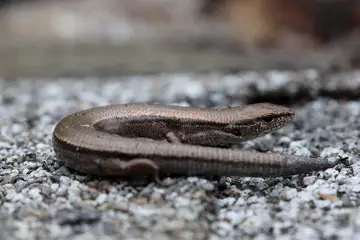
Ground Skink
Photo: Rstanton13 · CC BY-SA 4.0 · Wikimedia Commons · resized

Ground Skink

Scincella lateralis

Not stated

Venom
No official source we use states whether this animal is venomous. That does not mean it is harmless: do not handle it.
Where in New Jersey
Eastern Southern Region, west to eastern Camden, Gloucester, and Cumberland Counties; northern quarter of Cape May County … NJDEP Division of Fish & Wildlife, ENSP
Conservation
State Special Concern
What the sources say

Range: Eastern Southern Region, west to eastern Camden, Gloucester, and Cumberland Counties; northern quarter of Cape May County. All of Burlington, Ocean, and Atlantic Counties. Most of Monmouth County in the Northern Region.

Habitat: This lizard is typically found on the woodland floor. (NJDEP Division of Fish & Wildlife, ENSP)

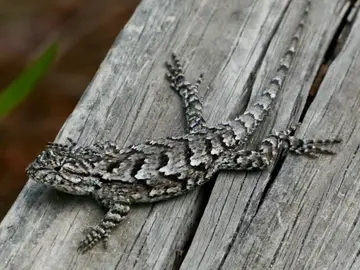
Northern Fence Lizard
Photo: John Matthew Erickson · CC BY 4.0 · iNaturalist

Northern Fence Lizard

Sceloporus undulatus hyacinthinus

Not stated

Venom
No official source we use states whether this animal is venomous. That does not mean it is harmless: do not handle it.
Size
About 4 to 7.25 inches total length (SREL, Ohio DNR); Illinois gives up to about 19 cm (7.5 in).
How to recognize it
  • Rough, spiny, keeled scales: the only native lizard in North Carolina (and in Georgia and South Carolina) that looks rough or spiny
  • Often on fences, trees, logs, stumps, rocks and buildings; dashes up a tree and keeps to the far side when approached
Where in New Jersey
All of Southern Region. In Northern Region, Monmouth County and southern Mercer and Middlesex Counties. NJDEP Division of Fish & Wildlife, ENSP
120 records by month.
What the sources say

Habitat: Fence lizards are often seen on rotting logs or stumps and fences. (NJDEP Division of Fish & Wildlife, ENSP)

Full Northern Fence Lizard guide

When lizards are active in New Jersey

Records of lizards in New Jersey peak in April to May and August to September. They show when people record lizards, not how many there are (about month bars).

213 records of lizards in New Jersey by month (GBIF, CC0 and CC BY records).

How to report

DEP 24-hour hotline 1-877-WARN DEP (1-877-927-6337) for venomous snakes on private land, bear damage or nuisance bears, and injured or dead bobcats; report endangered, threatened and special concern wildlife (and roadkill) with the NJ Wildlife Tracker app. NJDEP Fish & Wildlife
About this list

The species list comes from Reptiles of New Jersey (checklist) (NJDEP Division of Fish & Wildlife, Last Updated: December 10, 2004).

Venom labels come only from official sources and link to them; "Not stated" never means harmless. How labels work.

Sources

  1. New Jersey's Endangered, Threatened, and Special Concern Species. NJDEP Fish & Wildlife, ENSP. archived copy, captured August 25, 2026; checked November 3, 2026.
  2. Reptiles of New Jersey (checklist). NJDEP Division of Fish & Wildlife. updated December 10, 2004; checked November 3, 2026.
  3. Field Guide to Reptiles and Amphibians of New Jersey: Lizards. NJDEP Division of Fish & Wildlife, ENSP. 1st edition, February 2001; checked November 3, 2026.
    Quoted passages (1)
    “When to find them: June through September. … When to find them: Active May through September.”
  4. Black Bears in New Jersey. NJDEP Fish & Wildlife. archived copy, captured July 21, 2026; checked November 3, 2026.
    Quoted passages (1)
    “To report black bear damage and nuisance behavior, call the DEP’s 24-hour, toll-free hotline: 1-877-WARN DEP (1-877-927-6337)”
  5. GBIF.org occurrence records, human observations licensed CC0 1.0 or CC BY 4.0 only, accessed November 3, 2026. The datasets behind these counts are listed on our Sources page.